10 Small Half Bath Makeover Ideas on a Tight Budget
Explore 10 small half bath makeover ideas on a tight budget, from paint and hardware to simple storage, with a sample budget and practical planning tips.
By Home Crane Editors. . 7 min read.
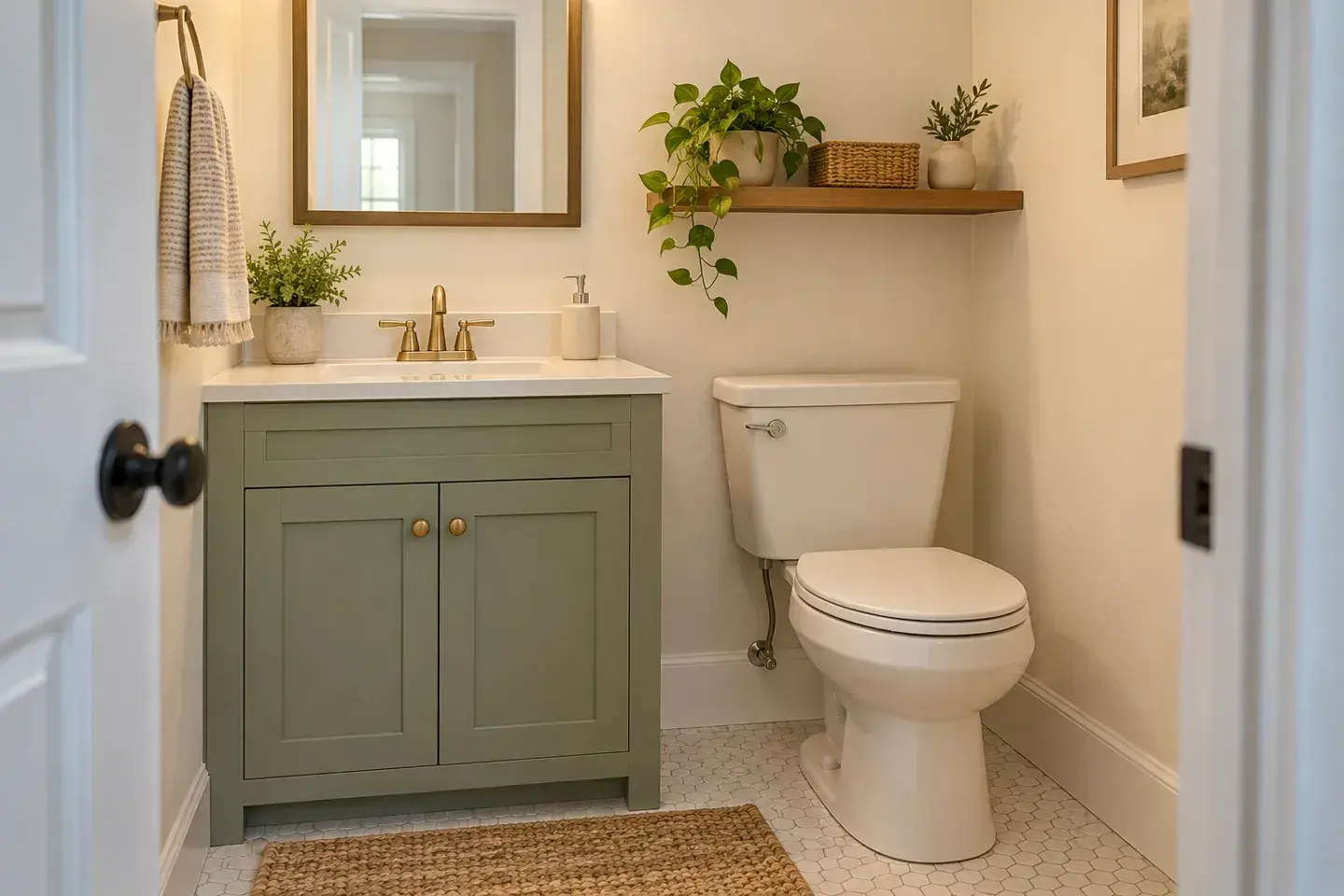
The most affordable half-bath makeover usually starts with the things you can keep: a working toilet, a sound vanity, and a floor that still does its job. Fresh paint, better lighting, and a few coordinated details can change how the room feels without opening a wall or moving a pipe.
A half bath, often called a powder room, contains a toilet and sink rather than a tub or shower. Its small size makes a modest update noticeable, but it also means every basket, frame, and shelf competes for space. Choose two or three improvements that solve the room's biggest problems. You do not need to complete all ten ideas.
These are design suggestions, not a report of a personally completed renovation. The illustrations show possible looks using retained fixtures and simple finishes.
Before you buy anything
Empty the counter and photograph the room from the doorway. What catches your eye first: scuffed walls, mismatched bulbs, an oversized frame, or clutter? Make that your first project. Then measure the wall you intend to change, the vanity doors, and any proposed storage location.
Set aside part of the budget for preparation and small surprises. A leaking toilet, damp cabinet base, or loose mirror needs attention before decorating. Renters should obtain permission for paint, drilling, or adhesive coverings. In a pre-1978 home, consult the EPA's lead-safe DIY guidance before disturbing old paint.
1. Refresh the walls with one well-chosen paint color
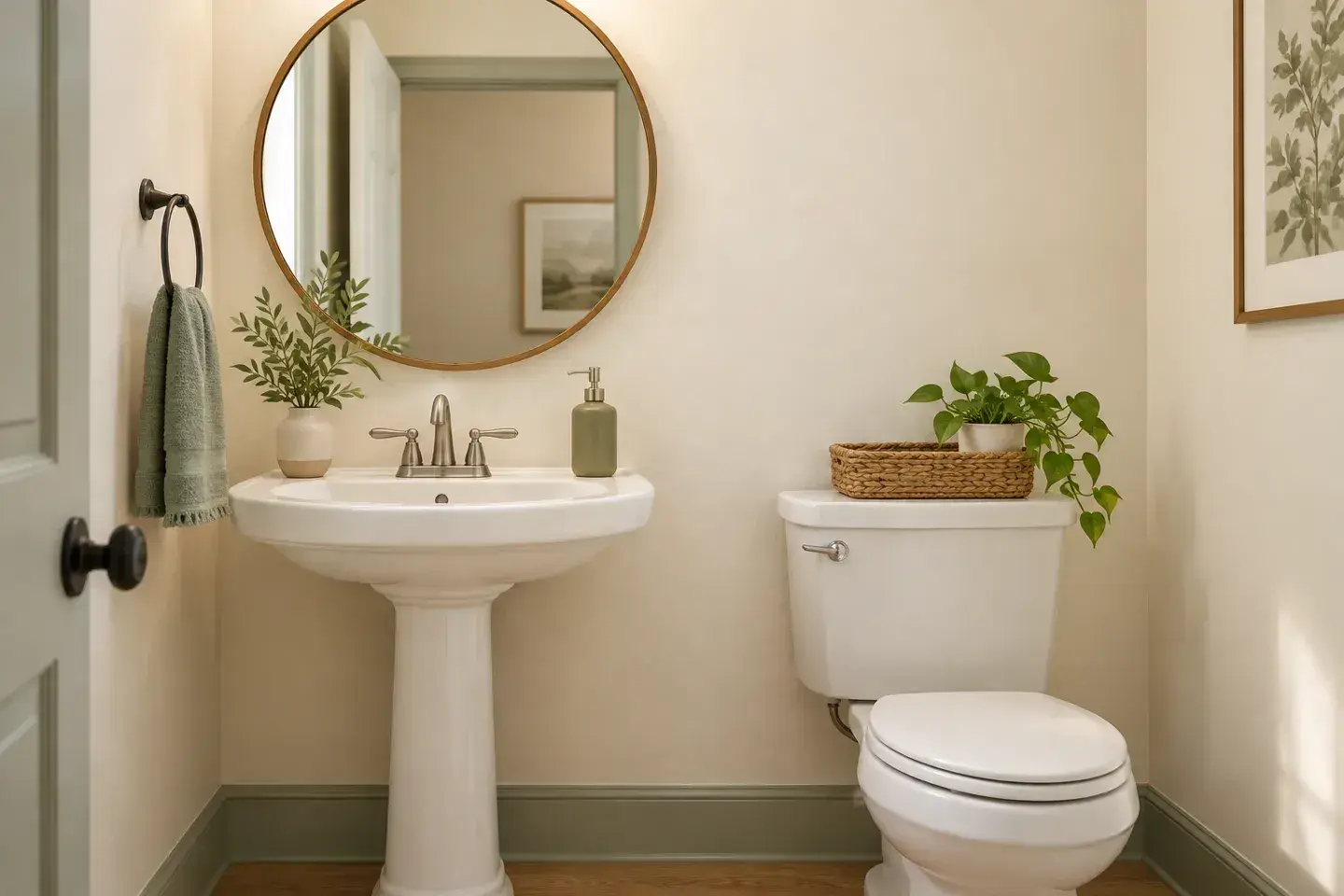
Paint makes the largest difference when the existing color clashes with the sink, floor, or countertop. Bring home samples and view them beside those fixed finishes with the room's actual light switched on. Warm ivory may work with a beige floor; a cooler white can make that same floor look unexpectedly yellow.
Keep the ceiling and trim simple if you want fewer materials and less cutting-in. Use a suitable washable interior coating and follow its preparation requirements. A small room does not automatically require high-gloss paint, which can emphasize uneven patches.
Budget move: check the condition and suitability of leftover paint before buying a new color. Reusing a good finish can free money for the problem you cannot fix with paint.
2. Paint a sound vanity instead of replacing it
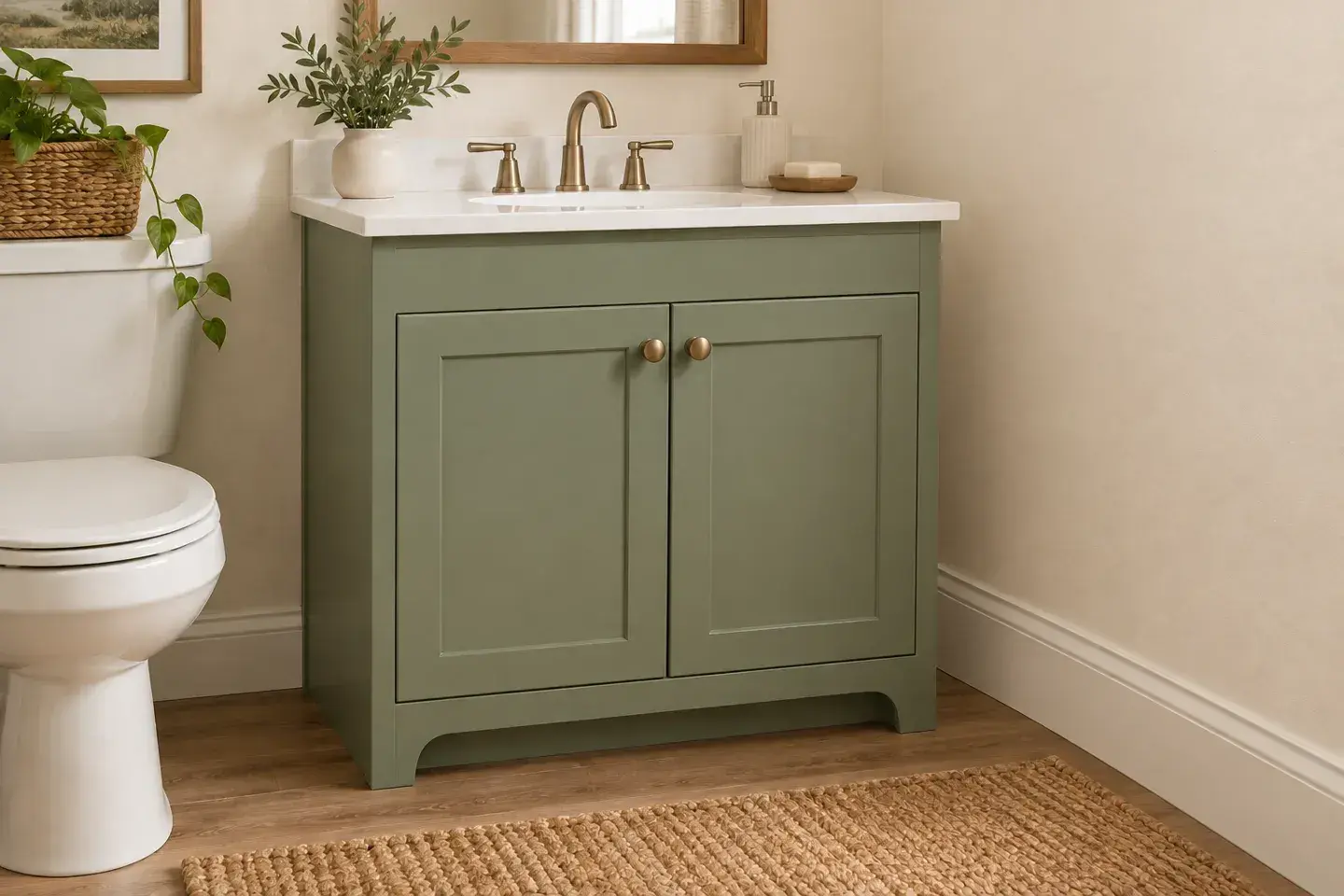
A compact vanity can become the room's focal point in muted green, navy, or warm gray. This works best when the cabinet box and doors are secure and the countertop still suits the room. Swollen particleboard or peeling surface layers need a different repair decision.
Remove the doors and hardware, clean away residue, and use the preparation, primer, and cabinet coating specified for the existing finish. Sherwin-Williams' vanity-painting guide includes cleaning, surface preparation, and an adhesion test. A “no sanding” claim is not permission to paint over grime or a failing finish.
Let the coating cure as directed before heavy use. Dry to the touch is not the same as ready for repeated cleaning.
3. Change the cabinet hardware without drilling new holes
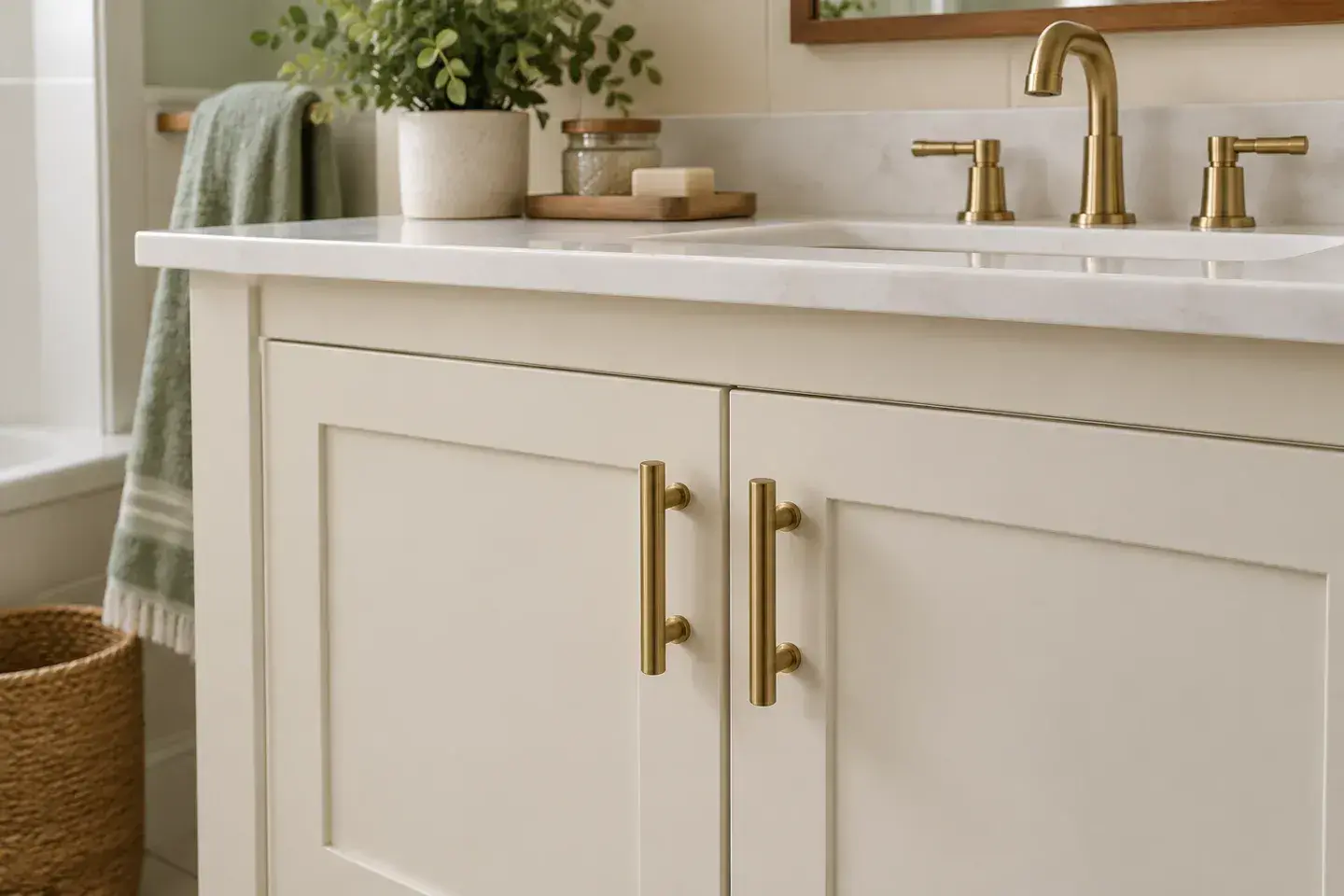
New knobs or pulls can make an older vanity look intentional. Match the existing hole spacing for pulls, measured from the center of one hole to the center of the other. For knobs, check that the new base covers any marks left by the old one.
Bring an old screw when shopping, but confirm the replacement hardware's thread and required length. A screw that is too long may bottom out before the pull tightens.
Choose one finish that works with what remains. You do not have to replace a functional faucet because the cabinet pulls are different. Repeating a finish on two small accessories can make the combination feel considered.
4. Give the existing mirror a simple frame
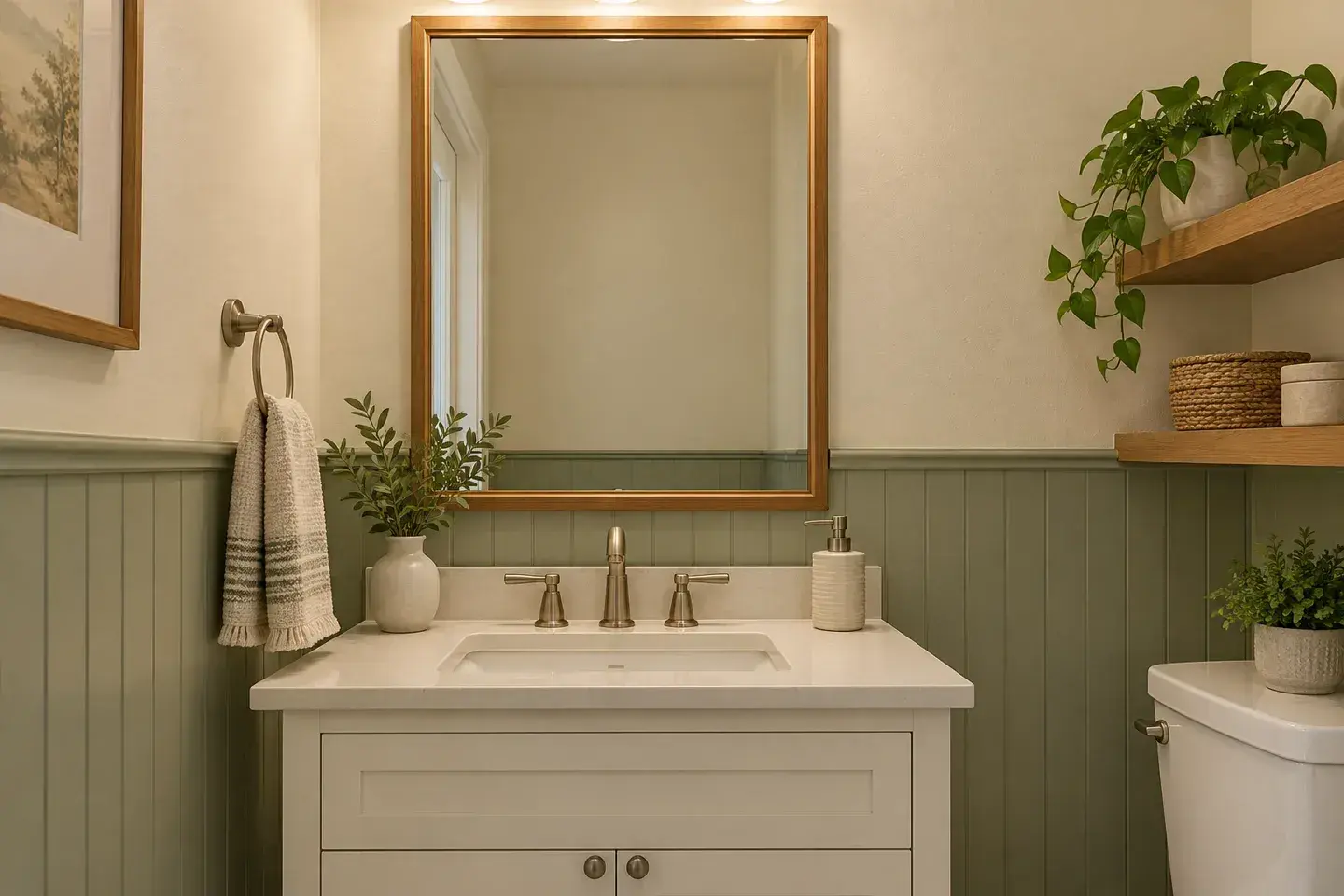
If the mirror is secure and undamaged, a slim frame can soften its unfinished edge. Measure carefully around the backsplash, light fixture, side walls, and retaining clips before choosing a system.
Purpose-made mirror frames can include a recessed back that accommodates clips; MirrorMate explains this approach. Ordinary flat trim does not automatically offer the same clearance. Do not remove the mirror's supports simply to make a decorative frame fit.
Compare the complete cost of trim, finish, adhesive, and tools with a suitable kit. A DIY frame saves money only when the material and attachment method suit the mirror. If the frame would crowd a narrow vanity, cleaning the mirror and leaving it unframed can be the better choice.
5. Use wallpaper on one small wall
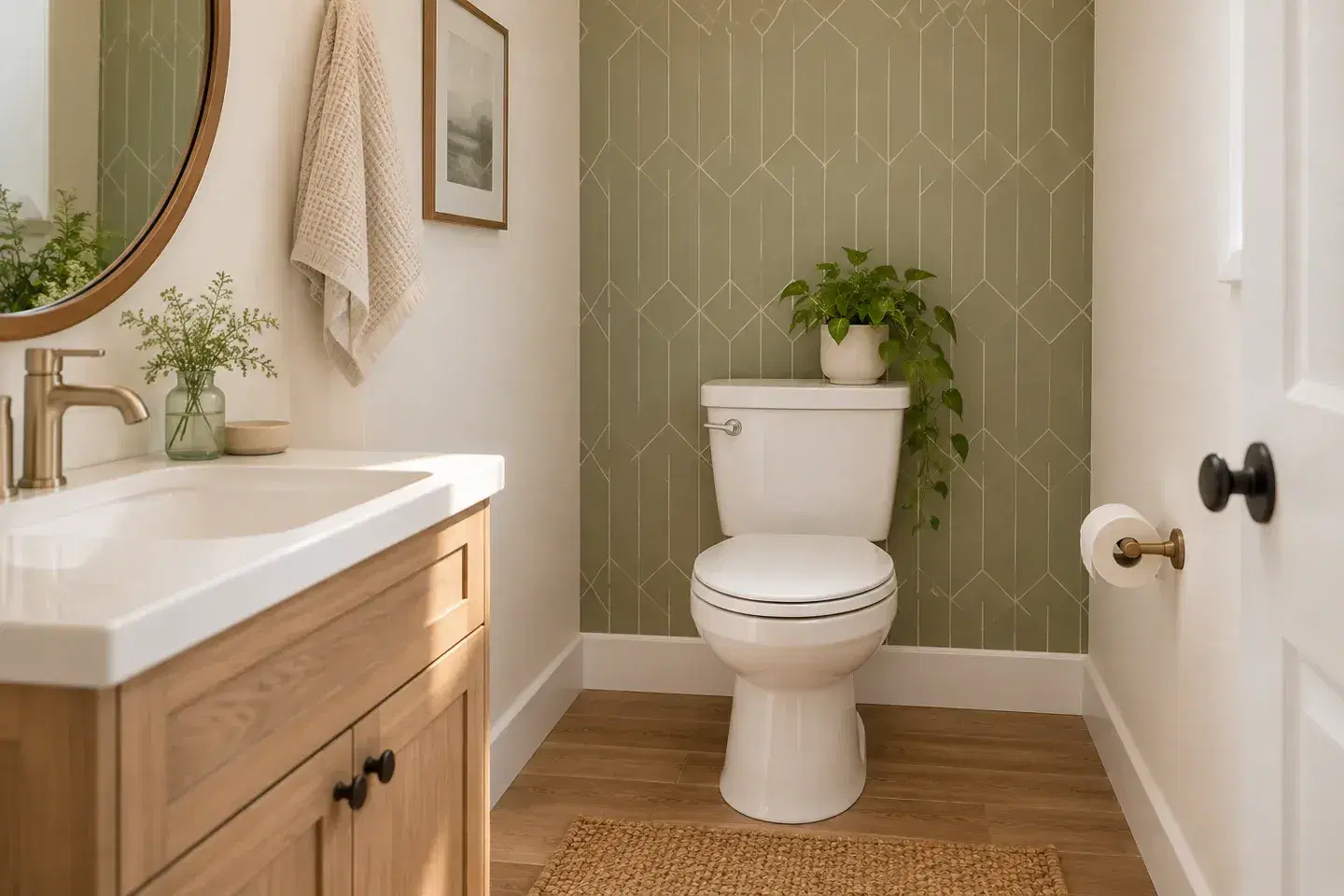
The wall behind the toilet is a useful place for a compact geometric pattern. It adds interest while keeping the other walls quiet, and it usually takes less material than wrapping the entire room.
Calculate purchases using wall height, roll width, pattern repeat, and trimming allowance. Square footage alone can underestimate what you need. Center the pattern deliberately so you do not finish with an awkward sliver beside a corner.
Check the exact wallpaper's surface and moisture requirements. Tempaper's FAQ discusses approved surfaces and bathroom use, but those instructions do not apply to every brand. Test first where permitted. Peel-and-stick wallpaper is not a promise of damage-free removal, particularly over weak paint or unsuitable texture.
6. Make the existing light work better
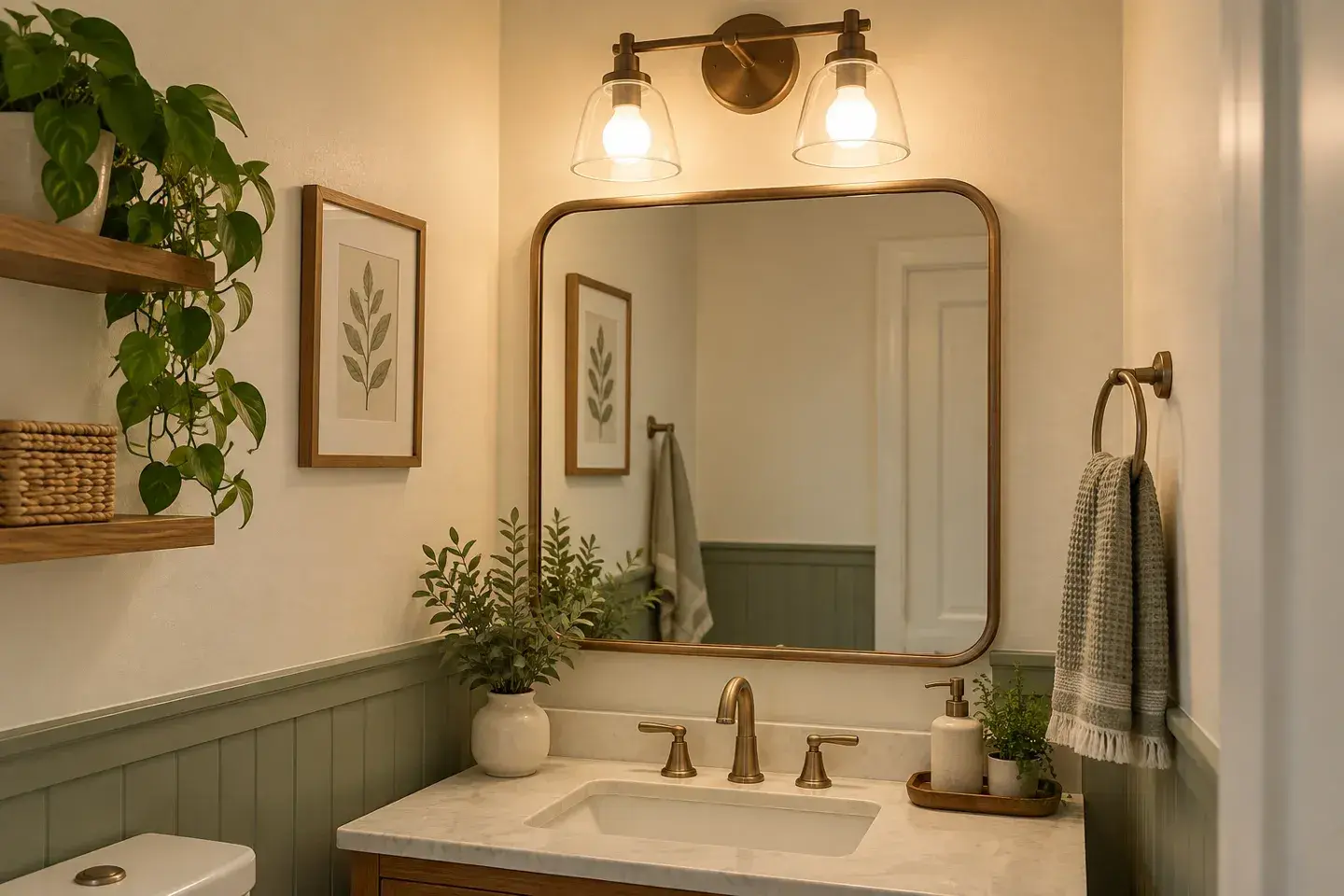
Before buying a new fixture, clean its shades and inspect whether the bulbs match. One cool bulb beside one warm bulb can make an otherwise coordinated room look uneven.
For a simple refresh, choose compatible bulbs with the same color temperature. A warm-to-neutral appearance, such as 2700K to 3000K, is a starting preference rather than a rule. Compare the effect on your paint samples. Use the correct bulb base, permitted wattage, and any required enclosed-fixture or dimmer compatibility.
Turn the light off and let bulbs cool before handling them. If the fixture is damaged or the project involves wiring, arrange appropriate electrical help. A bulb change and a fixture replacement are different scopes of work.
7. Add one shallow shelf where it is useful
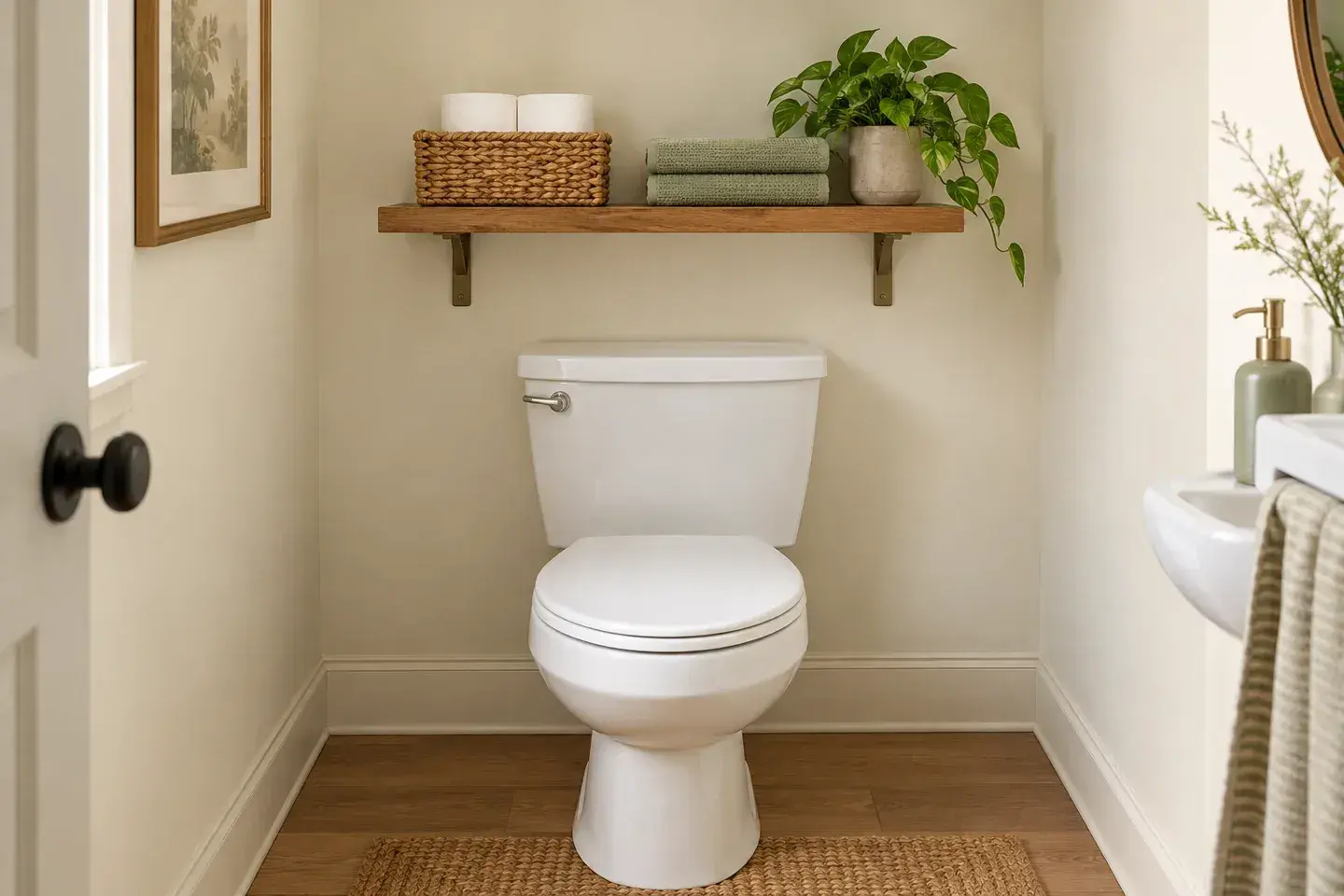
A narrow shelf can hold spare toilet paper or a couple of hand towels without filling the floor. Check the proposed position while standing and sitting, and make sure the toilet tank lid can still be removed.
Use a shelf and fixings suited to the wall and expected load. Keep heavy glass objects and large containers elsewhere. More shelves are not always better: a stack of deep boards above the toilet can make a small room feel crowded.
Budget move: buy storage only after deciding exactly what belongs on it. If you merely need a place for two spare rolls, a small basket in an existing cabinet may solve the problem without drilling.
8. Coordinate the hand towel and floor mat
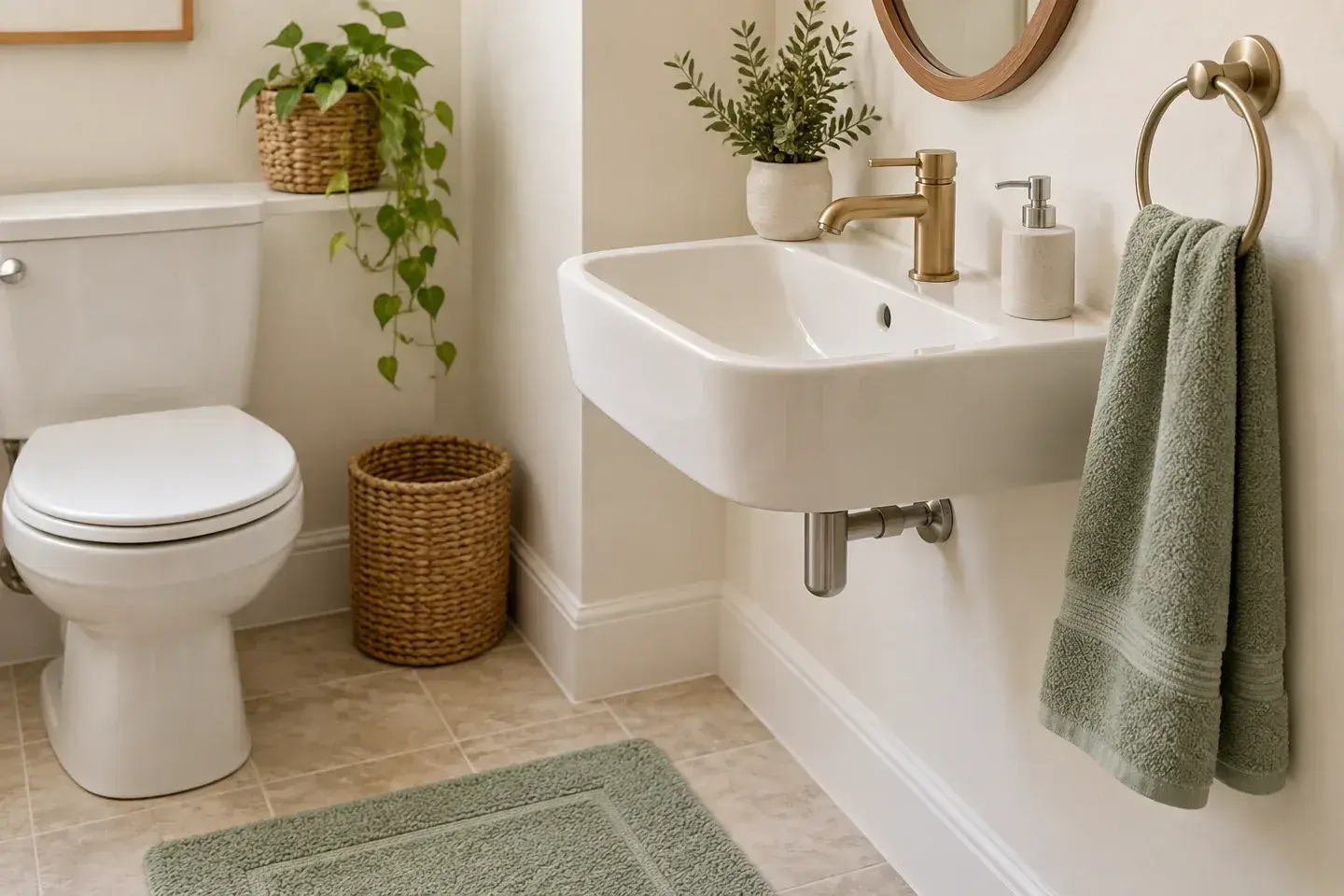
Textiles are easy to overlook because they are practical, but a faded towel and busy rug can dominate a tiny room. Choose one hand-towel color that repeats a detail in the paint, artwork, or wallpaper.
Add a small washable mat only if the room has space for one. Check door clearance, stability, and the flooring manufacturer's advice about backing materials. Avoid a curled edge or a mat that bunches near the toilet.
You do not need a matching set of everything. A plain towel with a textured neutral mat often looks calmer than multiple competing patterns. If the floor already has a strong design, leave more of it visible.
9. Hang one piece of artwork at the right scale
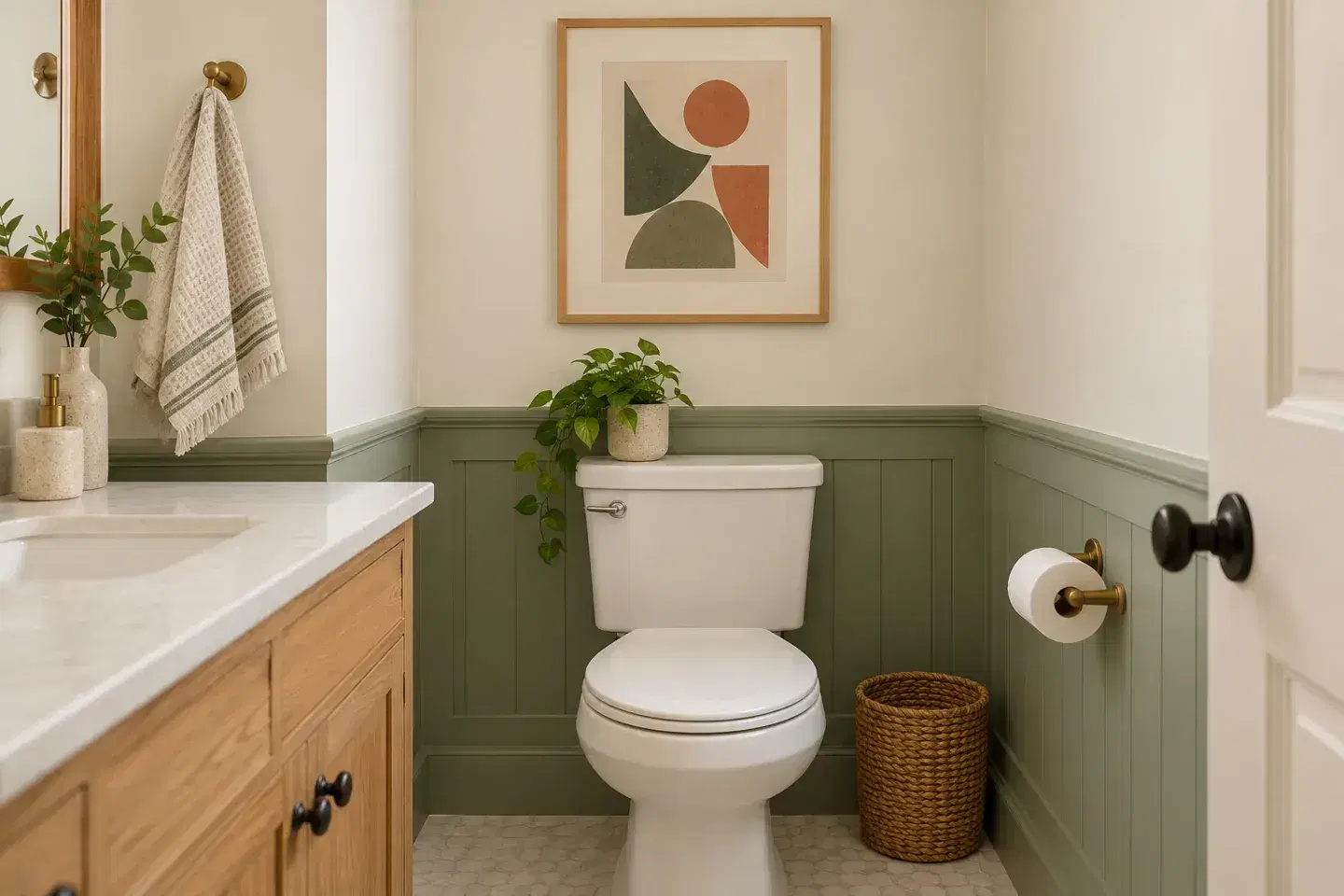
A modest abstract print, architectural sketch, or landscape can give the room character. Reuse a frame and change the print or mat before buying a complete new piece.
Tape a paper outline to the wall to test the size and position. Check it from the doorway and beside the sink, rather than relying on a universal hanging height. Leave room around switches, towel holders, and the mirror.
Use appropriate hanging hardware and keep artwork away from direct sink splashes. One well-sized piece generally has more impact than several tiny frames scattered wherever a gap remains. Original artwork or properly licensed prints also avoid copyright problems when choosing what to display.
10. Clear the counter and group the essentials
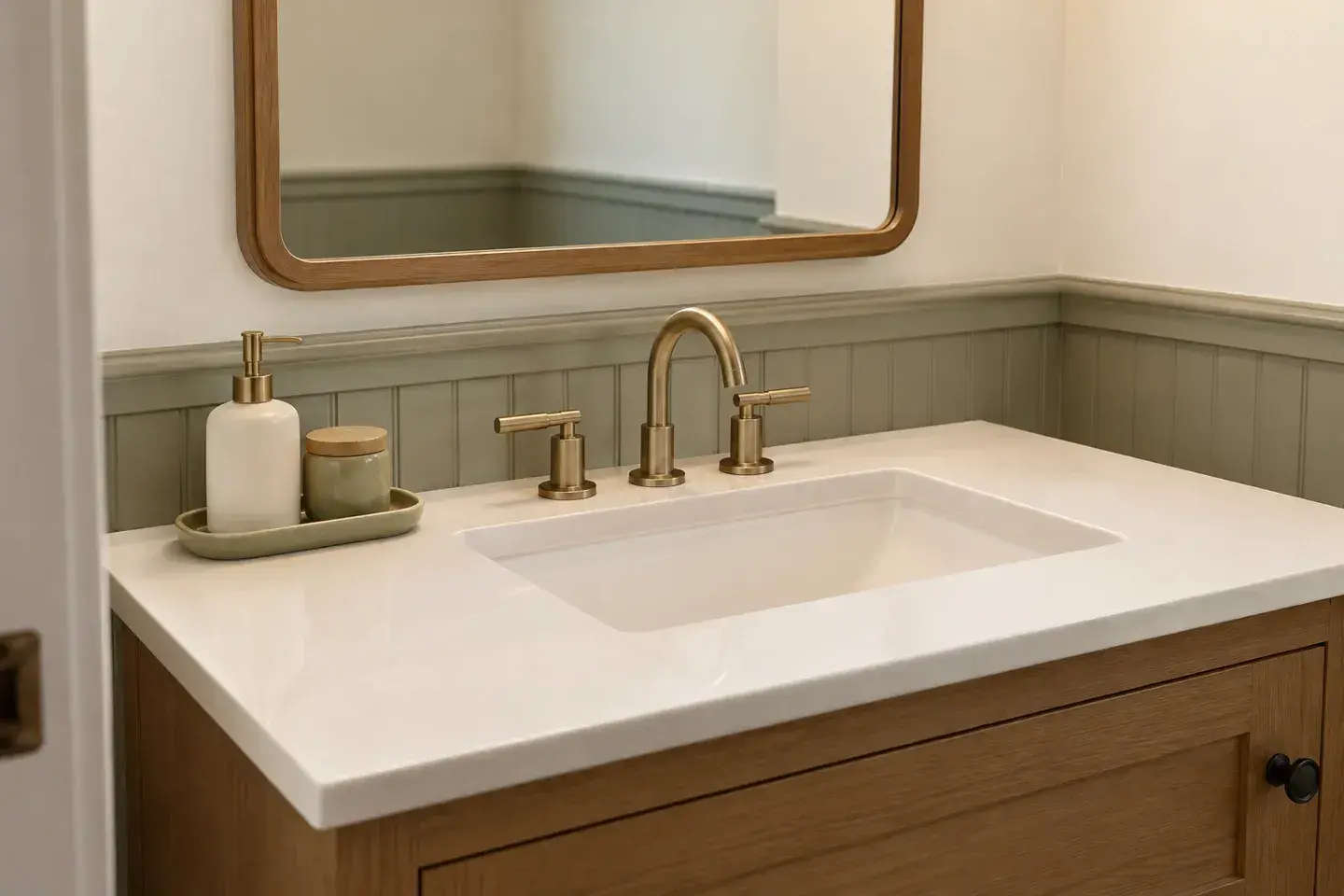
This is the first idea to try if the budget is almost zero. Remove duplicates, empty containers, and items that belong in a full bathroom. Keep only what a guest or household member needs at this sink.
A small washable tray can group the soap dispenser and one other essential. Leave enough exposed counter to wipe the surface easily. Store spare supplies in an existing cabinet or a compact basket rather than spreading them across the toilet tank.
Do not buy a larger organizer to accommodate things that do not belong in the room. The makeover should reduce the daily work of keeping the space tidy, not create another collection to arrange.
How to prioritize a tight budget
| Feature | Start with | Postpone |
|---|---|---|
| Room feels dingy | Cleaning, matching bulbs, then wall paint | Decorative shelving |
| Vanity looks dated but is sound | Hardware or a suitable paint system | A new sink and countertop |
| Room feels plain | One art piece or one accent wall | Pattern on every surface |
| Counter feels crowded | Remove duplicates and reuse storage | More accessories |
| Bare mirror looks unfinished | Compare a suitable frame with leaving it simple | Removing a secure mirror |
Here is a hypothetical $150 spending cap, not a live shopping quote: reserve $60 for a wall-paint refresh and preparation materials, $20 for a few cabinet knobs, $20 for a towel or mat, $15 for a reused-frame art update, and $35 for tax, missing supplies, or contingency. These allocations total $150. Actual local prices and coverage may require dropping an item. The plan assumes you already own basic tools and need no repairs or paid labor.
A mirror kit, wallpaper, or vanity-painting system may use most of that cap by itself. Treat those as alternatives, not extras to squeeze into the same basket.
Questions homeowners ask
What should I update first in a small half bath?
Start with cleaning and the most noticeable flaw. If the walls are damaged or discolored, accessories will not disguise them. If the finishes already work together, better organization and matching light may be enough.
Should a tiny powder room always be white?
No. Light colors can create a quiet background, while a deeper color can make a small room feel deliberate and cozy. Judge samples with your actual lighting and fixed finishes rather than choosing by room size alone.
Can I finish the makeover in a weekend?
Hardware, textiles, art, and decluttering can fit a short project window. Painting and wallpaper may involve separate preparation, drying, or curing periods. Plan around the products you choose, especially when the half bath is your only convenient toilet.
Sources
- EPA's lead-safe DIY guidance. Checked October 11, 2026
- Sherwin-Williams' vanity-painting guide. Checked October 11, 2026
- MirrorMate explains this approach. Checked October 11, 2026
- Tempaper: Frequently asked questions. Checked October 11, 2026
Share this article
Get new guides by email
Practical home articles and free resources. No spam, and you can unsubscribe at any time.
Keep reading

15 Icy Blue Bedroom Paint Ideas for 2026
Explore 15 icy blue bedroom paint ideas, from accent walls to blue ceilings, with warm pairings and practical sampling tips for 2026.
October 2026, 6 min read
Neo Deco Living Room Ideas: How to Get the Look on a Budget
Create a budget Neo Deco living room with curves, geometric patterns, metallic accents, jewel tones, and balanced furniture styling.
October 2026, 3 min read
15 Smart Small Laundry Room Stackable Washer Dryer Ideas
Explore 15 smart small laundry room stackable washer dryer ideas. Compare illustrated concepts, practical layout tips, and planning checks.
October 2026, 6 min read