Can You Lay Vinyl Plank Flooring Over Ceramic Tile?
Learn when vinyl plank can go over ceramic tile, including checks for loose tile, grout joints, flatness, moisture, finished height and movement.
By Home Crane Editors. . 4 min read.
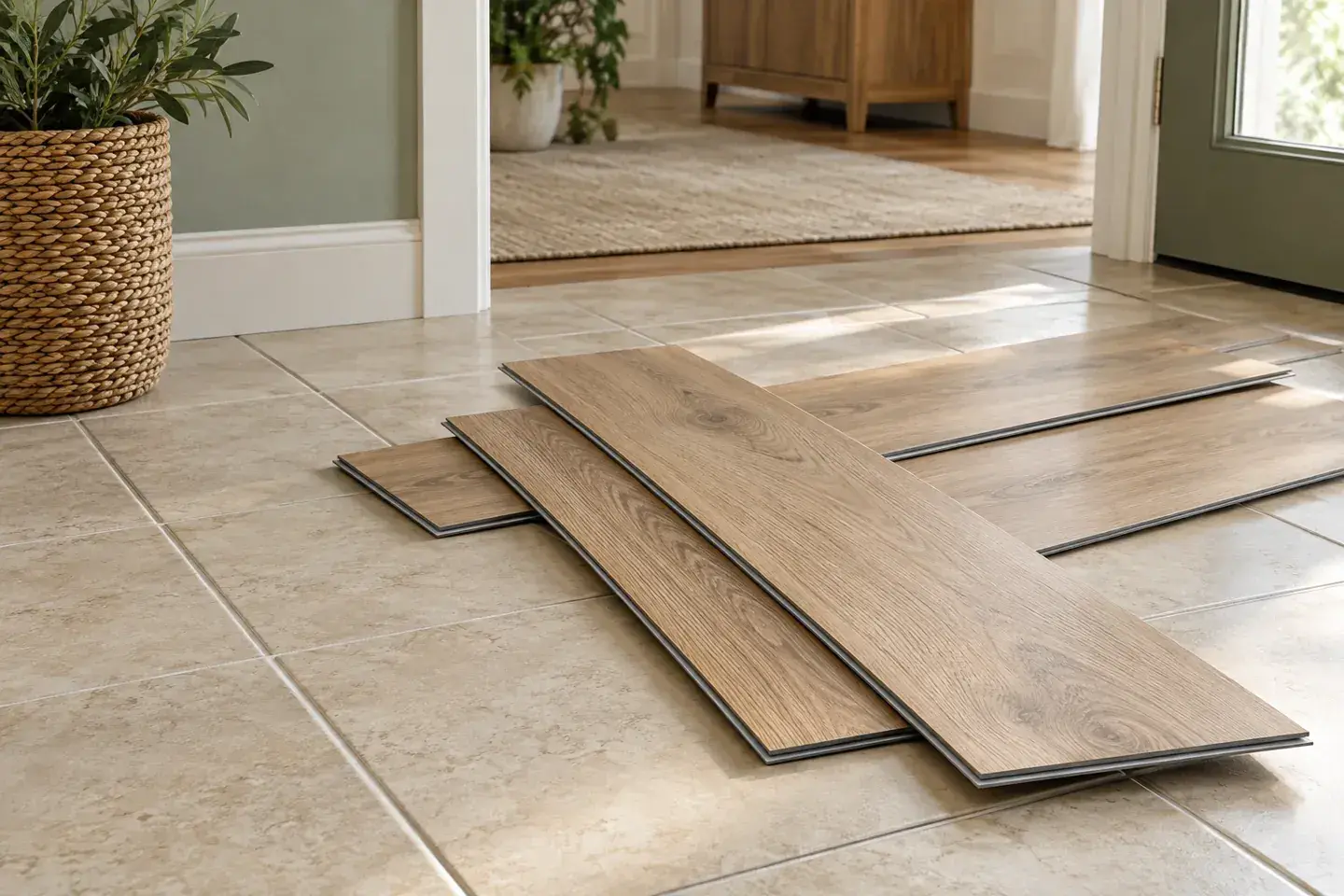
Yes, some vinyl plank products can be installed over ceramic tile when the existing floor is sound, sufficiently flat, dry, and approved by the new flooring manufacturer. Loose tile, deep grout lines, moisture, and excess finished height can make the project unsuitable or require substantial preparation.
Do not confuse "waterproof plank" with permission to cover a wet or failing floor. The old tile remains part of the supporting assembly. Problems beneath it do not disappear when a new surface is installed.
Shaw's vinyl installation guidance allows installation over existing flooring in many situations, subject to condition and the specific instructions. That is a useful starting point, but the exact product manual controls the decision.
1. Confirm that the tile is worth keeping
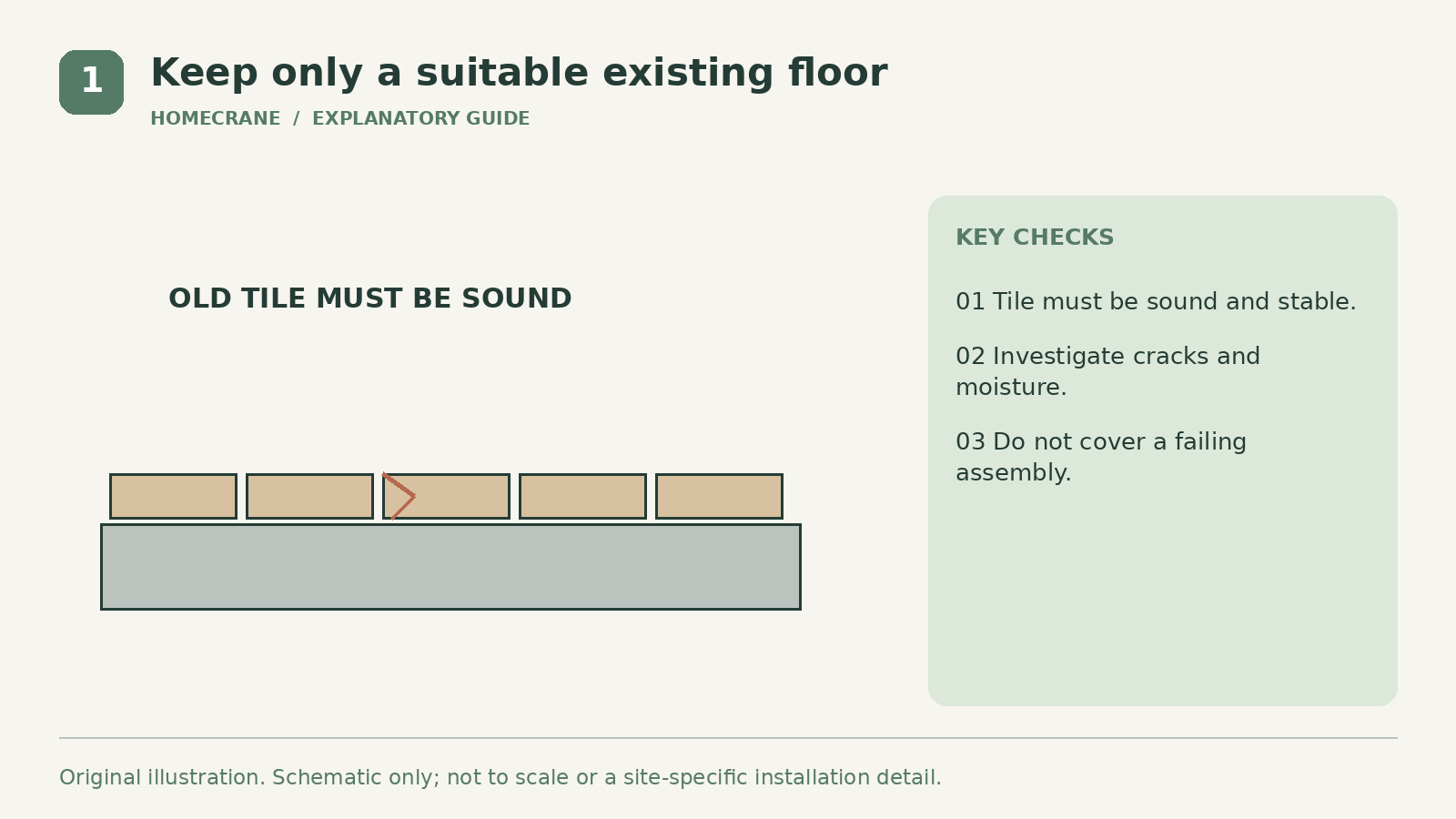
Inspect for loose tiles, cracked joints, movement, and signs of moisture. A hollow sound alone is not a complete diagnosis, but visible movement or a failing surface needs assessment before covering it. Do not use the new floor to hold loose tile in place.
Check the tile's bond and supporting construction with an installer when uncertain. If the old floor has failed repeatedly, determine why. Covering it can make future investigation more disruptive.
Clean the surface using a compatible method and remove residues that could interfere with patching or other preparation. Waxes, oily cleaners, and coatings may need a specific treatment. For glued-down vinyl, adhesive compatibility and preparation are especially important.
If removal becomes necessary, assess older tile, backing, and adhesive layers before disturbing them. Avoid dry grinding or demolition without the appropriate dust controls and hazardous-material checks. The seemingly easy overlay should not lead to an improvised removal project.
2. Measure flatness and grout joints against the actual manual
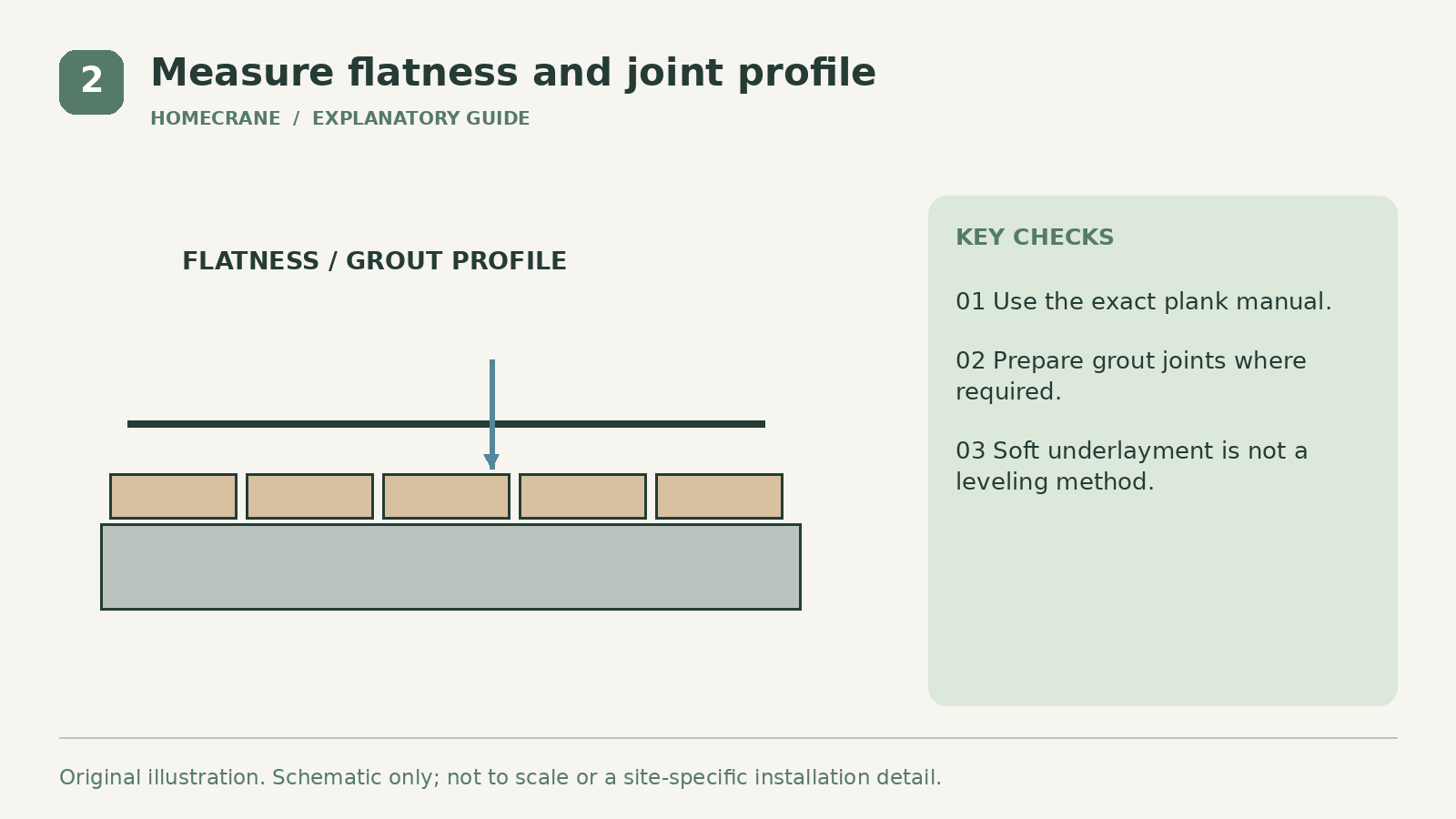
Flatness is different from level. A floor can slope gently and still meet a product's flatness tolerance; a level floor can have small ridges that exceed it. Use the specified measuring method and tolerance from the chosen vinyl product.
Measure grout width and depth, tile lippage, and low spots. Some rigid products permit certain joints without filling; others require a smooth prepared surface. Do not copy a grout-width limit from another brand or another product in the same brand.
Where preparation is needed, use a patching or leveling system approved for the tile and flooring. That may include cleaning, a bonding primer, specific thickness limits, and curing requirements. A generic bag of compound is not automatically suitable for glazed tile.
Do not add a thick soft underlayment to hide unevenness. It may allow movement that damages a locking joint, and extra underlayment may be prohibited when the plank already has an attached pad. Follow the complete assembly instructions.
3. Check the finished height before ordering
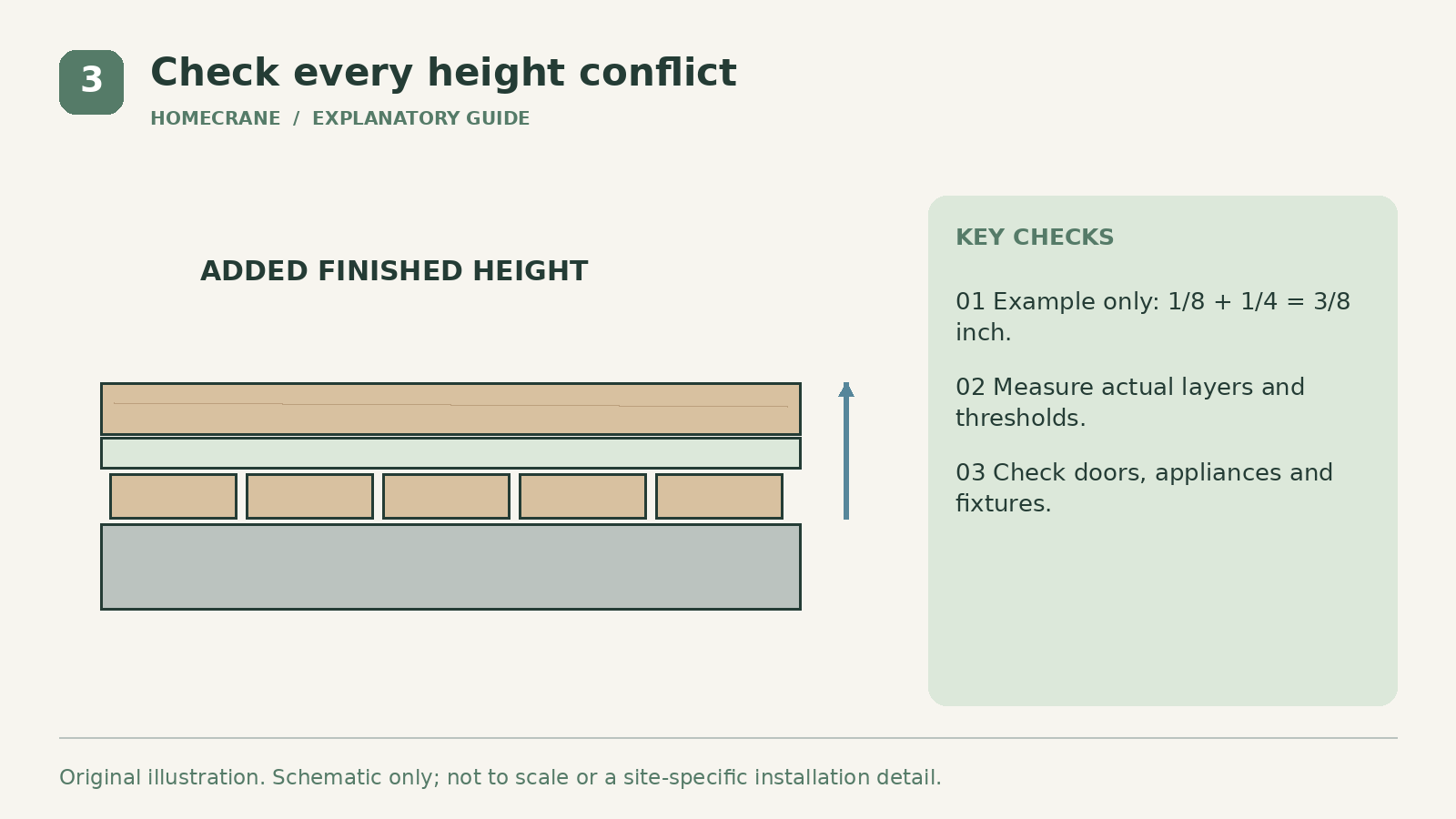
Add the actual thickness of all proposed layers and compare the result with doors, thresholds, appliances, stair edges, and adjacent floors. A small change can trap a dishwasher beneath a counter or create an awkward transition.
For an arithmetic example only, assume 1/8 inch of preparation and 1/4 inch of plank thickness. The added height would be 3/8 inch. These are assumed values, not a recommended assembly or a product specification. Measure your actual materials.
Check that exterior doors can still operate with their intended weather seals. Do not trim a fire-rated or exterior door casually. A bathroom overlay also requires an appropriate toilet-flange and fixture plan rather than simply reinstalling everything at a new height.
Ask how transitions will be attached without pinning a floating floor. A transition that looks neat can still interfere with movement if installed incorrectly. Plan the doorway detail before laying the first row.
4. Install only after moisture and movement requirements are resolved
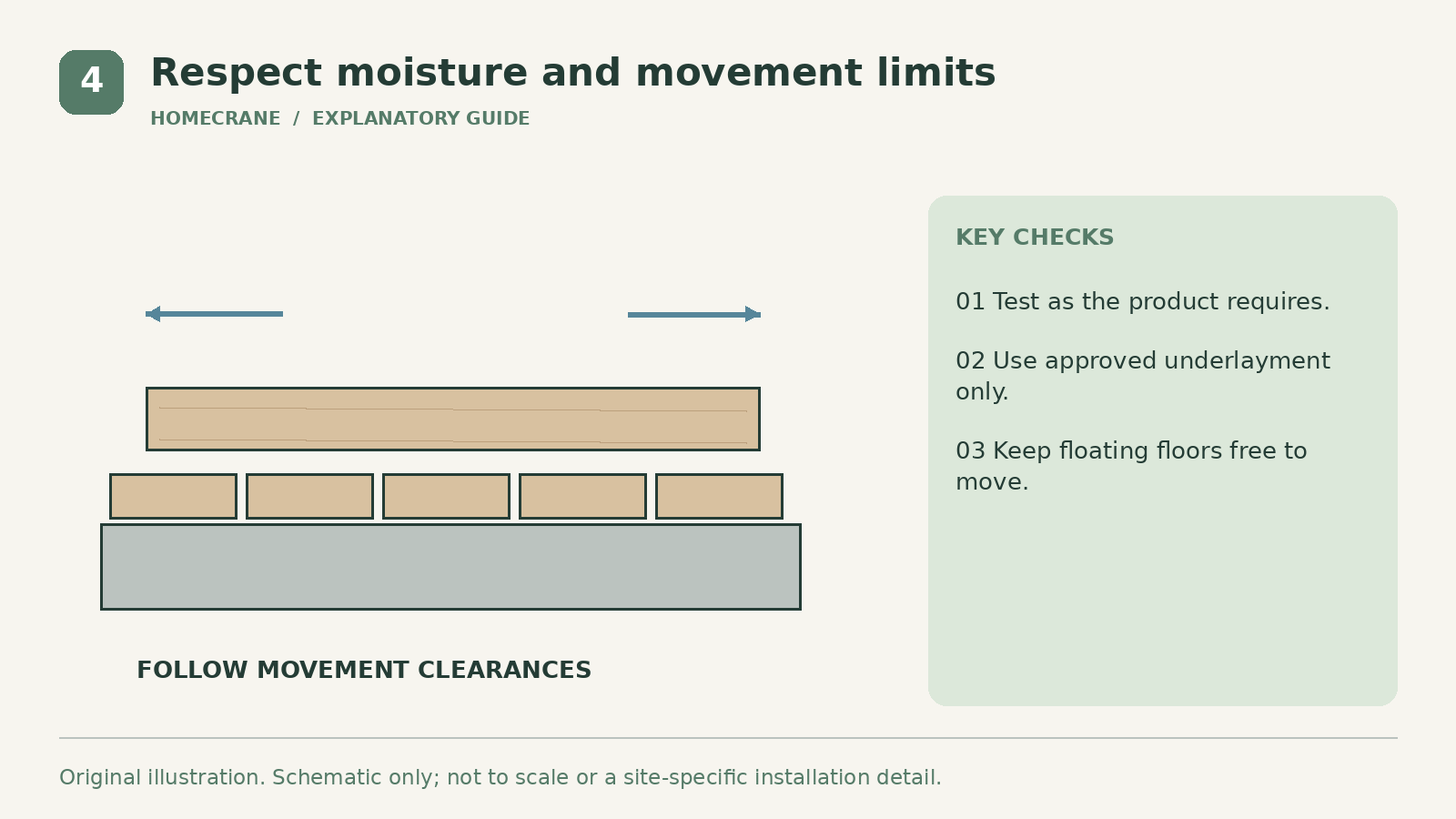
The tile surface does not establish that the slab or subfloor meets the new product's moisture limits. Follow the required testing and any approved moisture-control method. Do not assume a vapor barrier can solve every dampness problem.
Confirm the room's operating temperatures and sunlight exposure. An unconditioned porch or a room with intense direct sun may need a specifically approved product. Installation conditions and long-term service conditions can be different.
For a floating floor, maintain the specified perimeter and fixed-object clearances. Do not fasten through the planks or trap them under cabinetry unless the exact system allows the detail. Follow row layout, joint staggering, and transition requirements from the manual.
Keep the product instructions and photographs of preparation. Record any moisture results and the patching materials used. These details help with warranty questions and future repairs more than a photograph of the finished room alone.
Decide whether overlay is actually economical
| Feature | Overlay outlook | |
|---|---|---|
| Stable tile, compatible product, suitable height | Often worth evaluating | |
| Wide or recessed joints | Preparation may be needed | |
| Loose tile or recurring cracks | Diagnose before covering | |
| Tight appliance or door clearance | Resolve height conflict first | |
| Moisture outside product limits | Correct the condition or change the plan |
An overlay can save demolition and disposal, but preparation, transitions, and appliance adjustments still cost money. Compare a complete overlay quote with removal and replacement if extensive leveling is required.
Will grout lines show through?
They may affect appearance or support depending on the product and joint profile. Follow the exact grout preparation requirements rather than relying on plank thickness alone.
Can I use any waterproof vinyl?
No. Waterproof marketing usually describes a material property, not approval for every substrate, room, or moisture condition.
Is adhesive better than a floating floor?
The appropriate method depends on the product and project. Both need suitable preparation, and each has distinct restrictions. Choose the system first, then prepare to its requirements.
Sources
- Shaw's vinyl installation guidance. Checked October 11, 2026
Share this article
Get new guides by email
Practical home articles and free resources. No spam, and you can unsubscribe at any time.
Keep reading
Painted Bathroom Ceramic Floor Tile: What to Check After One Year
Painting ceramic bathroom floor tile can be a cosmetic alternative to replacement when the tile is sound and the coating system permits the application. A.
October 2026, 3 min read

The Easiest DIY Flooring to Install for Total Beginners
Compare five beginner-friendly flooring approaches, with illustrations, subfloor checks, installation tradeoffs, and a practical buying checklist.
October 2026, 4 min read
How to Fix Squeaky Hardwood Floors Underneath Carpet
Find the cause of squeaks beneath carpet, confirm the hidden floor layers, and choose a suitable repair while protecting the hardwood underneath.
October 2026, 4 min read