How to Fix Squeaky Hardwood Floors Underneath Carpet
Find the cause of squeaks beneath carpet, confirm the hidden floor layers, and choose a suitable repair while protecting the hardwood underneath.
By Home Crane Editors. . 4 min read.

To fix a squeak beneath carpet, first identify which layer is moving. The noise may come from hardwood boards, a plywood subfloor, a connection to framing, or another part of the floor assembly. The appropriate repair follows that diagnosis. Driving a screw through the carpet before confirming the layers and hidden services can damage both the finish floor and the carpet.
If there is genuine hardwood underneath, preserving it should be part of the repair brief. A method marketed for carpet over plywood is not automatically suitable for carpet covering a wood floor you may want to expose later.
Why the Distinction Matters
The Squeeeeek No More instructions distinguish carpeted plywood or chipboard from hardwood. They specifically state that the kit's joist-finding screw is not designed to locate joists beneath hardwood. That warning rules out a common shortcut: copying the carpeted-subfloor method without checking what the carpet covers.
The useful first repair tool is a clear description of the problem. The five stages below help you gather it, select a suitable repair route, and avoid making a small noise problem harder to correct.
1. Map the Noise Without Making Holes
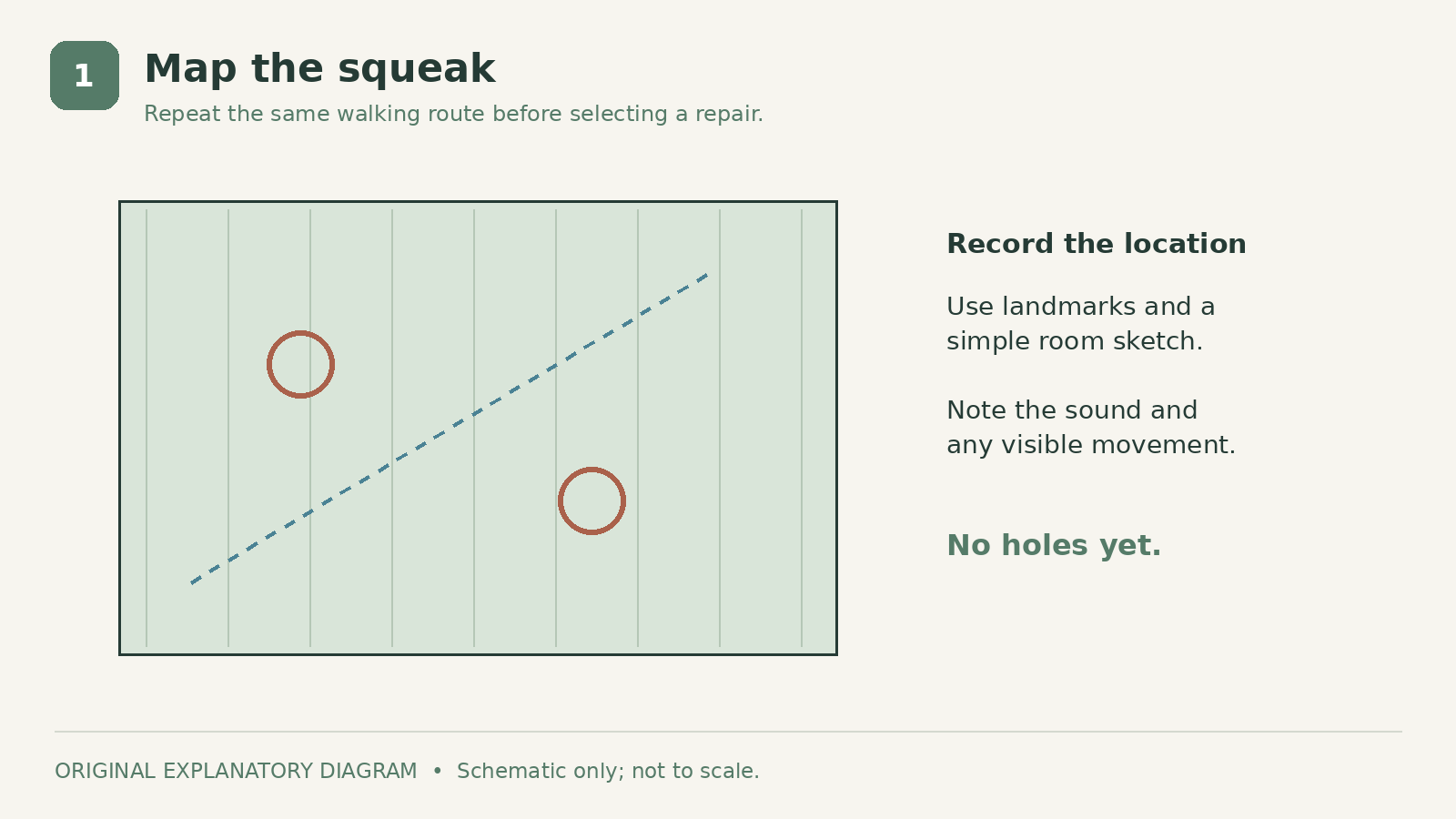
Walk slowly over the area under normal conditions and mark the noisy locations on a simple room sketch. Note whether one board-sized spot squeaks, several neighboring spots move, or the sound seems to come from a wall, pipe, or floor register. Use removable markers on the carpet only if they will not damage it.
Record whether the noise is constant or changes with the season. The National Wood Flooring Association's moisture guidance explains that wood responds to its environment by gaining or losing moisture. That does not diagnose every squeak, but it is a reason to mention recent leaks or major indoor-condition changes.
Do not bounce heavily on a suspect area to make the sound louder. If there is new sagging, softness, water damage, or pronounced movement, stop treating the issue as a cosmetic squeak and arrange a professional assessment.
2. Confirm the Layers Beneath the Carpet
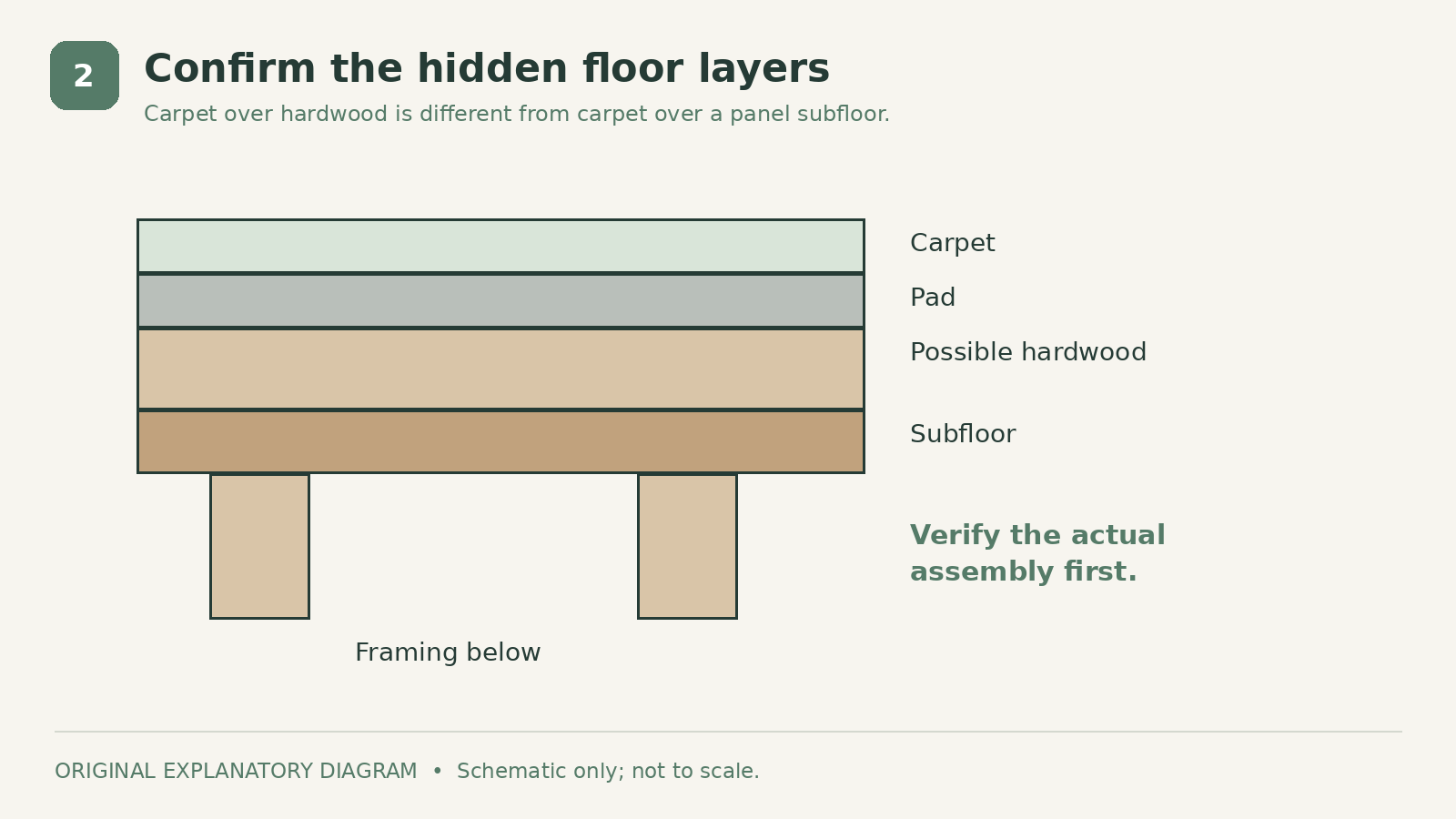
Look for existing information first: renovation photographs, previous flooring invoices, or an already exposed edge at an appropriate doorway or access point. A visible strip near one threshold does not prove that every part of the room has the same construction.
If the layers remain uncertain, ask a carpet installer or flooring professional to lift an appropriate section and restore it afterward. Carpet edges, seams, stretching, and tack strips need care. Randomly pulling up a corner can create another job and may still leave the noisy area hidden.
Write down the confirmed stack in order, such as carpet, pad, hardwood, subfloor, and framing. The exact arrangement may differ. Also identify the carpet type, especially loop pile, because penetrating threads can catch fibers. Do not use a general screw or substitute kit components to improvise a concealed repair.
3. Inspect Accessible Areas and Rule Out Damage
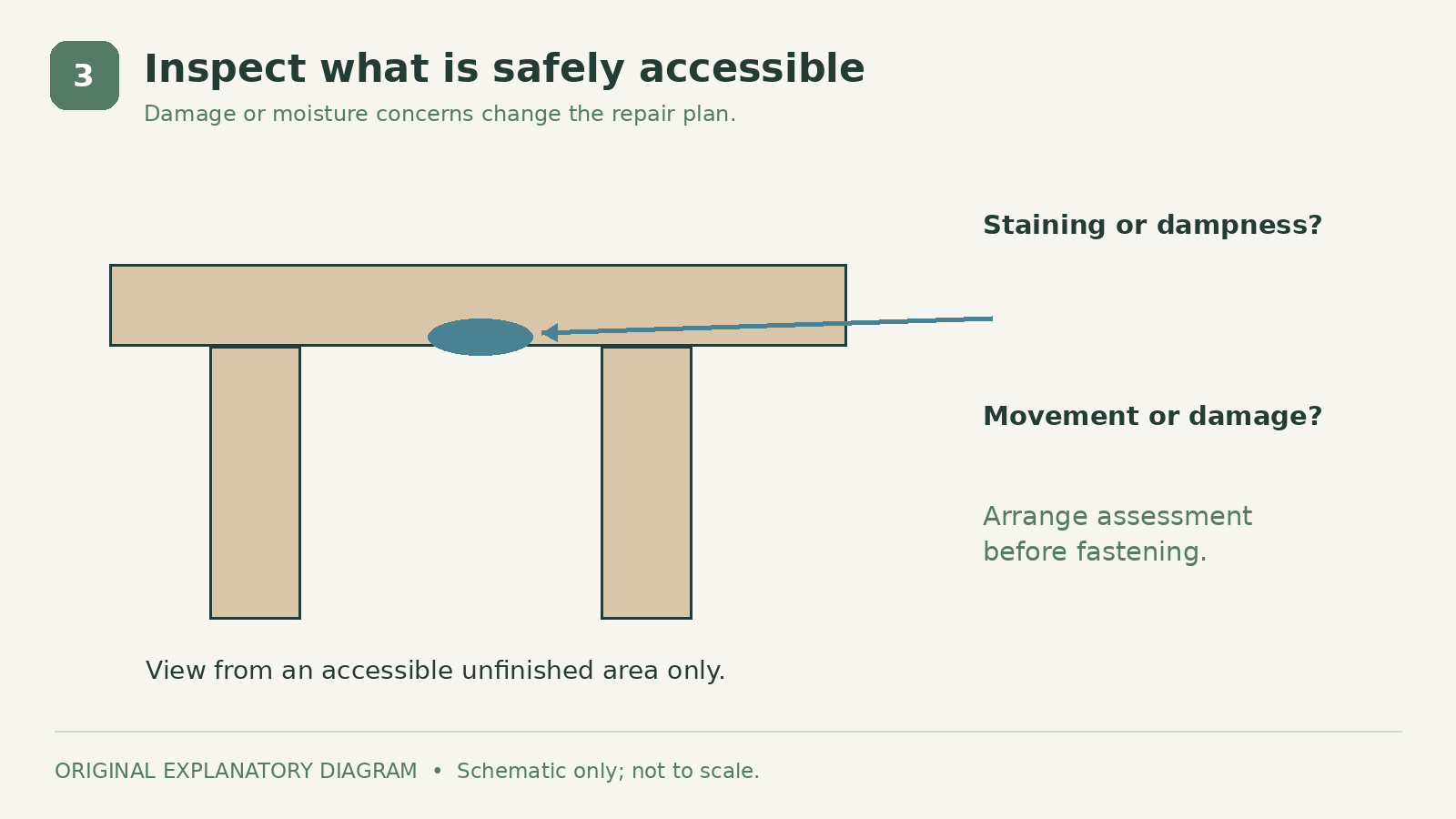
Where the underside is safely accessible from a normal basement area, have the noise located from above while the assembly is observed below. Look for visible movement, gaps, staining, or contact with building services. Do not enter an unsafe crawlspace or disturb wiring, pipes, or suspect materials to gain access.
An accessible view can help a professional decide whether the problem is at a board connection, a subfloor joint, or another interface. The American Hardwood Information Center describes different repair approaches depending on access and floor conditions. The choice should follow the observed movement.
Ask whether the proposed work treats the source or merely tightens a nearby layer. Forcing shims into an unverified gap can alter the floor rather than gently support it. Likewise, a fastener of an assumed length can enter a service or appear through a finished surface. Those details need to be established, not guessed.
4. Choose a Repair Matched to the Actual Floor
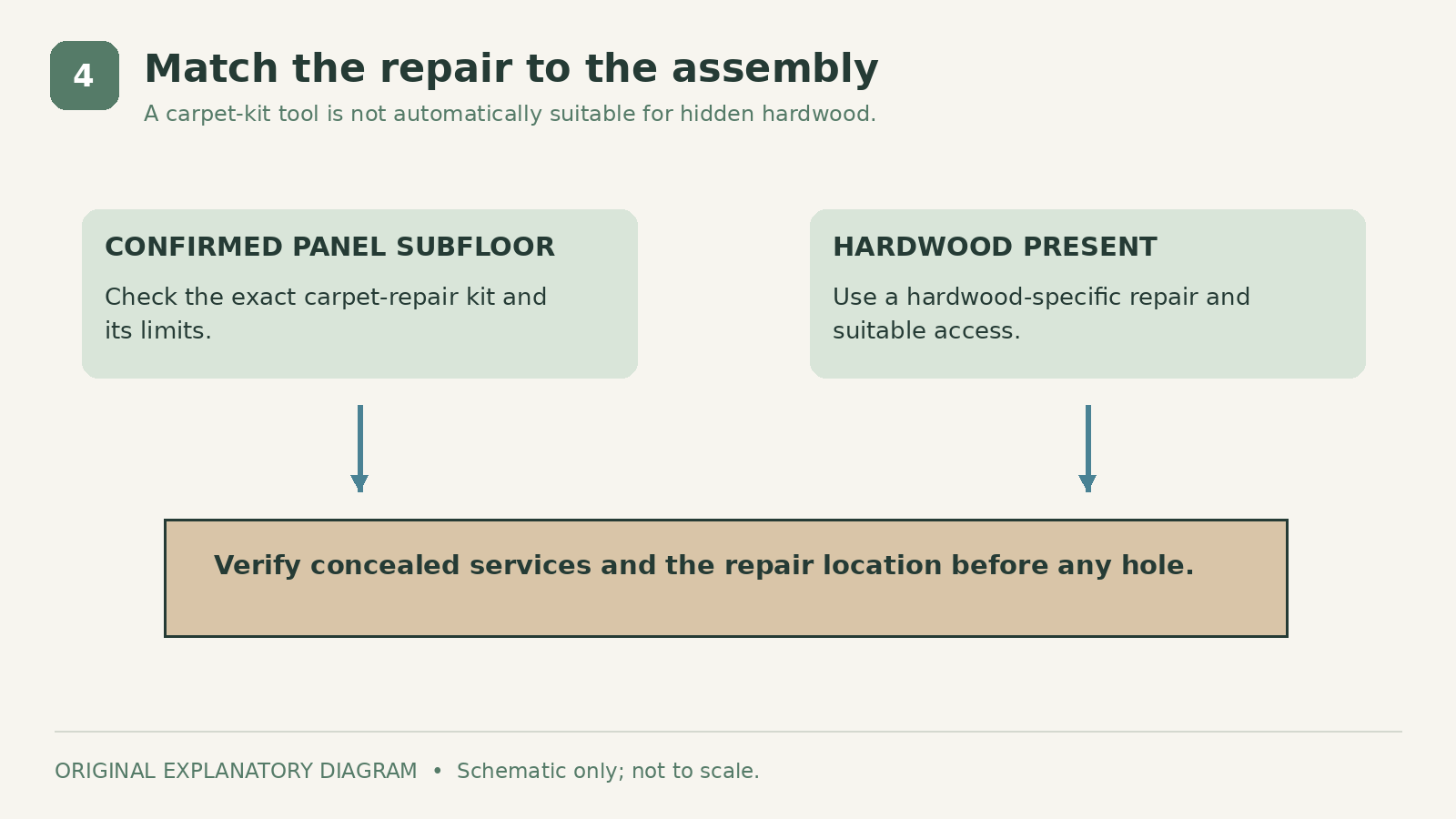
If the issue is an accessible subfloor-to-framing connection, a carpenter may use a suitable support or fastening repair from below. If the hardwood itself needs attention, lifting the carpet to work directly on the affected boards may preserve more control over placement and finish repair.
A proprietary through-carpet system is another possibility only when its manufacturer confirms the actual floor stack and carpet type are appropriate. Follow the complete system and its current instructions. The supplied depth control, special fasteners, and floor-specific method are not interchangeable with ordinary screws and an estimated stopping point.
When the assembly is unknown, services cannot be ruled out, or the hardwood has value as a future exposed floor, choose inspection and targeted access before blind fastening. This may take longer than an advertised quick fix, but it makes the repair reviewable and reduces the chance of an avoidable surface defect.
5. Retest and Restore the Carpet Properly
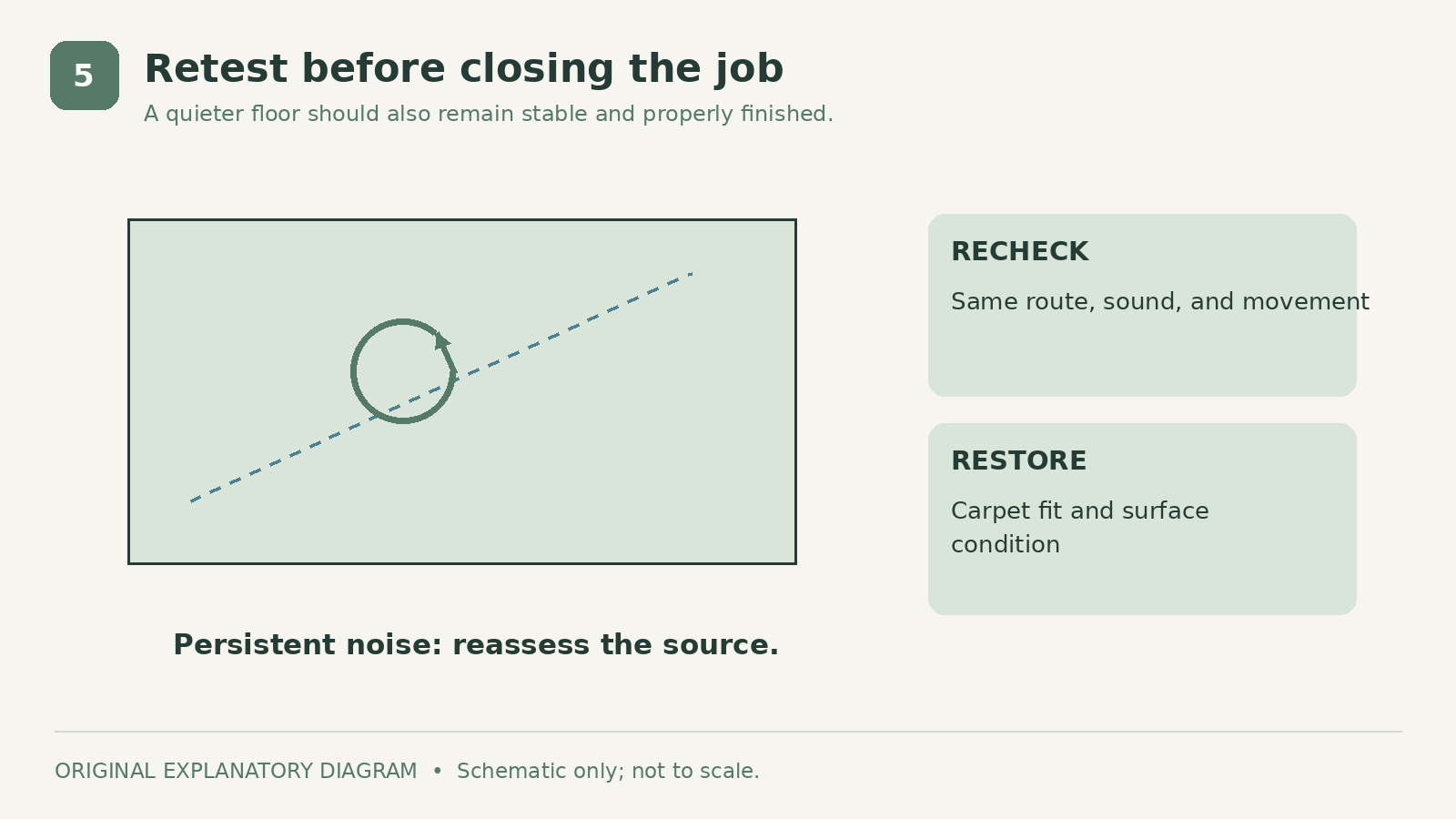
After the selected repair, walk the same route with normal pressure and compare it with your original sketch. Check neighboring areas as well as the loudest spot. The goal is a stable improvement without introducing new movement, a raised area, or a sharp projection.
For any proprietary repair, complete its required final inspection and account for all removed parts. Do not leave broken fastener pieces in carpet fibers. If the carpet was lifted, have it refitted and stretched appropriately so the floor is usable and the edge or seam is secure.
Keep a brief record of where work was done and which method was used. That information is useful if the carpet is removed in the future. If the squeak returns, revisit the diagnosis rather than adding a pattern of extra fasteners across the room.
Choose the Route by What You Know
| Feature | Sensible next move | |
|---|---|---|
| Layers are unknown | Establish the floor stack before making holes | |
| Carpet over plywood or chipboard | Assess a compatible subfloor repair system and hidden-service risk | |
| Carpet over hardwood worth preserving | Consider controlled carpet lifting and a targeted wood-floor repair | |
| Underside safely accessible | Inspect the moving connection before selecting a repair | |
| Softness, sagging, or water damage | Arrange professional assessment before cosmetic work |
What to Tell the Flooring Professional
Provide your noise map, photographs of any exposed layers, the history of leaks or flooring changes, and whether you intend to uncover the hardwood later. Ask whether the proposal includes carpet lifting, refitting, finish touch-up, and any work below the floor.
A squeak alone does not identify a structural defect, and a quick fastening method does not resolve every cause. Establish the layers, locate the moving connection, and use a repair designed for that specific situation. That is the best route to a quieter floor without sacrificing the hardwood underneath.
Sources
- O’Berry Enterprises / Squeeeeek No More: Snm Instructions Carpet Kit. Checked October 5, 2026
- National Wood Flooring Association: Problem Prevention. Checked October 5, 2026
- American Hardwood Information Center: Fixing Cracks Squeaks Hardwood Floors. Checked October 5, 2026
Share this article
Get new guides by email
Practical home articles and free resources. No spam, and you can unsubscribe at any time.
Keep reading
Painted Bathroom Ceramic Floor Tile: What to Check After One Year
Painting ceramic bathroom floor tile can be a cosmetic alternative to replacement when the tile is sound and the coating system permits the application. A.
October 2026, 3 min read

The Easiest DIY Flooring to Install for Total Beginners
Compare five beginner-friendly flooring approaches, with illustrations, subfloor checks, installation tradeoffs, and a practical buying checklist.
October 2026, 4 min read

The Best Waterproof Flooring Options for Basement Bathrooms
Compare five basement bathroom flooring options, with matching images and practical checks for moisture, substrate preparation, and product approval.
October 2026, 5 min read