Cordless Tool Battery Safety: Charging and Storage Basics
Lithium-ion batteries power most cordless tools, and while they are generally safe when handled correctly, damaged or improperly stored batteries have caused fires. Here are the habits that keep them safe.
By Home Crane Editors. . 3 min read.
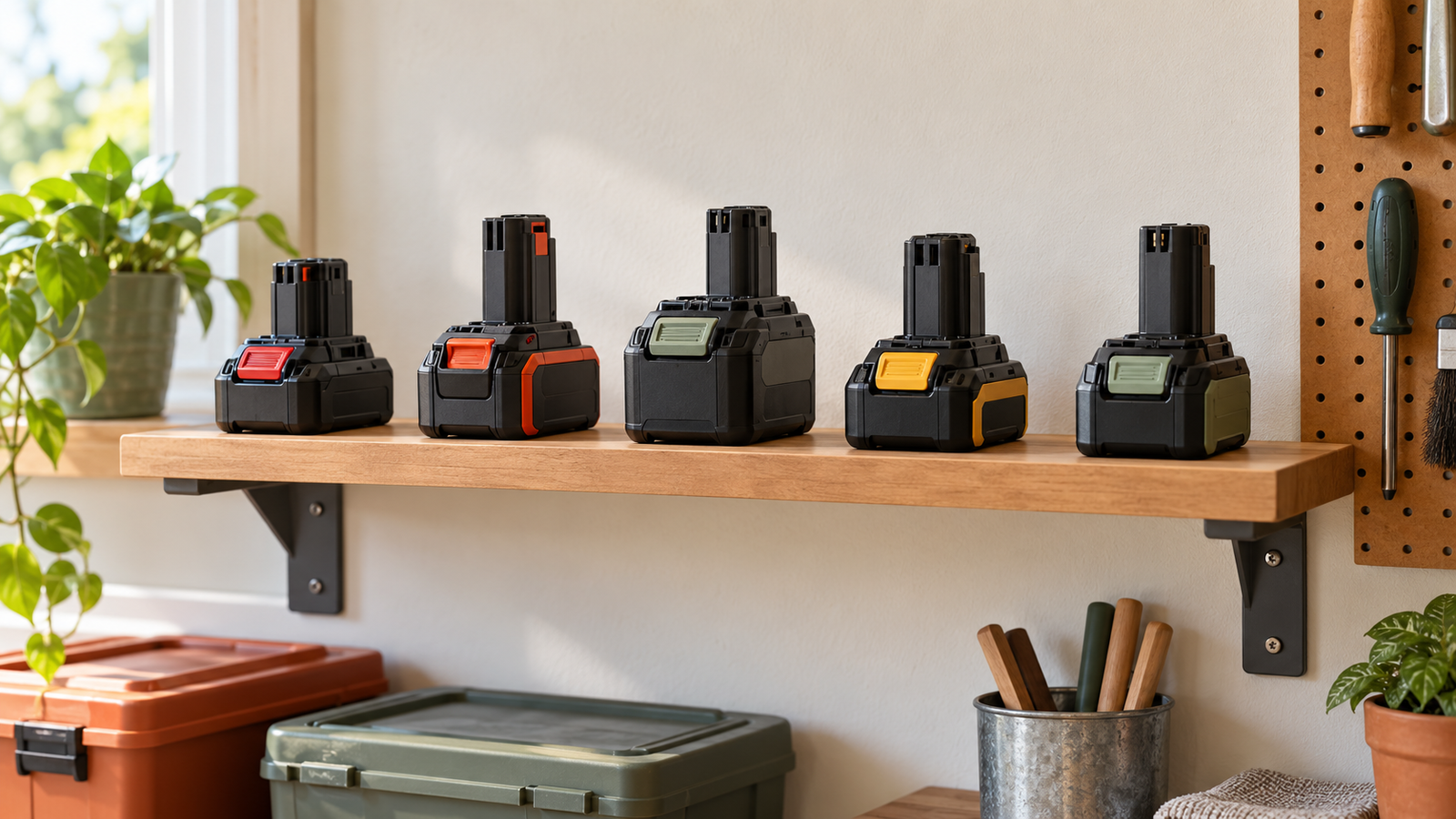
Conceptual illustration of proper battery storage.
Most cordless power tools today run on lithium-ion batteries, which are generally safe under normal use but carry a real fire risk when damaged, charged improperly, or stored in poor conditions. Fire departments across the country have responded to home fires traced to lithium-ion batteries, including tool batteries, which is why manufacturers and safety organizations publish specific charging and storage guidance rather than treating these batteries like any other household item.
Why lithium-ion batteries carry this risk
A lithium-ion battery stores a large amount of energy in a small package, which is exactly what makes cordless tools practical. That same energy density means that if a cell is damaged, defective or exposed to conditions outside its design range, such as extreme heat or physical puncture, it can enter a failure mode called thermal runaway, where the battery heats rapidly and can ignite. This is uncommon under normal handling, but the consequences when it does happen are serious enough that basic precautions are worth adopting as habits rather than treated as optional.
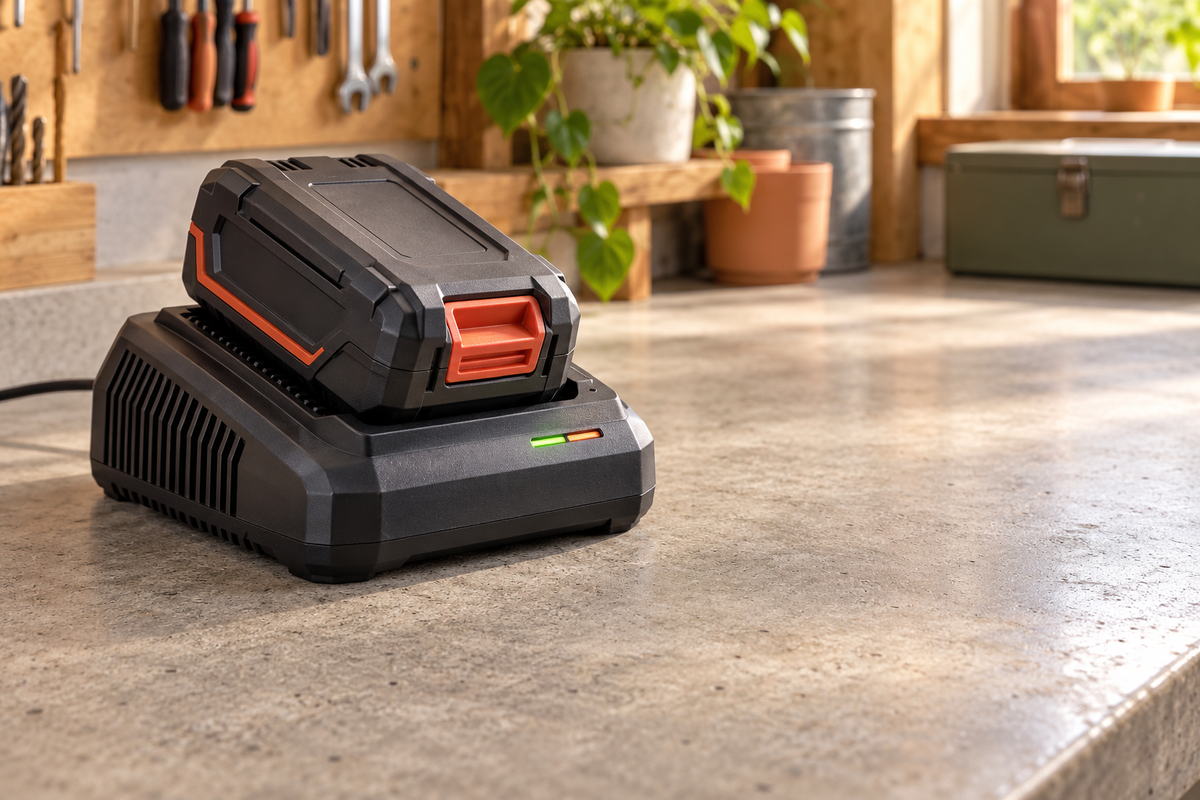
Charging habits
- Use only the charger designed for that specific battery and tool system. Mixing chargers and batteries from different product lines or manufacturers, even when they physically fit, can bypass safety features built into the matched pair.
- Charge batteries on a hard, non-flammable surface, not on a bed, carpet, or paper-covered workbench.
- Avoid charging unattended overnight or while away from home for extended periods, particularly for older batteries or ones you have not used recently.
- Stop using and charging any battery that feels unusually hot, has visibly swollen, or shows a cracked or damaged casing.
- Do not charge a battery that has been dropped from a significant height or otherwise physically impacted until it has been inspected, since internal damage is not always visible from outside.
Storage habits
- Store batteries at room temperature, away from direct sunlight and away from sources of heat such as a garage wall that gets hot in summer sun.
- Keep batteries away from flammable materials during both storage and charging, since a failure, though rare, can ignite nearby combustibles quickly.
- Avoid storing batteries fully depleted for long periods. Manufacturer guidance commonly recommends storing lithium-ion batteries at a partial charge rather than empty or completely full for extended storage.
- Keep the original manufacturer's storage case if one was included, since these are often designed with some protection in mind.
Extreme temperature exposure
Leaving a battery in a hot vehicle, direct summer sun, or a freezing unheated shed for extended periods can degrade its capacity over time and, in more severe cases, increase risk. Manufacturer guidance commonly recommends a moderate temperature range for both storage and charging, and using or charging a battery immediately after it has been extremely cold or extremely hot is generally discouraged until it returns closer to room temperature.
| Feature | What to do | |
|---|---|---|
| Unusual heat during charging or use | Stop charging or using it immediately, move it away from flammable materials, and let it cool in a safe location | |
| Swelling or a bulging case | Stop use immediately. Do not attempt to charge it again | |
| Cracked or damaged casing | Stop use, handle carefully, and follow manufacturer or local hazardous waste disposal guidance | |
| Unusual smell during charging | Disconnect if safely possible and move away from the area |
Batteries also naturally lose some capacity over their lifespan even with perfect handling, so a battery that no longer holds a useful charge after several years of normal use is not necessarily a defect. This is a normal part of lithium-ion battery aging, separate from the safety warning signs described above.
For tools used seasonally, such as a leaf blower or hedge trimmer, check the battery's condition at the start of the season before relying on it for a job, rather than discovering a problem mid-task. A quick visual inspection for swelling or casing damage takes only a moment and is a reasonable habit to build into seasonal tool checks alongside sharpening blades or checking fuel for gas-powered equipment.
Disposal matters too
Lithium-ion batteries should never go in regular household trash or curbside recycling. Damaged or end-of-life batteries can ignite in a garbage truck or recycling facility if crushed or punctured. Most communities have a battery recycling program, and many hardware and home improvement retailers accept used tool batteries for proper recycling. Check your local municipal waste guidance or a retailer's in-store recycling program before disposing of an old battery.
Your takeaway: charge tool batteries only with their matched charger on a hard, non-flammable surface, store them at room temperature away from direct heat, and treat any battery that feels hot, swollen or damaged as a reason to stop using it immediately rather than a minor inconvenience to work around.
Frequently asked questions
Can I use a different brand's charger if it fits my battery?
This is generally not recommended. Matched battery and charger systems are designed with specific safety features that may not function correctly with a mismatched combination, even if the physical connection works.
Is it safe to leave a tool battery charging overnight?
Many modern chargers include automatic shutoff once a battery is full, but manufacturer guidance and fire safety organizations generally recommend avoiding unattended charging for extended periods, particularly with older or damaged batteries, as an added precaution.
Share this article
Get new guides by email
Practical home articles and free resources. No spam, and you can unsubscribe at any time.
Keep reading

15 DIY Craft Room Pegboard Tool Organization Ideas
Organize your creative workspace with 15 DIY craft room pegboard ideas for thread, ribbon, brushes, tools, yarn, paper rolls, and project supplies.
November 2026, 10 min read

14 Easy Garage Wall Tool Storage Ideas That Are Budget Friendly
Organize your garage on a budget with 14 wall storage ideas for hand tools, cords, shelves, pegboards, hooks, bins, and long-handled equipment.
November 2026, 9 min read

12 Beginner Gardening Tool Kit Essentials List Items
Build a practical starter garden kit with 12 beginner gardening tools, from a hand trowel and pruners to gloves, watering gear, and plant labels.
November 2026, 7 min read