Cost to Clear Land for Building a House in Virginia: A Detailed Breakdown
Compare Virginia land-clearing scope, stump removal, site preparation, and local approval considerations with a clear illustrated budget and quote checklist.
By Home Crane Editors. . 4 min read.
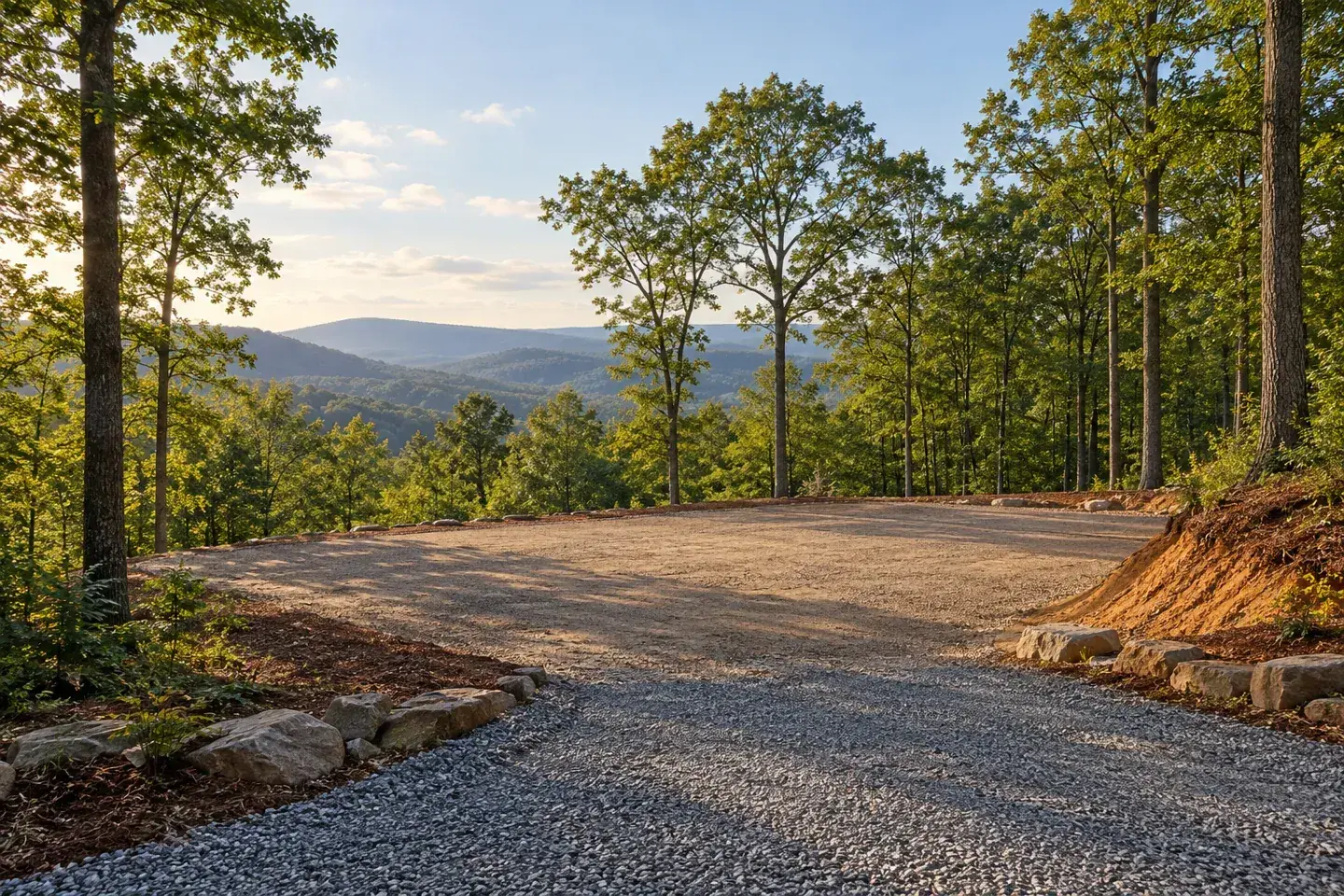
Clearing a Virginia homesite can cost a few thousand dollars for light vegetation or exceed $10,000 for a heavily wooded lot. There is no defensible statewide “exact cost” without inspecting the site. A useful estimate must identify the area being cleared, the fate of stumps and debris, and whether grading and erosion controls are included.
For context, Richmond-area contractor R.L. Elliott publishes 2026 ranges of $1,500–$3,500 for a lightly vegetated quarter- to half-acre residential lot and $5,000–$12,000 or more for a heavily wooded half- to one-acre lot. These are one contractor's planning figures, not a Virginia-wide average or a binding quote.
1. Define the land you actually need cleared
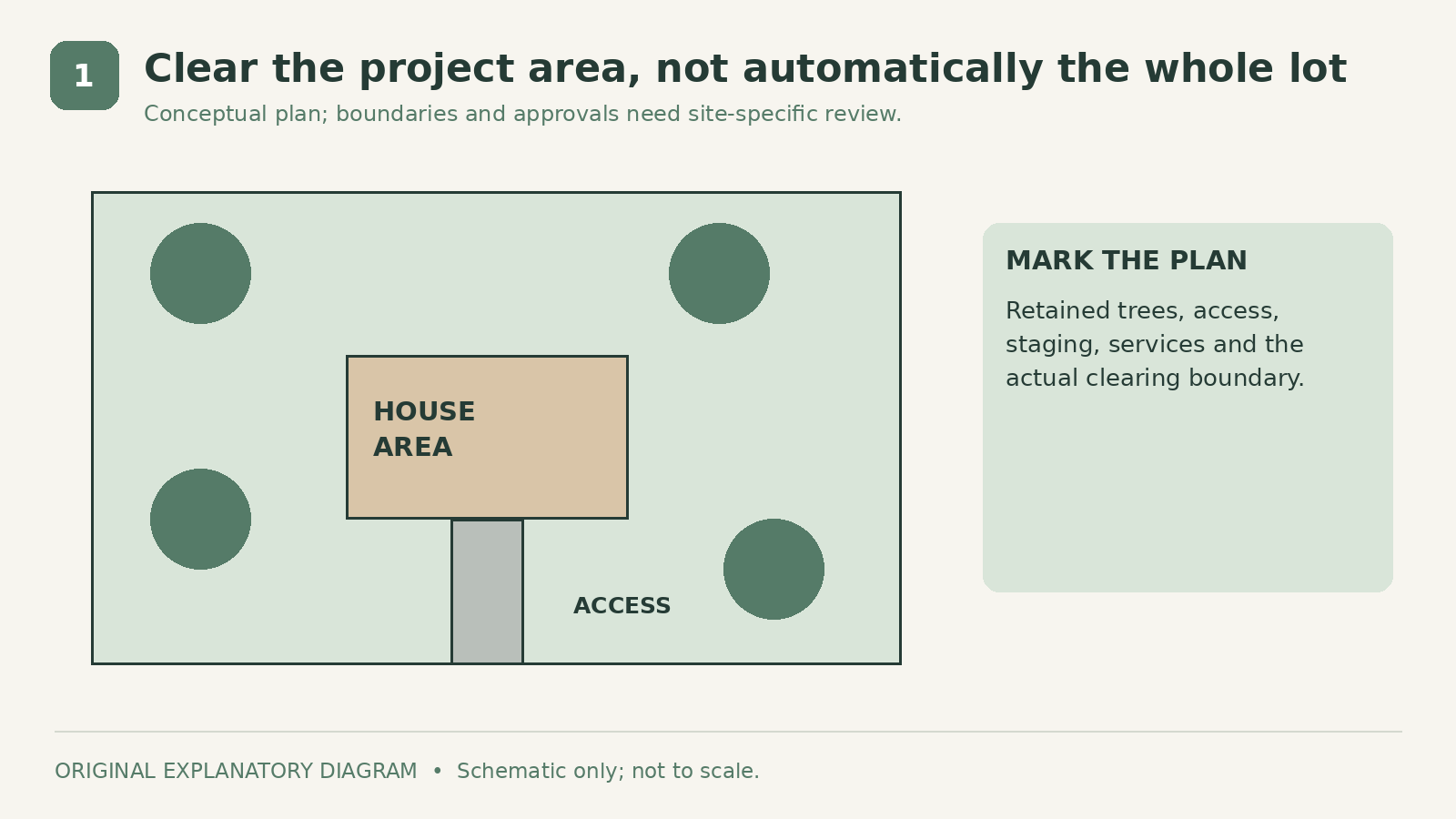
Start with a proposed site layout, not the acreage on the listing. A five-acre property does not necessarily need five acres cleared. The building, access route, utilities, septic area, construction staging, and future outdoor use establish the working scope.
Mark trees to retain before discussing equipment. Ask the builder and arborist how root areas will be protected. A tree left standing can still be compromised by traffic, excavation, or material storage around it. The drawing should distinguish permanent clearing from temporary access.
Give each bidder the same marked plan. Label the proposed house location, boundary information, overhead lines, known underground services, and areas that should remain untouched. Unknown boundaries need resolving before a crew mobilizes.
Fairfax County's land-disturbance guidance explains that clearing is land disturbance and that calculations can include working areas beyond the building footprint. Its local rules should not be transferred to another Virginia county. Ask your own locality which plans and approvals apply to the complete disturbance area, including access and stockpiles.
A smaller, carefully chosen clearing footprint is often a better starting brief than a request to “clean up everything.”
2. Compare clearing with complete site preparation
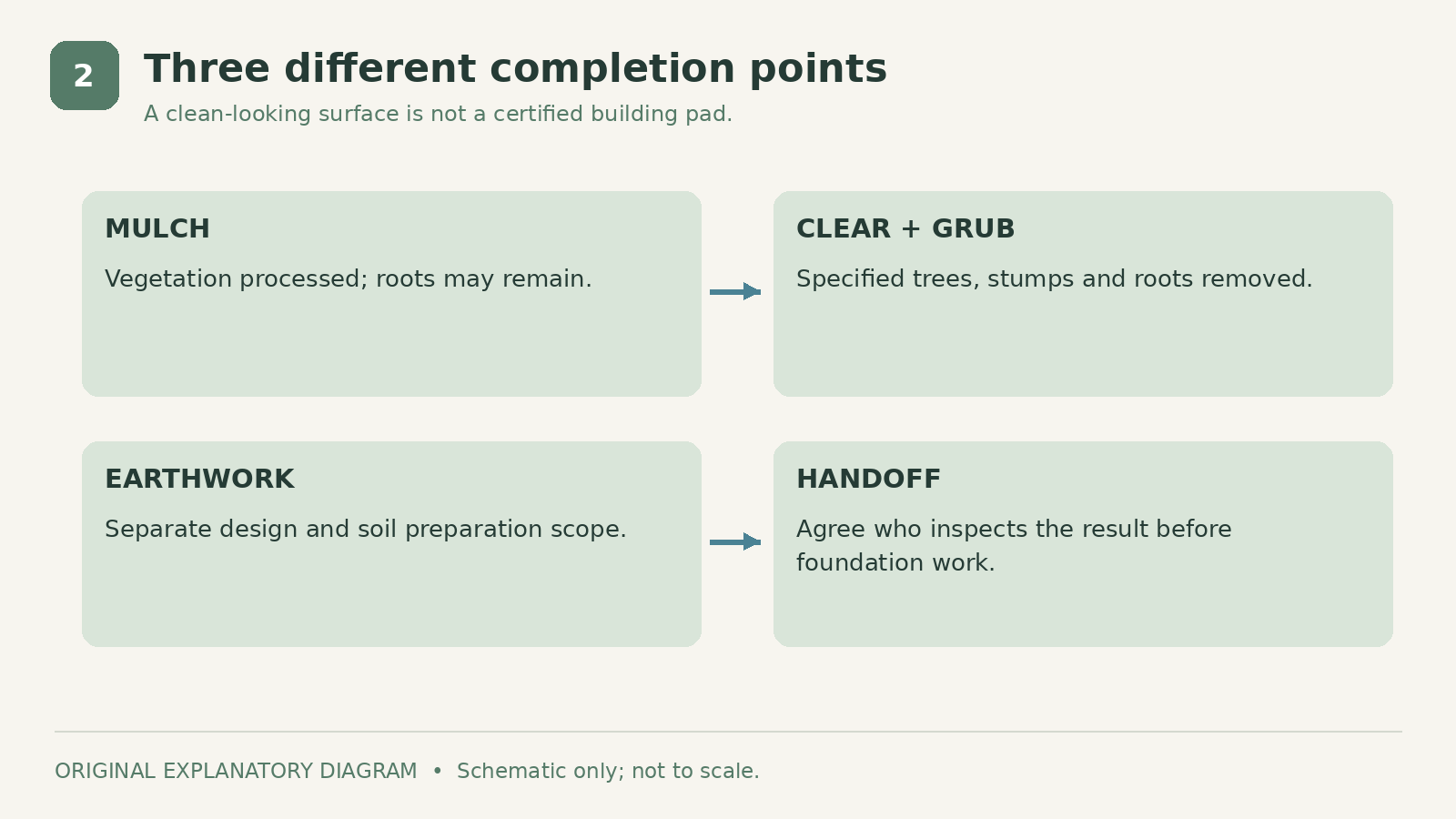
Forestry mulching, clear-and-grub work, and a finished building pad are different deliverables. Mulching may leave roots and buried organic material in place. Grubbing removes specified stumps and roots. Excavation and engineered fill preparation belong to a further scope determined by the proposed structure and soils.
Do not treat a neat surface as confirmation that it can support a house. Ask the builder or design professional what condition the ground must meet before foundation work starts. The clearing contractor's completion point should match that requirement.
Create three separate lines in the estimate: vegetation removal, below-ground removal, and subsequent earthwork. Then identify disposal or on-site processing within each line. This makes it harder for two apparently similar quotes to conceal different results.
If chips remain on the property, agree where they will be placed and who approves that location. Keeping material on site does not automatically make it suitable for a structural fill area.
For a phased project, put the handoff in writing. Who checks the cleared area, who repairs ruts, and who maintains temporary protection until the next contractor arrives?
3. Price the conditions that change the bid
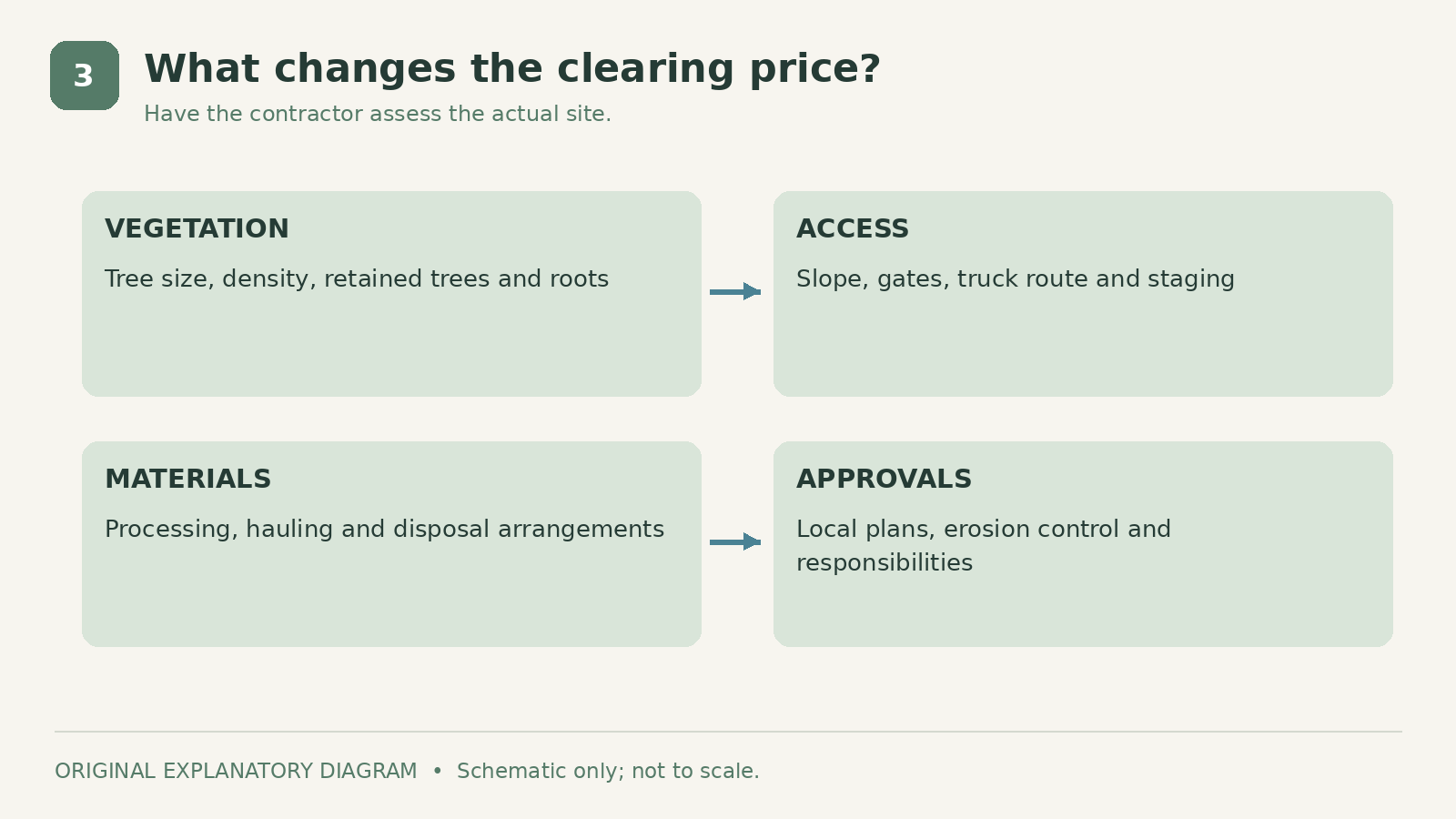
Tree size, density, slope, truck access, and disposal arrangements all belong in a site visit. A narrow residential entrance may affect equipment choice and handling. A proposed downhill building site can also need drainage and access decisions that an aerial photograph cannot answer.
Ask whether mobilization is included. If the job pauses while another trade works, a second equipment visit may carry another charge. Identify the assumed number of visits and the circumstances that trigger more.
Approval costs deserve their own allowance. Virginia DEQ's construction stormwater page describes permit coverage for disturbance of one acre or more and some smaller sites within a larger development plan. Local erosion-control requirements can apply separately and at smaller scales. Do not use the one-acre threshold as permission to begin work.
Potential timber value should be assessed, not deducted optimistically from the budget. Ask for a separate written valuation and handling arrangement if saleable timber is present. A credit is useful only when the species, quality, access, buyer, and costs make it real.
4. Build a transparent sample budget
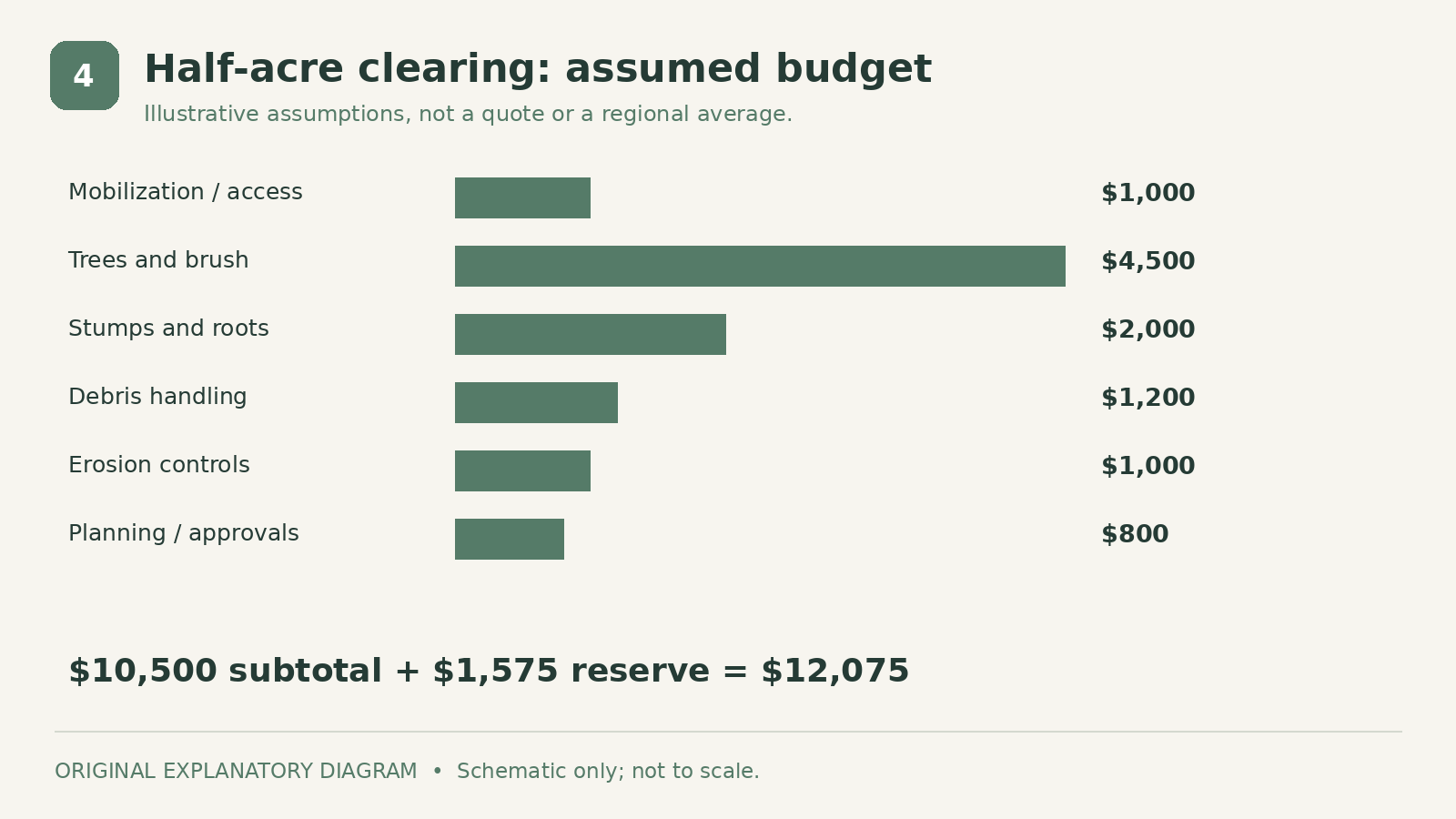
Consider this entirely hypothetical half-acre clearing project. The assumptions are usable equipment access, ordinary vegetation removal, specified stump extraction, no contaminated material, and no major rock excavation. Dollar figures are illustrative allowances, not measured local rates.
| Feature | Amount | |
|---|---|---|
| Mobilization and access protection | $1,000 | |
| Trees and brush removal | $4,500 | |
| Specified stump and root removal | $2,000 | |
| Debris handling and disposal | $1,200 | |
| Temporary erosion controls | $1,000 | |
| Planning and approval allowance | $800 | |
| Subtotal | $10,500 | |
| 15% contingency | $1,575 | |
| Planning total | $12,075 |
The example includes assumed labor, materials, equipment, disposal, and applicable charges within the named lines. It excludes land purchase, surveying beyond the allowance, house excavation, engineered retaining structures, permanent driveway construction, utility installation, and septic work.
The arithmetic is $10,500 × 15% = $1,575, then $10,500 + $1,575 = $12,075. Dividing by half an acre gives $24,150 per acre, but that figure should not be used to price a larger property. It bundles fixed and additional costs into a small project. That is precisely why a raw per-acre comparison can mislead.
5. Get a site-specific price in writing
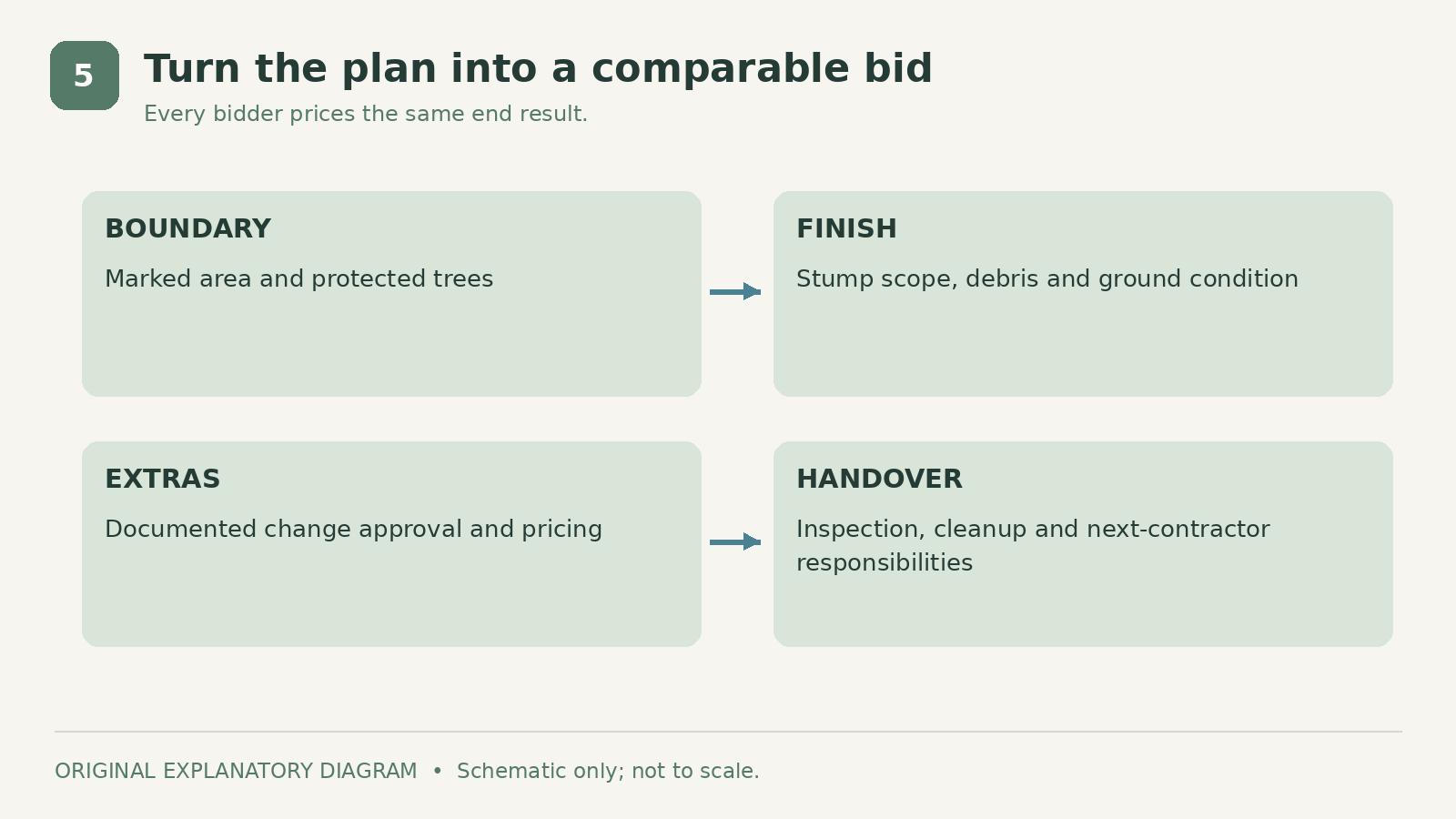
Request an itemized proposal tied to the marked plan. It should identify quantities or boundaries, disposal destinations, retained trees, exclusions, expected site condition at completion, and responsibility for approvals and inspections.
Ask how unknown conditions are priced. An hourly rate without an agreed approval process can be difficult to control. A useful contract explains who authorizes extra work, what evidence will be supplied, and whether an updated total must be accepted before proceeding.
Compare payment schedules alongside prices. Confirm insurance and the appropriate contractor credentials rather than assuming that a logo or large machine establishes either. Ask for references involving similar terrain and residential access.
Do not select a start date solely because a calendar month is described as “cheaper.” Actual soil conditions, weather, permit readiness, and the builder's sequence matter. A planned delay may be preferable to unnecessary disturbance before the rest of the project is ready.
Your next step is a shared site walk with the builder and clearing contractor. Bring one marked plan and ask every bidder to price the same end result. That produces an exact proposal for your land, which a statewide headline cannot supply.
Sources
- R.L. Elliott publishes 2026 ranges. Checked October 7, 2026
- Fairfax County's land-disturbance guidance. Checked October 7, 2026
- Virginia DEQ's construction stormwater page. Checked October 7, 2026
Share this article
Get new guides by email
Practical home articles and free resources. No spam, and you can unsubscribe at any time.
Keep reading

HVAC Replacement Cost in Texas: Hidden Fees to Check
Compare Texas HVAC replacement costs and hidden-fee risks, with equipment scope, duct assessment, installation allowances, and current incentive cautions.
October 2026, 4 min read
How Much Does a Lanai Screen Enclosure Cost in Florida?
Compare Florida lanai screen enclosure scopes, screen-area versus footprint pricing, frame and mesh choices, and a transparent sample budget.
October 2026, 4 min read
Stucco Repair Cost in Arizona: What Homeowners Should Know
Understand Arizona stucco repair pricing, surface damage versus concealed moisture, access, finish matching, and an illustrated repair budget.
October 2026, 5 min read