DIY Concrete Skim Coat Countertops Over Old Laminate: What to Know First
A concrete-look skim coat can change the appearance of an old laminate countertop, but it is not simply a matter of spreading any cement powder over a.
By Home Crane Editors. . 4 min read.
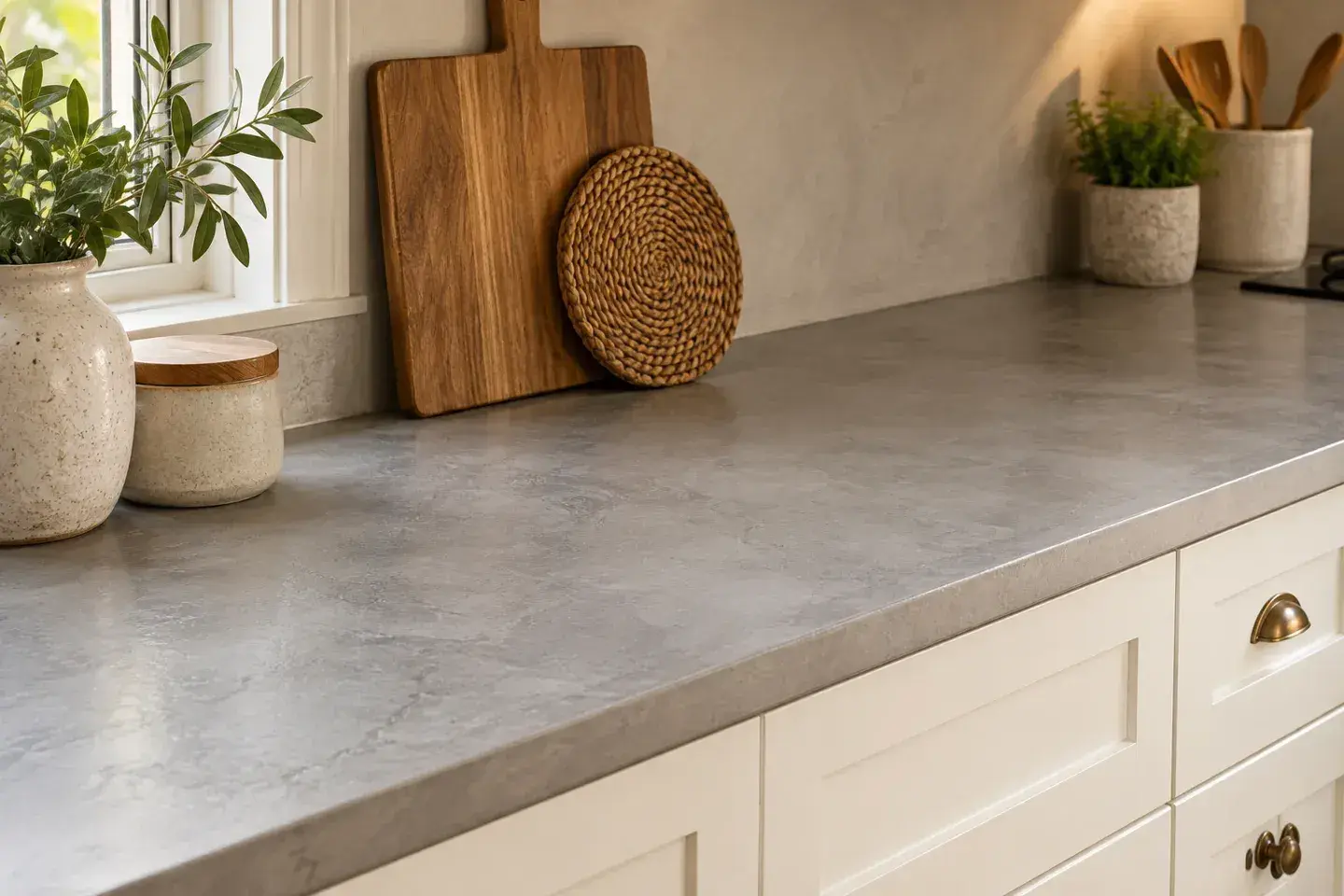
A concrete-look skim coat can change the appearance of an old laminate countertop, but it is not simply a matter of spreading any cement powder over a sanded surface. The laminate, supporting core, bond layer, overlay, and sealer must form a compatible system intended for countertop use.
This is a conditional planning and application guide. Proceed only with written product guidance for your exact substrate and complete assembly. If the manufacturer does not approve direct application over your laminate, use its specified alternative substrate or choose another renovation method. An attractive online result is not proof of compatibility or food-contact suitability.
1. Inspect the laminate and supporting core
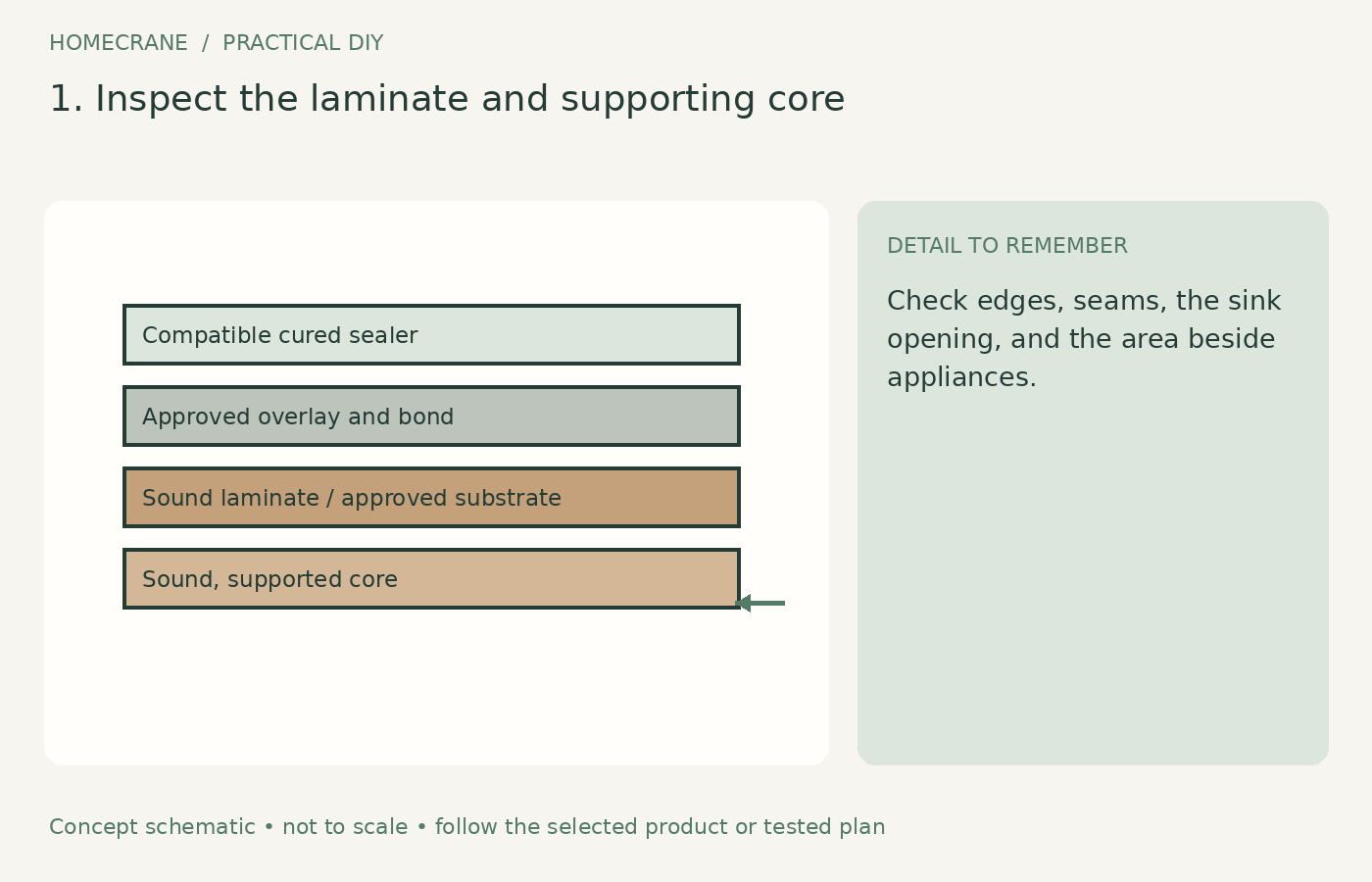
Check edges, seams, the sink opening, and the area beside appliances. Loose laminate, swelling particleboard, movement, and water damage are reasons to repair or replace the base rather than cover it. A thin overlay cannot restore a weakened countertop core.
Confirm that the counter is securely supported and that any intended additional layers will not interfere with the sink, faucet, backsplash, drawers, or appliance clearances. Even a thin build-up can change how a fixture fits.
Do not start by aggressively sanding an unidentified old assembly. Establish the materials and required preparation first. Removing a sink or disconnecting plumbing may be necessary for a sound edge detail; arrange appropriate help rather than coating around a failing seal.
2. Choose a complete countertop system
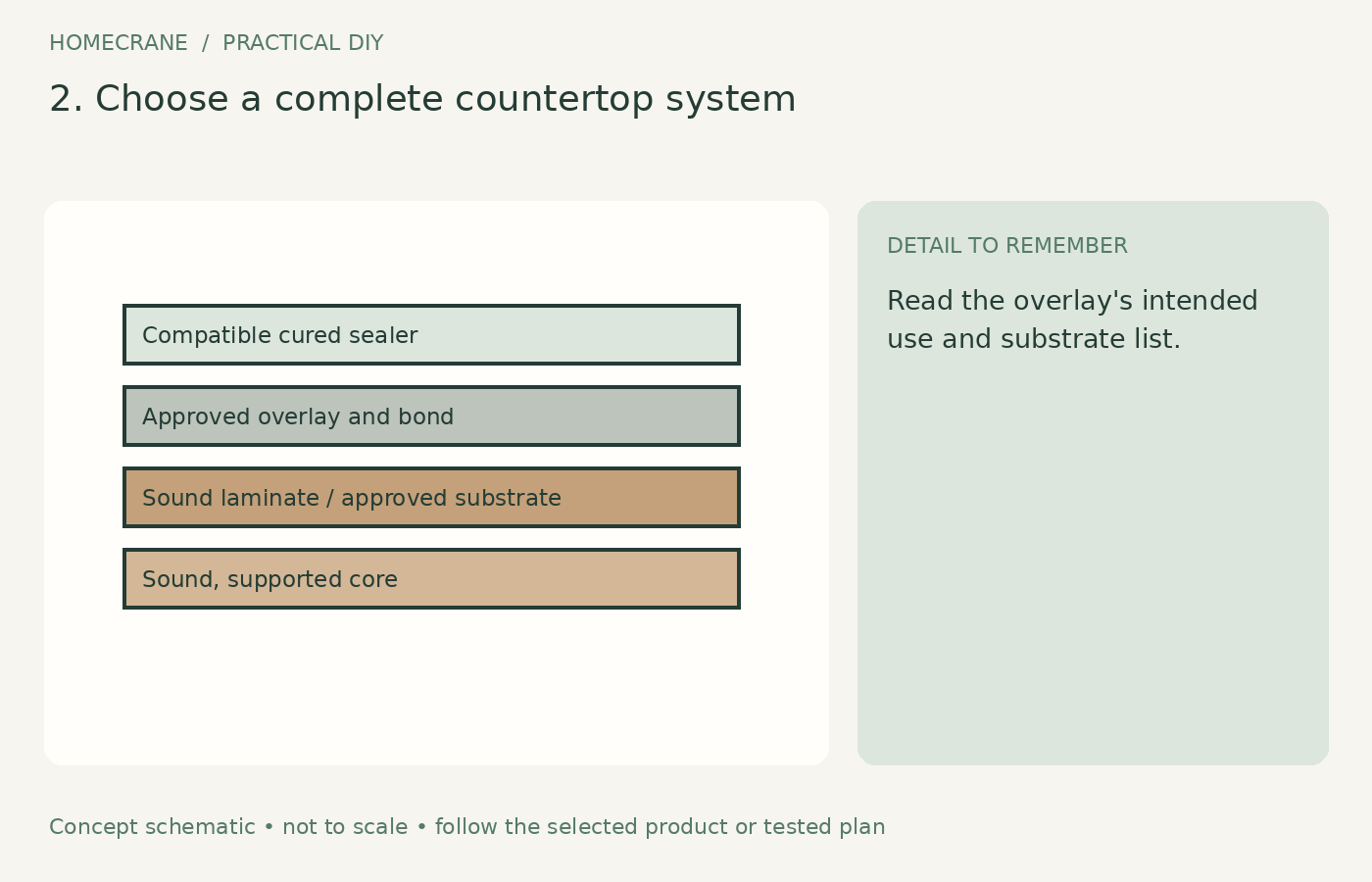
Read the overlay's intended use and substrate list. ARDEX FEATHER FINISH is described by its manufacturer as a floor-covering underlayment. Its popularity in countertop tutorials does not turn that description into manufacturer approval for a finished food-preparation surface.
SureCrete's MicroTek overview includes countertop applications but also directs users to technical guidance for the specific project. That does not automatically approve direct bonding to every laminate. Ask for the required substrate preparation, primer, reinforcement, thickness, and compatible sealer in writing.
Buy the system as a coordinated set. Mixing one brand's primer, another's overlay, and a random clear coat introduces compatibility questions that a beginner may have difficulty diagnosing later.
3. Make a sample and prepare the approved base
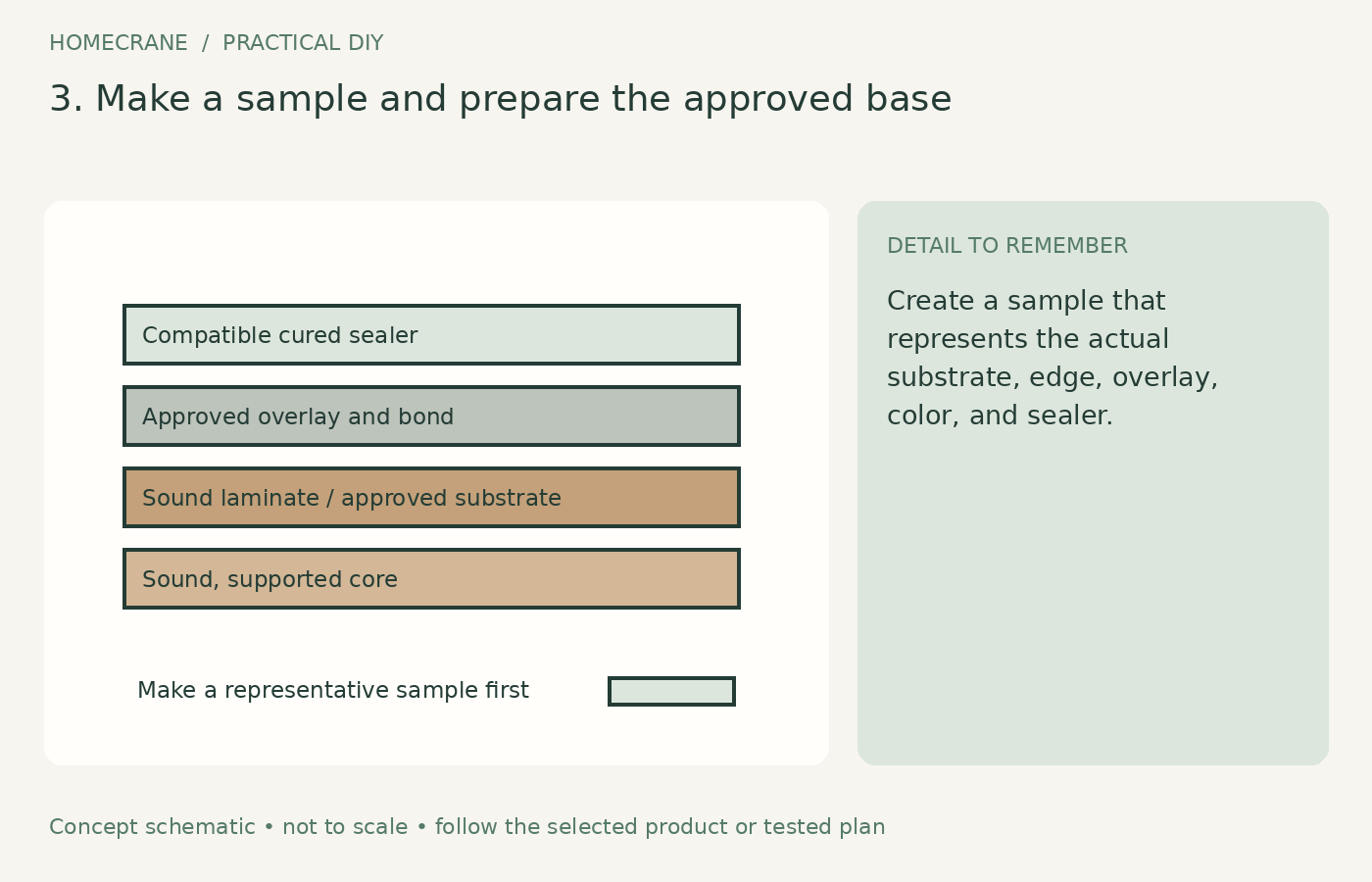
Create a sample that represents the actual substrate, edge, overlay, color, and sealer. Use it to practice troweling and see how the sealer changes the appearance. A raw gray sample can look very different after sealing.
Prepare the countertop exactly as the approved system requires. That may involve a specified bond layer, reinforcement, or a different substrate rather than direct application. Do not substitute a rough sanding job for a missing approval.
Protect nearby surfaces and use the dust and chemical controls required by the products. Cement-based materials and sanding operations can create harmful dust, and wet cement can irritate or burn skin. Follow the safety data and tool instructions rather than working barehanded because the layer is thin.
4. Apply controlled coats and respect the working time
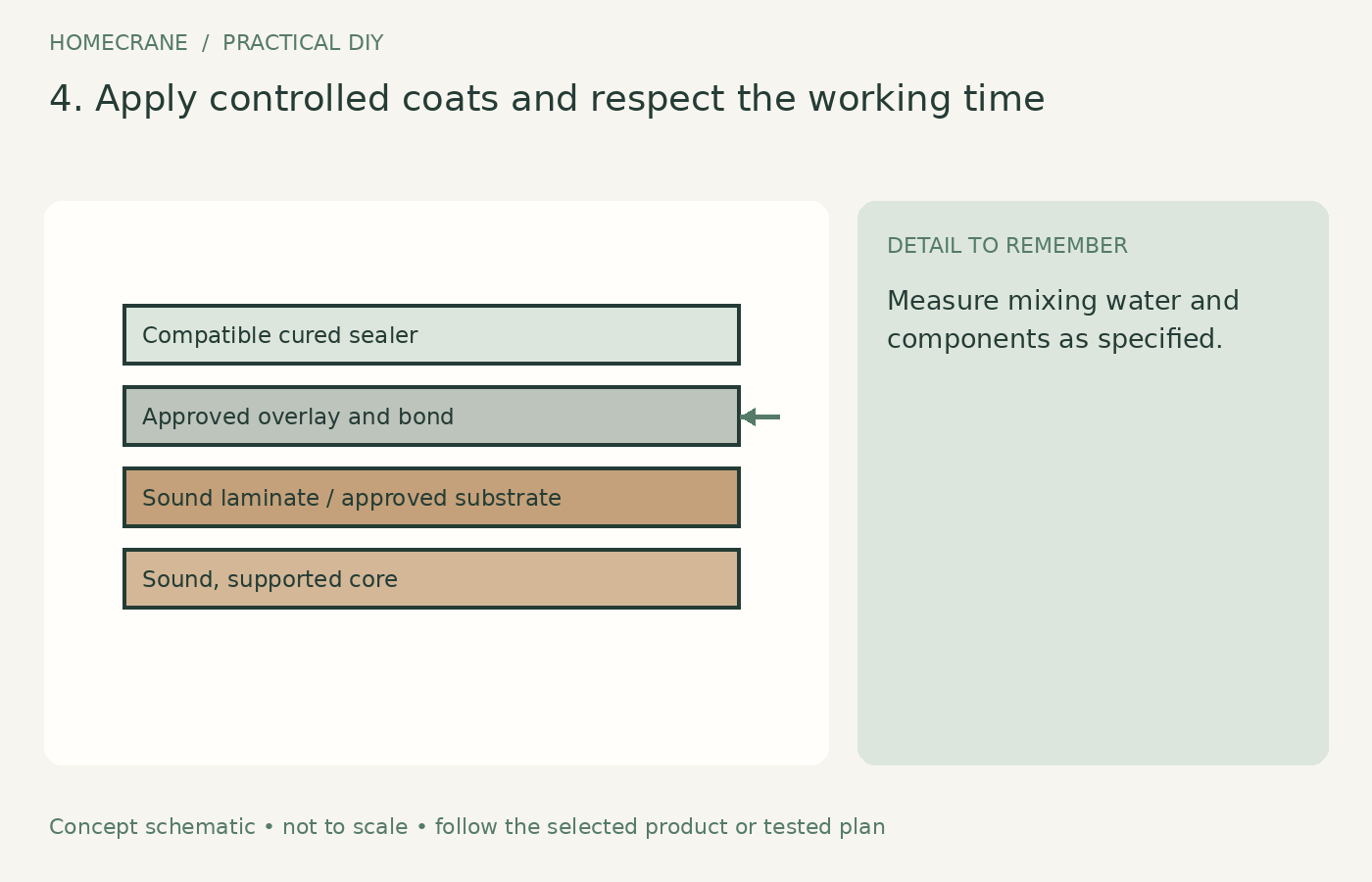
Measure mixing water and components as specified. Mix only what you can place within the working time, and do not revive stiffening material with extra water unless the manufacturer explicitly allows it. Inconsistent batches can change appearance and performance.
Apply the required thickness and number of layers with the recommended tools. Keep edges, corners, and sink details consistent with the approved system. A skim coat is not a structural patch for a large unsupported gap.
Follow the cure and intercoat preparation schedule. Do not sand every product by habit or switch between wet and dry preparation without checking sealer compatibility. Practice on the sample first so the countertop is not your first attempt at controlling trowel marks.
5. Seal, cure, and use it as a maintained surface
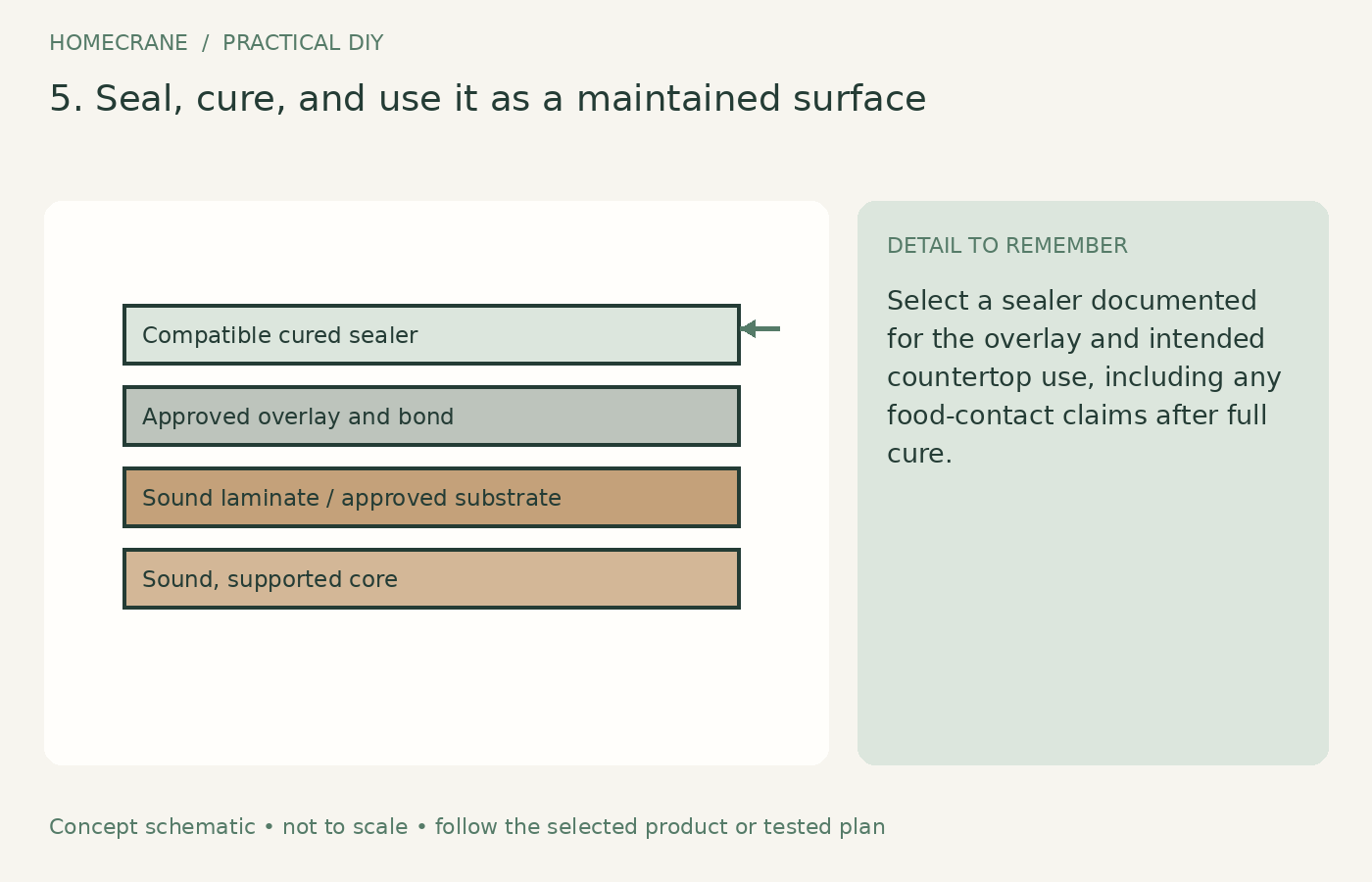
Select a sealer documented for the overlay and intended countertop use, including any food-contact claims after full cure. “Water-based” or “natural” does not establish food safety. The Concrete Countertop Institute's sealer FAQ explains product-specific performance and preparation considerations; those claims belong to that sealer, not every clear coating.
Apply and cure the sealer as instructed before normal use. Use cutting boards and trivets, wipe spills promptly, and follow the approved cleaner list. Do not assume a sealed cement surface tolerates direct cutting, hot pans, or prolonged acidic spills.
Keep a maintenance record and inspect edges and wet areas. If the finish chips or water reaches the substrate, obtain the system's repair guidance promptly. A decorative overlay requires care even when the initial result looks like a solid concrete slab.
Questions to ask before purchasing
| Feature | Why it matters | |
|---|---|---|
| Is my laminate assembly approved? | Establishes the bond and substrate route | |
| What preparation is required? | Prevents improvised layering | |
| Which sealer is compatible? | Affects stain, water, and food-contact performance | |
| How long is the kitchen unavailable? | Includes all cure stages | |
| How are chips repaired? | Determines future maintenance |
Budget for samples, preparation, sealer, fixture work, and downtime. The bag of overlay can be a small part of the total. Compare that full cost with a replacement laminate top or another suitable finish before choosing the concrete look.
Questions homeowners ask
Is a skim coat as strong as a poured concrete countertop?
No. It is a thin finish supported by the existing assembly. It does not provide the same structural behavior as a separately designed concrete countertop.
Can I use the counter the day after coating?
Only if every component's instructions permit the intended use by then. Overlay drying, sealer application, and full cure are separate stages. Do not confuse a surface that feels dry with one ready for food preparation and routine cleaning.
Sources
- ARDEX FEATHER FINISH. Checked October 11, 2026
- SureCrete's MicroTek overview. Checked October 11, 2026
- Concrete Countertop Institute's sealer FAQ. Checked October 11, 2026
Share this article
Get new guides by email
Practical home articles and free resources. No spam, and you can unsubscribe at any time.
Keep reading

DIY Fluted Headboard Made Out of Pool Noodles
Plan a decorative fluted headboard using covered foam channels, a stable backer, careful material checks, and secure independent mounting.
October 2026, 3 min read

4 Renter-Friendly Ways to Hang Curtains Without Drilling
Compare tension rods, adhesive curtain hooks, magnetic rods, and floor-to-ceiling systems for curtains in a rental without drilling.
October 2026, 3 min read
Genius Under-Stairs Pull-Out Storage Ideas You Can DIY
Explore five under-stairs storage approaches with practical guidance on access, drawer hardware, stability, and existing openings.
October 2026, 3 min read