How to Create a Stunning DIY Indoor Plant Wall
Build a manageable indoor plant wall with removable pots, suitable light, secure shelves, and a watering routine that protects the wall.
By Home Crane Editors. . 3 min read.
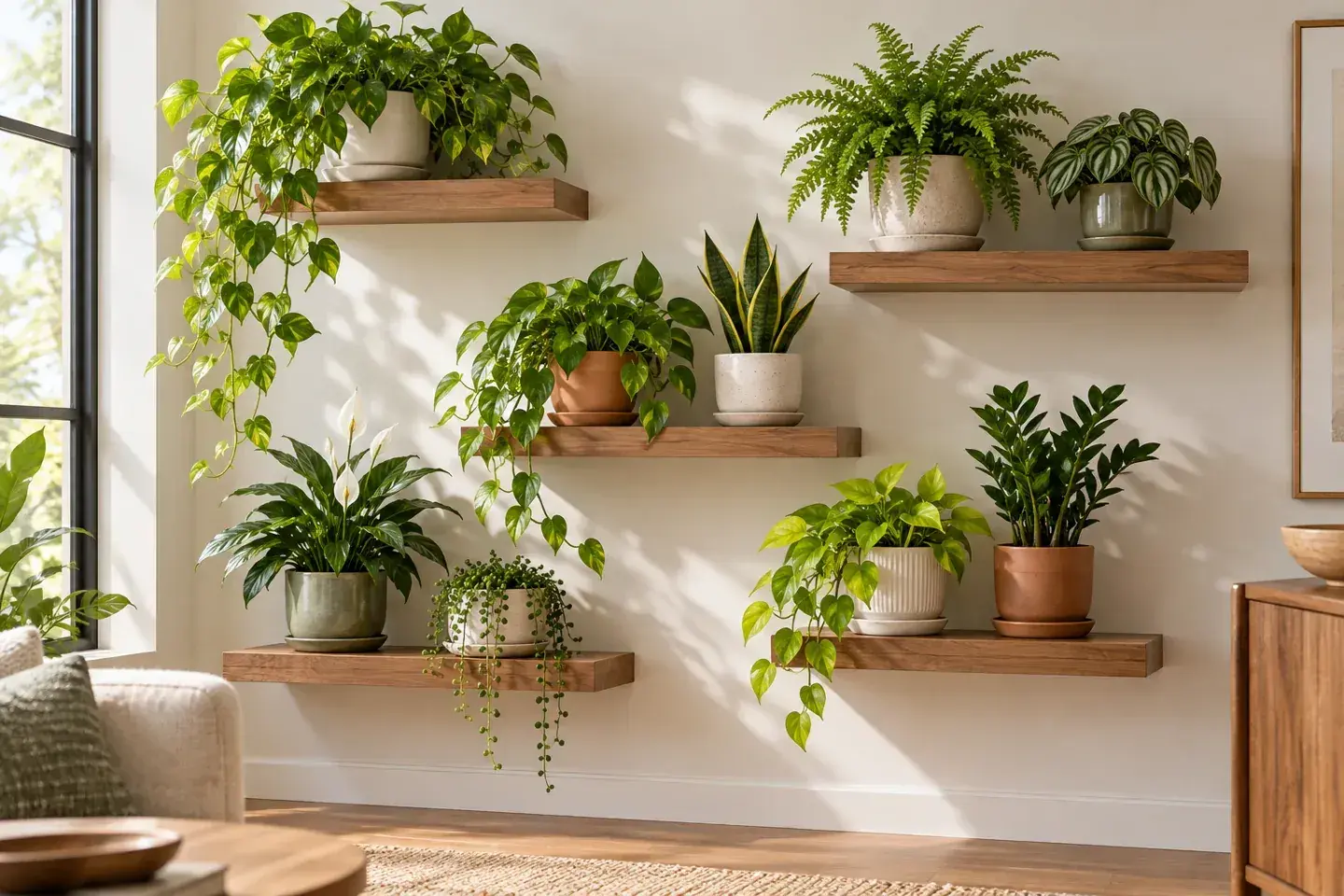
A home plant wall does not need to be a permanently irrigated vertical garden. For many DIY households, a few securely mounted shelves or a purpose-made rail holding removable pots are easier to install, inspect, and maintain.
The useful design question is not how many plants will fit in a photograph. It is whether each plant gets suitable light, can be watered without soaking the wall, and remains accessible as it grows. A smaller, healthy display usually looks better than an overcrowded wall of struggling foliage.
Before you start
Choose a location away from routine collisions and review the available daylight. University of Minnesota Extension explains how indoor light conditions influence plant selection and the possible need for supplemental lighting. [1]
Gather a shelf or rail system with published installation and load guidance, suitable fasteners, removable pots, drainage saucers or watertight outer containers, and cleaning supplies. Calculate the load with wet growing medium and containers, not empty pots. Check plant suitability for your household, including pets, before purchase.
1. Map the light and choose a modest first layout
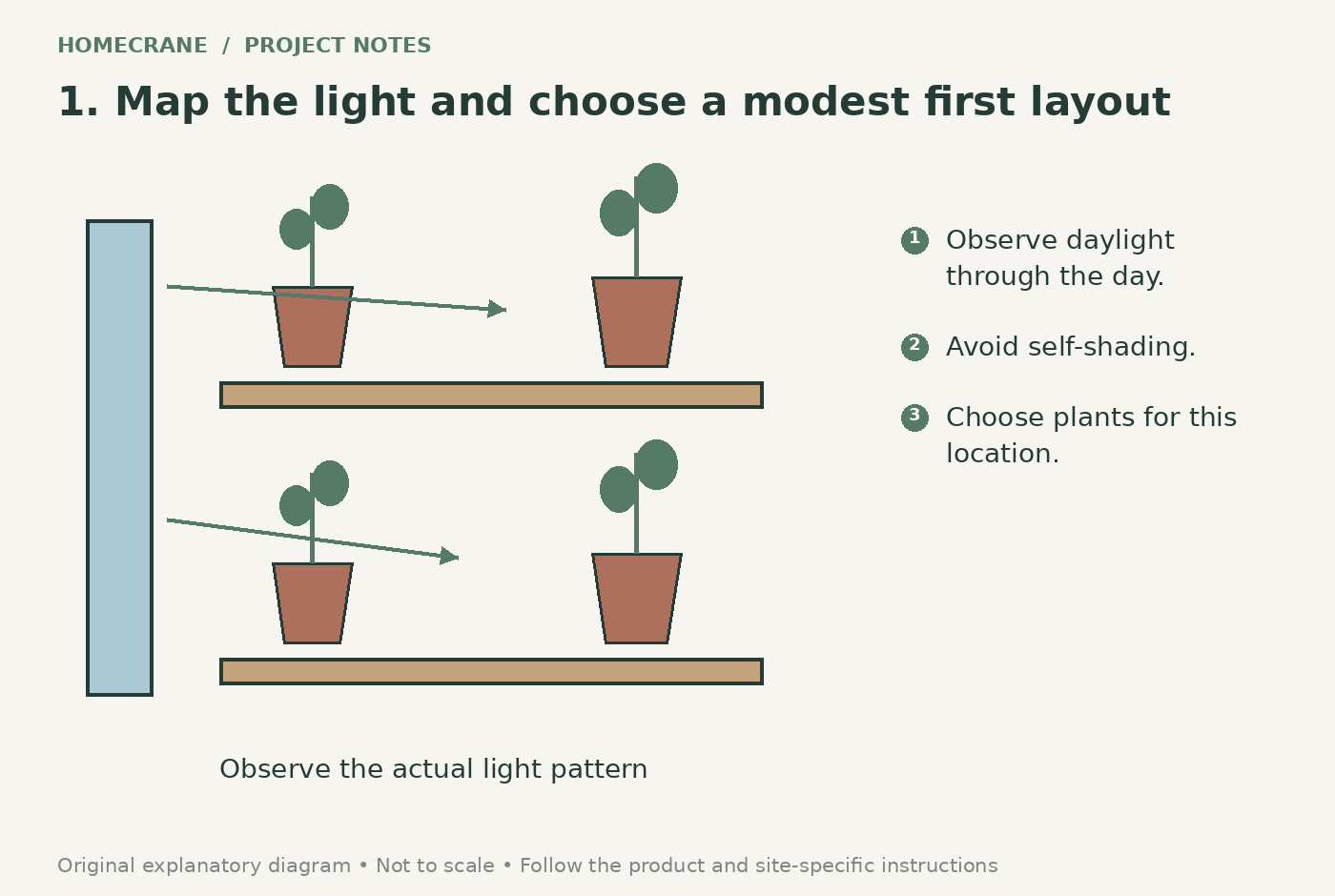
Observe the proposed wall at several times of day. Note nearby windows, obstructions, and whether the display would shade itself. Choose plants suited to those conditions rather than assuming a wall near a window is uniformly bright.
Tape paper rectangles where shelves would go and mark approximate plant height. Leave room above each pot for lifting it out. Start with fewer plants than the final vision requires; you can expand after learning how the location behaves. If supplemental lighting is needed, plan a listed fixture and tidy, accessible cord route before mounting shelves.
2. Design for wet weight and secure support
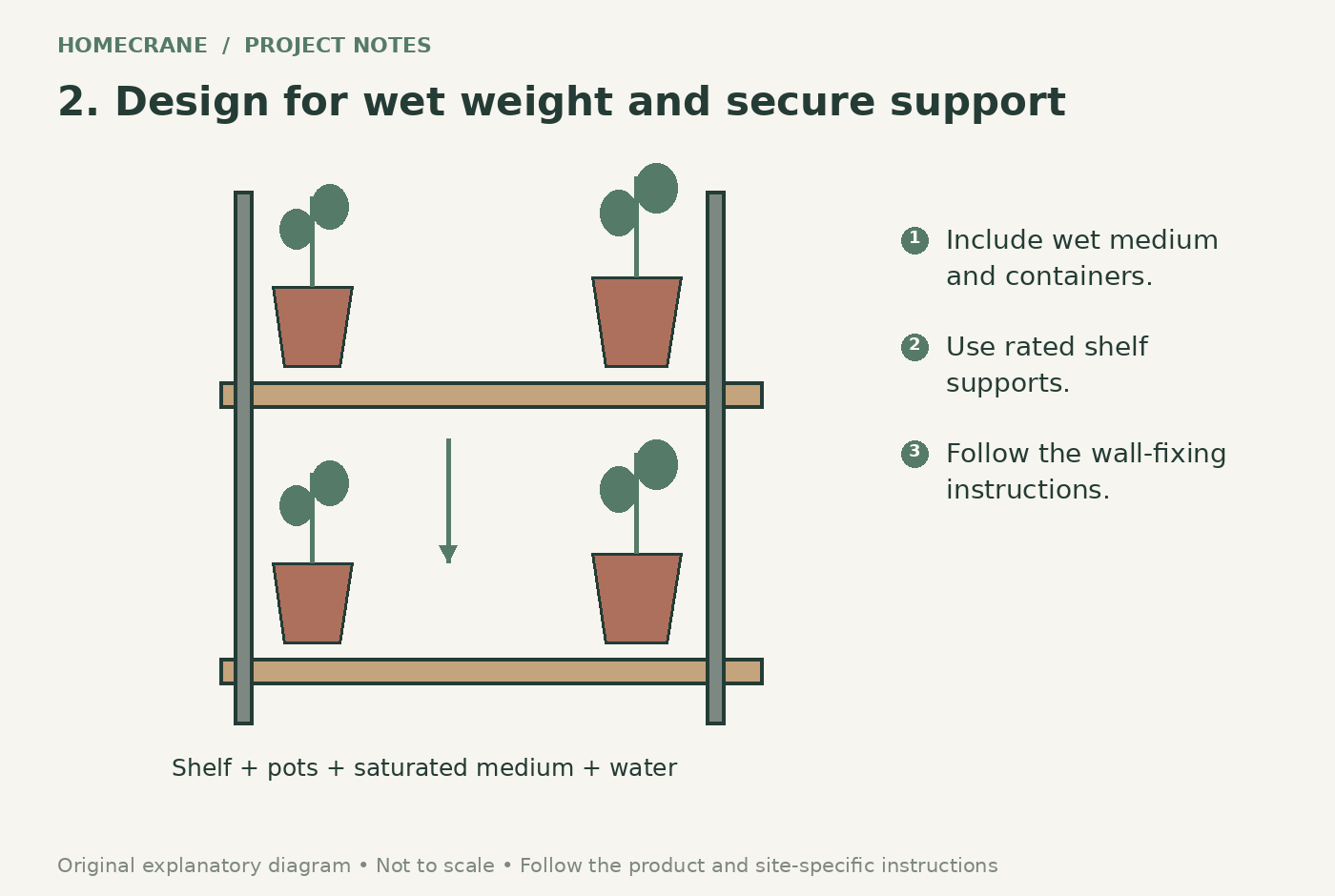
Add the shelf weight, pots, saturated growing medium, and water held in the intended containers. Compare the total and its distribution with the hardware system's rating and installation conditions. A stated rating may depend on attachment to studs or another specific substrate.
Follow the mounting instructions and check for concealed utilities before drilling. Do not treat a decorative adhesive hook as a substitute for a plant-shelf support. If the wall construction is uncertain, use professional help or a stable freestanding plant stand instead.
3. Keep drainage separate from the wall
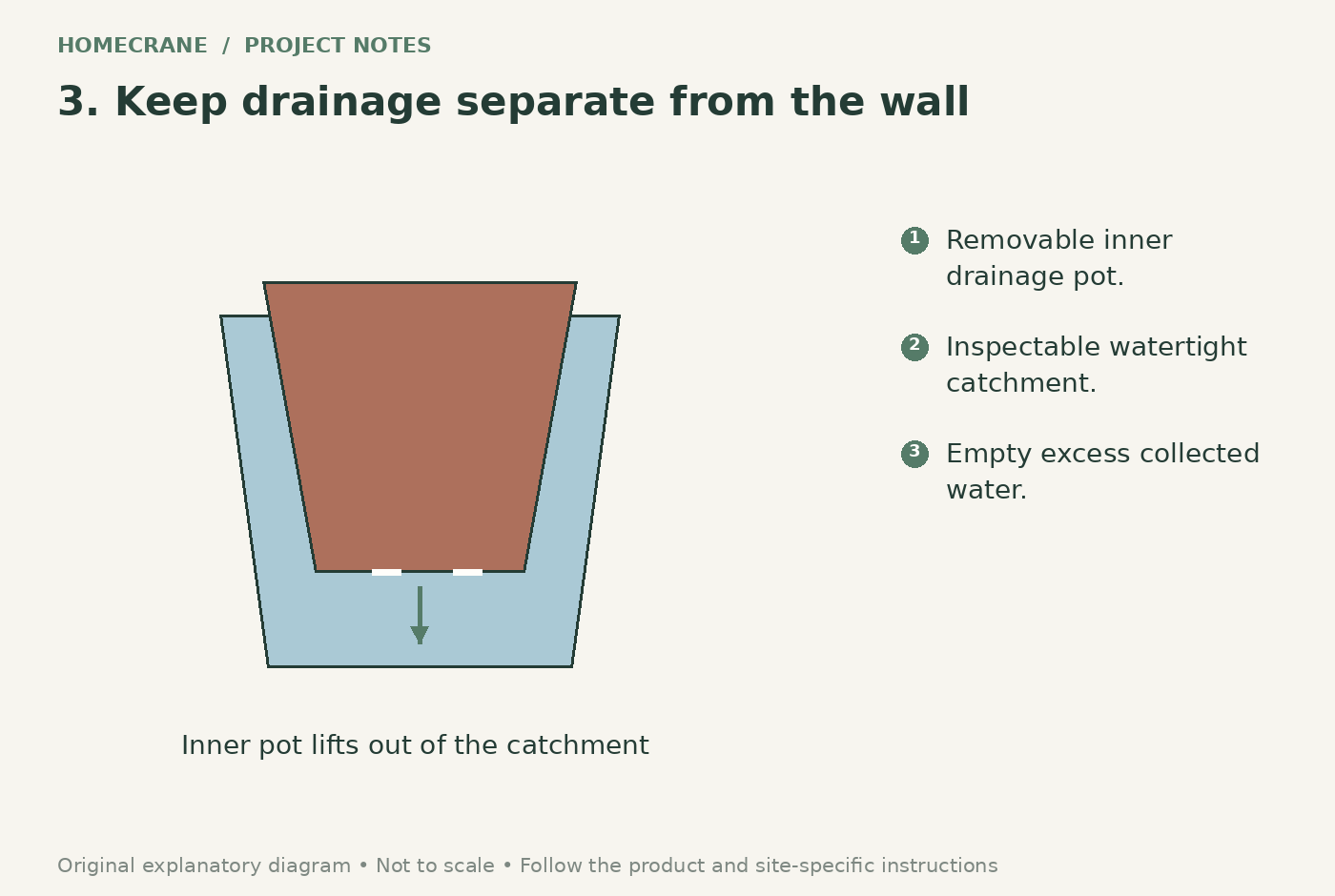
Use individual drainage pots nested in appropriate saucers or watertight outer containers. The catchment arrangement must be inspectable and removable; a hidden leak behind foliage can go unnoticed.
University of Maryland Extension recommends allowing plants to drain and removing excess collected water. [2] Keep pots from sitting in standing water unless the particular plant and growing method require otherwise. A protective shelf surface can simplify cleanup, but it does not make drywall a waterproof planting system. Leave air space and access behind the display for inspection.
4. Arrange plants for growth and access
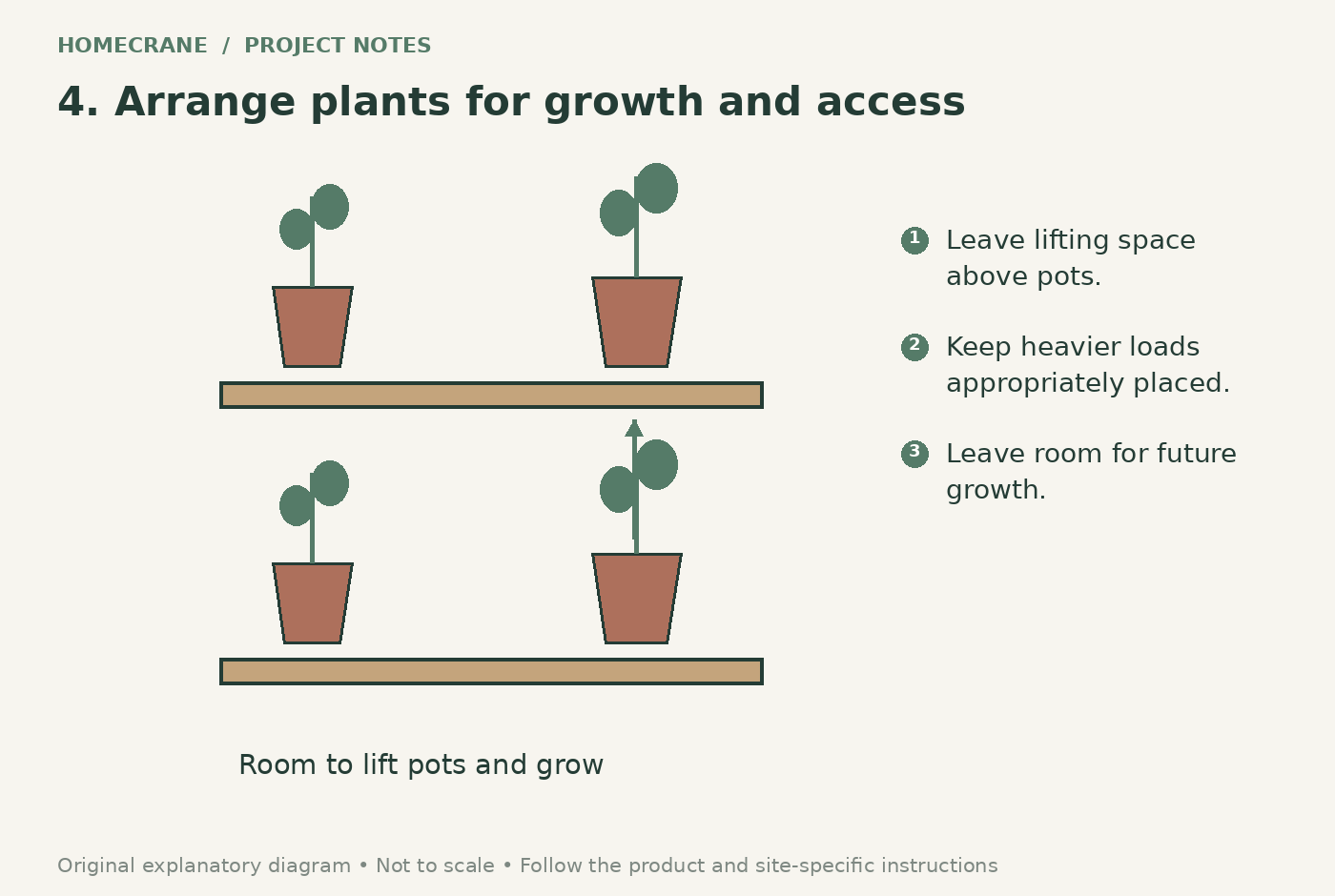
Place heavier pots where the support system is designed to carry them, and keep frequent watering tasks within comfortable reach. Mix a few upright forms with trailing foliage, but do not let vines conceal fasteners, switches, or outlets.
Turn the empty pots into a trial arrangement before adding plants. Confirm that every pot can be lifted out without disturbing its neighbors. Keep the composition loose enough for growth. Repeated container colors can create a cohesive display without requiring every plant to have the same care needs.
5. Use a removable-pot watering routine
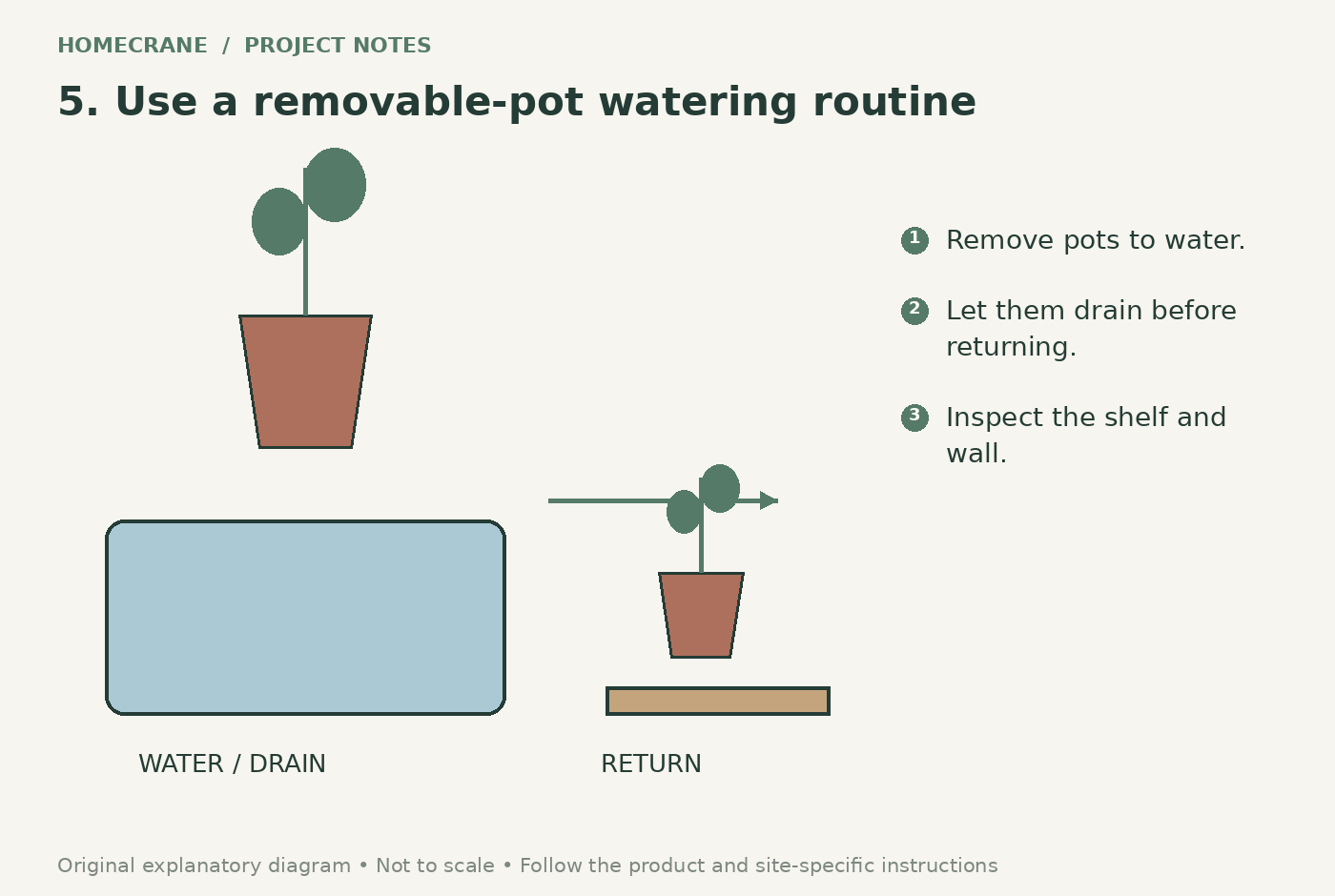
Take suitable pots to a sink or another protected watering area, water according to each plant's needs, let them drain, and return them after checking their outer containers. Do not water every plant on the same fixed schedule just because they share a wall.
Inspect leaves, undersides, shelves, and the wall regularly. Separate a plant showing pests or disease and use appropriate extension guidance. [3] Rotate or prune plants as needed to preserve light and access. If you repeatedly find moisture behind the display, correct the setup before adding more greenery.
Common questions and next steps
Can you use fabric planting pockets directly on drywall? Do not assume a pocket system protects the building surface. Follow its complete waterproofing, drainage, support, and maintenance requirements. Removable pots are often simpler for a first project.
How many plants should you start with? Enough to test the light and care routine without overwhelming the space. Three to five modest pots can establish the look.
What makes it feel like a wall feature? Repeat container colors, align the support system carefully, and let the foliage provide variation. The empty spaces are part of the design.
Sources and further reading
- University of Minnesota Extension: lighting for indoor plants
- University of Maryland Extension: watering indoor plants
- University of Minnesota Extension: insects on indoor plants
Research reviewed October 12, 2026.
Sources
- University of Minnesota Extension: lighting for indoor plants. Checked October 12, 2026
- University of Maryland Extension: watering indoor plants. Checked October 12, 2026
- University of Minnesota Extension: insects on indoor plants. Checked October 12, 2026
Share this article
Get new guides by email
Practical home articles and free resources. No spam, and you can unsubscribe at any time.
Keep reading
DIY Fluted Headboard Made Out of Pool Noodles
Plan a decorative fluted headboard using covered foam channels, a stable backer, careful material checks, and secure independent mounting.
October 2026, 3 min read
4 Renter-Friendly Ways to Hang Curtains Without Drilling
Compare tension rods, adhesive curtain hooks, magnetic rods, and floor-to-ceiling systems for curtains in a rental without drilling.
October 2026, 3 min read
Genius Under-Stairs Pull-Out Storage Ideas You Can DIY
Explore five under-stairs storage approaches with practical guidance on access, drawer hardware, stability, and existing openings.
October 2026, 3 min read