What Is the Best Primer for Painting Over Dark Colors?
Choose primer for a dark-color repaint by hiding, adhesion and stain-control needs. Compare undercoat colors and plan a compatible finish system.
By Home Crane Editors. . 4 min read.
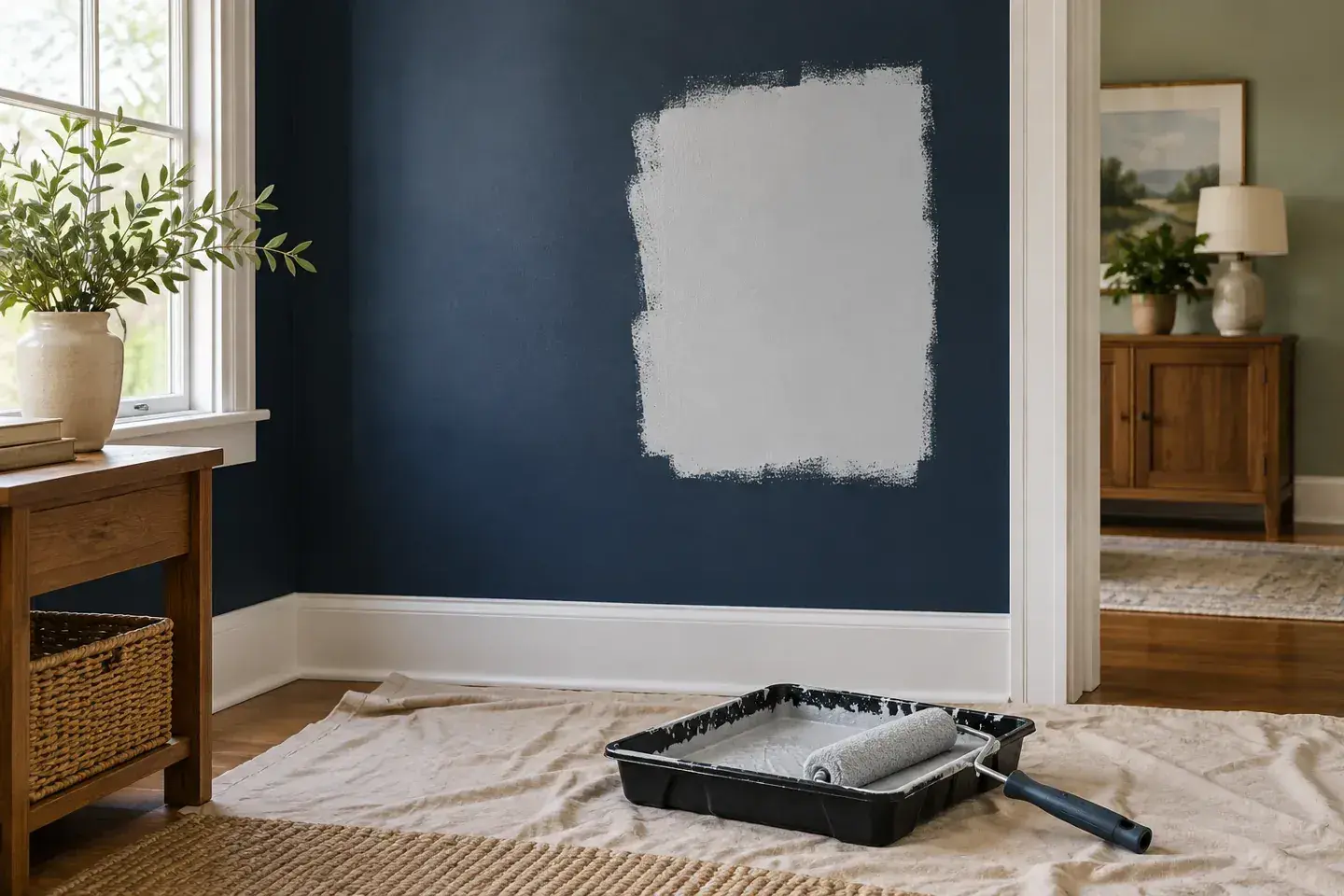
For a sound interior wall changing from a dark color to a light one, a compatible high-hide primer is a practical starting point. If the surface is stained, glossy, damaged, or made from a difficult substrate, those conditions may determine the primer more than the old color.
Dark paint showing through and a stain bleeding through are different problems. The first is about coverage; the second can require a specific stain-blocking system. Adding more ordinary wall paint is not always the economical answer.
This guide uses manufacturer examples to explain selection. It does not claim comparative product testing or promise that one coat will cover every dark wall.
1. Identify what the primer needs to do
Inspect the wall in good light. Is the existing paint firmly attached? Are there greasy areas, water marks, smoke residue, patched spots, or glossy sections? Correct active moisture problems and remove loose material appropriately before coating.
For a simple color change on clean, sound paint, hiding power and topcoat compatibility may be the main needs. For a glossy or unusual surface, adhesion becomes a separate question. For stains, identify their source and choose a primer rated for that problem.
Patched areas can absorb paint differently from the rest of the wall. A suitable primer helps create a more consistent base, but it does not erase ridges or poor patch texture. Inspect repairs under side lighting and finish the preparation before priming.
If the home has older coatings that may contain lead, assess that risk before sanding or scraping. See the EPA lead-safe renovation guidance before disturbing suspect paint, especially in pre-1978 homes. Primer is not a reason to create uncontrolled dust. Follow the preparation method suitable for the actual surface and coating history.
2. Choose the primer category before the brand
KILZ 3 Premium is an example of a water-based high-hide primer whose manufacturer lists multiple substrates and stain-blocking uses. It may be a candidate for a suitable wall, but its label and the topcoat instructions still determine preparation and use.
For persistent staining, a different stain-blocking product may be needed. For slick surfaces, an adhesion-focused system may be more important than maximum hiding. Ask the paint supplier to recommend a complete system based on photographs, the substrate, and the existing coating.
| Feature | Main primer question | |
|---|---|---|
| Sound dark painted drywall | Does it provide suitable hiding under the new color? | |
| Glossy or difficult surface | Is adhesion approved after the specified preparation? | |
| Water or tannin staining | Is it rated to block that stain after the cause is fixed? | |
| Unevenly porous repairs | Will it seal the repair and support uniform finish? |
Avoid buying a solvent-based primer simply because it sounds stronger. Product suitability, ventilation, cleanup, and compatibility matter. A more aggressive formulation is not automatically necessary for an ordinary color change.
3. Match primer color to the new topcoat
When moving to white or a pale shade, a suitable white or appropriately tinted primer can provide a useful base. When applying a deep new color, the paint manufacturer may recommend a specific gray or tinted undercoat. The destination color matters, not just the color being covered.
KILZ 2 Gray is specifically positioned by its manufacturer for dark, rich topcoats. That is different from saying gray is always best when painting over a dark wall with white. Ask for the undercoat recommendation for your actual finish color.
Have the supplier tint only within the primer's allowed limits. Adding extra colorant at home can change performance. Record the product and tint formula so a second can matches the first.
Test the primer and finish together on a representative area. Let each coat dry as specified, then inspect in daylight and evening light. A test can show whether the planned system gives consistent coverage before you commit to the whole room.
4. Apply controlled coats and judge the dry result
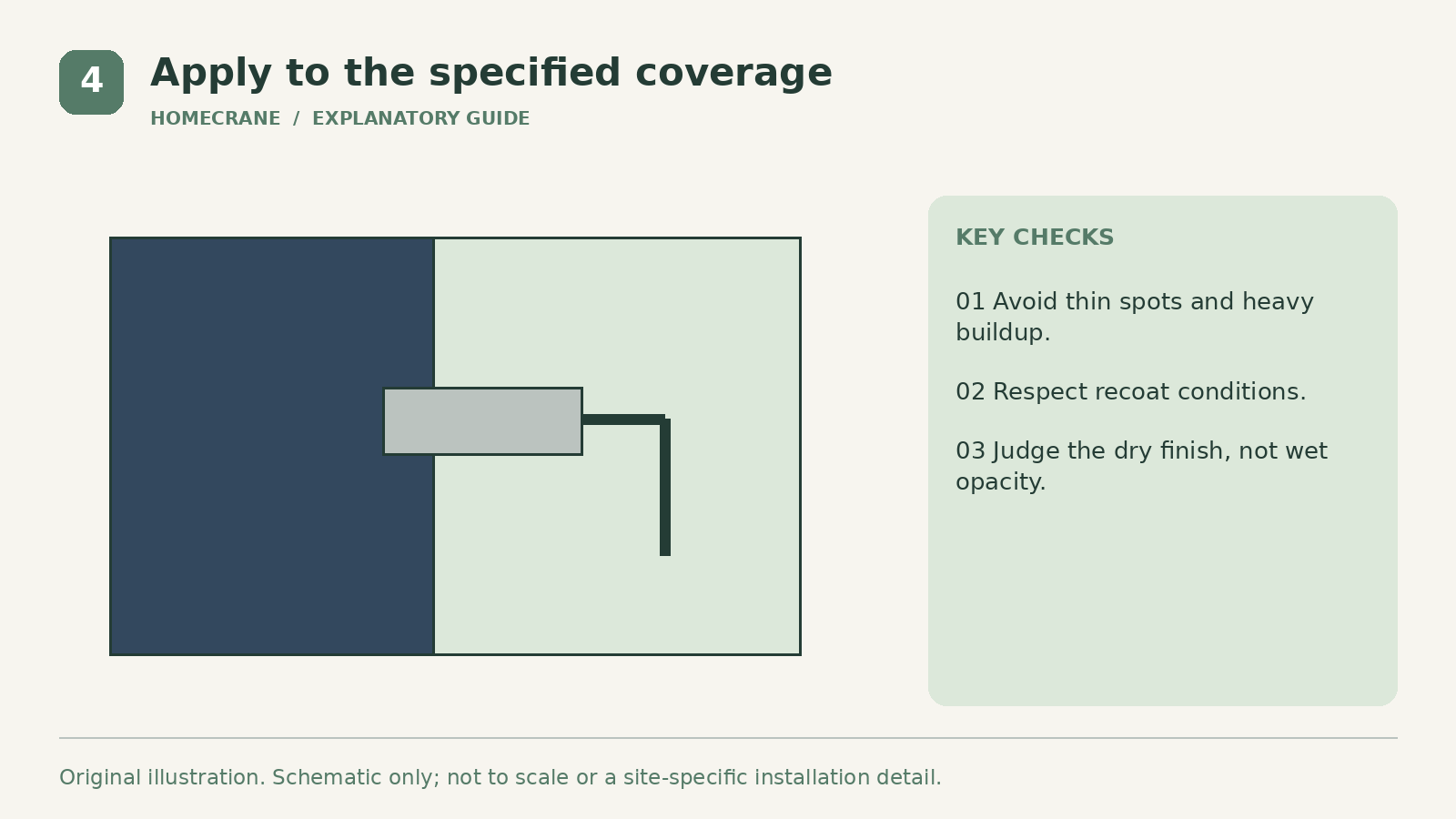
Clean the surface, complete repairs, and remove preparation dust using the appropriate method. Protect flooring and nearby finishes. Use the applicator recommended for the product and wall texture.
Apply at the stated coverage rate rather than stretching the can too far or laying on a heavy coat. Thin patchy application can reduce hiding, while excessive thickness can create drying and texture problems. Keep a wet edge where appropriate to reduce visible overlap.
Observe the recoat interval under the actual room conditions. Cool temperatures, humidity, and poor ventilation can change drying behavior. Dry-to-touch is not permission to ignore the product's recoat instructions.
Inspect after drying. If a stain reappears, follow the stain-blocking system's troubleshooting method before covering the whole wall with finish paint. If the issue is simply uneven opacity, evaluate the specified coat sequence and application rate.
Apply the finish coats according to the paint instructions. Primer is a preparatory layer, not the final washable wall finish. Keep enough time in the project for both the primer and the topcoat to do their jobs.
Estimate quantity without guessing
Measure wall lengths and height, then account for openings as appropriate. Compare the area with the product's stated coverage and the number of coats planned. Texture, porosity, and application losses can affect the quantity.
For example, an assumed 320-square-foot paintable area with a product rated for 300–400 square feet per gallon is close enough to the lower end that a single gallon may leave little margin. This is an estimating illustration, not a coverage guarantee. Use your measurements and chosen product.
Can paint-and-primer-in-one replace primer?
Sometimes a sound previously painted surface can be recoated directly if the paint maker allows it. That label does not replace a dedicated stain-blocking or bonding primer when the surface needs one.
Will one primer coat always hide black paint?
No. Surface condition, film thickness, product, and topcoat all matter. Evaluate the complete dry system rather than demanding a perfectly finished appearance from primer alone.
Sources
- EPA lead-safe renovation guidance. Checked October 11, 2026
- KILZ 3 Premium. Checked October 11, 2026
- KILZ 2 Gray. Checked October 11, 2026
Share this article
Get new guides by email
Practical home articles and free resources. No spam, and you can unsubscribe at any time.
Keep reading
Does Peel and Stick Wallpaper Work on Textured Walls?
Sometimes a manufacturer permits a limited texture, but many peel and stick wallpapers require a smooth, flat surface. Texture reduces the contact area.
October 2026, 3 min read

The Most Durable House Siding Options for Wisconsin Winters
Compare siding options for Wisconsin winters, including fiber cement, engineered wood, steel, and vinyl, with installation and maintenance considerations.
October 2026, 4 min read

15 Eco Friendly Sustainable Architecture Materials to Use in Your Build
Explore 15 sustainable building materials to consider with illustrated concepts, practical design tips, and planning checks for your US home.
October 2026, 5 min read