DIY Faux Marble Epoxy Countertops: An Honest Research-Based Review
Weigh faux marble epoxy countertops against their preparation, curing, heat protection, repair, and downtime requirements before buying a kit.
By Home Crane Editors. . 3 min read.

DIY faux marble epoxy can create a dramatic surface change over a suitable existing counter. Its appeal is visual: you can choose the vein direction and color without buying a stone slab. Its disadvantages show up in preparation, application control, downtime, and the care the finished surface still needs.
This is a research-based assessment, not a hands-on product test or a report of years of use. The photographs are illustrative concepts. There is no universal epoxy lifespan or performance rating here because different formulas, substrates, and application conditions produce different outcomes.
Before you start
Identify the counter material and condition, including seams, sink cutouts, loose laminate, swelling, and movement. Ask the chosen kit manufacturer to confirm compatibility and required preparation. Price the full system, not just the resin bottle: primer, colorants, tools, protection, any specified topcoat, and possible plumbing help all matter.
Read the current technical and safety documents before purchase. Follow their ventilation, skin and eye protection, mixing, disposal, and workspace requirements. Keep the project area isolated from routine food preparation during application and curing.
1. Appearance: convincing from a distance, technique-dependent up close
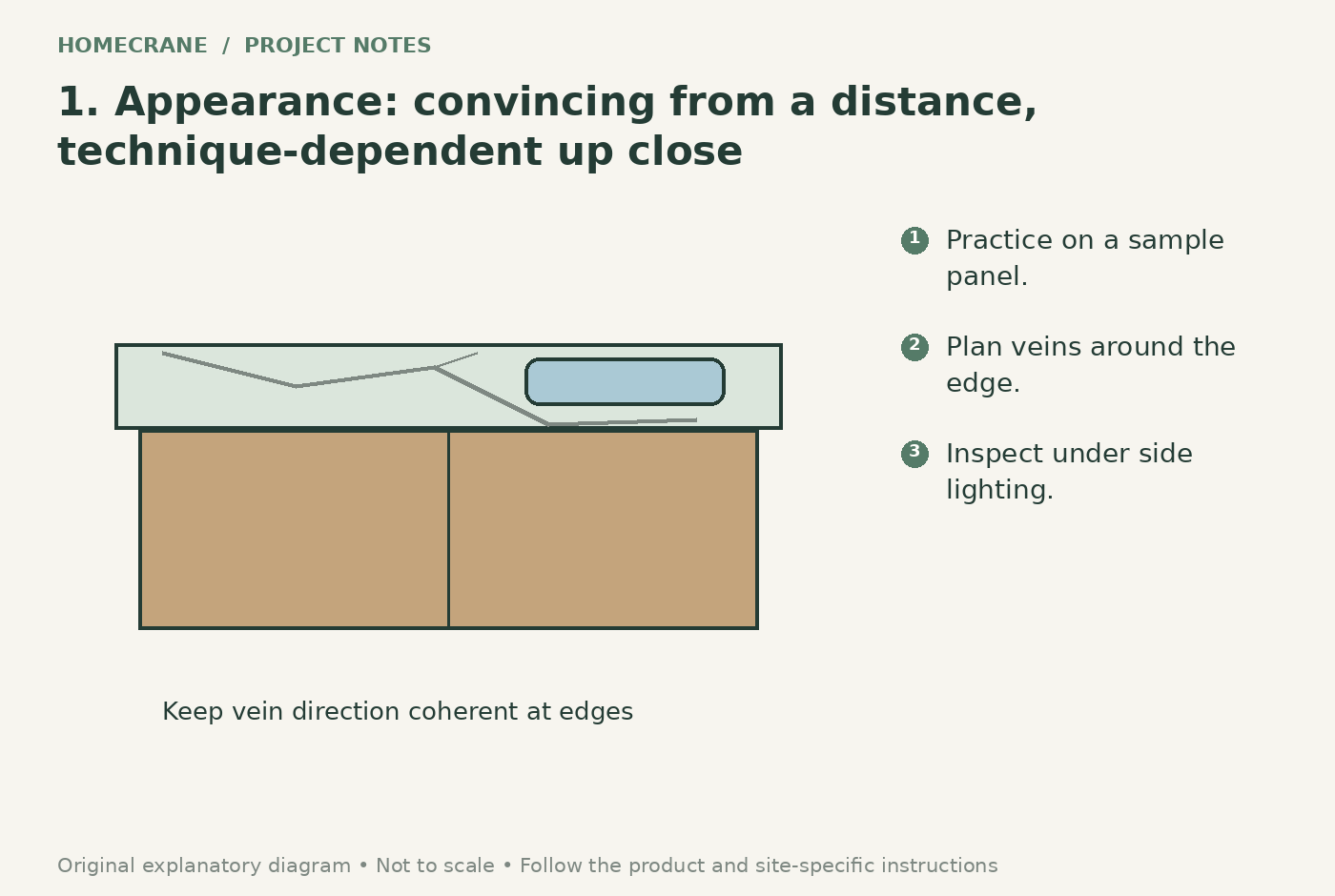
A restrained vein pattern usually gives beginners a clearer plan than trying to recreate every detail of a marble slab. Make a practice panel with the actual base color and resin system. Examine it under side lighting, where drips, dust, and texture are easier to see.
Plan where veins would continue around an edge before pouring. Do not mistake a glossy photograph for proof of a flat, defect-free surface. Your tolerance for visible handwork is an important part of the decision, especially on a large island viewed from every direction.
2. Preparation: the substrate decides whether the project is viable
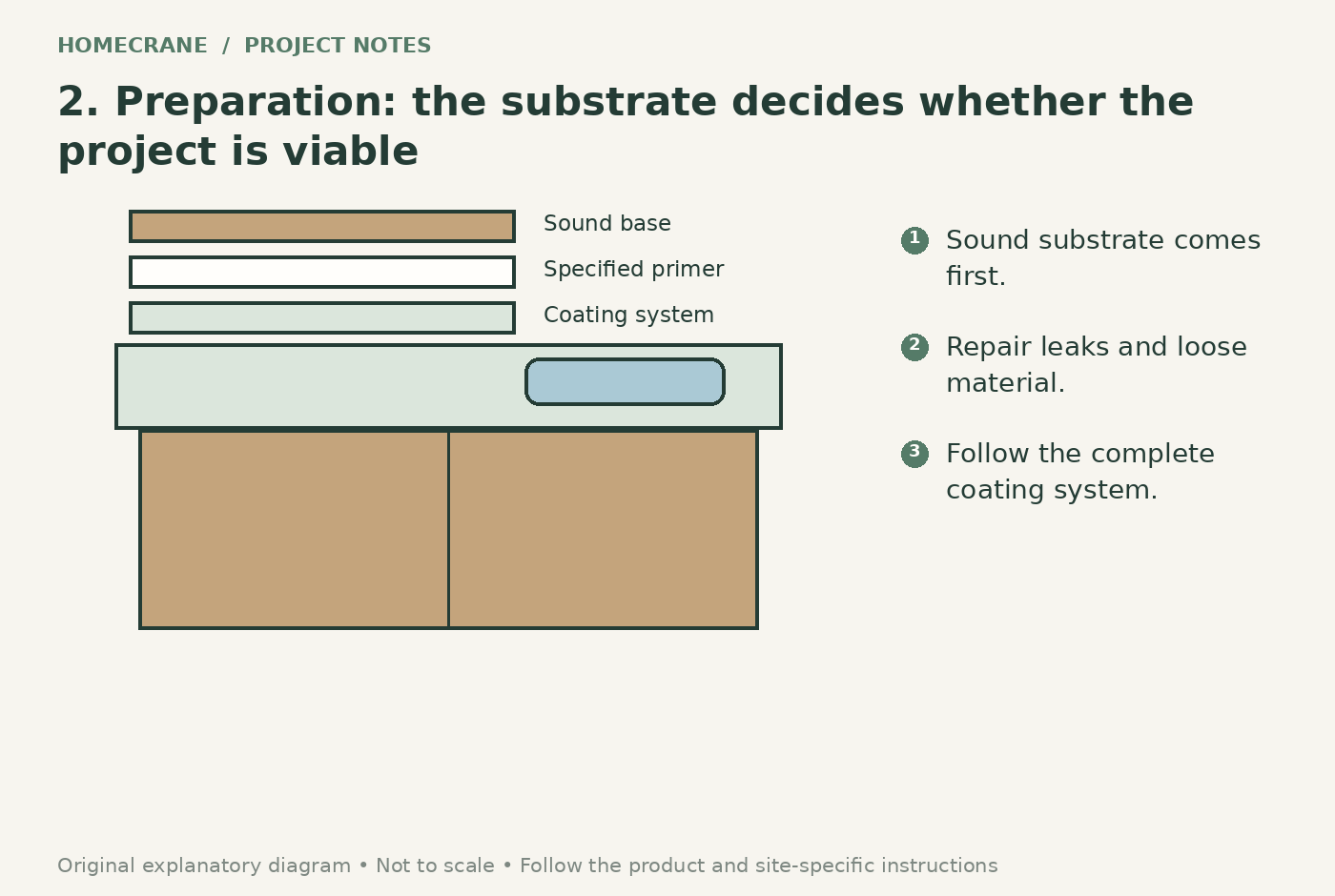
A coating cannot restore a swollen or unstable counter core. Resolve leaks and structural problems first, and replace unsuitable material rather than coating over it. Follow the kit's exact cleaning, abrasion, repair, and priming sequence.
Make a written checklist for edges, seams, and the sink area so they do not become last-minute improvisations. If disconnecting plumbing or removing fixtures is necessary, include that work in the plan. A cheap kit becomes expensive when the underlying counter needs replacement anyway.
3. Application: working time limits your freedom
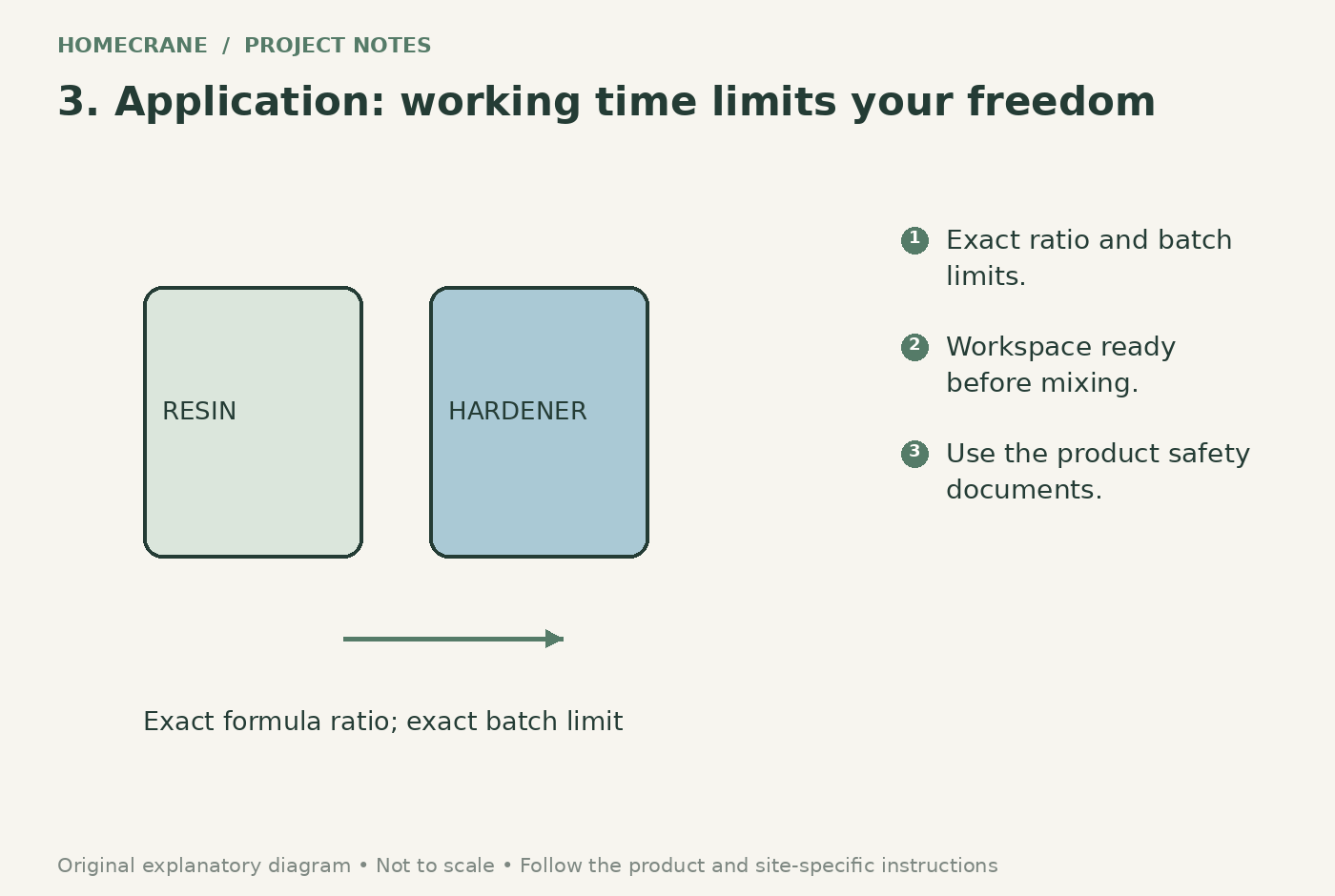
Resin and hardener ratios, batch limits, temperature, and working time are formula-specific. Read them before you begin and have tools and protection ready. A measured test panel helps reveal whether the process suits your pace.
Do not mix an oversized batch to save time or assume heat-tool techniques from another brand apply. Epoxy handling can involve heat buildup and chemical exposure; follow the exact product's safety instructions. Decide where excess material and used tools will go before opening containers. If the required controls are impractical in your home, choose another finish.
4. Curing and daily care: plan for a protected surface
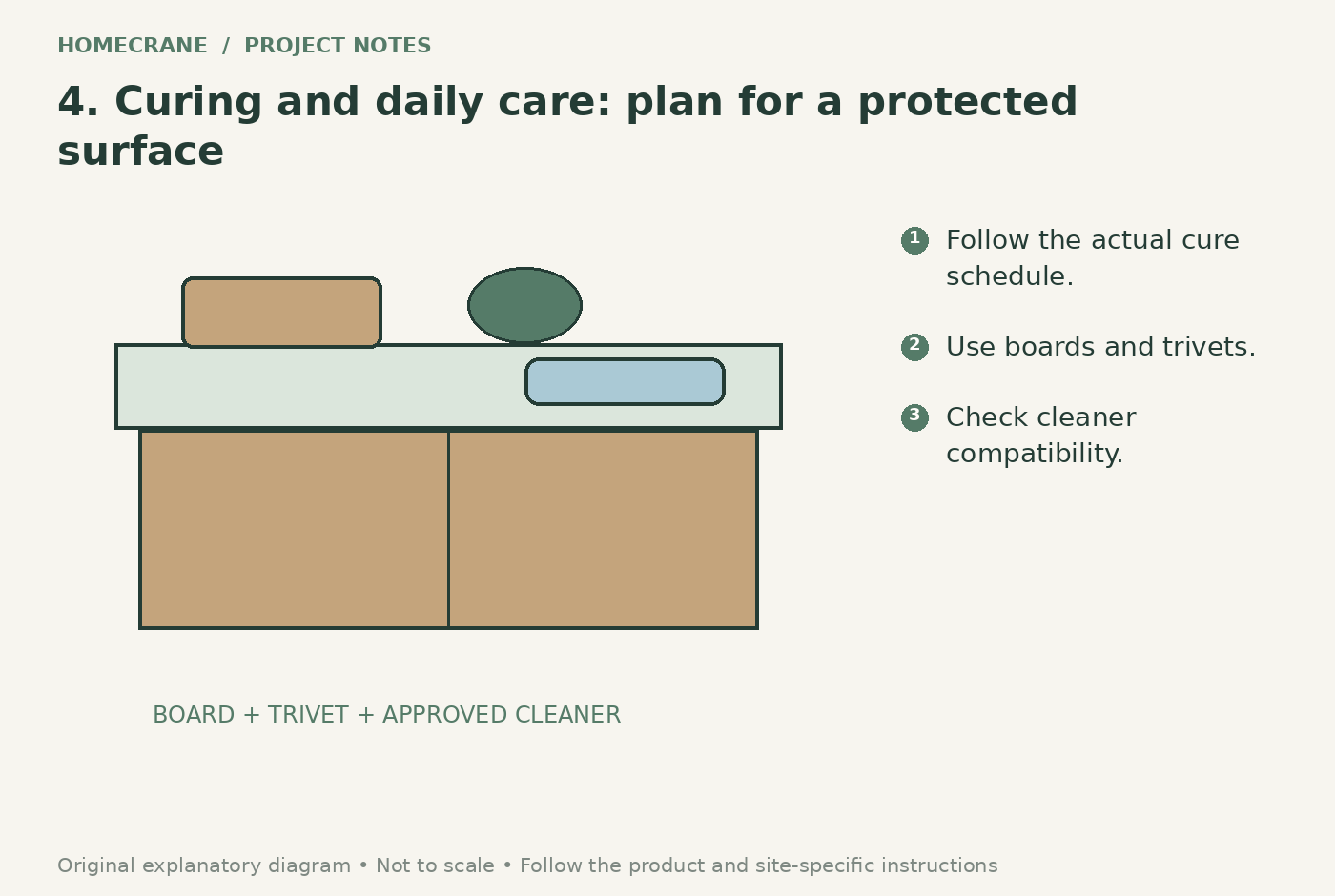
Stone Coat's FAQ distinguishes cure schedules among its formulas and advises protective habits such as trivets and cutting boards. [1] Use the schedule for the product actually purchased, not a generic internet cure time. A surface that feels firm may still be within its restricted-use period.
Do not place hot cookware directly on the finish or cut on it. Confirm cleaning-product compatibility and wipe spills promptly according to the manufacturer's care instructions. Food-contact claims must apply to the exact system and its properly cured condition; a generic description of epoxy is insufficient.
5. Value: compare the complete project and a repair scenario
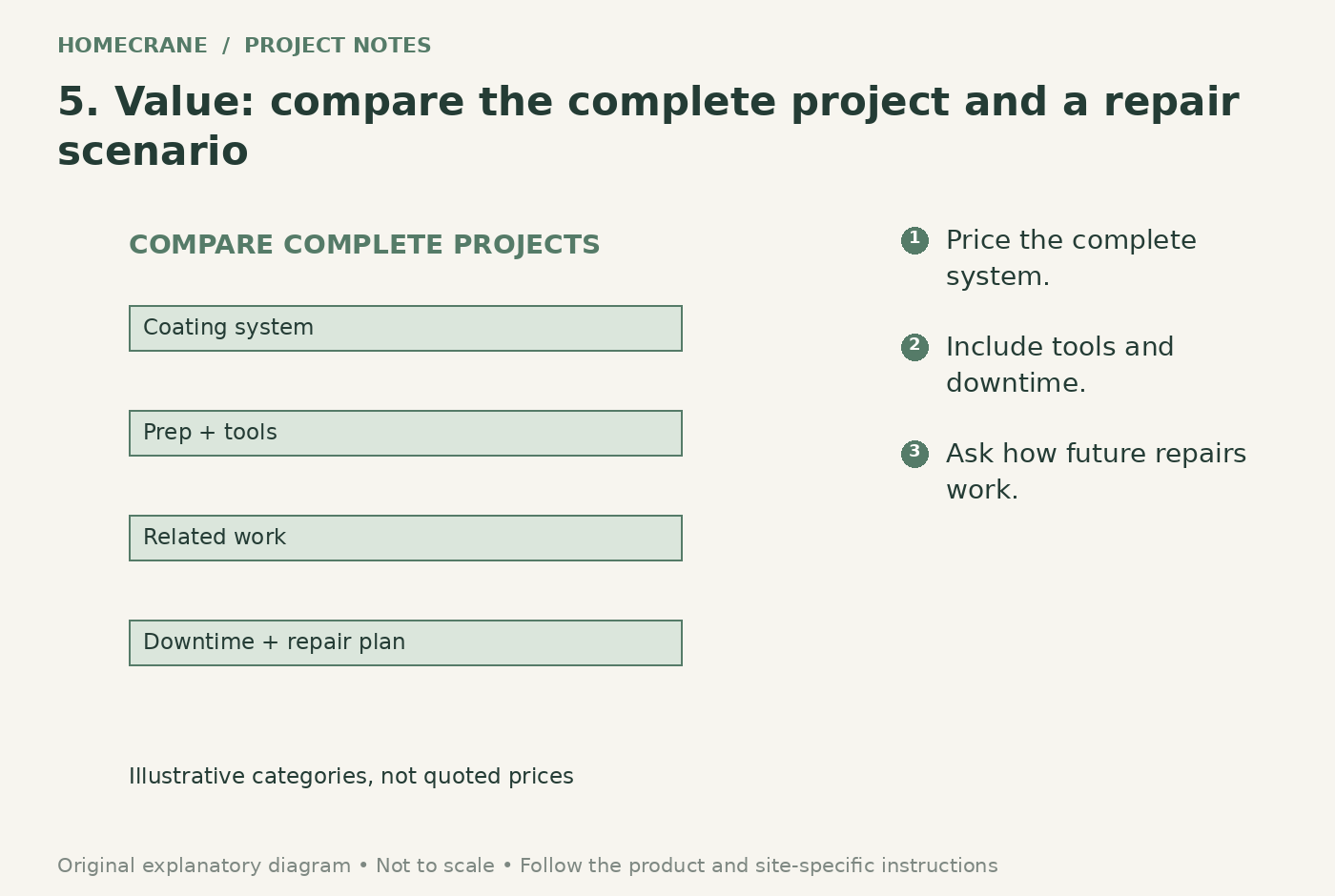
Add the full material bill, equipment you do not own, downtime, and any professional work. Then compare that total with a like-for-like quote for another suitable countertop option. This is more useful than comparing resin cost with the price of an installed premium stone slab.
Ask how a scratch, burn, or chipped edge would be repaired and whether a local repair will remain visible. Keep the product name, batch details, and care instructions. A finish is a better fit when you accept both its appearance and its future maintenance, not merely its initial price.
Common questions and next steps
Editorial verdict: Consider epoxy if the existing counter is sound, the manufacturer approves the substrate, you enjoy detailed finishing work, and you can accommodate the complete application and cure process. Choose another route if you need immediate use, dislike protected-surface care, or are trying to hide a failing counter.
Does it look exactly like marble? A carefully designed pattern can suggest marble, but gloss, edge treatment, and repeated veins may reveal the coating. Approve a real sample.
Does epoxy make the counter heatproof? No. Use the exact product's limitations and protective care guidance; a headline temperature claim is not permission to set down a hot pan.
Sources and further reading
Research reviewed October 12, 2026.
Sources
- Stone Coat Countertops: formula-specific cure and care FAQs. Checked October 12, 2026
Share this article
Get new guides by email
Practical home articles and free resources. No spam, and you can unsubscribe at any time.
Keep reading

DIY Fluted Headboard Made Out of Pool Noodles
Plan a decorative fluted headboard using covered foam channels, a stable backer, careful material checks, and secure independent mounting.
October 2026, 3 min read

4 Renter-Friendly Ways to Hang Curtains Without Drilling
Compare tension rods, adhesive curtain hooks, magnetic rods, and floor-to-ceiling systems for curtains in a rental without drilling.
October 2026, 3 min read
Genius Under-Stairs Pull-Out Storage Ideas You Can DIY
Explore five under-stairs storage approaches with practical guidance on access, drawer hardware, stability, and existing openings.
October 2026, 3 min read