Building a Fence on a Property Line: Surveys, Costs and Neighbors
A fence built even a few inches over the line can become a legal dispute. Here is why a survey comes before a shovel, how shared-fence costs are often handled, and what to settle with a neighbor in writing.
By Home Crane Editors. . 3 min read.
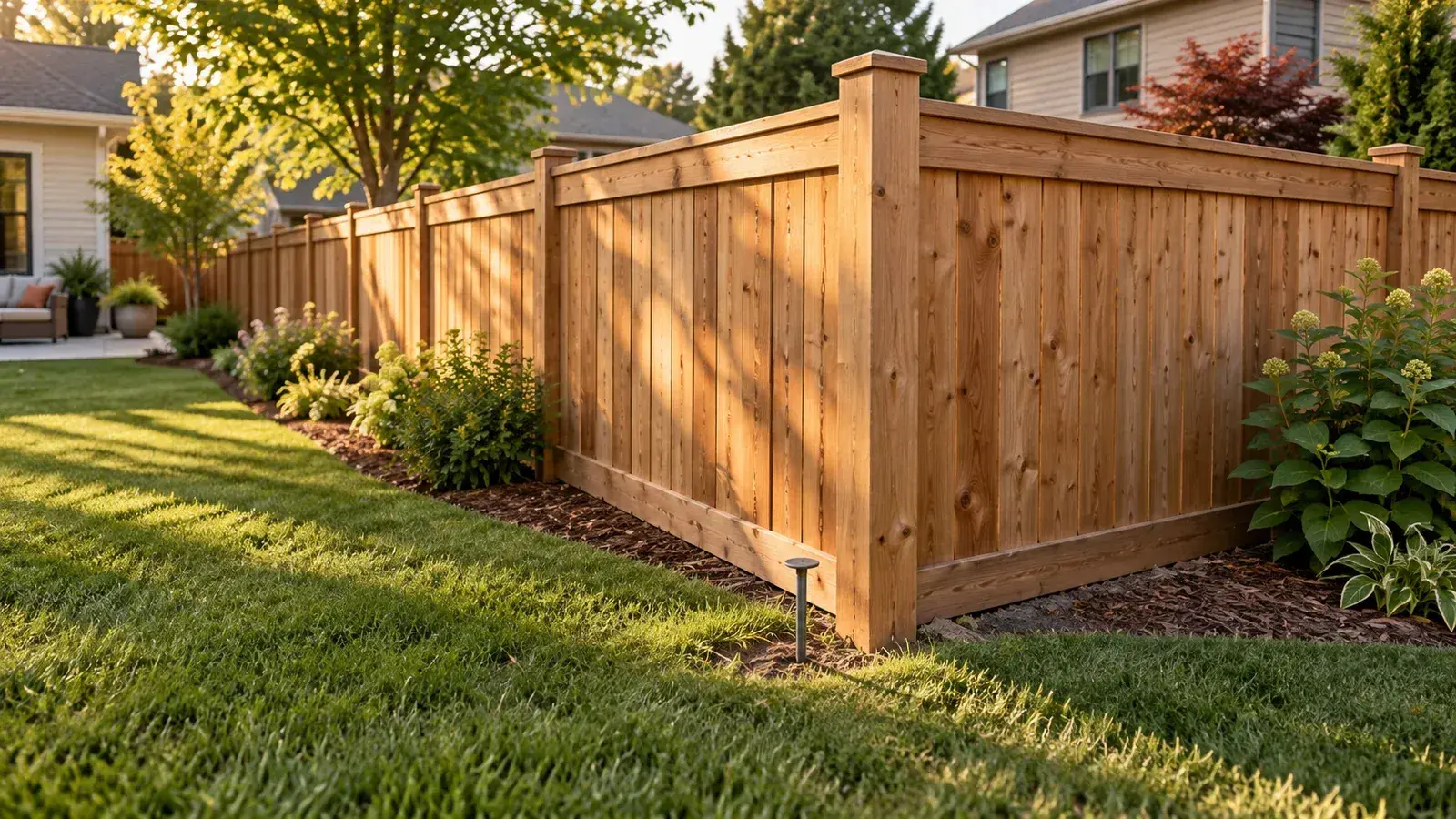
Conceptual illustration of a boundary fence and a survey marker.
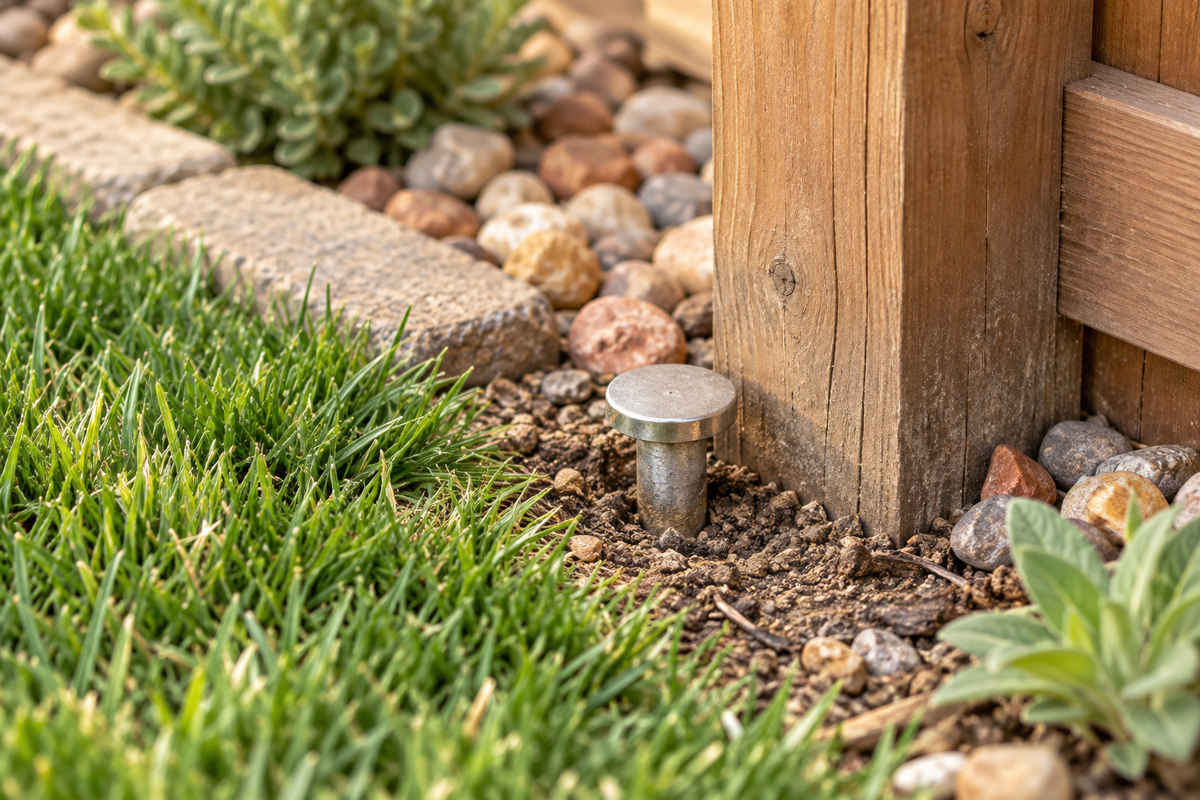
Before you set a single post near a shared boundary, find out exactly where that boundary is. A fence built even a few inches over a property line can be treated as an encroachment, and a neighbor can legally request its removal or challenge it in court, according to guidance summarized by fence contractor CoolCat Fence on land surveys. The fix is straightforward and often skipped: hire a licensed land surveyor to confirm the line using recorded property records and physical markers before you build.
Why a survey matters more than it seems to
Fences are commonly built from memory, an old stake, a line of trees or what looks about right, and that is exactly how boundary disputes start. A professional survey removes the guesswork and gives you a documented reference point if a disagreement ever comes up later, whether with the current neighbor or a future one. Confirming your property records with your county recorder's office is a reasonable first step even before calling a surveyor, since older deeds and plats sometimes carry helpful information about existing markers.
Shared fences: one common legal approach
Rules for a fence built directly on a shared boundary line vary significantly by state, and some states are silent on the question entirely, leaving it to local custom or a court to sort out if a dispute arises. California is a clear, well-documented example of how one state has handled it. Under California Civil Code section 841, often called the Good Neighbor Fence Law, neighbors are presumed to share equal responsibility for a boundary fence located on the legal property line, with costs for reasonable construction, repair or replacement typically split evenly. A law firm's summary of the statute notes that if one neighbor wants premium materials or upgrades beyond what is reasonable, that neighbor typically covers the difference.
| Feature | What the statute covers | |
|---|---|---|
| Who pays to build | Neighbors share equal responsibility for a fence on the legal boundary | |
| Who pays to repair or replace | Same shared responsibility, based on reasonable costs | |
| What counts as reasonable | Standard materials, typical design, fair labor cost | |
| Who pays for upgrades | The neighbor who wants the upgrade typically covers the extra cost |
Do not assume your state follows the same rule. Some states use a fence-in versus fence-out framework tied to livestock rather than a residential cost-sharing rule, and many leave the matter to local ordinances or private agreement. Check with your state's statutes, your local building or zoning department, or a local real estate attorney before assuming any cost-sharing arrangement applies to you.
Local rules layer on top of state law
Even where a state law exists, local ordinances often add their own requirements on top of it, covering height limits, setbacks from the property line, and permitted materials. A municipality can require a permit for a fence over a certain height, or restrict fence types in front yards versus back yards. Contact your local building or zoning department before finalizing a design, not after you have already bought materials.
Put the agreement in writing
- Confirm the property line with a survey before construction, not after.
- Discuss the project with your neighbor early, including materials, height, style and who is paying for what.
- Get any cost-sharing or maintenance agreement in writing, even if it is a short, signed note. A clearly written agreement is far easier to enforce or refer back to than a verbal understanding.
- Ask your local building department what permits or setback rules apply before you start.
- Keep a copy of the survey and any written agreement with your other home records.
Design choices beyond the boundary question
Once the boundary and any neighbor agreement are settled, fence design still involves real trade-offs. Height affects both privacy and how much natural light reaches nearby plantings, and many local ordinances cap front-yard fence height lower than back-yard height. Material affects maintenance: wood generally needs periodic staining or sealing, vinyl and composite need less upkeep but cost more upfront, and chain-link is often the least expensive option but offers little privacy. None of these choices are governed by the boundary rules discussed above, but they are worth deciding only after the legal groundwork is done, since redesigning a fence after materials are purchased is far more costly than settling the design question early.
Estimating materials once the boundary is settled
Once you have a confirmed line and, where needed, an agreement with your neighbor, our fence calculator can estimate posts, rails and pickets for a straight run. It is a materials estimate only. Post depth, spacing and local wind or frost requirements are a structural and local-code question, not something a calculator can answer for your specific site.
Your takeaway: get the line surveyed, talk to your neighbor before you build, and put whatever you agree on in writing. Skipping any one of those three steps is the most common way a simple fence project turns into a dispute.
Frequently asked questions
Do I have to split fence costs with my neighbor?
It depends on your state and local law. Some states, like California, have a statute presuming shared responsibility for a boundary fence. Many states have no such statute, so check your own state and local ordinances rather than assuming a rule applies.
Can I build a fence without a survey?
You can, but without a confirmed boundary you risk building over the property line, which can lead to a legal dispute and possible removal of the fence at your expense.
Sources
- California Good Neighbor Fence Law (Civil Code 841), Schorr Law. Checked September 24, 2026
- Can You Build a Fence on the Property Line?, CoolCat Fence. Checked September 24, 2026
Share this article
Get new guides by email
Practical home articles and free resources. No spam, and you can unsubscribe at any time.
Keep reading

7 Ways to Hide a Chain Link Fence With Plants
A chain link fence is practical, durable, and relatively affordable, but its open metal pattern can make a backyard feel unfinished. The good news is that...
November 2026, 11 min read

Horizontal Wood Fence Panels: Privacy Designs for a Stylish Backyard
Explore 10 horizontal wood fence panel privacy designs, from cedar slats to metal accents, lighting, and planter features. Get material and planning tips.
November 2026, 9 min read
11 Cheap Backyard Privacy Fence Ideas That Look Stylish
Explore 11 cheap backyard privacy fence ideas, from wood slats and bamboo to lattice, living hedges, and renter-friendly screens. Create a stylish outdoor retreat on a budget.
November 2026, 10 min read