Horizontal Wood Fence Panels: Privacy Designs for a Stylish Backyard
Explore 10 horizontal wood fence panel privacy designs, from cedar slats to metal accents, lighting, and planter features. Get material and planning tips.
By Home Crane Editors. . 9 min read.
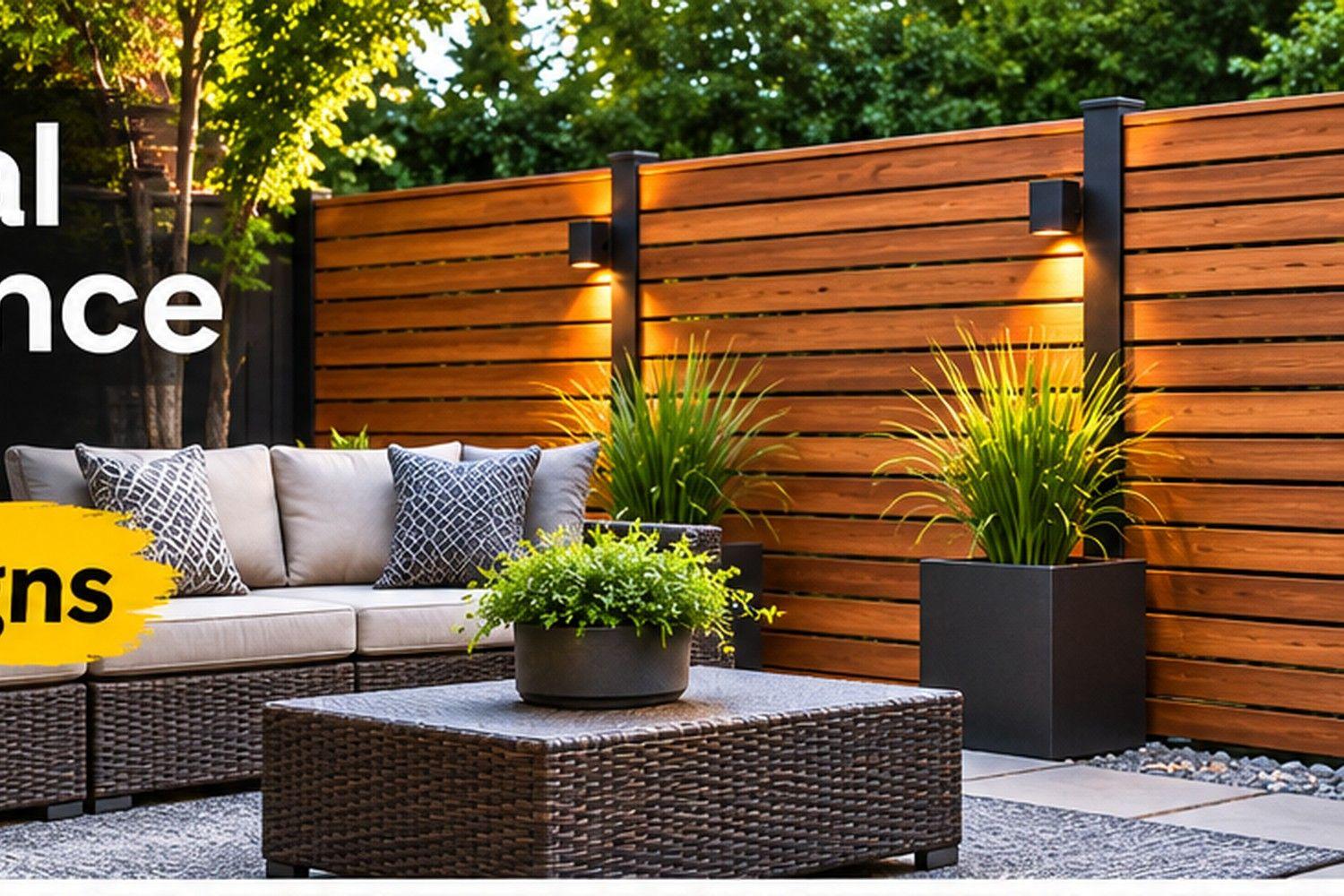
Horizontal wood fence panels are a popular way to create backyard privacy while giving an outdoor space a clean, contemporary look. Their long lines can make a narrow yard feel wider, and the combination of wood boards, dark posts, landscaping, and lighting can turn a basic boundary into an architectural feature.
The right design depends on more than appearance. Board spacing determines how much you can see through the fence; wood species and finish affect maintenance; and post size, footing design, and connections must suit the fence height, soil, and wind exposure. This guide explores practical privacy designs and the details to consider before building.
Why Choose a Horizontal Wood Fence?
Horizontal boards create a strong visual rhythm that complements modern, mid-century, farmhouse, and transitional homes. They can be installed tightly for stronger privacy, spaced for airflow, overlapped for a layered appearance, or paired with metal posts and decorative inserts.
A fence can also define outdoor rooms, screen a patio, hide utility equipment, frame a garden, or provide a backdrop for planting and outdoor lighting. You do not always need to enclose the entire yard: a shorter privacy screen around a seating area may solve the problem with less material.
10 Horizontal Wood Fence Panel Privacy Designs
1. Classic Tight-Gap Cedar Slats
Evenly spaced cedar boards create a warm, simple boundary. Narrow gaps provide substantial visual screening while retaining a little light and airflow. Cedar's natural tones range from pale honey to reddish brown, so the fence can look attractive with a clear finish or a compatible exterior stain.
This versatile design works along a property line or behind a patio. Keep board widths and spacing consistent, and use lumber graded and intended for exterior use.
2. Full-Privacy Overlapping Boards
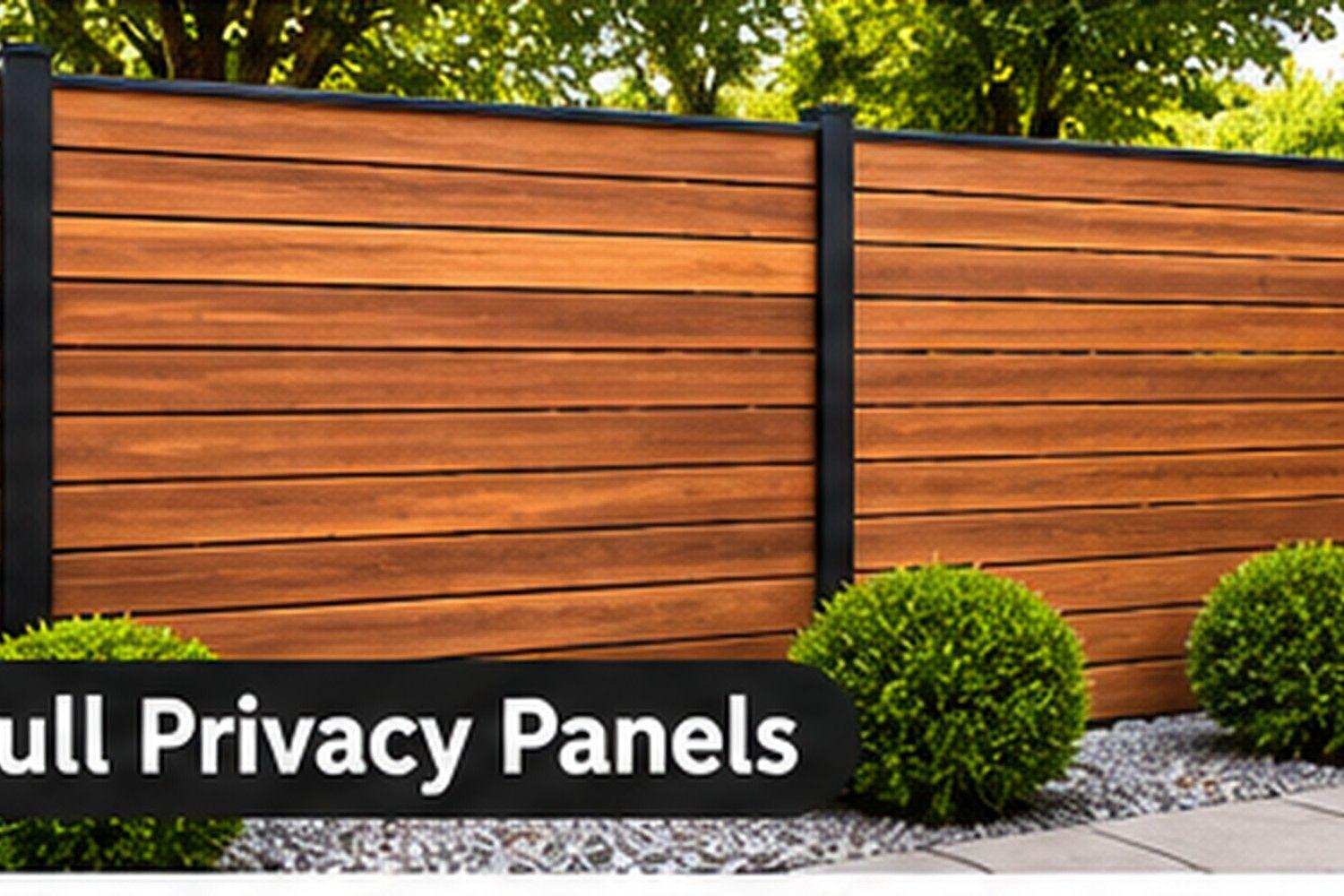
Overlapping horizontal boards create a more enclosed appearance and reduce direct sightlines through the fence. The layered profile can also add depth and shadow. Plan the overlap and fastening pattern to accommodate seasonal wood movement, and avoid details that trap water between layers.
This option can suit a patio, outdoor shower, or seating area overlooked by neighboring windows. Check the view from different angles before committing to the layout.
3. Narrow Shadow-Gap Slats
A shadow-gap design uses small, consistent spaces between boards. The gaps create a lighter architectural look and can make a tall fence feel less imposing. However, this style is not fully private from every angle.
Build a sample panel and inspect it from seated and standing positions on both sides. A gap that looks minor straight on may reveal a clear view from a raised deck or neighboring window.
4. Dark Metal Posts With Warm Wood Boards
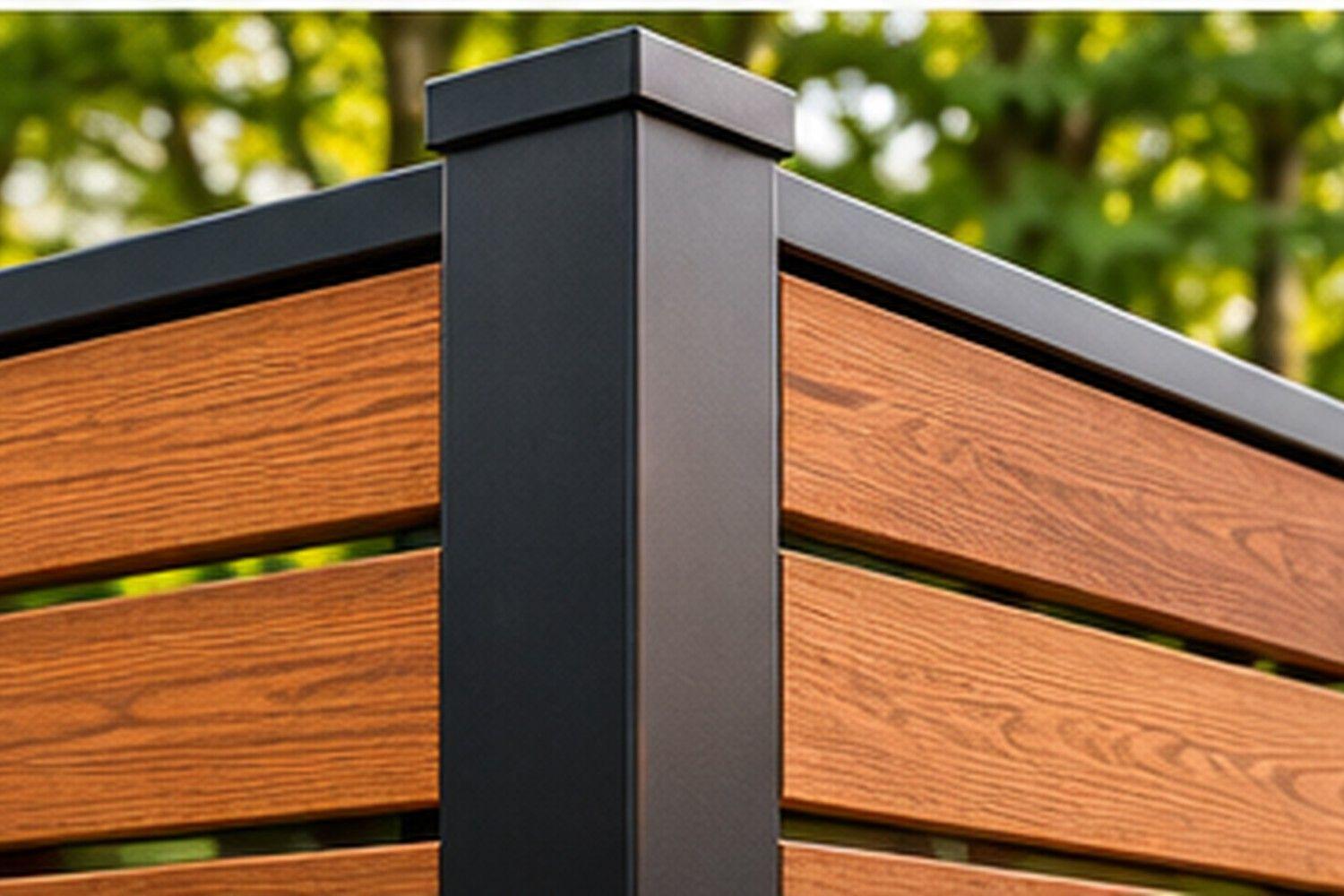
Black or charcoal metal posts contrast beautifully with cedar or other warm-toned boards. The combination feels modern and gives the fence a crisp structural rhythm. Choose posts, brackets, screws, and coatings rated for exterior exposure.
Check compatibility between the wood treatment and metal fasteners. Unsuitable hardware can corrode or leave stains, so follow the lumber and hardware manufacturers' recommendations.
5. Integrated Outdoor Lighting
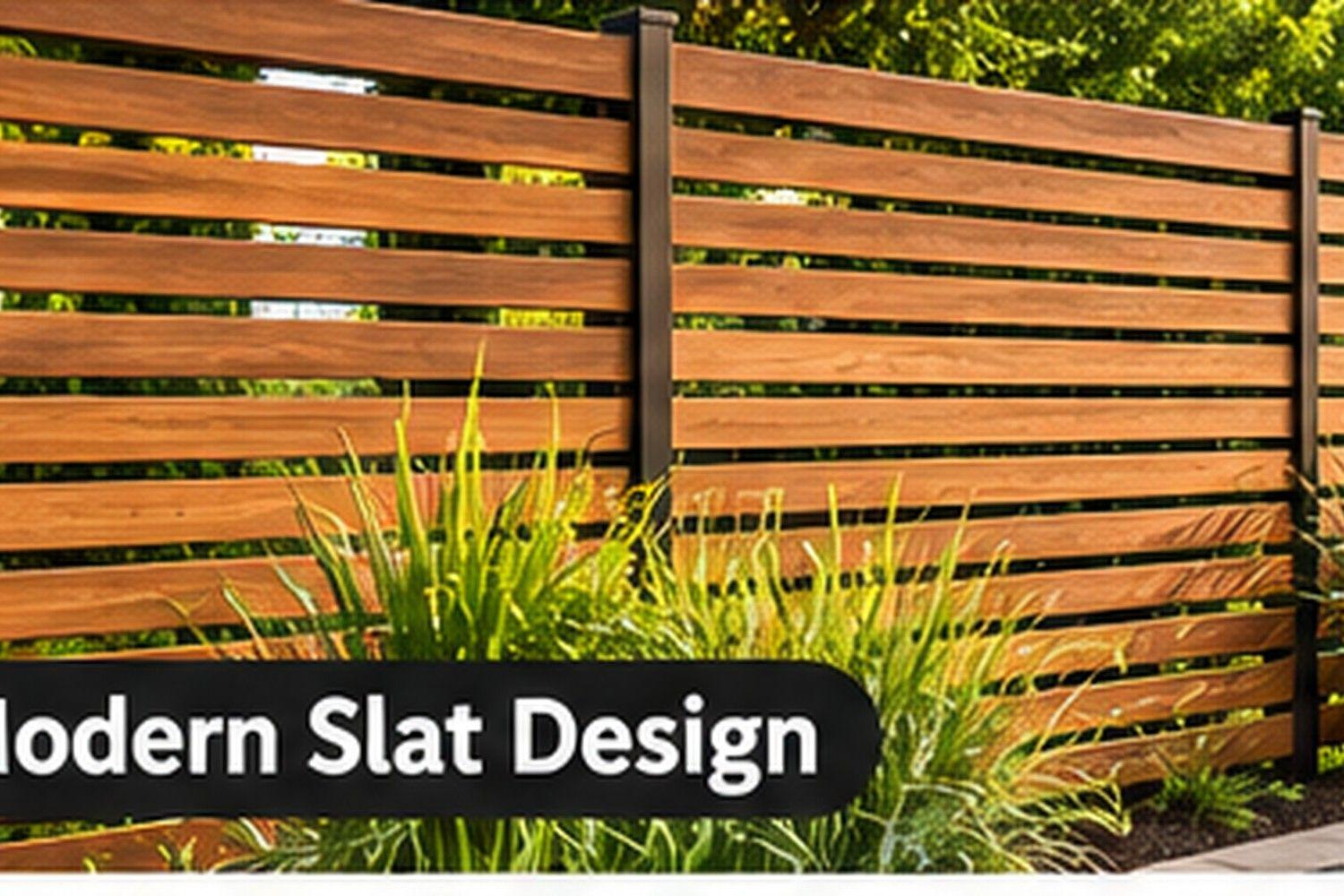
Small low-voltage fixtures mounted to posts or positioned in nearby landscaping can wash light across the horizontal boards. Warm lighting highlights the wood grain and makes a patio feel welcoming after sunset.
Plan wiring and fixture positions before installing the fence. Use outdoor-rated components, protect wiring from damage, and follow the manufacturer's electrical instructions and applicable local requirements.
6. Decorative Metal Inserts
Narrow decorative metal panels can break up a long wood fence. Geometric screens, vertical fins, or simple cutout patterns work well as accents near an entrance or garden feature.
Use inserts sparingly so they complement rather than compete with the boards. Make sure the panels are designed for outdoor use and have no sharp exposed edges.
7. Fence With Built-In Planter Zones
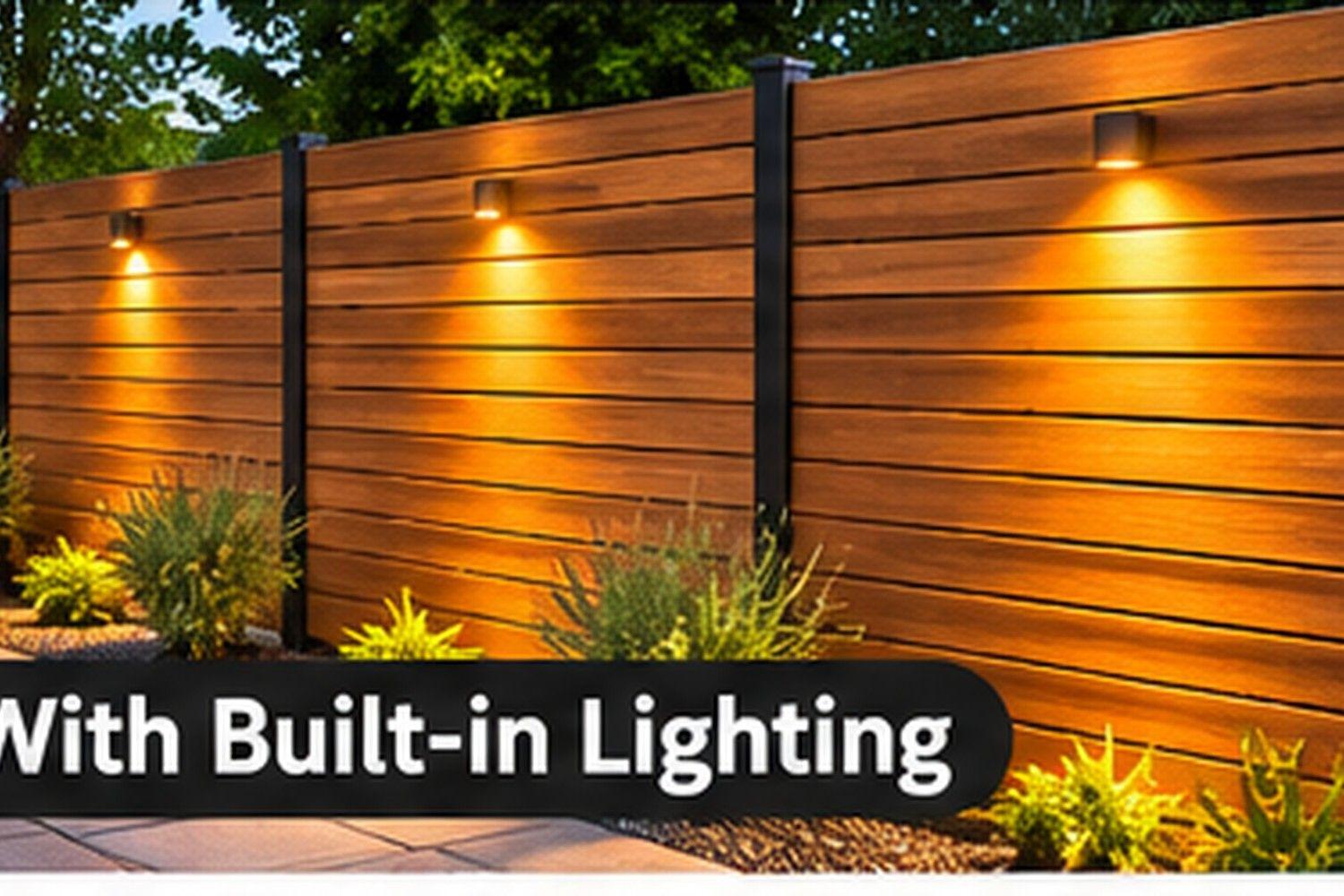
Planters in front of a horizontal fence soften its straight lines and add color and texture. Ornamental grasses, compact shrubs, and seasonal flowers can create a layered garden effect.
Use independent containers with drainage and leave space for air to circulate. Do not let wet soil sit against the boards, and do not attach heavy, water-filled planters to fence boards unless the structure is designed for that load.
8. Two-Tone Horizontal Fence
A two-tone design combines contrasting boards, posts, caps, or rails. Medium-brown boards with a charcoal frame create a tailored modern look, while natural wood with a darker top rail feels more subtle.
Keep the palette to two or three finishes. Test stain samples on the actual lumber because species, grain, age, and exposure affect the final color.
9. Horizontal Boards With a Top Lattice
A solid lower section with an open lattice band above can reduce the visual weight of a tall fence. The lattice may support suitable climbing plants and allow more light and airflow.
Remember that lattice does not provide the same privacy as solid boards. Check sightlines and local height rules, and keep climbing plants pruned away from nearby structures.
10. L-Shaped Patio Privacy Screen
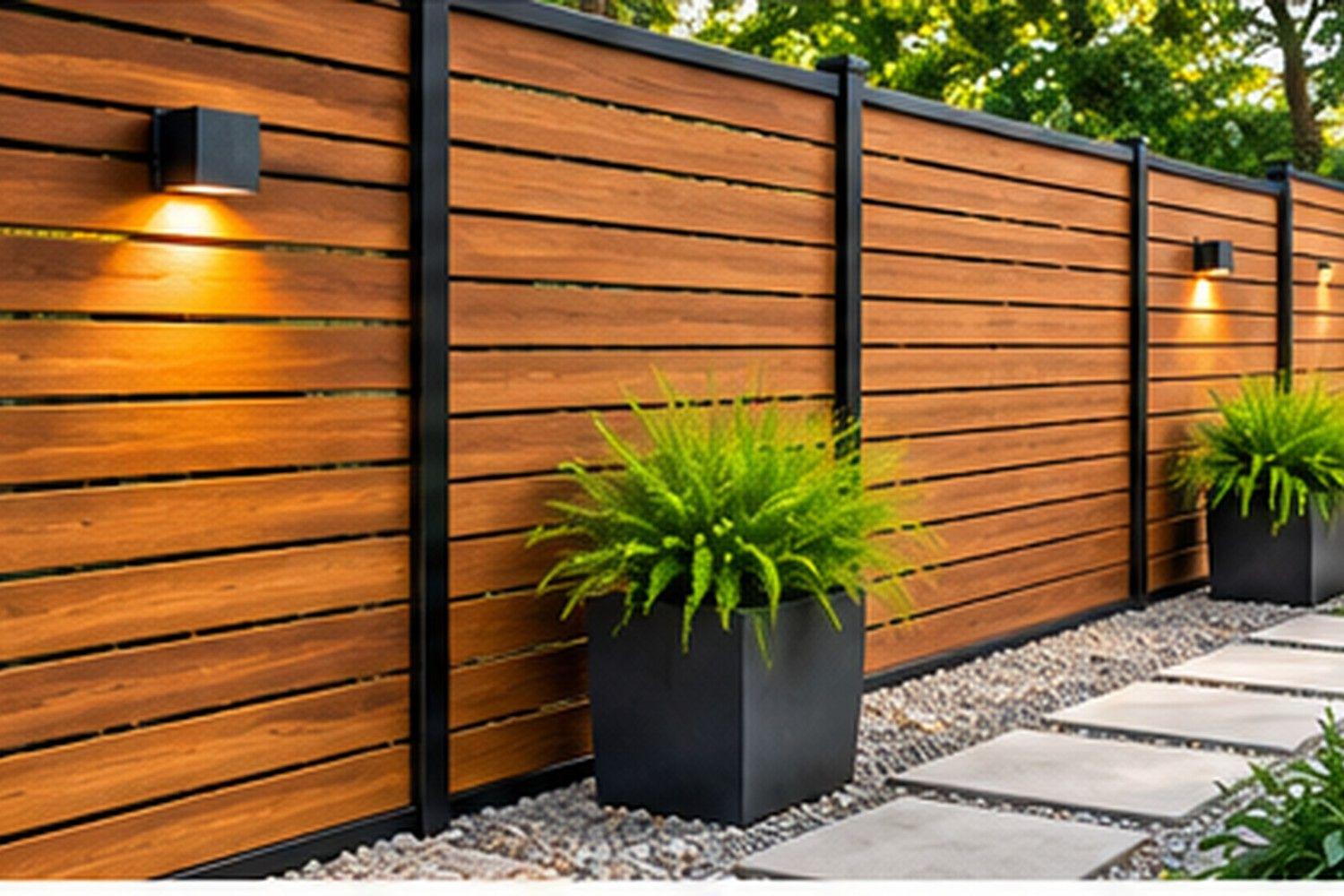
An L-shaped screen can create a sheltered corner around a dining set, hot tub, or outdoor lounge without enclosing the whole yard. It is often a practical choice for smaller spaces because it blocks specific views while preserving an open garden.
Keep gates, stairs, exits, and required clearances unobstructed. For pools and hot tubs, verify the applicable barrier and electrical safety rules; a decorative screen is not automatically a compliant safety barrier.
Choosing the Right Wood
Wood selection affects appearance, durability, price, and maintenance. Availability and performance vary by region, so compare local suppliers and ask about grade, moisture content, treatment, and exterior suitability.
- Western red cedar: Popular for its warm color, relatively light weight, and natural decay resistance. It can weather to gray if left unfinished.
- Redwood: Attractive and durable in suitable grades, although cost and availability vary by location.
- Pressure-treated pine: Often budget-friendly and widely available. Follow treatment guidance for handling, drying, compatible hardware, and finishing.
- Cypress: Used in some regions for outdoor projects. Check local availability and grade.
- Thermally modified wood: Can offer improved dimensional stability for certain applications, but follow the product's specifications and installation guidance.
Use boards intended for exterior fencing, not interior trim or unprotected indoor lumber. Follow the treatment manufacturer's instructions for cut ends, handling, and compatible fasteners.
Board Spacing: Privacy Versus Airflow
Tight spacing provides a more solid appearance, while wider gaps let in more light and air. There is no universal gap that guarantees privacy because the result depends on board width, fence height, terrain, viewing angle, and the height of nearby windows or decks.
Make a small sample panel before buying all the materials. Check it from likely viewing positions, including diagonal angles. If privacy is the priority, look at the fence from both sides and from raised areas.
Wood changes dimension as moisture levels change. Follow the lumber supplier's spacing guidance rather than forcing boards tightly together. Allow for seasonal movement, drainage, and airflow.
How to Plan Your Fence
1. Confirm boundaries and local rules
Verify the property line before setting posts. Check local rules for fence height, front-yard restrictions, corner visibility, easements, pool barriers, and permits. Homeowners association rules may also apply.
2. Locate underground utilities
Before digging, contact the appropriate utility-location service and follow its process. In the United States, homeowners can generally start through 811, although timing and procedures vary by state. Never assume a shallow post hole is safe without a locate.
3. Measure the layout
Measure the fence run, mark changes in grade, and decide where gates and returns will go. Plan panel widths so board lengths and post locations work together. Sloping ground may require stepped sections or a racked system designed for the terrain.
4. Account for wind and soil
A tall, solid fence can act like a sail. Post size, spacing, embedment, footing design, soil conditions, fence height, and local wind exposure all affect stability. Do not copy generic post-hole dimensions from an unrelated project. Use a locally appropriate design or consult a qualified fence contractor or engineer for tall, long, or exposed runs.
5. Choose a finish
An exterior stain or sealer can help manage moisture and UV exposure, but it does not eliminate maintenance. Select a product labeled for the wood and fence application. Follow its instructions for preparation, moisture, application temperature, coverage, and recoating.
Installation Details That Help a Fence Last
Good fence details shed water. Use caps or sloped top details that direct rain away, keep boards clear of soil, and avoid pockets where water can collect around posts or behind trim.
Use exterior-rated fasteners compatible with the lumber and any preservative treatment. Stainless steel or appropriately coated fasteners may be recommended depending on the wood and exposure. Follow hardware guidance rather than mixing metals without checking compatibility.
Pre-drilling can reduce splitting near board ends, especially with dense or dry lumber. Support board spans as required by the design and use a consistent fastening pattern. Gates need hardware sized for their weight and expected use.
Maintenance for Horizontal Wood Fence Panels
Inspect the fence seasonally and after severe weather. Look for loose boards, popped fasteners, leaning posts, cracked caps, peeling finish, rot near the ground, and corrosion around hardware. Trim plants so they do not hold moisture against the boards.
Clean the surface gently with a product approved for the wood and finish. Aggressive pressure washing can damage wood fibers and leave marks. If the fence is stained, follow the product's maintenance instructions and test cleaners or maintenance coats in an inconspicuous area.
The maintenance interval depends on sun, rain, shade, wood species, finish, and exposure. A fence facing strong afternoon sun may fade faster than a shaded section. Recoat according to product guidance and the actual condition of the wood rather than a fixed calendar schedule.
Common Design Mistakes to Avoid
- Ignoring angled sightlines: Gaps may reveal more than expected from a neighboring window or raised patio.
- Using unsuitable fasteners: Corrosion and staining can shorten the fence's life.
- Building too close to soil: Persistent moisture near the bottom encourages deterioration.
- Skipping structural planning: Long, solid walls can place substantial stress on posts and connections in wind.
- Ignoring seasonal movement: Rigid details can contribute to splitting or distortion.
- Overdecorating: Too many colors, inserts, and lighting effects can compete with the house.
- Skipping utility locates and boundary checks: This can create safety, legal, and repair problems.
- Treating a decorative screen as a safety barrier: Pool and hot-tub barriers have separate requirements.
Frequently Asked Questions
Are horizontal wood fences more private than vertical fences?
Not automatically. Privacy depends on board width, spacing, height, construction, and viewing angle rather than board direction. A tight horizontal layout can provide strong screening, while widely spaced boards may allow clear views.
What is the best wood for a horizontal privacy fence?
Cedar, redwood, pressure-treated pine, cypress, and thermally modified wood are common choices. The best option depends on local availability, budget, climate, grade, and maintenance expectations. Choose exterior-rated material and compatible fasteners.
Do horizontal fence boards sag?
They can if boards are too long, too thin, poorly supported, or fastened incorrectly. Use a design that supports the span and accounts for wood movement and local weather exposure. Follow supplier or contractor guidance for the selected materials.
Should horizontal fence boards touch?
Some designs use tight joints, while others use small gaps. Spacing depends on the wood's moisture condition, species, installation system, and desired privacy. Follow supplier guidance and allow for seasonal movement and drainage.
How tall can a horizontal privacy fence be?
Allowed height varies by jurisdiction, property location, corner visibility, and special conditions such as pools or easements. Check local building and zoning rules before construction. Taller fences may also need a more robust structural design.
Can I install horizontal boards on existing posts?
Possibly, but inspect the posts, footings, spacing, condition, and connections first. Horizontal boards can create different fastening and load requirements than the previous fence. A fence professional can assess whether the existing structure is suitable.
How do I keep a wood fence from turning gray?
A suitable exterior stain or UV-protective finish can slow color change, but all exterior wood weathers. Clean and maintain the fence according to the product label. Some homeowners prefer the natural silver-gray patina and leave the wood unfinished.
Final Thoughts
Horizontal wood fence panels offer a flexible way to add privacy and give a backyard a more finished appearance. From tight-gap cedar slats to metal-framed boards, integrated lighting, planter zones, and corner screens, the style can adapt to different homes and outdoor layouts.
Start with sightlines, property rules, soil, and wind exposure. Then choose durable exterior materials, compatible fasteners, and a board layout that balances privacy with airflow. A simple, well-built fence with thoughtful proportions will usually look better for longer than an elaborate design that ignores structure and maintenance.
Sources
- USDA Forest Products Laboratory: Wood Handbook. Checked November 7, 2026
- Call 811: Before You Dig. Checked November 7, 2026
- American Wood Council: Design and Construction Resources. Checked November 7, 2026
- International Code Council: Codes and Standards. Checked November 7, 2026
- USDA Forest Service: Wood Durability and Preservation Resources. Checked November 7, 2026
Share this article
Get new guides by email
Practical home articles and free resources. No spam, and you can unsubscribe at any time.
Keep reading
7 Ways to Hide a Chain Link Fence With Plants
A chain link fence is practical, durable, and relatively affordable, but its open metal pattern can make a backyard feel unfinished. The good news is that...
November 2026, 11 min read
11 Cheap Backyard Privacy Fence Ideas That Look Stylish
Explore 11 cheap backyard privacy fence ideas, from wood slats and bamboo to lattice, living hedges, and renter-friendly screens. Create a stylish outdoor retreat on a budget.
November 2026, 10 min read
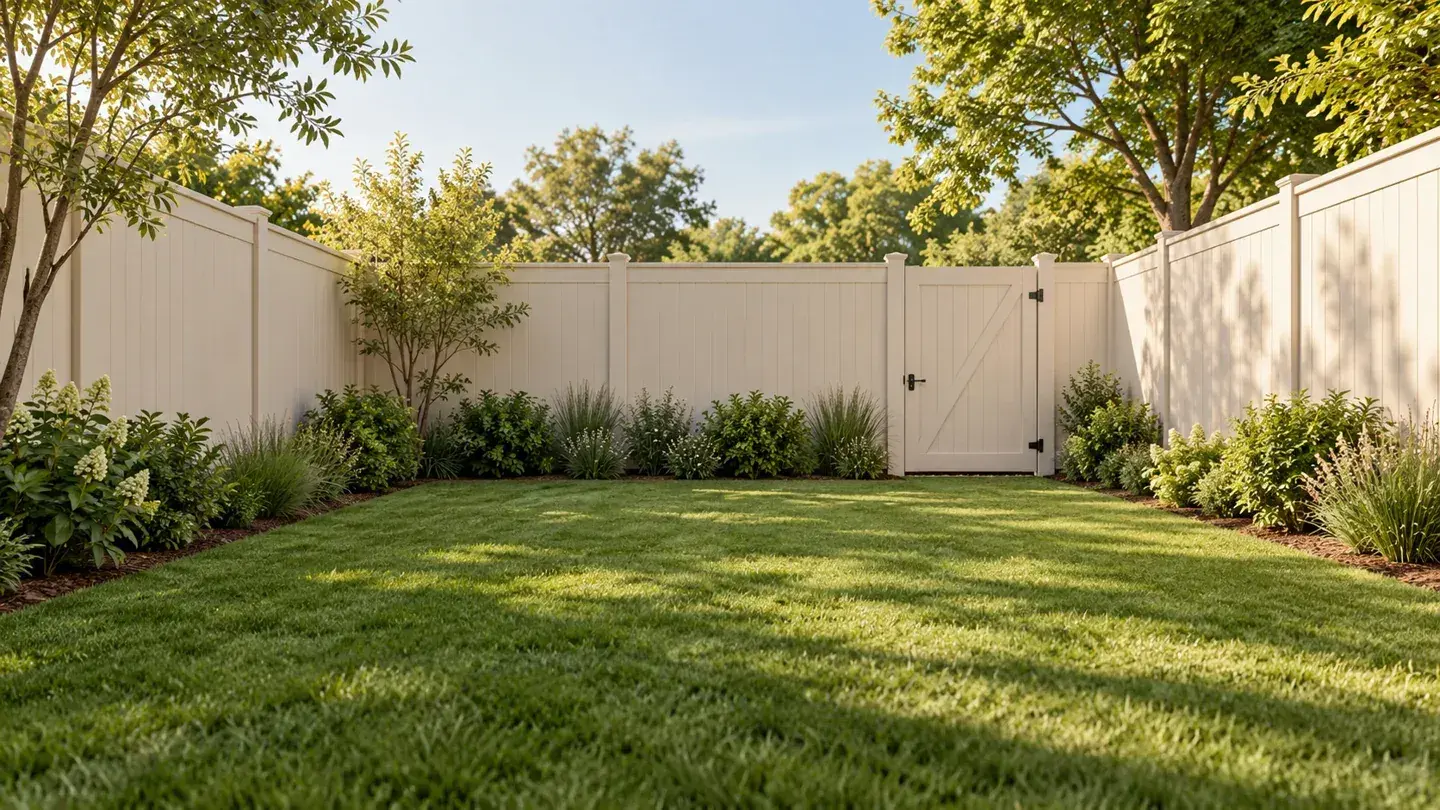
The Best Types of Fencing for Dogs That Jump or Climb
Compare five fencing and enclosure approaches for dogs that jump or climb, with illustrations and practical checks for gates, footholds, and escape routes.
October 2026, 5 min read