Garden Design Cost in the US: Budgeting for Your Outdoors
Plan a US garden design budget by comparing design fees, deliverables, revisions, and construction exclusions, with an illustrative fee calculation.
By Home Crane Editors. . 5 min read.
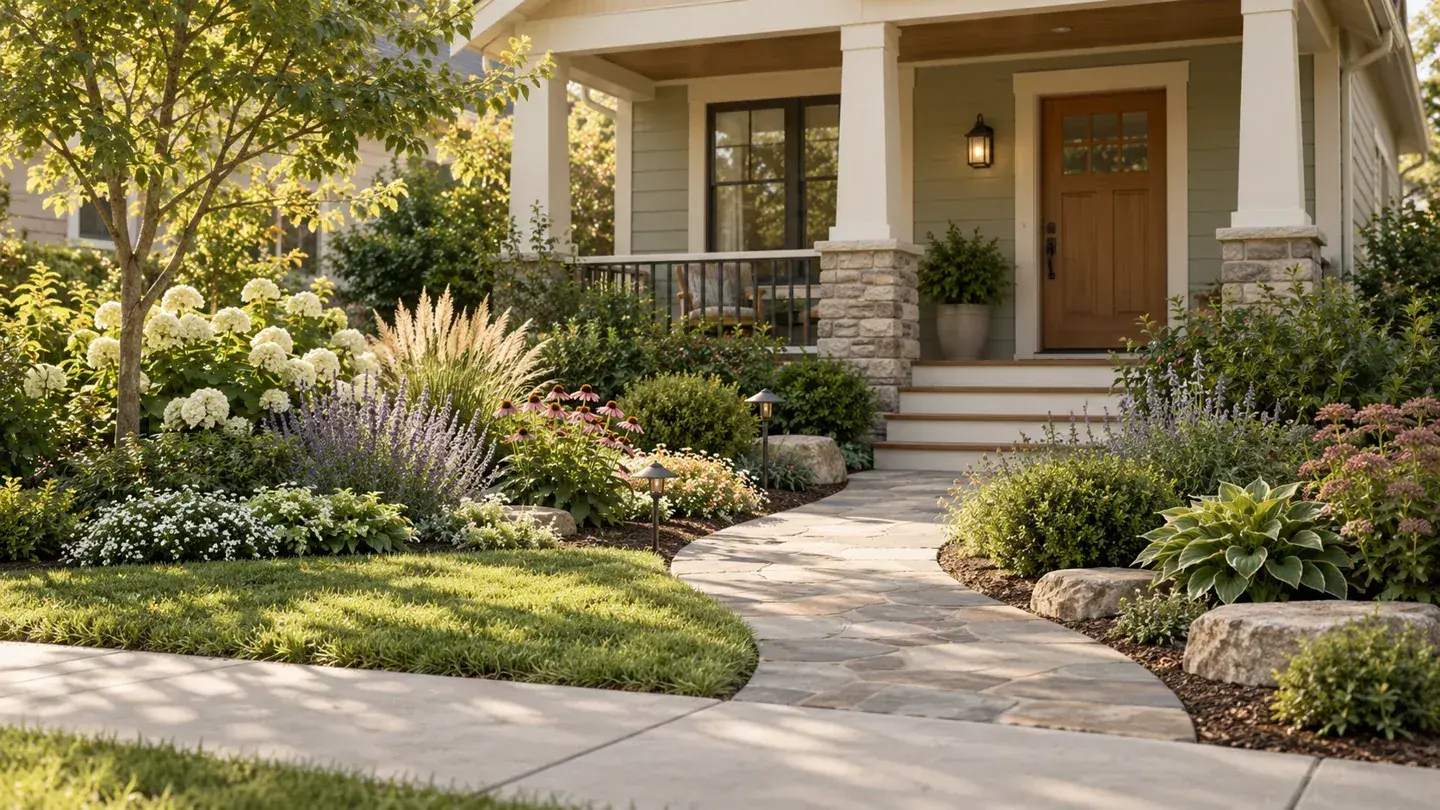
Garden design cost is the fee for planning your outdoor space, which is different from paying to build it. As a US reference checked October 5, 2026, HomeGuide lists landscape design plans at $700 to $3,000 and designer time at $50 to $150 per hour. Its small garden design example is $300 to $600. These are broad published estimates, not a promise that your project will fit those ranges.
A useful quote states exactly what you receive: advice, a concept sketch, a planting plan, construction details, or help during installation. Compare those deliverables before judging whether the fee is reasonable.
Decide What You Need the Designer to Solve
A planting refresh around an existing patio is different from a complete yard redesign. The first might need plant selection and placement. The second could involve drainage, levels, paths, lighting, irrigation, and coordination with several trades.
Write a short brief before requesting proposals. Describe how you want to use the garden, what currently frustrates you, what must remain, and how much maintenance you want to undertake. Include photographs and a simple marked-up property plan if one is available.
State your approximate installation budget separately from the design fee. Without that distinction, a designer can create an attractive proposal that is more expensive to build than you intended. Ask for early feedback if the brief and budget do not match.
Compare Services by Deliverable
| Feature | What to ask for | What may remain outside the fee |
|---|---|---|
| Consultation | Advice, priorities, and written follow-up | Drawings, plant quantities, installation |
| Concept design | Layout and overall design direction | Detailed levels and construction specifications |
| Planting plan | Plant names, positions, sizes, and quantities | Irrigation design and purchasing |
| Detailed design | Agreed drawings and specifications | Specialist engineering and approvals |
| Construction support | Agreed visits and responses to questions | Full-time supervision or contractor work |
The names of service packages are not standardized. One firm's “full design” may include several revisions and site visits; another's may stop at a digital concept. Ask for a written list rather than inferring scope from the package title.
A rendered picture is useful for understanding the appearance, but it may not supply the measurements or details a contractor needs. Confirm whether the work is intended for inspiration, pricing, or construction before paying for a particular output.
How Designers May Charge
An hourly arrangement can suit an initial consultation or a scope that is not yet well defined. Ask for an estimated number of hours, a spending cap or review point, and approval before additional work.
A fixed fee can be easier to budget when deliverables are clear. Define how many concepts, revisions, meetings, and visits it includes. Also ask what counts as a changed brief rather than an ordinary revision.
Some providers link fees to a construction budget or offer design alongside installation. In those cases, ask what the percentage applies to or how the design charge is treated if you do not proceed with their build proposal. A credited design fee still needs clear terms.
HomeGuide states that its data comes from research and project costs reported by members. Treat it as a starting reference with a broad national scope. Local proposals and your required deliverables are the stronger basis for a purchasing decision.
What Makes a Project More Complex
Size matters, but complexity can matter more. A small sloping yard with poor access may require more investigation than a larger flat planting area. Existing trees, uncertain boundaries, drainage problems, and retaining structures can all change the work required.
Tell the designer about known conditions at the start. Supply any surveys, relevant drainage information, or earlier drawings you already have, while allowing the professional to identify what needs checking. Do not assume an online aerial image is a substitute for accurate site information.
For retaining walls, major changes in grade, or difficult drainage, ask whether a landscape architect or another qualified specialist is needed. Confirm applicable local requirements for your specific proposal. The professional team should match the problem, not simply the garden's area.
Access is another practical issue. Ask how a contractor could bring in soil, remove debris, and deliver plants or paving. A design that ignores those constraints can be costly to implement even when the drawings themselves are straightforward.
A Hypothetical Design-Fee Calculation
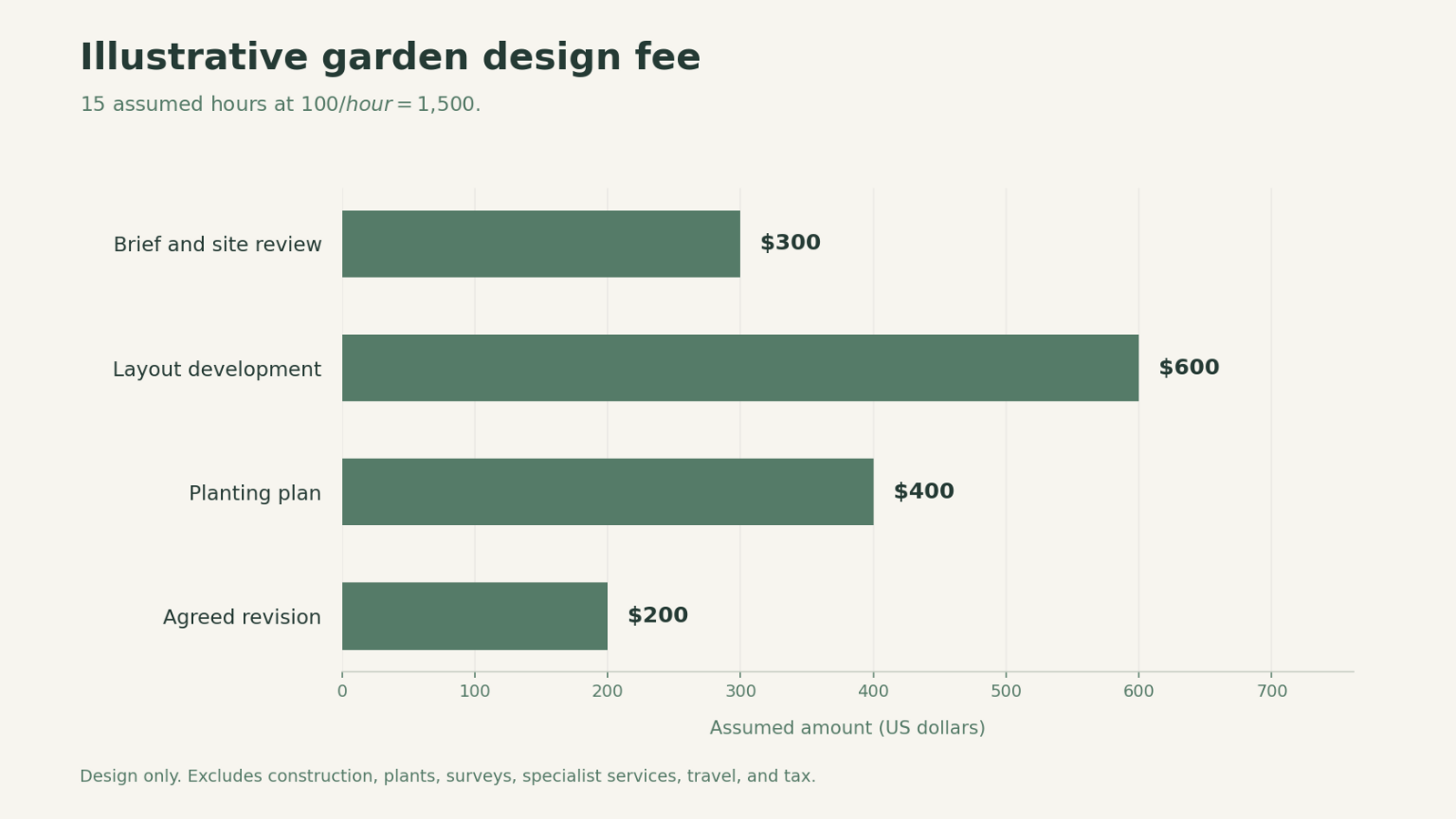
Suppose a designer proposes the following hourly scope at an assumed $100 per hour. These are illustrative inputs, not a recommended fee or real quotation.
| Feature | Assumed hours | Assumed fee |
|---|---|---|
| Brief and site review | 3 | $300 |
| Layout development | 6 | $600 |
| Planting plan | 4 | $400 |
| Agreed revision | 2 | $200 |
| Total | 15 | $1,500 |
The arithmetic is 15 hours × $100 = $1,500. This example excludes construction, plants, paving, surveys, specialist services, travel charges, and applicable taxes unless the proposal specifically includes them. It also assumes the revision stays within the original brief.
If you later request an outdoor kitchen instead of a simple planting bed, ask for a revised scope before work proceeds. A clear change process protects both the budget and the working relationship.
Keep the Construction Budget Separate
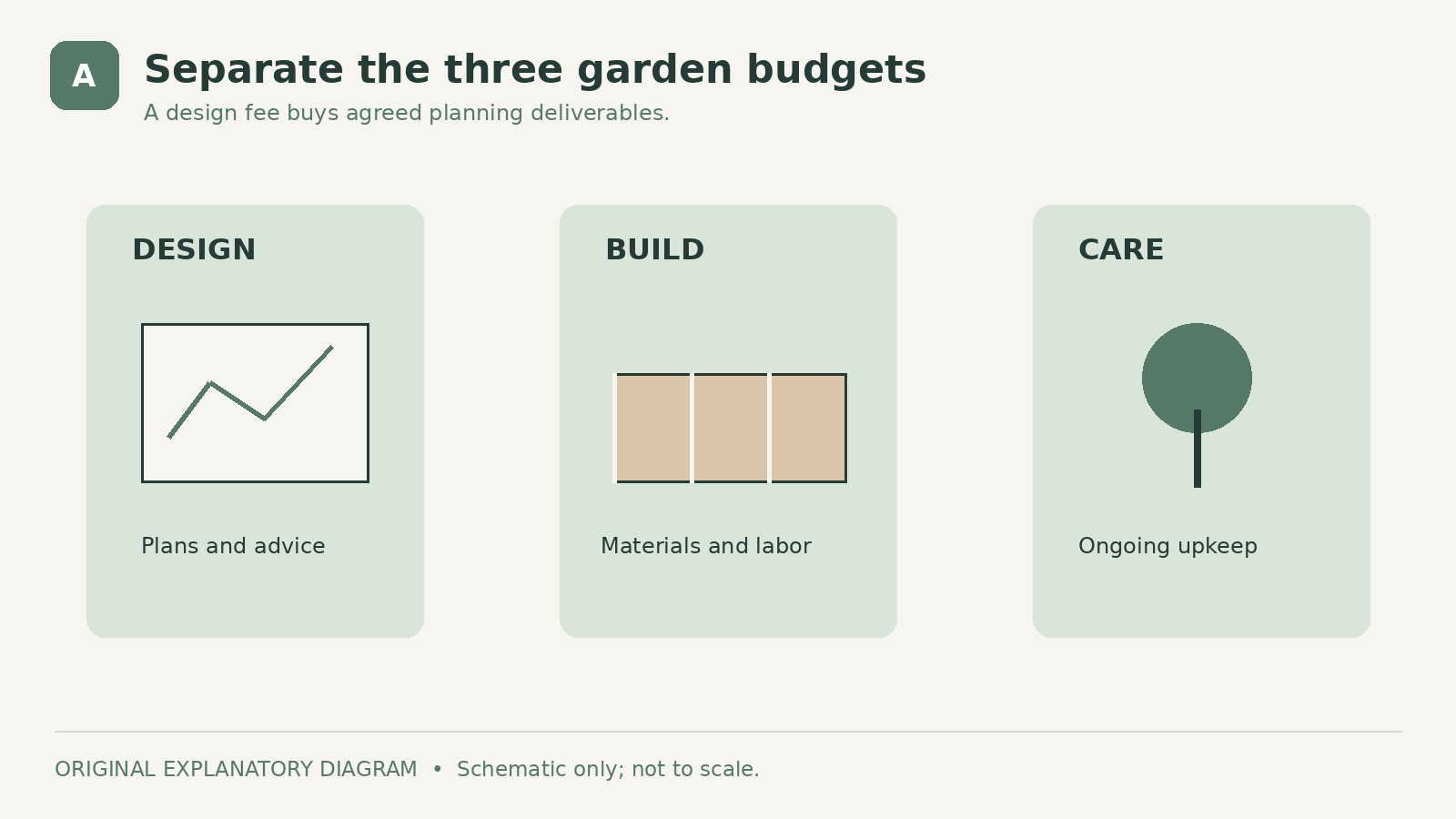
After agreeing on the design scope, build a second budget for implementation. Include materials, labor, site preparation, delivery, disposal, and any specialist work. Keep a separate reserve for uncertainties identified during planning rather than treating every unknown as already included.
Ask contractors to price the same drawings and specifications. If one quote uses larger plants, different paving, or less site preparation, the totals are not directly comparable. Request a written explanation of substitutions.
Discuss ongoing costs too. Irrigation, seasonal maintenance, pruning, and replacement plants affect what the garden costs to live with. Colorado State University Extension's water-wise design guidance connects garden planning with site conditions, intended use, and maintenance. Those principles are useful even when the plant palette must be adapted to another US region.
Reduce Scope Before Reducing Essential Work
If the first proposal is beyond your budget, identify which deliverables solve your main problem. A focused planting plan might be enough when hardscape and drainage are staying. A complete master plan with phased installation may make more sense when several areas need coordinated work.
Phasing can spread spending, but the sequence matters. Discuss whether later construction would damage an earlier planting phase or require moving irrigation twice. Keep access routes and underground work in the plan from the beginning.
Retaining healthy, suitable plants and serviceable hardscape can also reduce the work involved. Ask the designer what deserves keeping. Starting over is a choice, not a requirement for a cohesive result.
Questions to Settle Before Signing
Confirm the deliverables, fee basis, revision allowance, schedule, and payment milestones. Ask who measures the property, who handles specialist input, and whether you may share the plans with independent contractors for pricing. Request relevant examples of similar work.
Finally, ask what you will have in hand when the design service is complete. The answer should be concrete enough that both sides can recognize completion. A clearly scoped plan helps you spend on the outdoor space you actually need, with fewer assumptions carried into construction.
Sources
- HomeGuide lists landscape design plans at $700 to $3,000 and designer time at $50 to $150 per hour. Checked October 5, 2026
- Colorado State University Extension's water-wise design guidance. Checked October 5, 2026
Share this article
Get new guides by email
Practical home articles and free resources. No spam, and you can unsubscribe at any time.
Keep reading
HVAC Replacement Cost in Texas: Hidden Fees to Check
Compare Texas HVAC replacement costs and hidden-fee risks, with equipment scope, duct assessment, installation allowances, and current incentive cautions.
October 2026, 4 min read
How Much Does a Lanai Screen Enclosure Cost in Florida?
Compare Florida lanai screen enclosure scopes, screen-area versus footprint pricing, frame and mesh choices, and a transparent sample budget.
October 2026, 4 min read
Stucco Repair Cost in Arizona: What Homeowners Should Know
Understand Arizona stucco repair pricing, surface damage versus concealed moisture, access, finish matching, and an illustrated repair budget.
October 2026, 5 min read