Genius Small Pantry Organization Hacks Using Dollar Tree
Organize a small pantry with six practical Dollar Tree ideas, from meal baskets to food containers, plus measuring tips and a realistic budget.
By Home Crane Editors. . 4 min read.
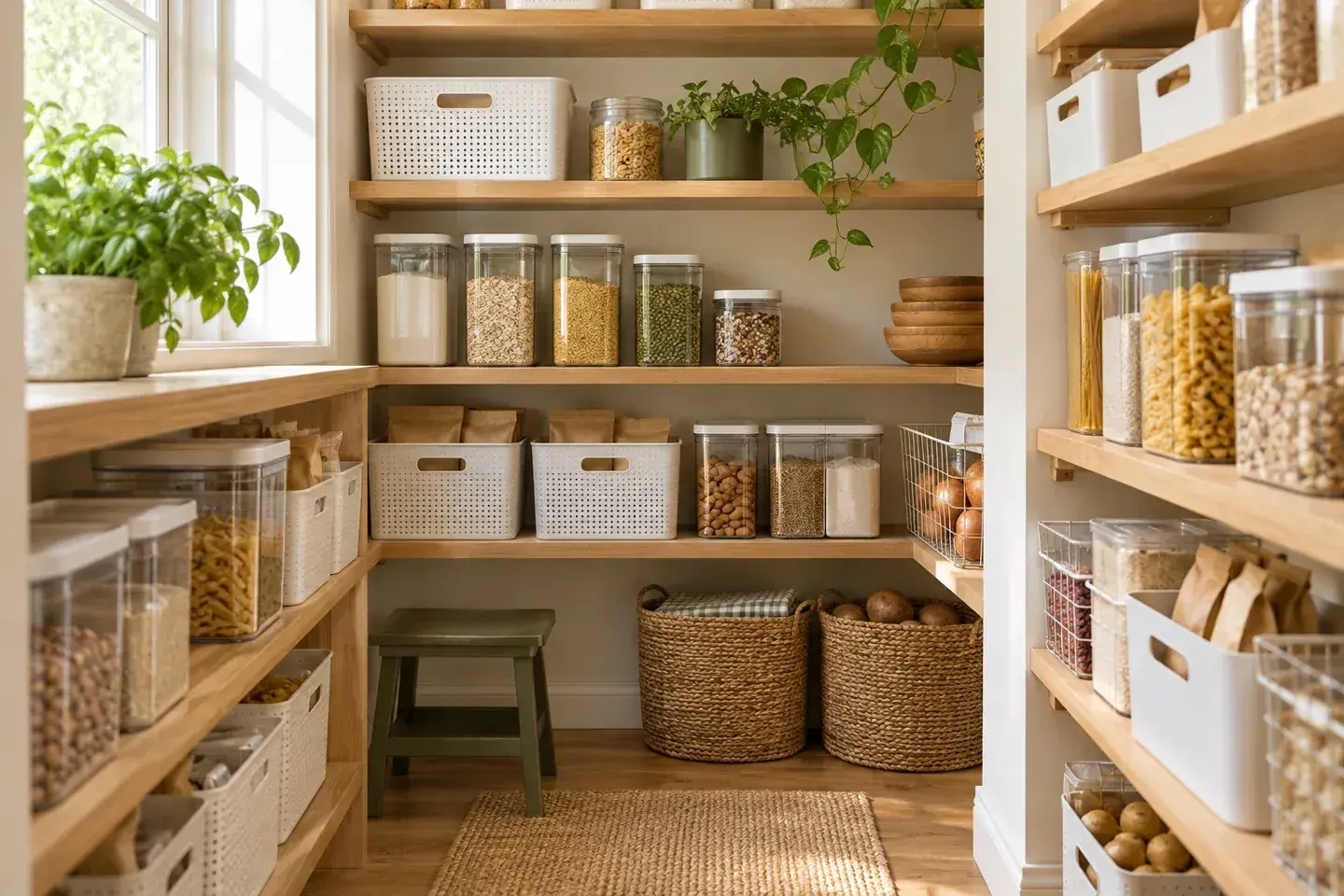
A small pantry usually needs clearer categories and easier access before it needs more containers. Dollar Tree baskets and food-storage items can help, but the best purchase is the one that fits your shelf and solves a specific problem.
Start by measuring shelf width, depth, and the clear height above it. Account for door hinges and the opening through which a filled basket must pass. Then sort what you already own. These six ideas focus on affordable organization without pretending that every store carries the same products or that every item has the same price.
1. Make grab-and-go zones with handled baskets
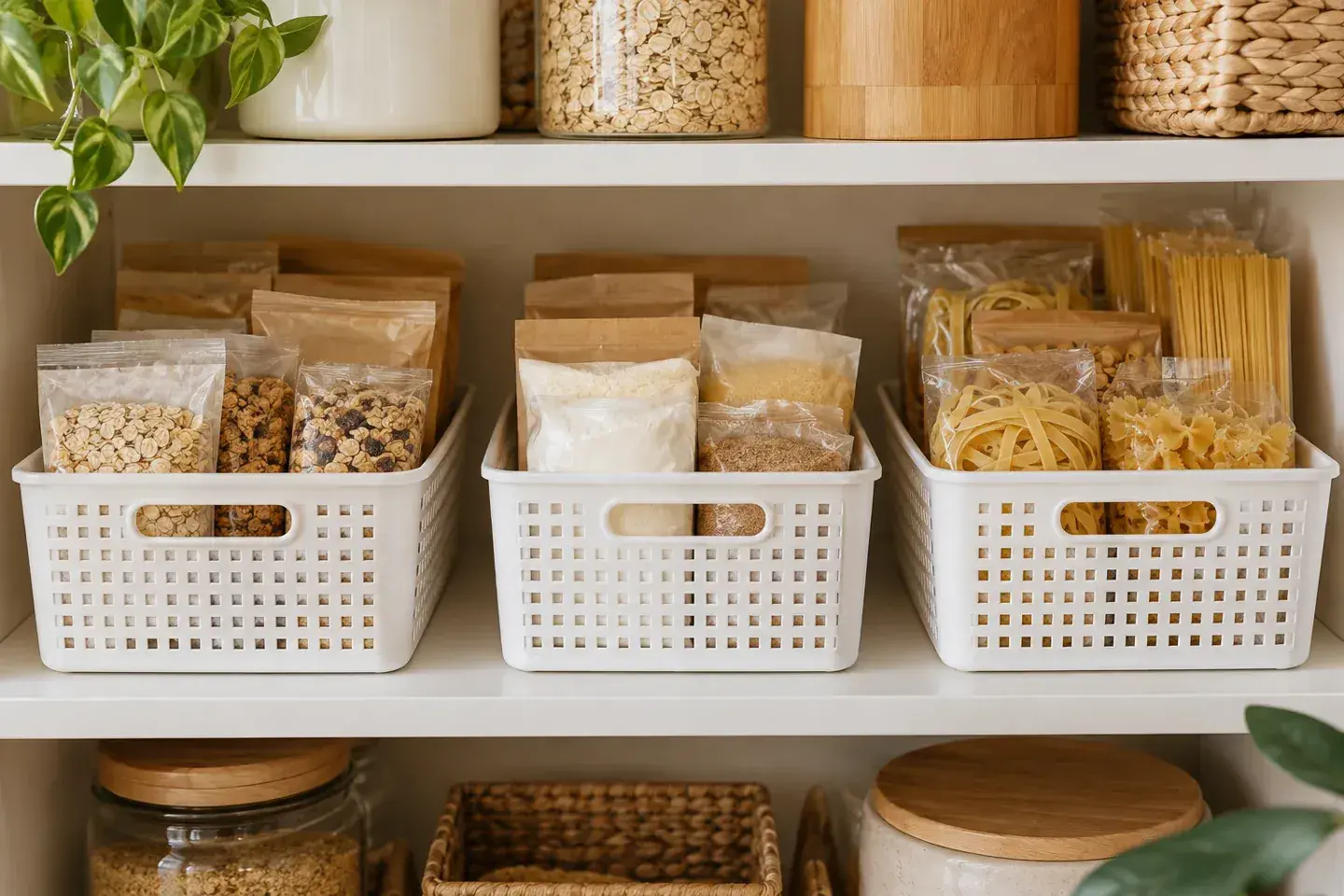
Group groceries by the task they support: breakfast, baking, packed lunches, or a familiar weeknight meal. A handled basket lets you bring the whole category to the counter and return it together.
Choose a basket that stays manageable when full. Heavy cans can turn a large, inexpensive bin into an awkward lifting job. Keep heavier goods on an accessible lower shelf and reserve lighter packets for higher storage.
Dollar Tree's rectangular basket listing is an example of the type to look for, but confirm dimensions and stock before designing around it. Leave enough room beside the basket to grip it. A shelf packed edge to edge with attractive containers can be less usable than a slightly looser arrangement.
2. Put a clear “use first” bin at eye level
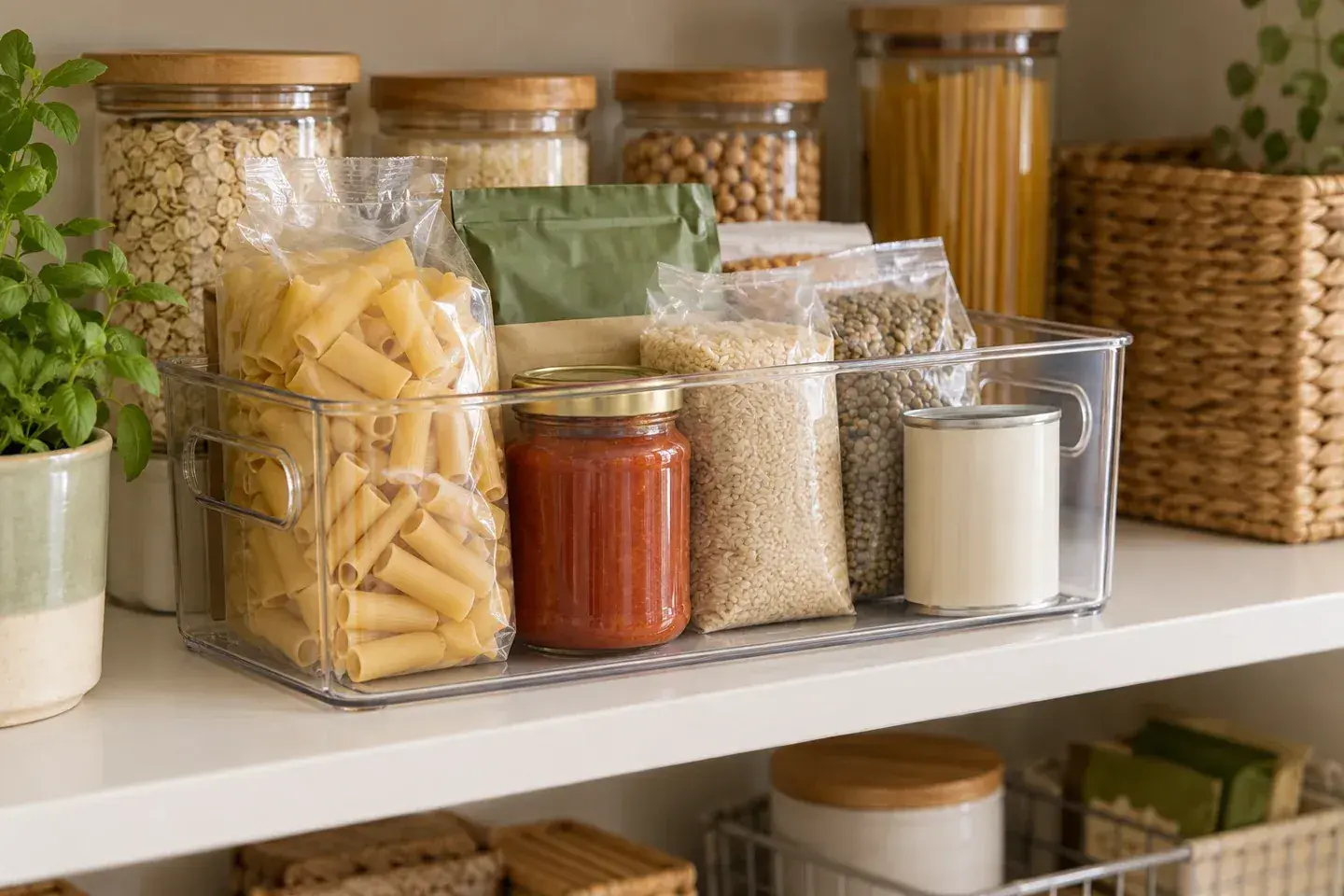
Set aside a small, visible bin for open packages and items you want to use soon. The point is to make the next meal decision easier, not to move every older item into one overflowing container.
Keep original labels with the food and follow storage instructions after opening. Products labeled for refrigeration belong in the refrigerator, even if they look similar to shelf-stable products. A pantry bin does not change how a food must be stored.
A clear Dollar Tree storage bin illustrates the format. Use general-purpose bins to organize sealed packages unless the product is specifically suitable for direct food contact. Keep the bin shallow enough that the contents remain visible without unloading it.
3. Stand small packets upright in a narrow basket
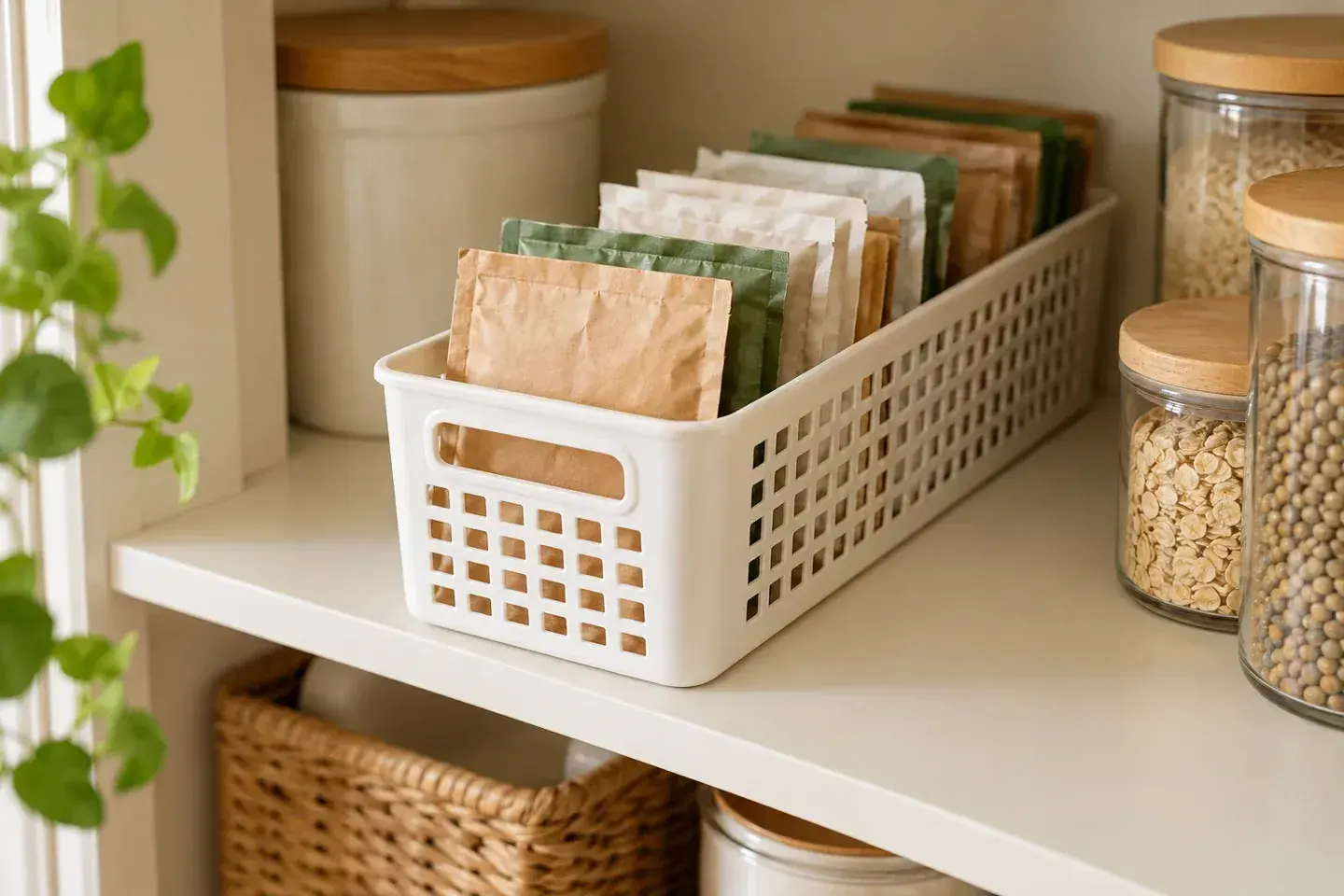
Seasoning envelopes, oatmeal packets, and small snack pouches disappear easily behind taller groceries. A narrow basket allows them to stand upright, so you can see and remove one at a time.
Sort by a simple category that your household recognizes. Elaborate subcategories may look tidy on the first day but become difficult to maintain. A basket labeled “meal packets” can work better than six miniature categories that no one remembers.
Avoid folding or cutting packaging in ways that remove preparation instructions, ingredient information, or identification codes. If a packet leaks, empty and clean the basket before returning the remaining food. A container is most useful when it makes routine maintenance easier, not when it hides spills.
4. Use a suitable shelf riser for visibility
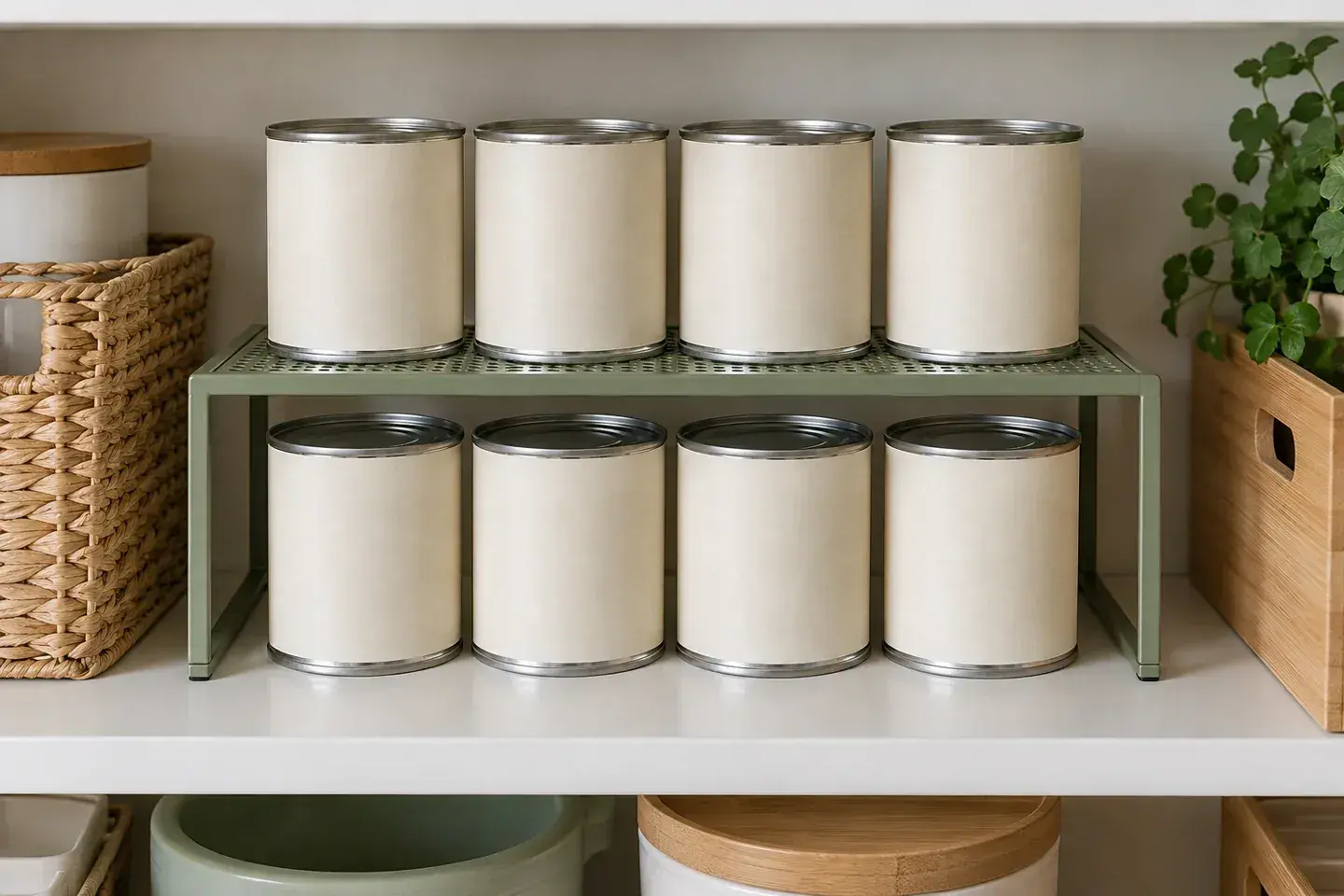
A small freestanding riser can make a second row of cans visible without stacking them into an unstable tower. Measure the shelf height with the tallest can in place before buying, and confirm that the riser is rated for the intended load.
Place it on a flat, stable shelf and keep cans within the supported area. Do not improvise a food-storage riser from lightweight decorative items that were never intended to hold the weight. If a suitable product is not available at your local Dollar Tree, skip the purchase or compare a purpose-made option elsewhere.
Start with a short row, then test whether you can reach the back comfortably. A riser that forces you to lift a heavy can over another stack may be less useful than a shallow basket. Visibility and safe access matter more than using every inch of height.
5. Decant only the foods that benefit
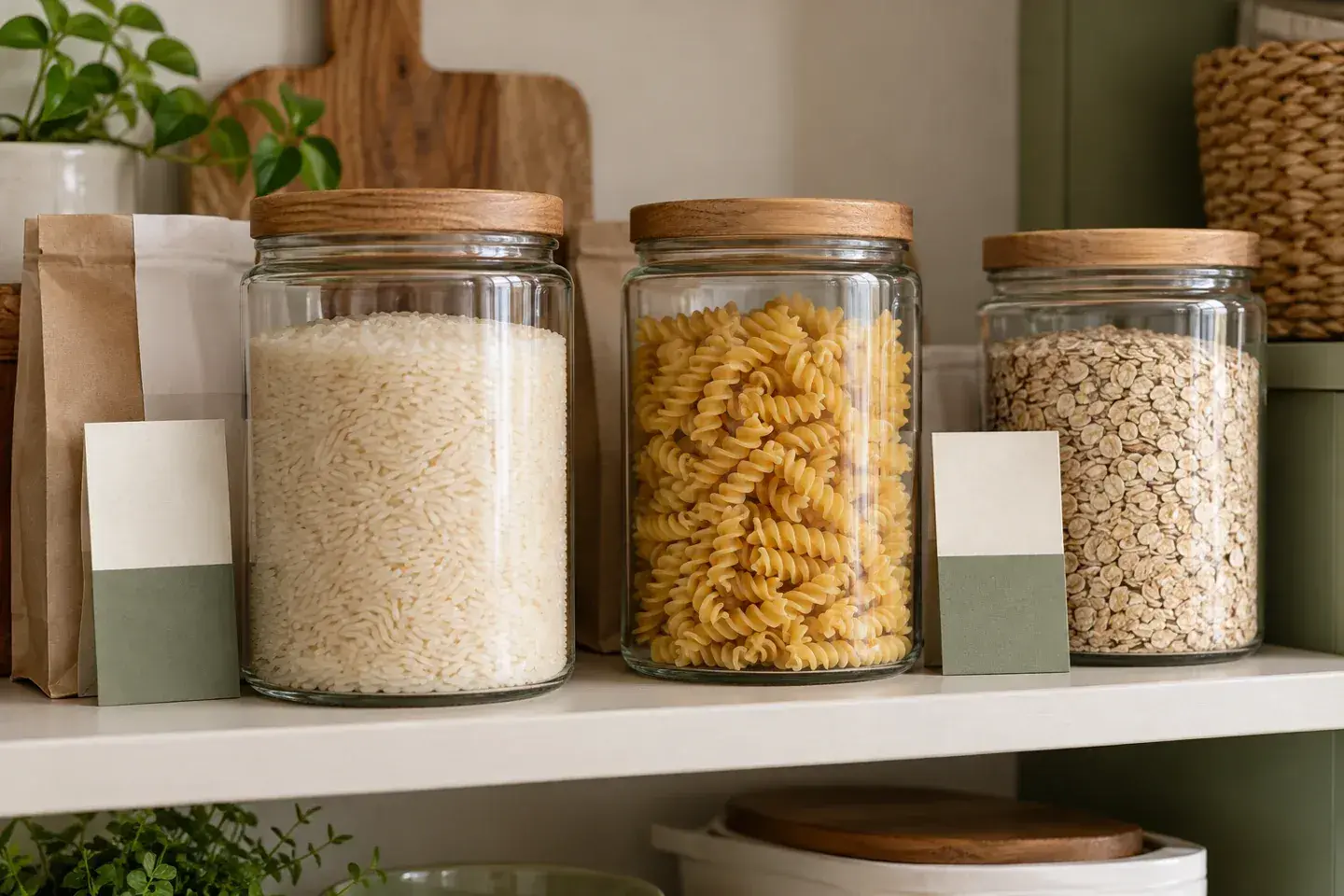
Matching containers can reduce torn bags and make a few frequently used dry foods easier to handle. They can also cost money, consume space, and separate food from important information. Choose selectively.
Use containers intended for food storage, such as the type represented by Dollar Tree's food-storage canister listing. Check the lid, usable capacity, and care instructions. A large-looking container may not hold the full bag you routinely buy.
Retain the product name, allergens, lot information, cooking directions, and date information. Avoid topping up old contents indefinitely; empty, clean, and dry the container as appropriate before refilling. Do not assume a decorative jar is airtight, pest-proof, or suitable for every food merely because it has a lid.
6. Add simple labels and a short restock list
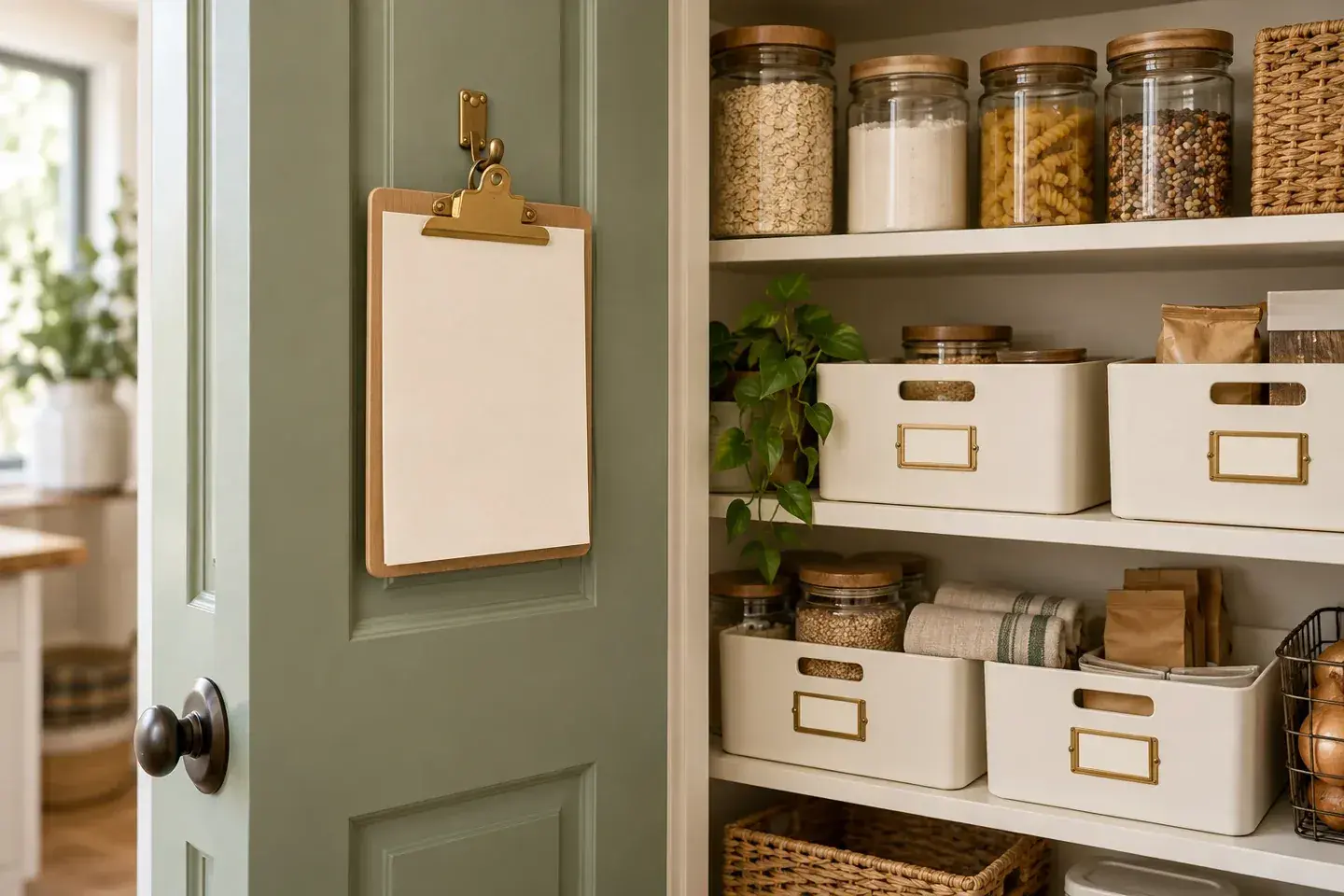
Use broad, readable labels that describe where things go. “Breakfast,” “baking,” and “snacks” are often more practical than labels tied to one brand or package size. Removable labels make it easy to adjust categories after a week of use.
Keep a small restock list nearby, on a safely attached lightweight clipboard or in a phone note. Write down an item when you open the final package instead of buying duplicates because the back of the shelf is hard to see.
If you attach anything to the door, check clearance and the fixing's permitted use. Do not load adhesive hooks with heavy organizers or hang containers where they strike shelves when the door closes. A paper list is enough; the system does not need another bulky accessory to work.
Keep the budget honest
Dollar Tree notes that prices and availability vary. Do not assume every item costs $1.25 or that online inventory reflects your nearest store. Same-day delivery listings can also differ from in-store shopping.
| Feature | Why it matters | |
|---|---|---|
| Measure the opening and shelf | The basket must fit and come back out | |
| Count categories | Prevents buying unnecessary bins | |
| Check food-contact suitability | General storage is not always food storage | |
| Check loaded weight | Thin handles and risers have limits | |
| Compare total purchase cost | Many small extras can exceed the budget |
Keep the pantry useful after the makeover
The USDA's shelf-stable food guidance recommends appropriate storage conditions and regular checks. Keep groceries away from dampness and excessive heat, and inspect packaging rather than relying only on an attractive arrangement.
Most “best if used by” dates describe quality, not a universal safety deadline, as the USDA explains. Follow product-specific instructions and discard damaged or suspect foods appropriately. Review the pantry before shopping, return items to their zones, and leave a little open space for the groceries you actually use.
Sources
- Dollar Tree's rectangular basket listing. Checked October 11, 2026
- clear Dollar Tree storage bin. Checked October 11, 2026
- Dollar Tree's food-storage canister listing. Checked October 11, 2026
- Dollar Tree notes that prices and availability vary. Checked October 11, 2026
- USDA's shelf-stable food guidance. Checked October 11, 2026
- USDA explains. Checked October 11, 2026
Share this article
Get new guides by email
Practical home articles and free resources. No spam, and you can unsubscribe at any time.
Keep reading

15 Icy Blue Bedroom Paint Ideas for 2026
Explore 15 icy blue bedroom paint ideas, from accent walls to blue ceilings, with warm pairings and practical sampling tips for 2026.
October 2026, 6 min read

Neo Deco Living Room Ideas: How to Get the Look on a Budget
Create a budget Neo Deco living room with curves, geometric patterns, metallic accents, jewel tones, and balanced furniture styling.
October 2026, 3 min read
15 Smart Small Laundry Room Stackable Washer Dryer Ideas
Explore 15 smart small laundry room stackable washer dryer ideas. Compare illustrated concepts, practical layout tips, and planning checks.
October 2026, 6 min read