How to Help Prevent Frozen Pipes in Minnesota Winters
Prepare Minnesota plumbing for winter with guidance on vulnerable pipes, heat, insulation, outdoor lines, and when to contact a plumber or utility.
By Home Crane Editors. . 5 min read.
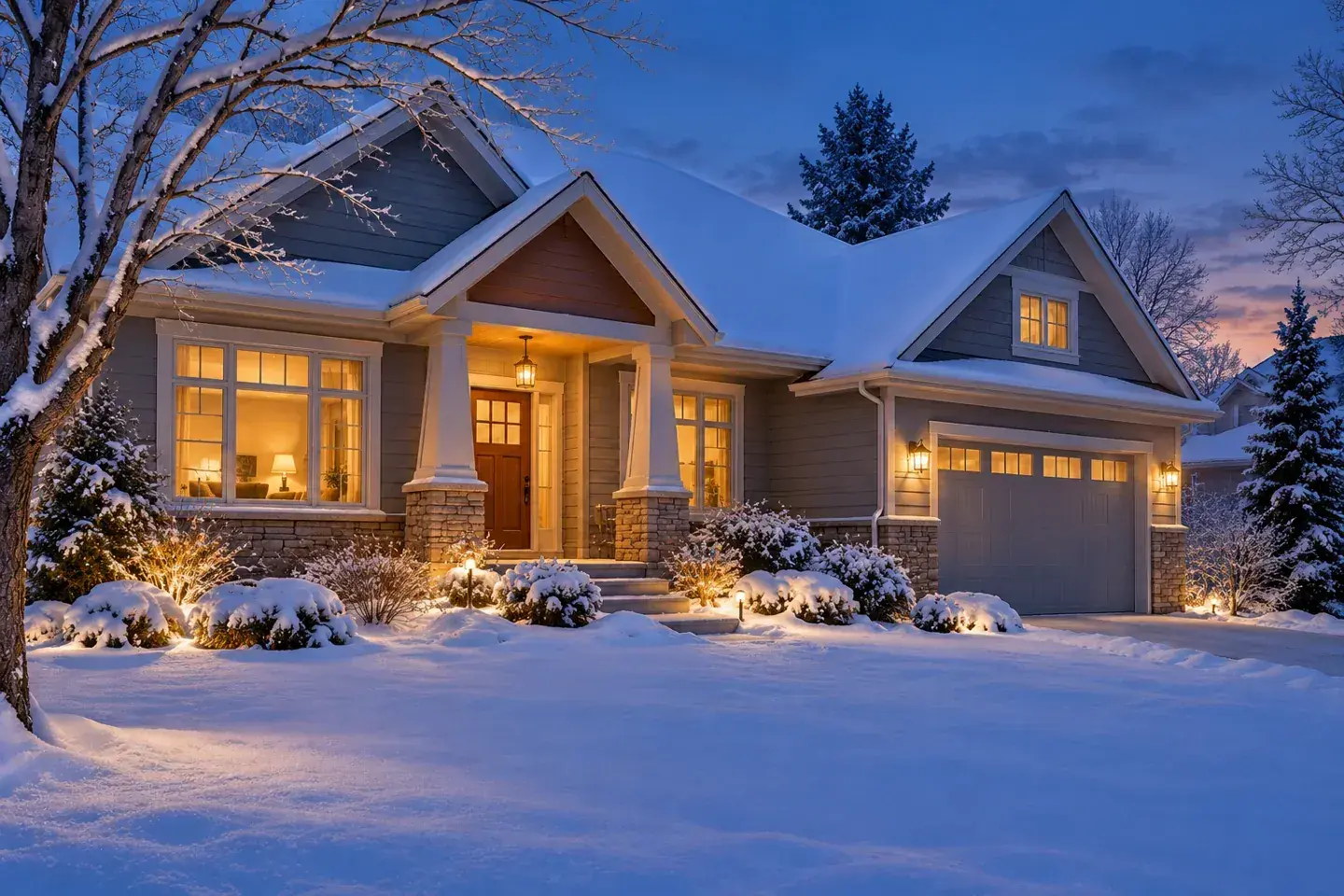
Preventing frozen pipes in Minnesota takes a combination of reliable heat, protection from cold air, suitable insulation, and an absence plan. Pipe sleeves alone are not a guarantee during a prolonged freeze or heating failure. Pay particular attention to plumbing in exterior walls, unheated spaces, and the point where water enters the home.
If water is already leaking, or you suspect a burst, stop treating the situation as routine winter maintenance. Shut off the water if you can reach the valve safely, avoid water near electrical equipment, and contact a plumber. If water has stopped throughout the house, the water utility may also need to investigate.
1. Map the vulnerable plumbing before winter
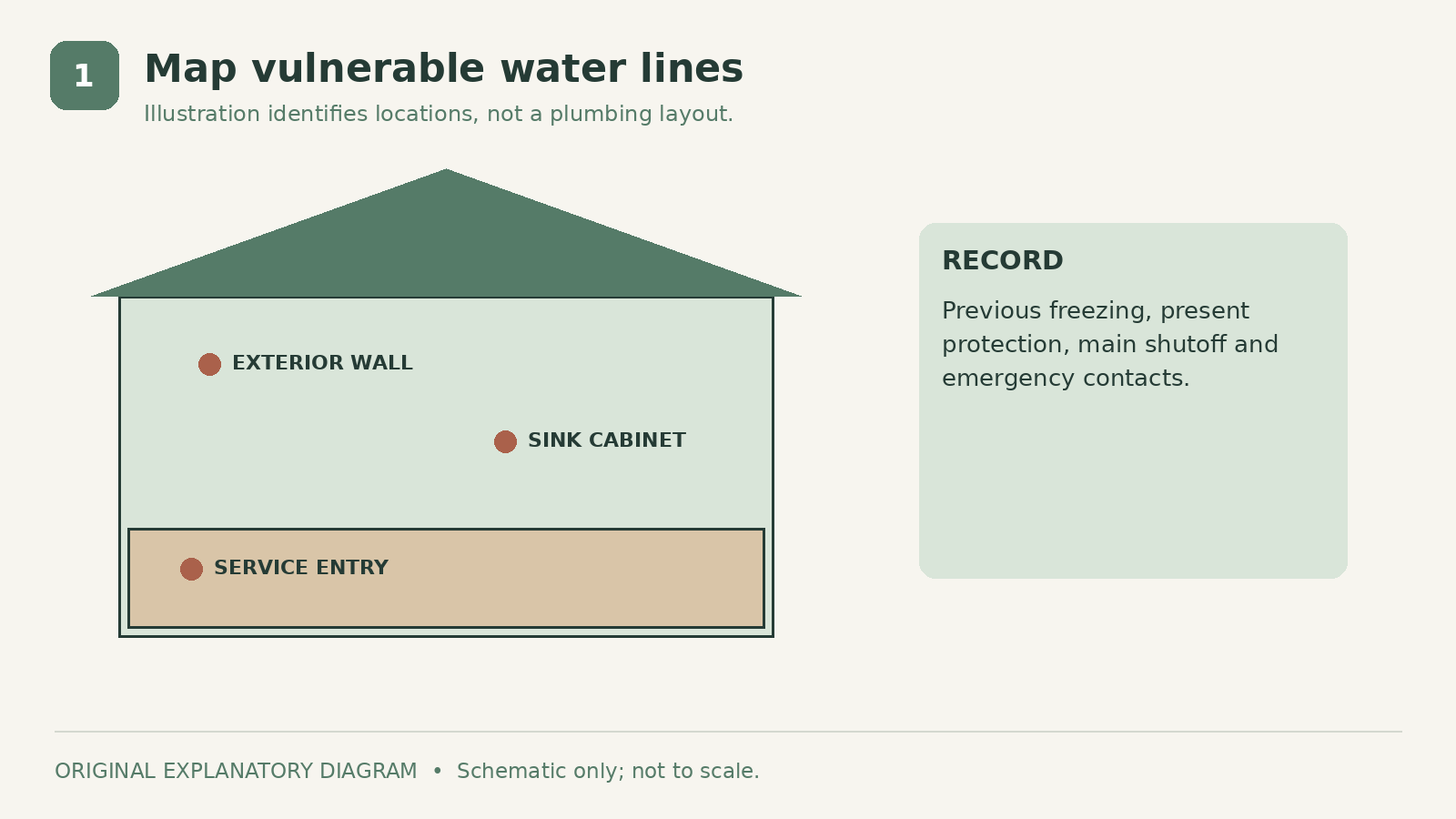
Make a simple room-by-room list of accessible water lines. Record plumbing in garages, outside walls, under sinks, and near basement entry points. Include both hot and cold supply pipes. Note any location that has frozen before, since that history deserves a targeted repair rather than another hopeful winter.
Find the main water shutoff and make sure other household members know where it is. Ask a plumber to identify an unfamiliar or stuck valve instead of forcing it. Keep its approach clear of boxes and furniture.
A basic record can have four columns: location, previous problem, present protection, and action needed. Photographs taken from a safe accessible position help explain the issue to a contractor. There is no need to open a wall just to complete the record.
The City of Minneapolis describes freezing service lines as a distinct problem, including risks where the service enters an unheated basement. Its advice is especially relevant to local properties with a history of service-line freezing. Elsewhere in Minnesota, use your own water provider's instructions and emergency number.
2. Keep warmth where the pipes are
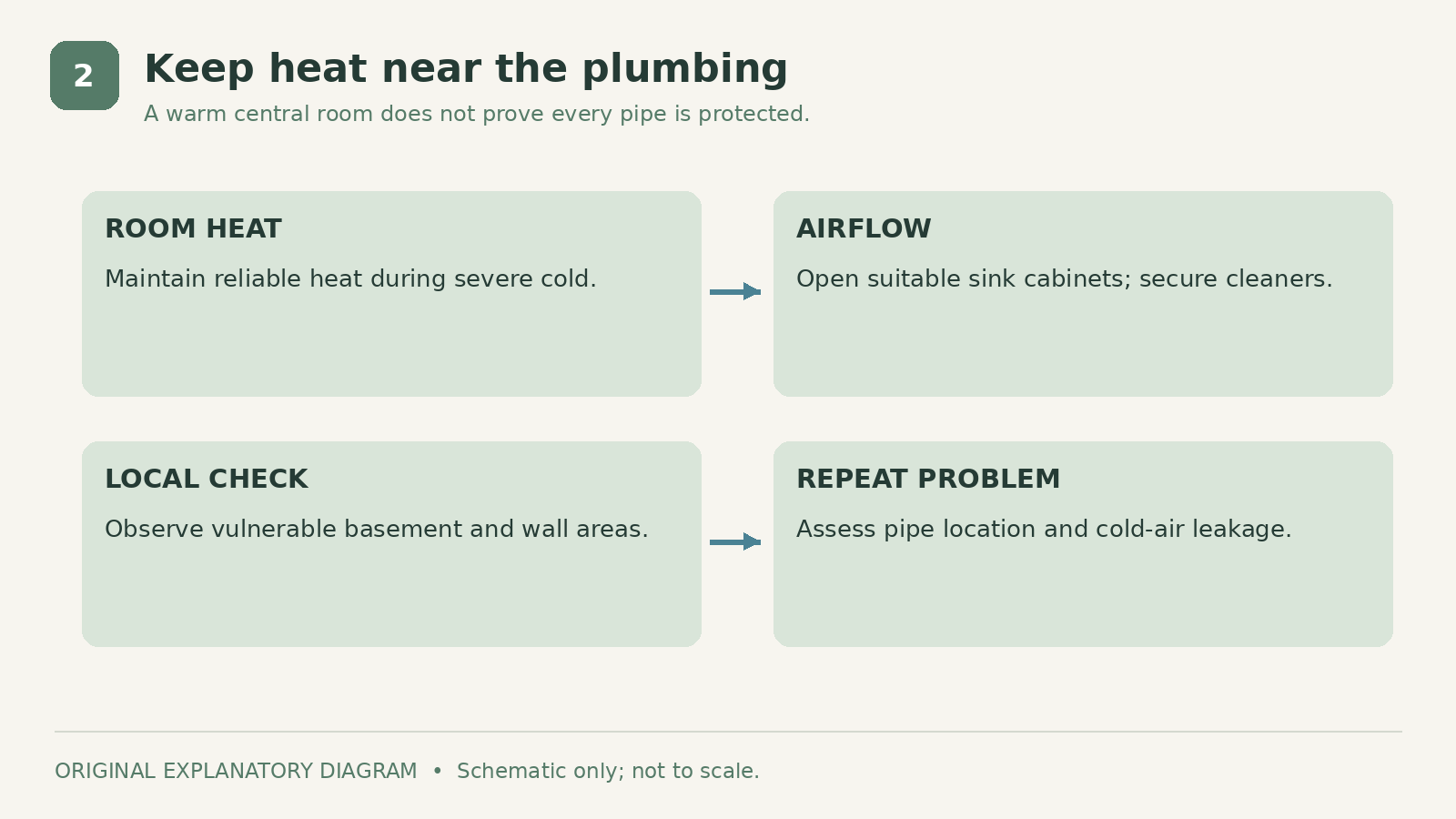
During severe cold, check the temperature in vulnerable spaces rather than relying entirely on the thermostat in a comfortable central room. A warm hallway does not establish that a closed sink cabinet or a remote basement corner is warm enough.
The American Red Cross recommends keeping garage doors closed where plumbing is present, opening sink cabinets to allow room warmth around pipes, and avoiding nighttime temperature setbacks during extreme cold. Move cleaners out of children's reach before opening cabinets. For an absence, it recommends leaving heat at no less than 55°F; that is a general precaution, not a guarantee for every hidden pipe.
If a particular pipe repeatedly freezes while the house remains heated, ask for an assessment of air leakage, pipe location, and the building enclosure. Increasing the whole-house temperature indefinitely can hide an unresolved local defect.
The Building America plumbing-insulation guidance favors locating water lines away from exterior walls and protecting them appropriately where that cannot be avoided. Moving vulnerable plumbing may be a better long-term repair than repeatedly dealing with the same frozen section.
3. Choose insulation and heat cable carefully
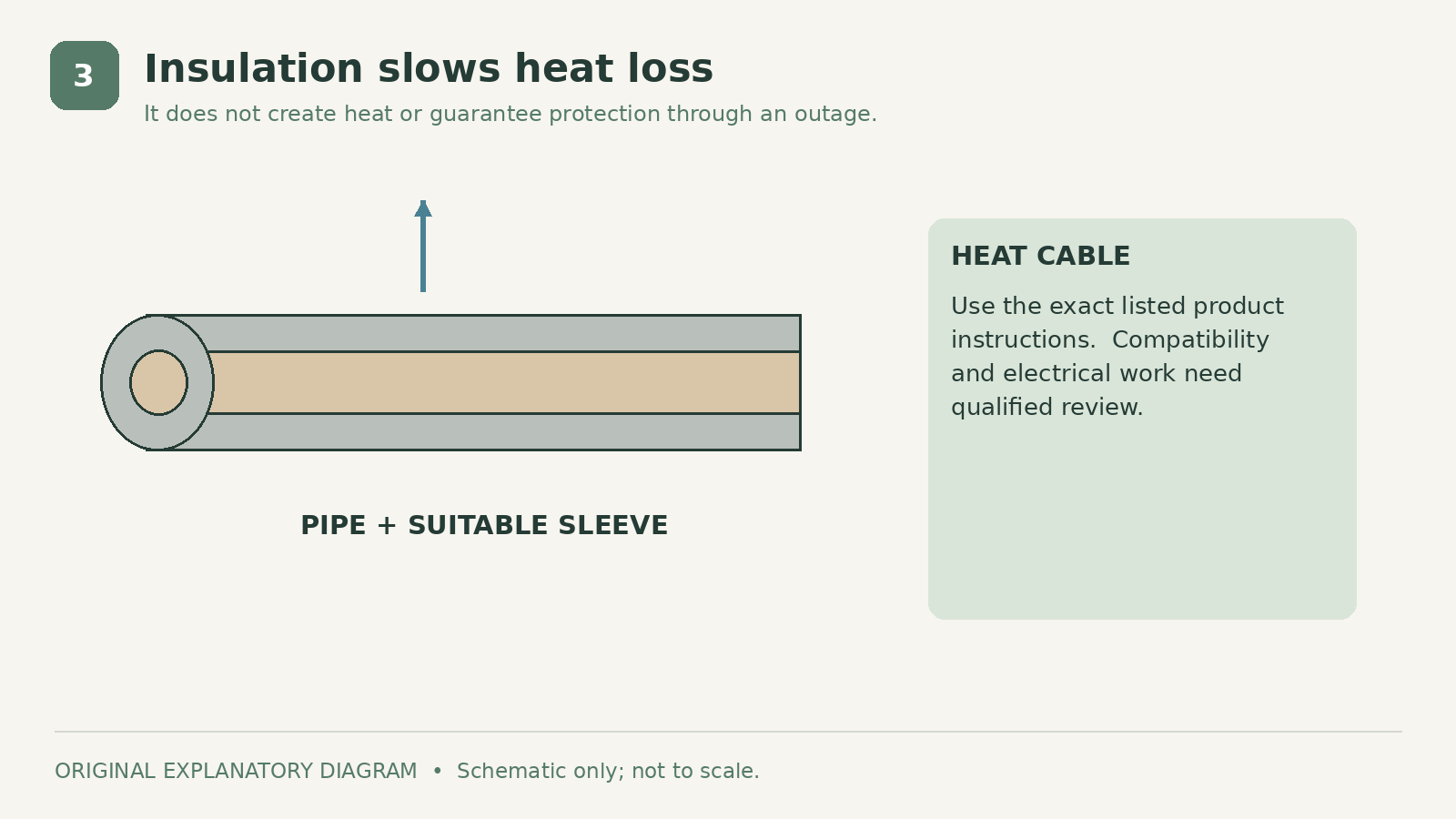
Match pipe insulation to the actual pipe and location. Accessible sections are only part of the picture: gaps around bends, fittings, and transitions deserve attention. Ask a qualified installer to assess concealed or awkward locations rather than crawling into an unsafe space.
Insulation slows heat transfer. It does not produce heat, so an unheated space can still become a freezing environment. This is why insulation, air control, and a reliable heat source should be considered together.
Heat cable requires more care than purchasing the first package that says “winter protection.” Confirm compatibility with the pipe material, location, and proposed insulation. Use a listed product and follow its exact installation and electrical requirements. Have a qualified professional handle uncertain compatibility or electrical work.
The Consumer Product Safety Commission's heat-cable guidance warns about damaged coverings, incorrect overlaps, and unsuitable insulation. The notice is old, but those cautions reinforce the need to follow current product instructions. Do not reuse its historical fire statistics as current data.
Inspect existing cable before cold weather. Charring, exposed conductors, or damaged coverings call for professional attention, not another layer of tape or insulation over the problem.
4. Prepare outdoor lines and an absence plan
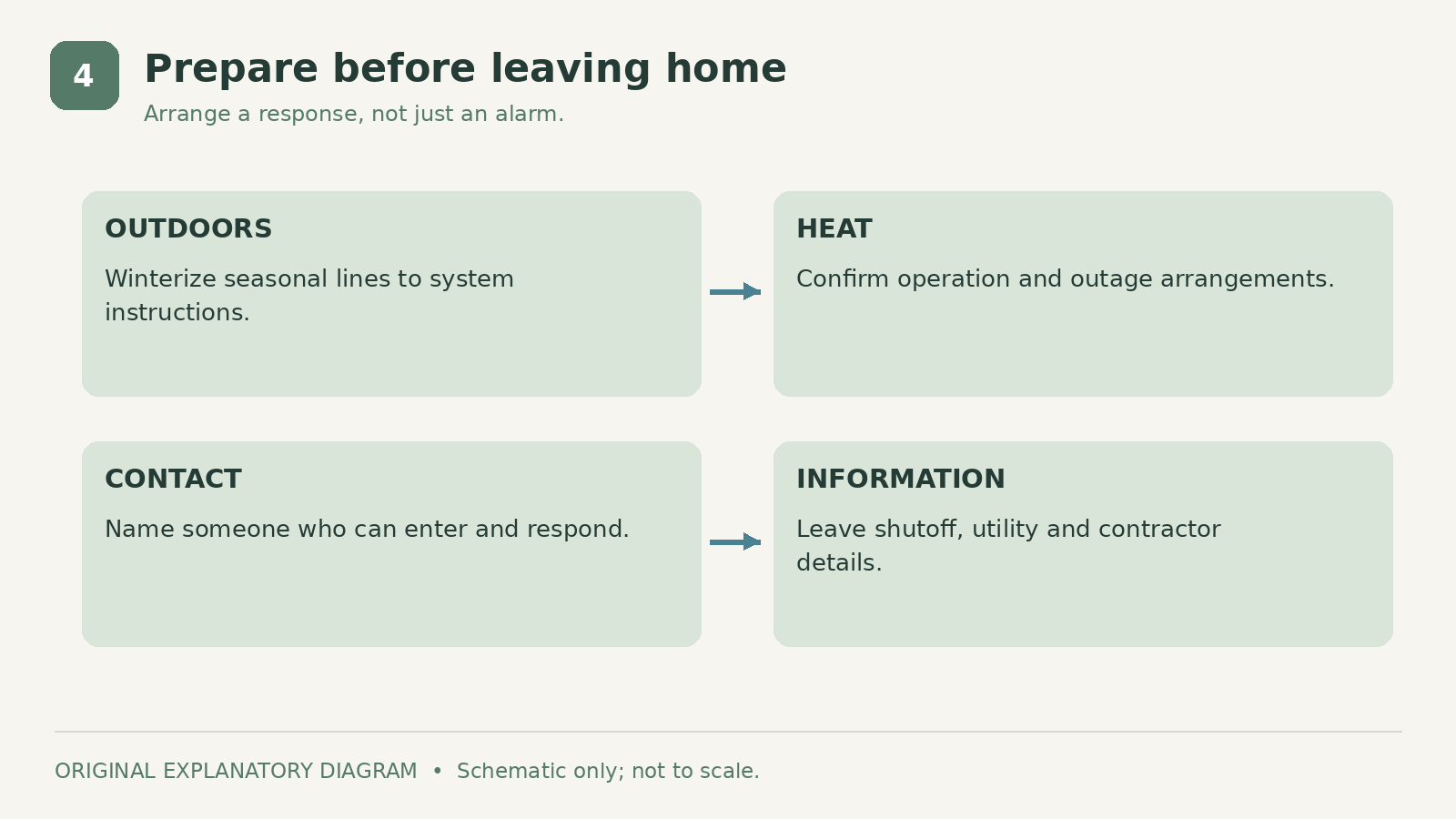
Disconnect outdoor hoses and have seasonal plumbing winterized according to the system's instructions. The details depend on the faucet, shutoffs, irrigation equipment, and layout. Do not assume that a frost-resistant faucet remains protected with a hose attached or that every system drains by the same method.
University of Minnesota Extension advises draining and shutting off infrequently used winter water lines, particularly those leading outdoors. It also warns against using ovens or stoves as space heaters. Plumbing protection must not introduce a fire or carbon monoxide hazard.
Before leaving, arrange someone who can respond if heat fails. A temperature alarm is more useful when a named person receives it, can enter the property, and knows whom to call. Write down the utility, plumber, heating contractor, and shutoff location.
For an unoccupied seasonal property, ask a plumber about a proper winterization plan. Turning off a valve does not necessarily empty all water from the system, fixtures, or equipment. Discuss the particular appliances and plumbing rather than following an improvised draining sequence.
Also check what happens during a power outage. A heat cable, remote alert, or heating system may depend on electricity.
5. Respond safely to low flow or a leak
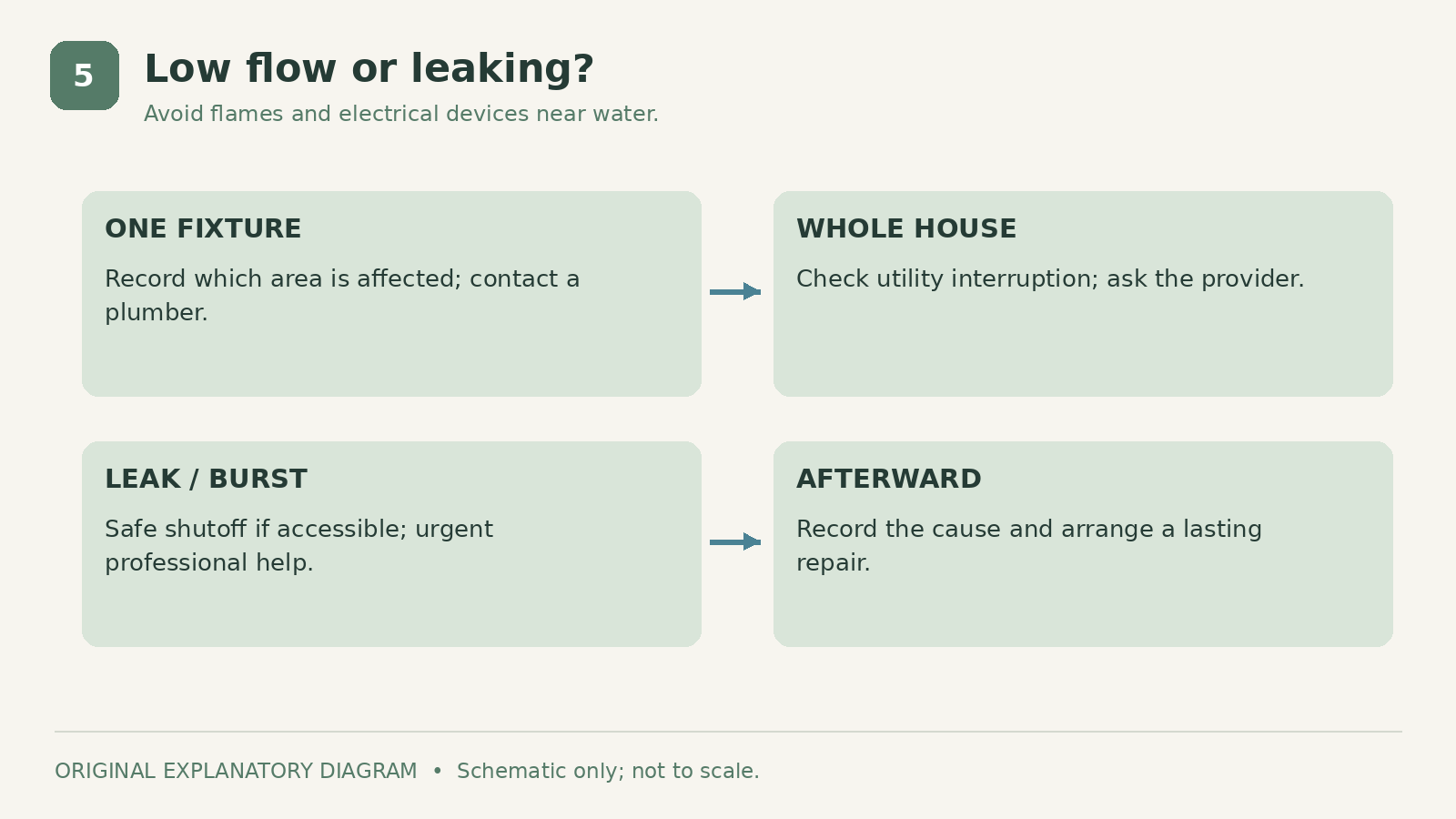
A trickle at one fixture and no water anywhere are different observations. Note which fixtures are affected, whether neighbors have water, and whether a utility interruption has been reported. Share those details when requesting help. Do not assume every loss of flow is an indoor frozen pipe.
Iowa State Extension's frozen-pipe guidance advises calling a plumber when the frozen area cannot be found or reached, or cannot be thawed. Never use an open flame to thaw plumbing. Do not use electrical heating devices where water or wet conditions create an electrical hazard.
A utility may recommend running a small flow for a specific vulnerable service line. That advice is not a universal instruction to leave every faucet running all winter. Confirm the location, duration, and drain requirements with the provider, especially after a service line has already frozen.
| Feature | Appropriate next contact | |
|---|---|---|
| Leak or suspected burst | Plumber; safe water shutoff first | |
| Entire house without water | Utility and plumber as appropriate | |
| Repeated freezing in one location | Plumbing and enclosure assessment | |
| Heating failure during severe cold | Heating service and household safety plan |
After the immediate problem is resolved, record where it occurred and what caused it. A specific repair before the next freeze is more useful than repeating emergency measures every January.
Sources
- City of Minneapolis describes freezing service lines. Checked October 6, 2026
- American Red Cross recommends. Checked October 6, 2026
- Building America plumbing-insulation guidance. Checked October 6, 2026
- Consumer Product Safety Commission's heat-cable guidance. Checked October 6, 2026
- University of Minnesota Extension. Checked October 6, 2026
- Iowa State Extension's frozen-pipe guidance. Checked October 6, 2026
Share this article
Get new guides by email
Practical home articles and free resources. No spam, and you can unsubscribe at any time.
Keep reading
Painted Kitchen Countertops After Two Years: What to Inspect and Expect
Assess painted countertops after two years with a practical inspection guide for edges, sink areas, scratches, cleaning, and repair decisions.
October 2026, 3 min read
Repointing Brick Cost in Pennsylvania: What You Need to Know
Compare Pennsylvania brick repointing costs with Philadelphia context, wall-area calculations, compatible mortar, access, and a clear sample budget.
October 2026, 4 min read
The Best Way to Clean Oxidized Aluminum Window Frames
Clean dull aluminum window frames by identifying the finish and using a mild approved method. Know when oxidation needs specialist restoration.
October 2026, 4 min read