The Best Way to Clean Oxidized Aluminum Window Frames
Clean dull aluminum window frames by identifying the finish and using a mild approved method. Know when oxidation needs specialist restoration.
By Home Crane Editors. . 4 min read.
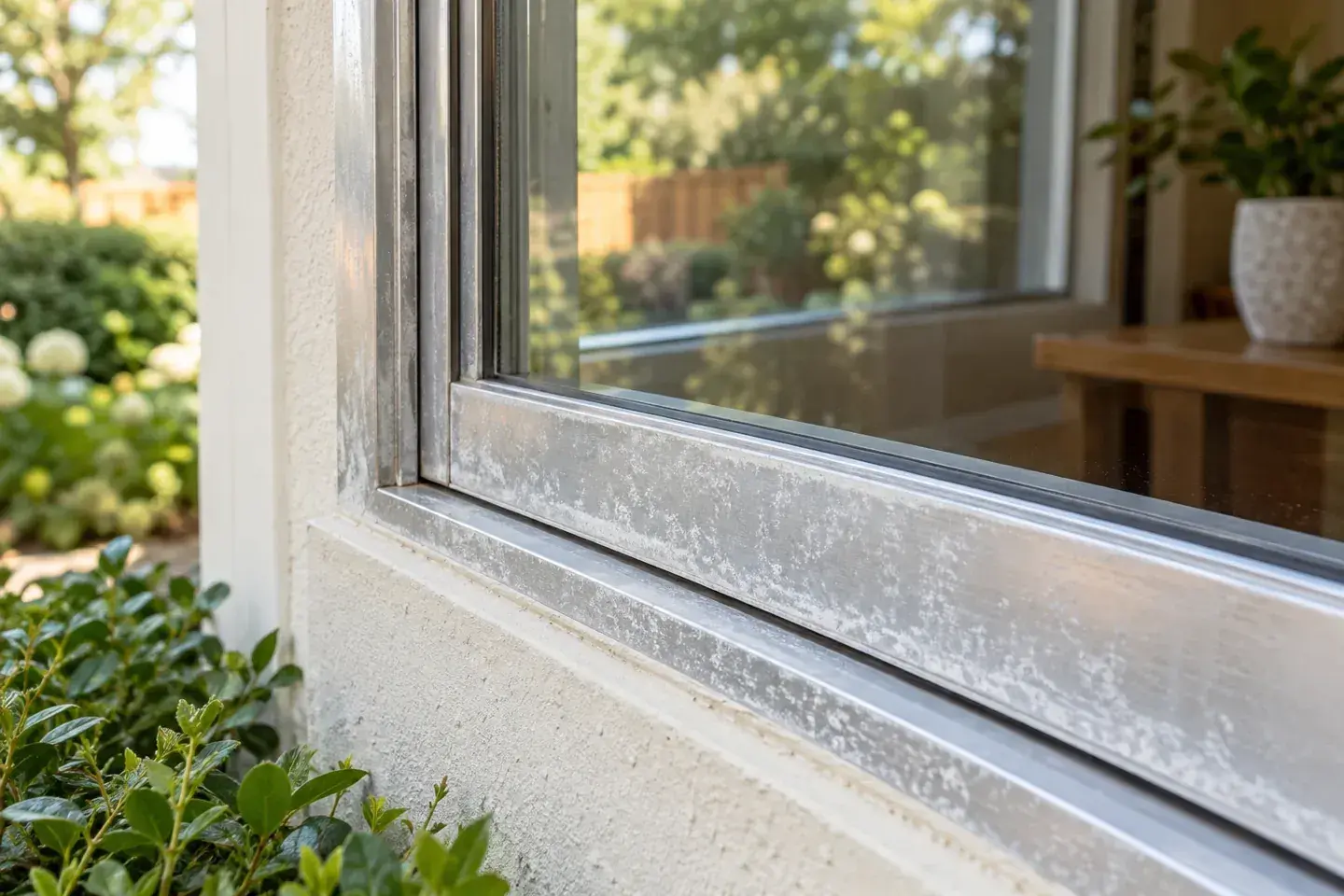
Identify the finish, start with mild compatible cleaning, and stop if the remaining discoloration is coating damage. A bare aluminum frame, an anodized frame, and a painted frame should not all receive the same polishing treatment. Aggressive cleaning can remove a protective finish instead of restoring it.
Chalky or dull frames may carry ordinary dirt, weathering residue, or corrosion-related damage. Appearance alone does not establish the cause. Find the window brand, finish information, and care instructions if possible.
Work only where the frame can be reached safely. Exterior upper-story cleaning is not a reason to lean out of a window or improvise a ladder arrangement. A qualified window-cleaning or restoration service can handle difficult access.
1. Identify the coating and inspect the condition
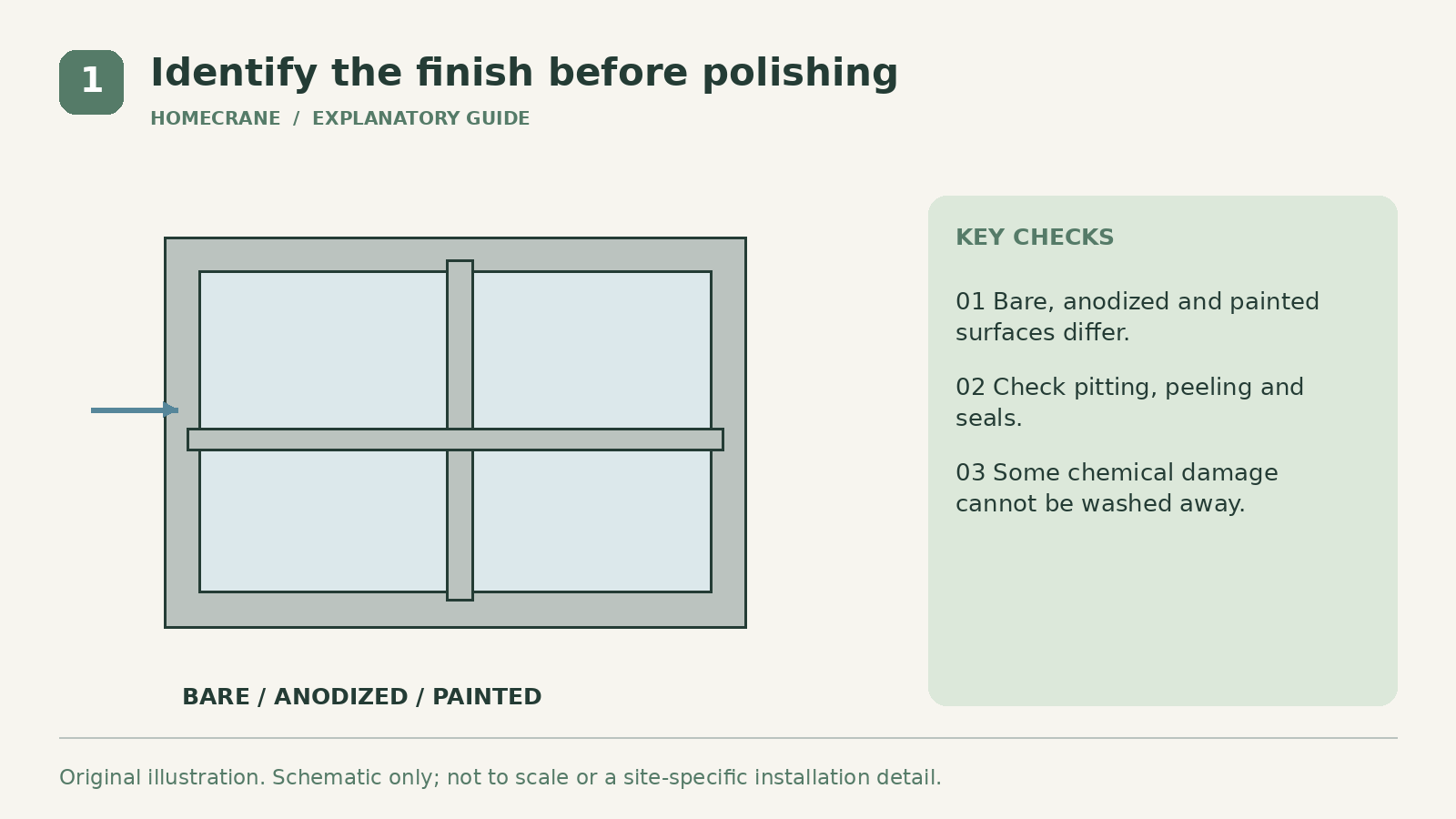
Look for peeling paint, blistering, pitting, exposed metal, and damaged seals. Note whether the discoloration is uniform or concentrated beneath masonry, runoff paths, or previous chemical exposure. Photograph it before treatment.
Anodized aluminum has a deliberately formed protective surface. It should not be treated as unfinished metal that can be polished freely. Painted aluminum likewise needs coating-compatible care. If you cannot identify the finish, ask the window maker or a specialist before using a metal polish.
The Aluminum Anodizers Council's FAQ explains that cloudiness can come from different causes, including weathering and chemical attack. Some damage is irreversible through cleaning. That makes diagnosis more important than finding the strongest remover.
Inspect drainage openings without altering them. Do not fill or paint over weep paths, and avoid forcing debris deeper into the assembly. Loose glazing, damaged seals, or water entry needs a window repair assessment separate from cosmetic cleaning.
2. Wash a small test area with a mild method
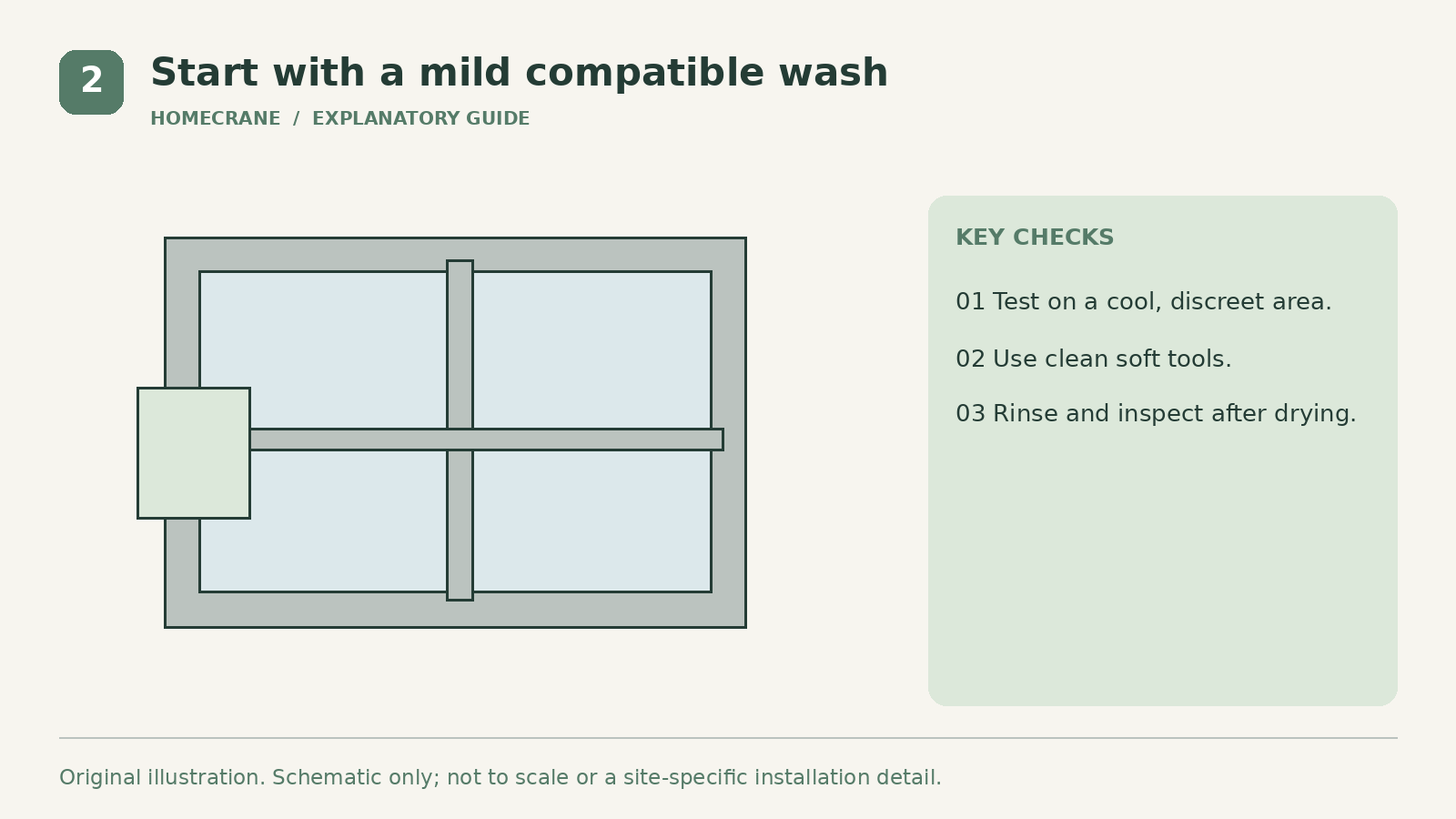
Choose a cool surface out of intense sun where practical. Heat can make cleaners dry too quickly and leave marks. Protect adjacent finishes and plants from runoff using the method appropriate to the products and site.
Remove loose grit gently, then use a mild cleaner approved for the finish with a soft clean cloth or sponge. Keep pressure light and work in a small area. Rinse as directed and prevent residue from drying on the metal.
Kawneer's cleaning guidance for painted and anodized finishes emphasizes identifying the finish, testing first, and avoiding aggressive acids, alkalies, and abrasive cleaning. It is manufacturer guidance for its systems, not permission to apply every listed method to an unknown residential window.
Dry the test area and compare it with the surrounding frame. If the improvement is satisfactory and no finish change occurs, continue with the approved method. If the cloth picks up coating color or the surface becomes patchy, stop and reassess.
3. Escalate only to a finish-specific restoration method
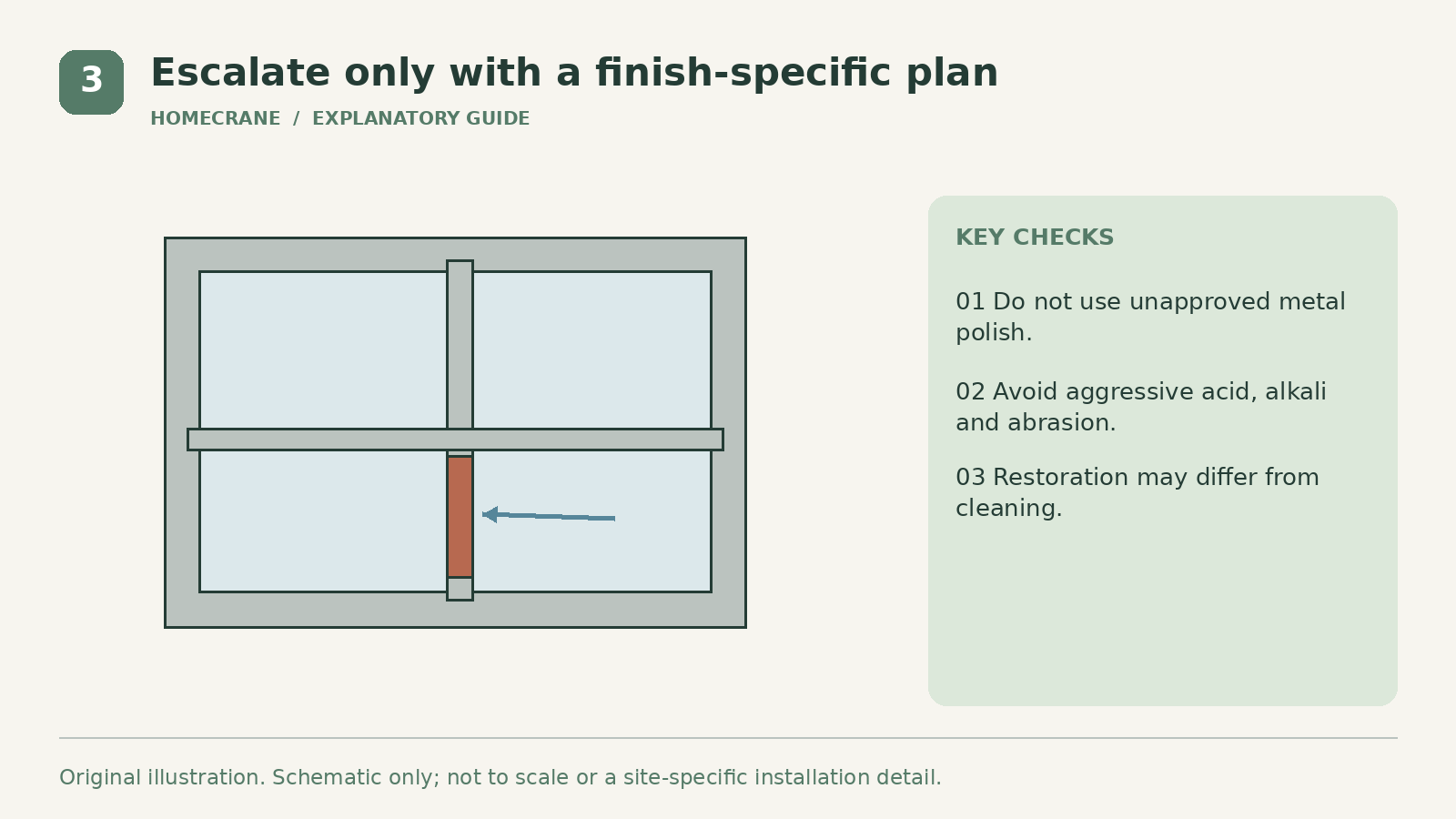
If mild cleaning removes soil but leaves dullness, ask whether the remaining condition is surface residue, coating deterioration, or metal loss. A cleaner cannot replace missing metal or reconstruct a failed anodized layer.
Do not use steel wool, sandpaper, oven cleaner, strong acid, or a general-purpose metal polish merely because the frame is aluminum. Such treatments can scratch, stain, or strip finishes. They can also damage glass, seals, and nearby masonry or paint.
Some professional restoration methods use carefully selected abrasives or chemicals on specific finishes. That does not make them suitable for an unidentified frame. Ask for a small demonstration area, the proposed product, and an explanation of what material will be removed.
For painted frames with coating failure, refinishing may be more appropriate than cleaning. It requires surface preparation and a coating system compatible with the metal and existing finish. Protect moving parts, seals, glazing, and drainage details throughout the process.
If the frame is badly pitted or leaks, compare restoration with component or window replacement. Cosmetic appearance should not distract from function and weather resistance.
4. Keep the frame clean without repeatedly abrading it
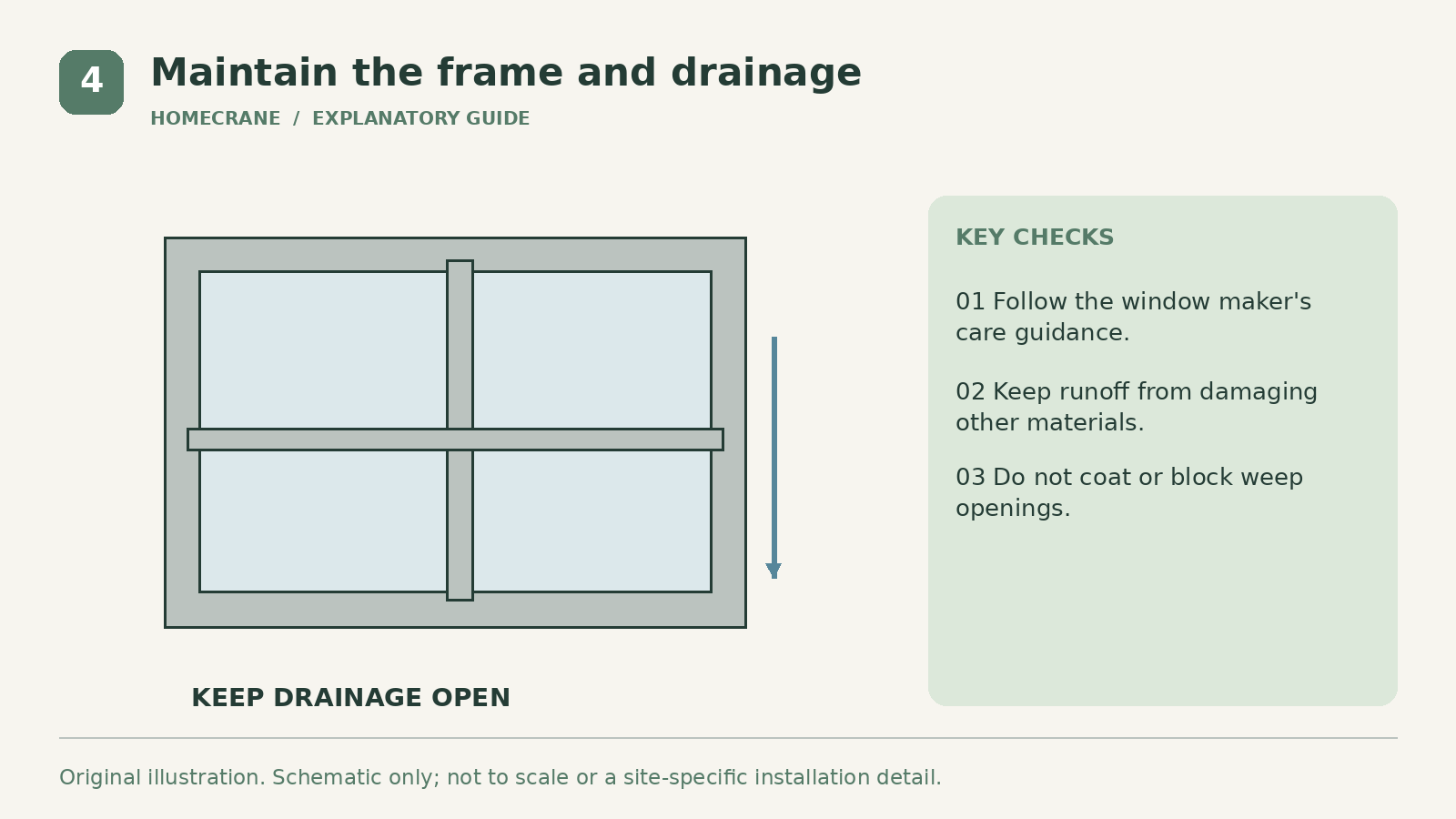
Use the manufacturer's maintenance schedule, adjusted for the actual exposure. Coastal salt, industrial deposits, and sheltered areas that rain does not wash may need different attention from an inland window under ordinary conditions.
Rinse and dry with the approved method after cleaning. Keep cloths free of grit and avoid transferring residue from a dirty sill to a clean vertical frame. Inspect joints and weep openings without obstructing them.
Do not apply wax, oil, or a protective coating unless the window maker approves it. A shiny temporary finish can attract dirt, interfere with seals, or complicate repainting later. Keep a record of the products used.
Address runoff sources where possible. If masonry cleaning repeatedly splashes chemicals onto the frame, changing the window-cleaning routine alone will not prevent new damage. Coordinate exterior maintenance so one trade does not undo another's work.
| Feature | Appropriate direction | |
|---|---|---|
| Surface dirt on sound finish | Mild approved cleaning | |
| Unknown dullness after washing | Identify finish and obtain assessment | |
| Peeling painted coating | Compatible refinishing evaluation | |
| Pitting, leaks or failed components | Window repair or replacement assessment |
Will vinegar remove the oxidation?
It is not a universal safe choice. Acid can affect anodized or painted finishes and nearby materials. Use the actual window-care instructions.
Can polishing make it look new?
Sometimes restoration improves appearance, but polishing can remove protective material. Missing or chemically damaged finish may not be recoverable through cleaning.
How will I know when to stop?
Stop when the approved cleaning no longer improves the surface, when color transfers, or when scratches and patchiness appear. Further force is not evidence of a better method.
Sources
- Aluminum Anodizers Council's FAQ. Checked October 11, 2026
- Kawneer's cleaning guidance for painted and anodized finishes. Checked October 11, 2026
Share this article
Get new guides by email
Practical home articles and free resources. No spam, and you can unsubscribe at any time.
Keep reading
Painted Kitchen Countertops After Two Years: What to Inspect and Expect
Assess painted countertops after two years with a practical inspection guide for edges, sink areas, scratches, cleaning, and repair decisions.
October 2026, 3 min read

How to Help Prevent Frozen Pipes in Minnesota Winters
Prepare Minnesota plumbing for winter with guidance on vulnerable pipes, heat, insulation, outdoor lines, and when to contact a plumber or utility.
October 2026, 5 min read
Repointing Brick Cost in Pennsylvania: What You Need to Know
Compare Pennsylvania brick repointing costs with Philadelphia context, wall-area calculations, compatible mortar, access, and a clear sample budget.
October 2026, 4 min read