Painted Kitchen Countertops After Two Years: What to Inspect and Expect
Assess painted countertops after two years with a practical inspection guide for edges, sink areas, scratches, cleaning, and repair decisions.
By Home Crane Editors. . 3 min read.
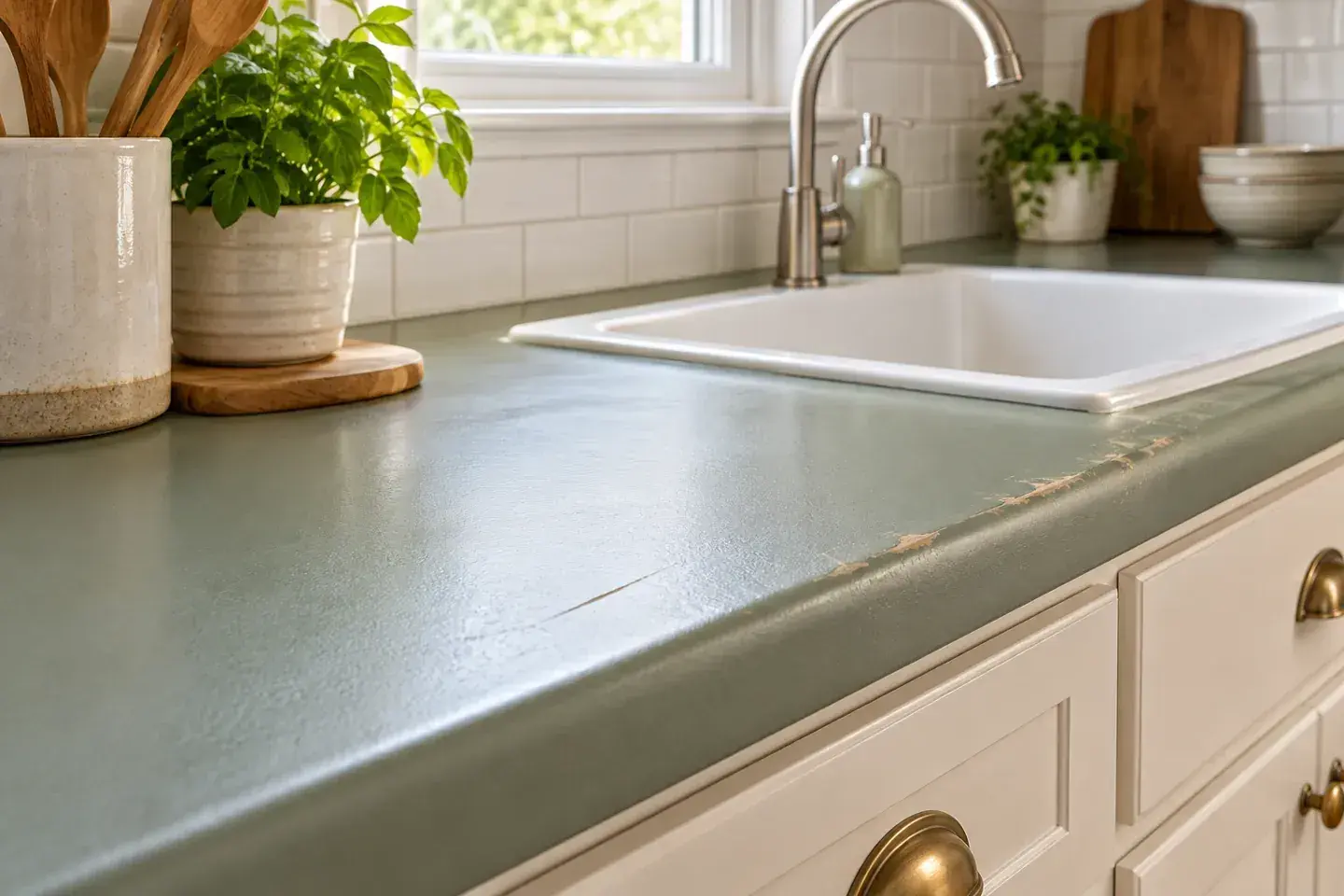
A useful two-year countertop update should show more than a flattering wide-angle photograph. Edges, sink cutouts, high-use preparation areas, and cleaning habits reveal much more about how a coating is holding up.
This article is an inspection and care guide, not a personal two-year test. It does not present a documented renovation or measured durability test. The images are illustrative, and the comparison diagram shows a concept rather than documented wear over time. Use this framework to evaluate your own surface or another creator's update.
Before you start
Find the exact coating name, application date, substrate, preparation record, and care instructions. “Countertop paint” can describe substantially different systems. Rust-Oleum HOME and Giani products have their own curing and care directions; one brand's instructions should not be applied to another. [1][2]
Photograph the counter clean and dry in consistent light. Include close-ups and note any changes without scrubbing or scraping to make them more visible. An inspection should not create additional damage.
1. Compare the same views, not just the styling

Take a wide view from the same position as the original photograph if you have one. Then photograph the sink edge, front edge, seams, and the area used most often for food preparation. Keep lighting and exposure similar so gloss and color changes are easier to judge.
Distinguish cosmetic changes from different styling. Removing clutter or changing bulbs can make a counter look dramatically improved without changing the coating. If there is no original photo, record the current condition as a baseline rather than inventing a before image.
2. Inspect edges, seams, and the sink area
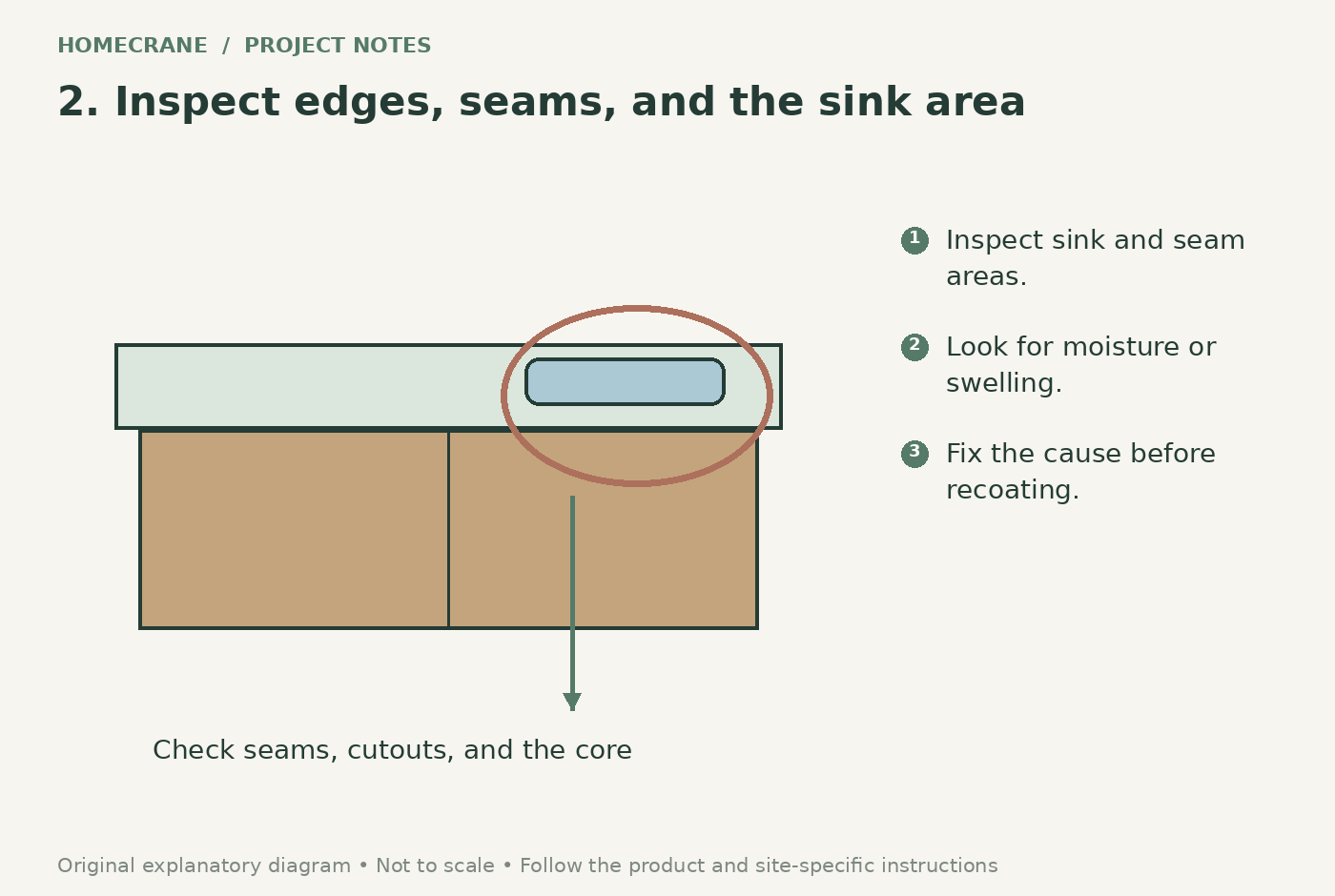
Look for lifting finish, chips, swollen substrate, or a joint that remains damp. These locations deserve close attention because a small surface defect may coincide with an underlying moisture problem.
Do not coat over swelling or active leakage. Determine the source and repair it before considering a finish repair. If the counter core is deteriorating, another decorative coat may not be a viable solution. Keep photographs and ask the coating manufacturer or an appropriate professional to distinguish an isolated finish defect from substrate failure.
3. Record scratches, stains, and gloss changes
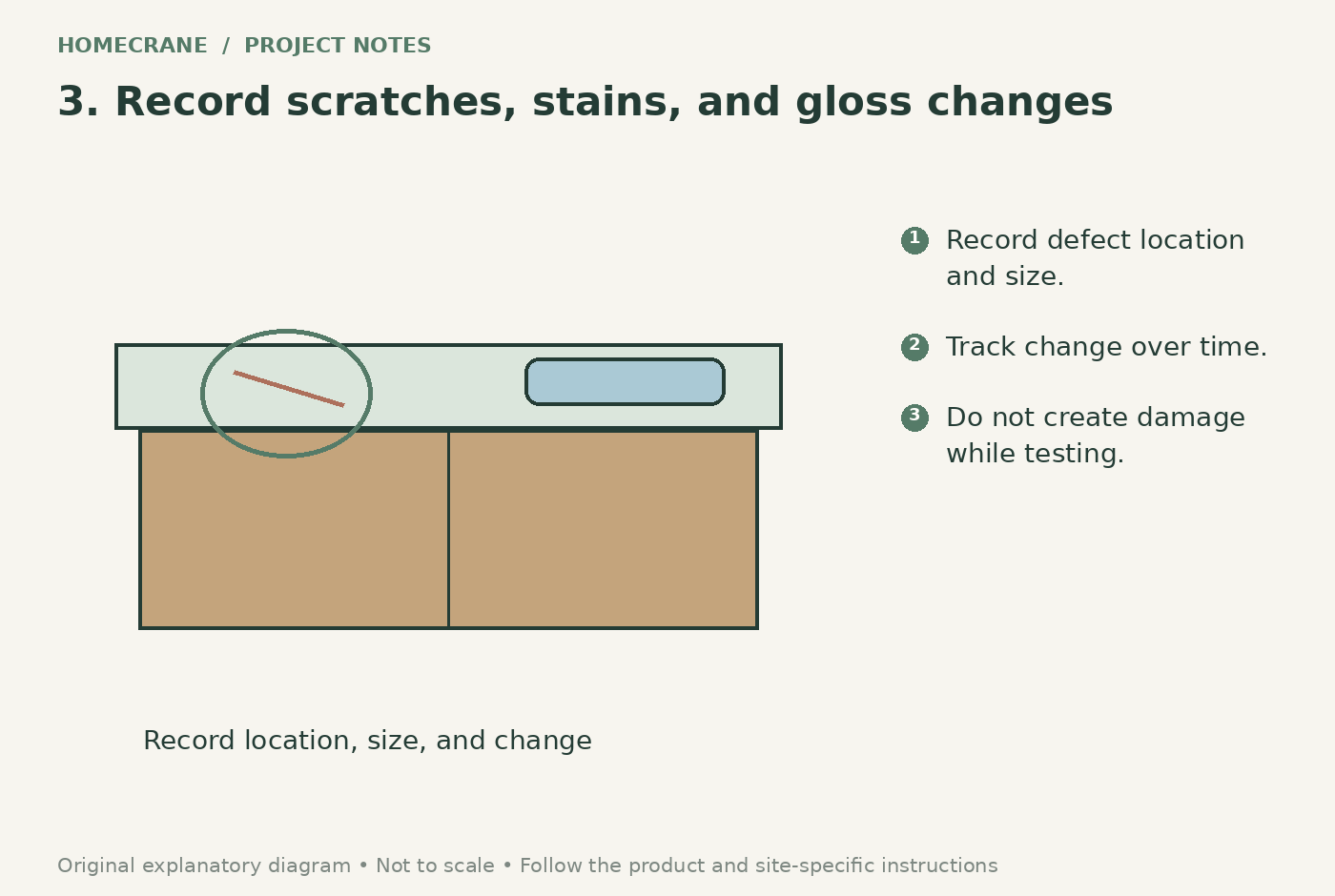
Use a simple condition log: location, approximate size, appearance, and whether it is changing. A scratch near the preparation area suggests a different use pattern from a chip on an exposed corner, but a photograph alone cannot prove the cause.
Avoid abrasive “restoration hacks” until the product manufacturer confirms a repair method. The wrong scrub pad or solvent can enlarge the damaged area or change the sheen. A finish can still be usable with cosmetic wear, provided its condition and manufacturer guidance support continued use.
4. Review cleaning and protective habits
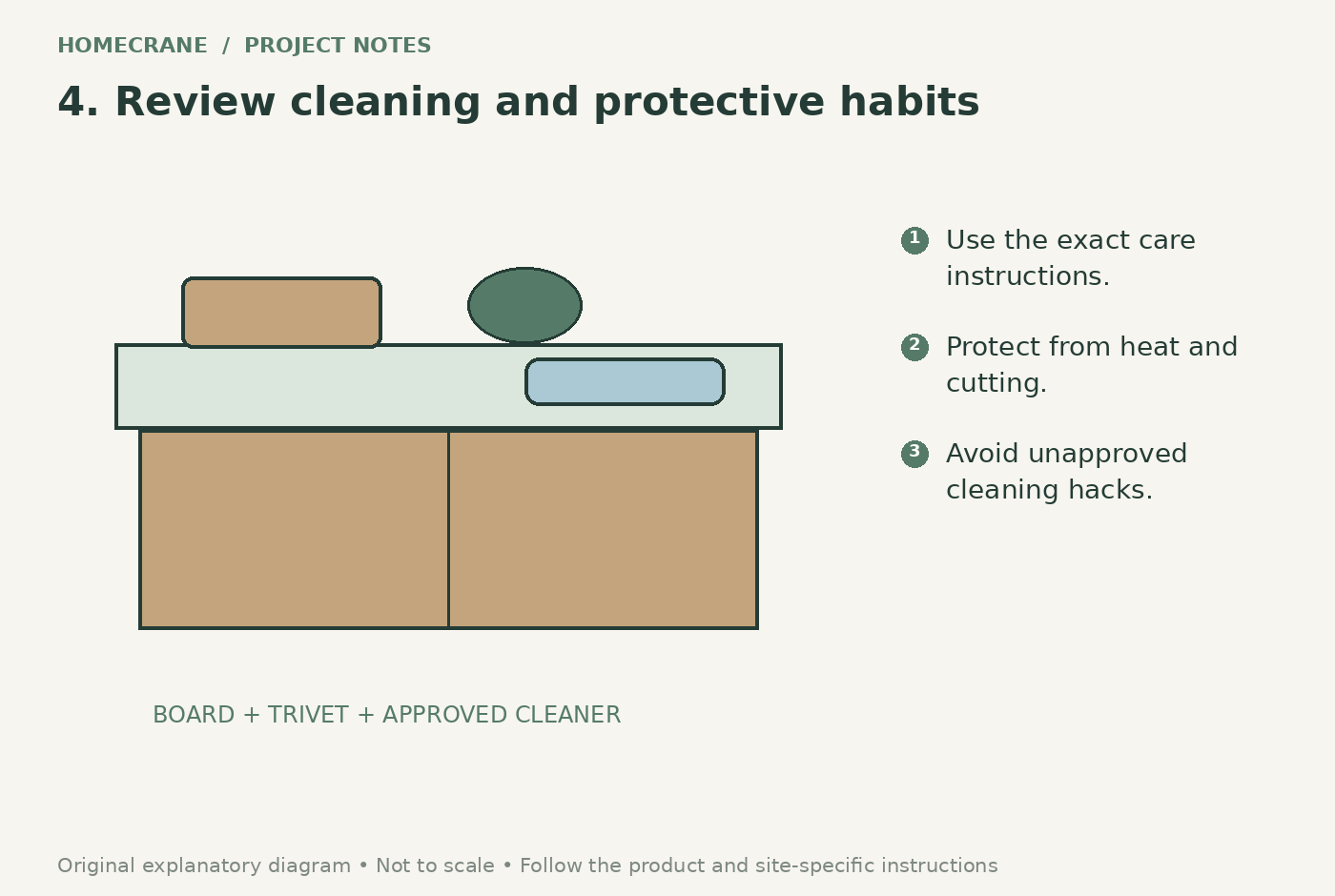
Follow the actual coating's approved cleaners and methods. Giani's FAQ recommends gentle cleaning and identifies products to avoid for its systems. [2] Do not generalize a vinegar or bleach recipe across all painted countertops.
Use cutting boards and trivets. Rust-Oleum says its HOME countertop coating is not a direct food-preparation surface. [1] Wipe spills as directed, avoid leaving wet items against vulnerable seams, and check the sink seal when cleaning. These habits matter more than treating the coating as if it were an unprotected stone slab.
5. Choose a touch-up, recoat, or replacement deliberately
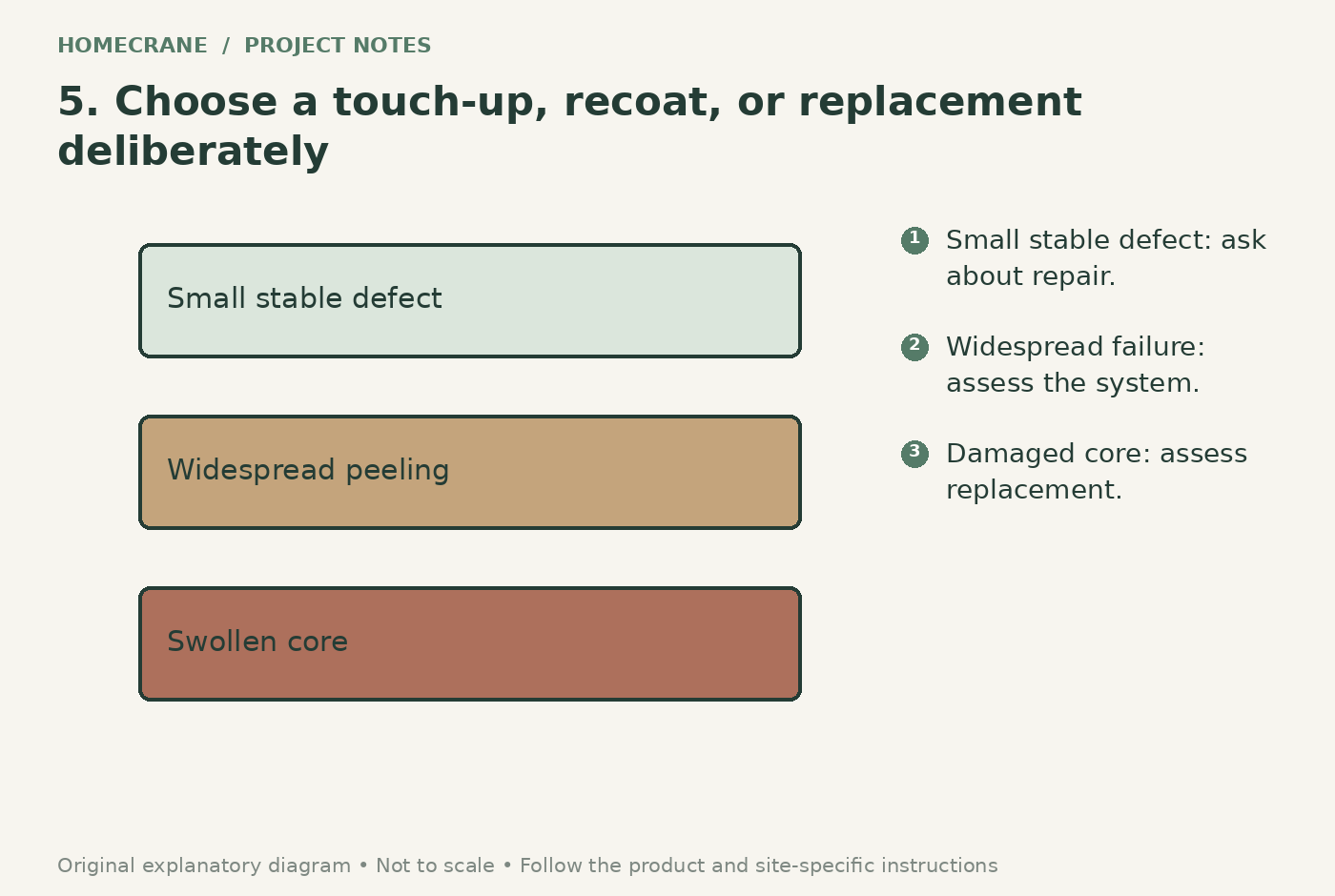
For a small stable cosmetic defect, ask the manufacturer whether a local repair is appropriate and how it will affect appearance. Keep enough information to identify the system; mixing unrelated products is not a reliable shortcut.
For widespread peeling, repeated moisture damage, or a failing substrate, compare proper removal or replacement with another coating cycle. Include downtime and any plumbing work. A two-year update is most useful when it explains those tradeoffs, not when it treats a single attractive photograph as proof that every painted counter will perform the same way.
Common questions and next steps
How long do painted countertops last? There is no reliable universal number. Product, preparation, substrate condition, curing, and use all affect the result.
What makes a two-year review useful? Look for the exact product, dates, preparation, care, close-up photographs, and any repairs. A documented project record is more informative than a dramatic image without those details.
What is a fair verdict? Report both the visual benefit and the work needed to preserve it. A budget coating may be worthwhile for one household and the wrong fit for another.
Sources and further reading
Research reviewed October 12, 2026.
Sources
- Rust-Oleum support: HOME Countertop Coating Kits. Checked October 12, 2026
- Giani: countertop coating FAQs and care. Checked October 12, 2026
Share this article
Get new guides by email
Practical home articles and free resources. No spam, and you can unsubscribe at any time.
Keep reading

How to Help Prevent Frozen Pipes in Minnesota Winters
Prepare Minnesota plumbing for winter with guidance on vulnerable pipes, heat, insulation, outdoor lines, and when to contact a plumber or utility.
October 2026, 5 min read
Repointing Brick Cost in Pennsylvania: What You Need to Know
Compare Pennsylvania brick repointing costs with Philadelphia context, wall-area calculations, compatible mortar, access, and a clear sample budget.
October 2026, 4 min read
The Best Way to Clean Oxidized Aluminum Window Frames
Clean dull aluminum window frames by identifying the finish and using a mild approved method. Know when oxidation needs specialist restoration.
October 2026, 4 min read