How to Paint a Brick Fireplace White Without Ruining It
Painting a brick fireplace white can brighten a room, but it is a lasting change to porous masonry. The project described here concerns a suitable.
By Home Crane Editors. . 4 min read.
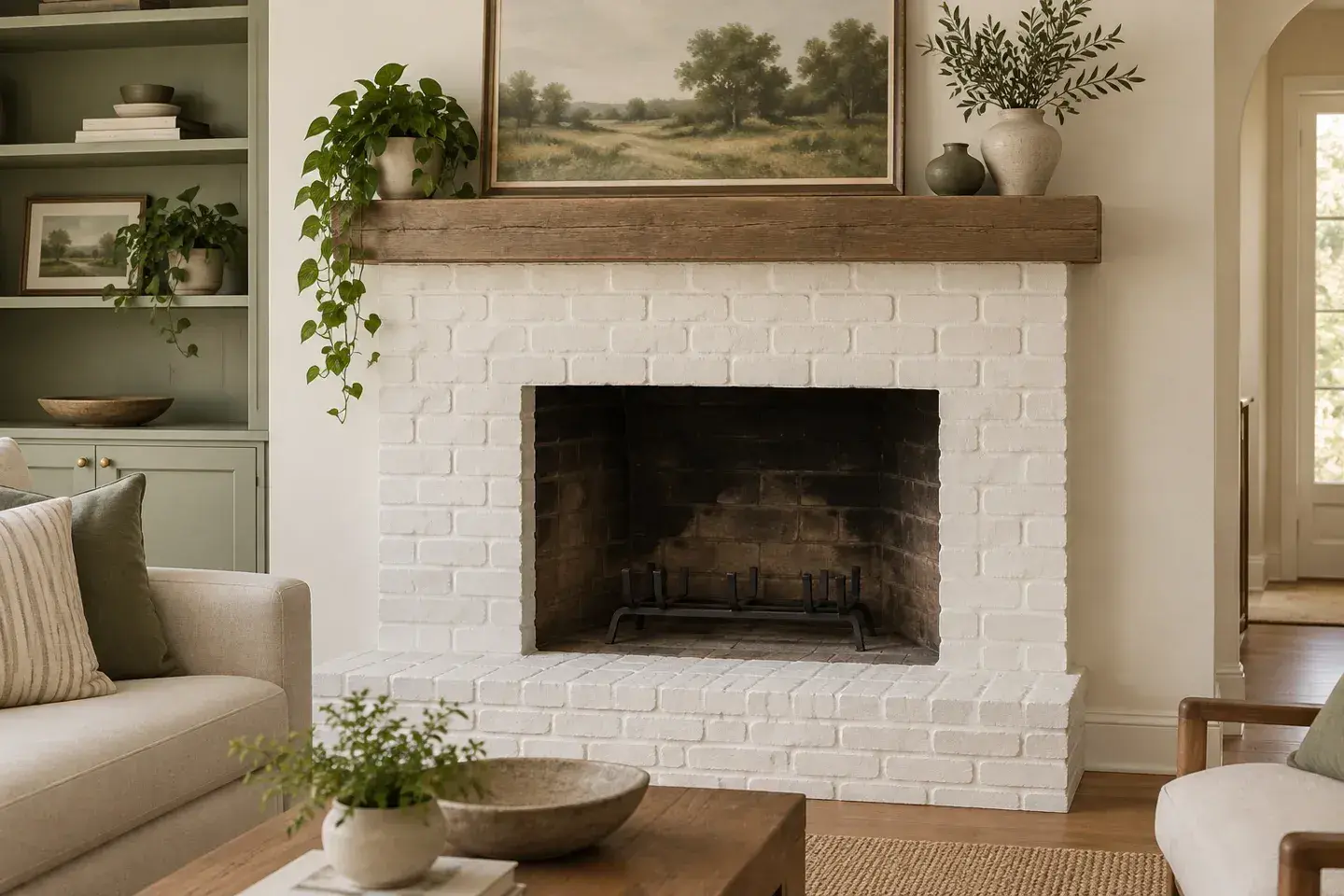
Painting a brick fireplace white can brighten a room, but it is a lasting change to porous masonry. The project described here concerns a suitable exterior brick surround on a cold, unused fireplace during the work. It does not cover painting inside the firebox, over burner parts, on an insert, or across vents and safety labels.
Before choosing a white, decide whether you are comfortable with the maintenance and difficulty of returning painted brick to its original appearance. A sample and a careful inspection are more useful than rushing into the first coat because the room looks dark.
1. Check the fireplace and define the paintable area
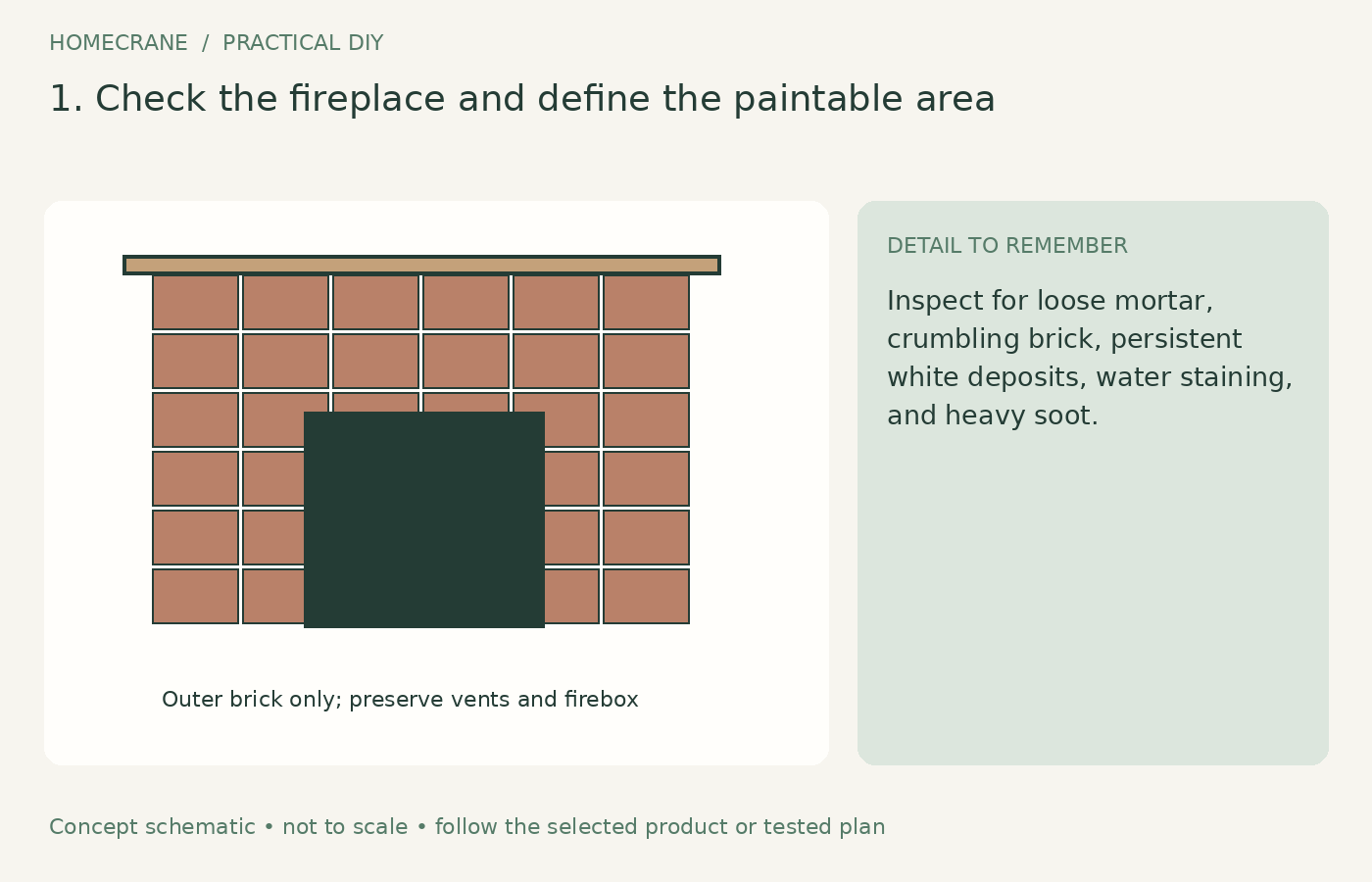
Inspect for loose mortar, crumbling brick, persistent white deposits, water staining, and heavy soot. These conditions need diagnosis and repair before paint. A coating should not conceal an ongoing chimney leak or damaged masonry.
Identify the appliance, if any, and read its clearance and finish restrictions. The outer surround, hearth, metal trim, and interior combustion area are different surfaces with different exposures. Do not treat “fireplace paint” as one universal category.
Sherwin-Williams' fireplace guide provides general guidance for painting an exterior brick fireplace. Confirm the proposed primer and finish with the coating manufacturer for your actual temperatures and substrate. If the surround becomes unusually hot or the system's condition is uncertain, have it assessed before cosmetic work.
2. Clean the brick without saturating it
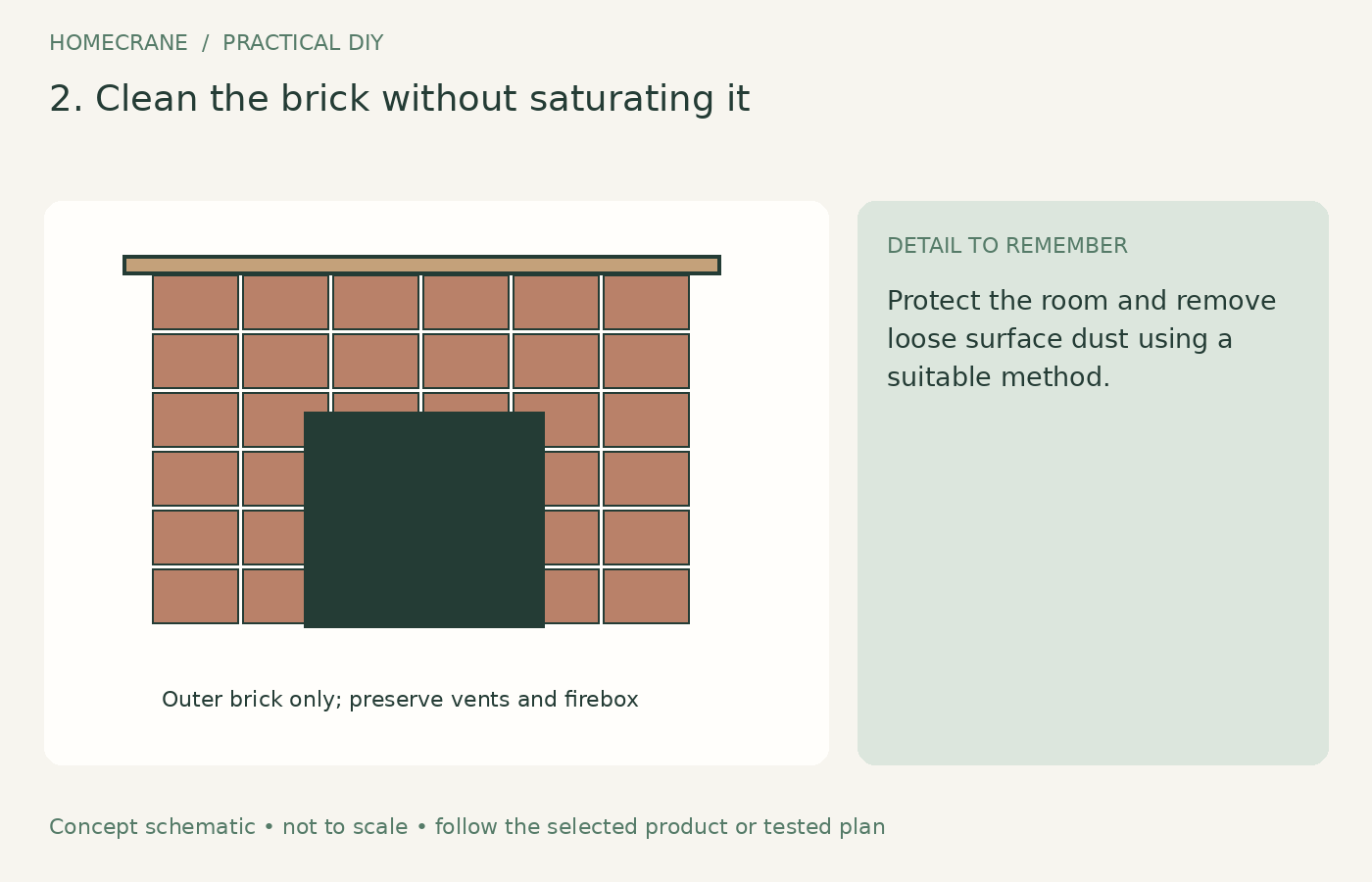
Protect the room and remove loose surface dust using a suitable method. Clean soot and contamination with products approved for the masonry and intended coating. Follow dilution, protective equipment, rinsing, and ventilation instructions.
Do not mix cleaners or assume a stronger chemical will produce a better bond. Excess moisture can delay painting and affect porous masonry, so allow the surface to dry as required. A darkened brick face immediately after cleaning is not ready simply because the room air feels dry.
Address stains with the coating manufacturer's recommended approach. If soot keeps returning while the fireplace is not being used, investigate its source. Paint is not a remedy for a venting or combustion problem.
3. Repair defects and test the white
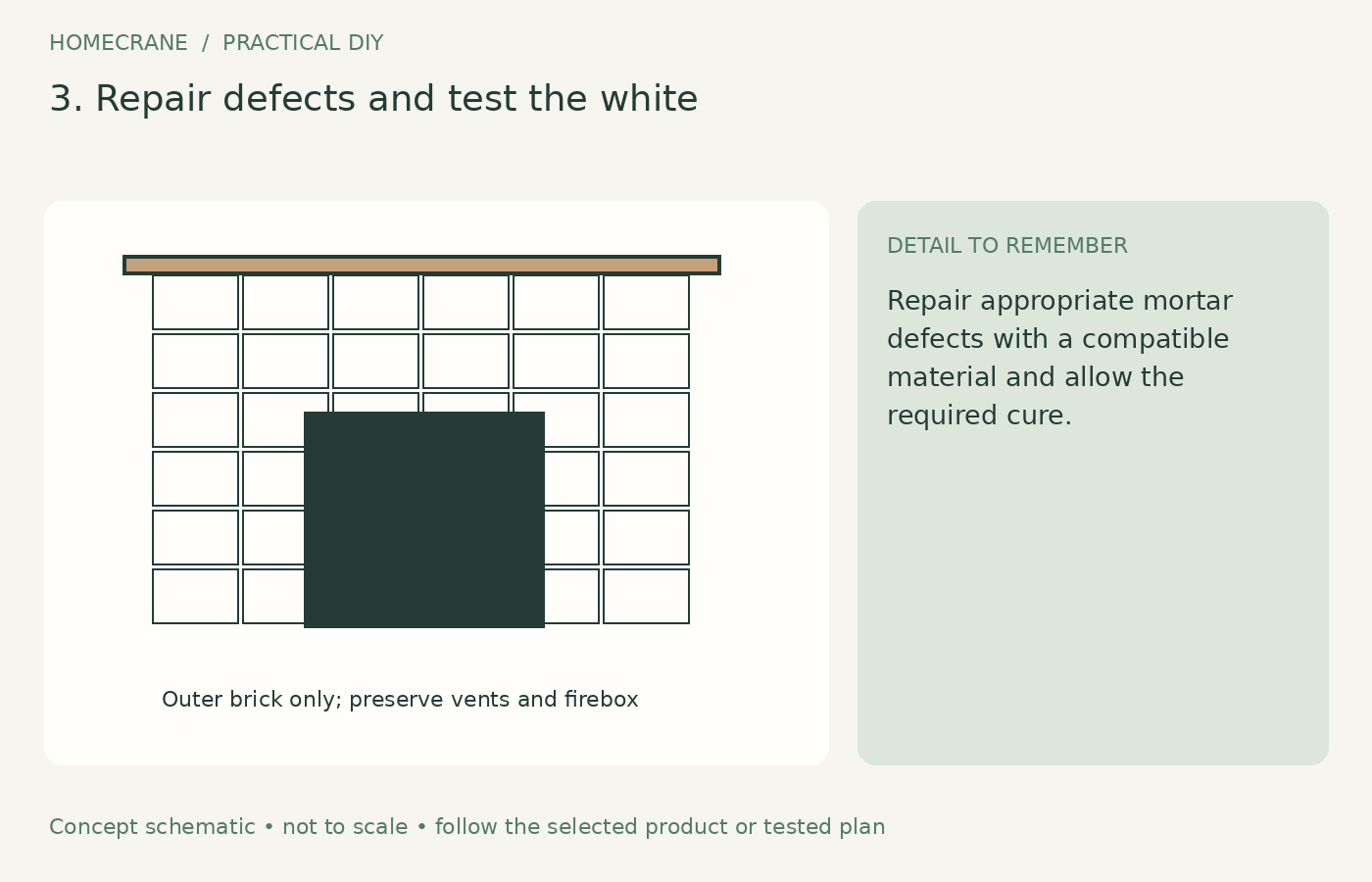
Repair appropriate mortar defects with a compatible material and allow the required cure. Significant cracks, loose masonry, or structural concerns belong with a qualified professional. Do not bridge them with flexible paint and call the repair complete.
Test the chosen white on a representative sample or approved small area. Look at it beside the wall color, floor, mantel, and daylight. A cool white can make warm cream walls look yellow; a very warm white can look dingy beside a bright white insert surround.
Decide how much brick texture you want to retain. Paint usually leaves the masonry relief visible. Filling every mortar joint to create a smooth modern slab is a different project with different material requirements.
4. Apply the compatible primer and finish
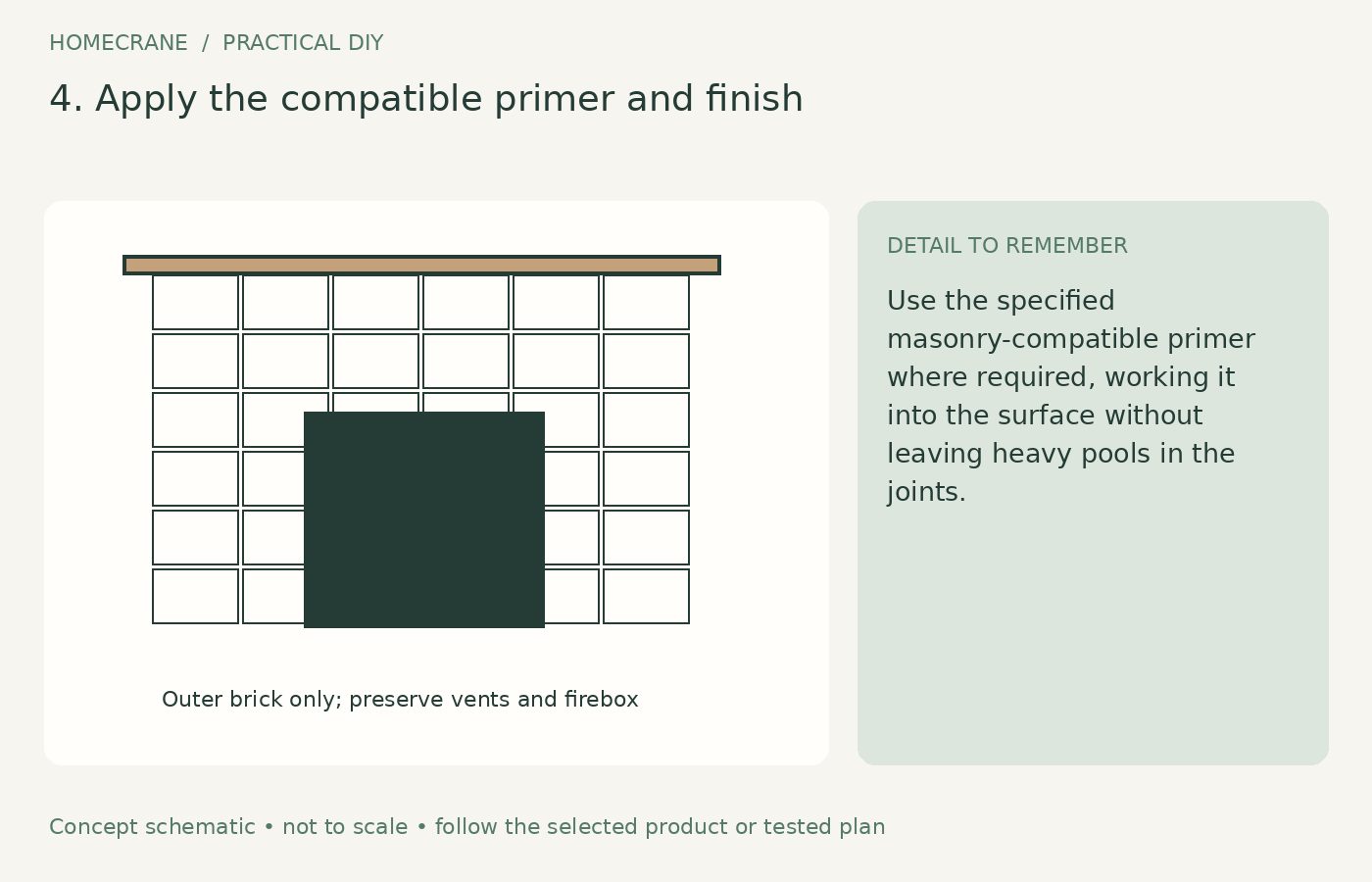
Use the specified masonry-compatible primer where required, working it into the surface without leaving heavy pools in the joints. Use suitable brushes and rollers for the texture. Keep paint off glass, gaskets, metal components, vents, controls, and labels unless their manufacturer explicitly approves the coating.
Apply the finish in the recommended number of coats and at the correct coverage. An extra-thick coat is not a shortcut to hiding red brick. Follow temperature, ventilation, and recoat requirements, and check the surface from several angles for missed recesses.
Let the coating reach the manufacturer's required condition before returning the fireplace to use. Do not light a fire to accelerate drying. If the product has no documented suitability for the intended exterior surround conditions, choose another system rather than experimenting.
Choose the right scope before buying paint
| Feature | What to confirm | |
|---|---|---|
| Exterior brick surround | Masonry condition and coating compatibility | |
| Hearth | Heat, wear, and the proposed finish's approved use | |
| Metal insert or trim | Appliance-specific instructions | |
| Firebox interior | Separate high-temperature system or no coating |
A white surround can look complete without painting every component. Leaving a dark firebox interior and coordinating the mantel often provides useful contrast. The safest visual plan respects the fireplace's functional parts.
Care after the makeover
Use the coating's approved cleaning method and avoid abrasive scrubbing that alters the finish. White makes dust and soot more visible, so diagnose recurring staining instead of repeatedly applying another coat.
Keep a record of the primer, finish, color, application date, and any masonry repair. That information helps with maintenance and lets a future contractor understand what is on the brick. Store leftover paint only as its label allows.
If the existing surround is already painted and you plan to disturb old coating, review the EPA's lead-safe guidance for older homes. Removing an uncertain old finish is different from painting clean, bare brick.
Questions homeowners ask
Is whitewashing easier to reverse?
Do not assume so. A diluted paint treatment can still bond deeply to porous brick. Test the appearance and understand the removal difficulty before treating the full surround.
Can I use leftover wall paint?
Only if its manufacturer confirms suitability for the actual masonry and exposure. The fact that a can is white and labeled interior paint does not establish that it is appropriate for your fireplace.
Sources
- Sherwin-Williams' fireplace guide. Checked October 11, 2026
- EPA's lead-safe guidance. Checked October 11, 2026
Share this article
Get new guides by email
Practical home articles and free resources. No spam, and you can unsubscribe at any time.
Keep reading

DIY Fluted Headboard Made Out of Pool Noodles
Plan a decorative fluted headboard using covered foam channels, a stable backer, careful material checks, and secure independent mounting.
October 2026, 3 min read

4 Renter-Friendly Ways to Hang Curtains Without Drilling
Compare tension rods, adhesive curtain hooks, magnetic rods, and floor-to-ceiling systems for curtains in a rental without drilling.
October 2026, 3 min read
Genius Under-Stairs Pull-Out Storage Ideas You Can DIY
Explore five under-stairs storage approaches with practical guidance on access, drawer hardware, stability, and existing openings.
October 2026, 3 min read