How to Stop a Door from Rattling When the AC Turns On
Stop an AC-triggered door rattle by checking latch clearance, hinge attachments and room airflow, with practical steps that preserve door operation.
By Home Crane Editors. . 4 min read.
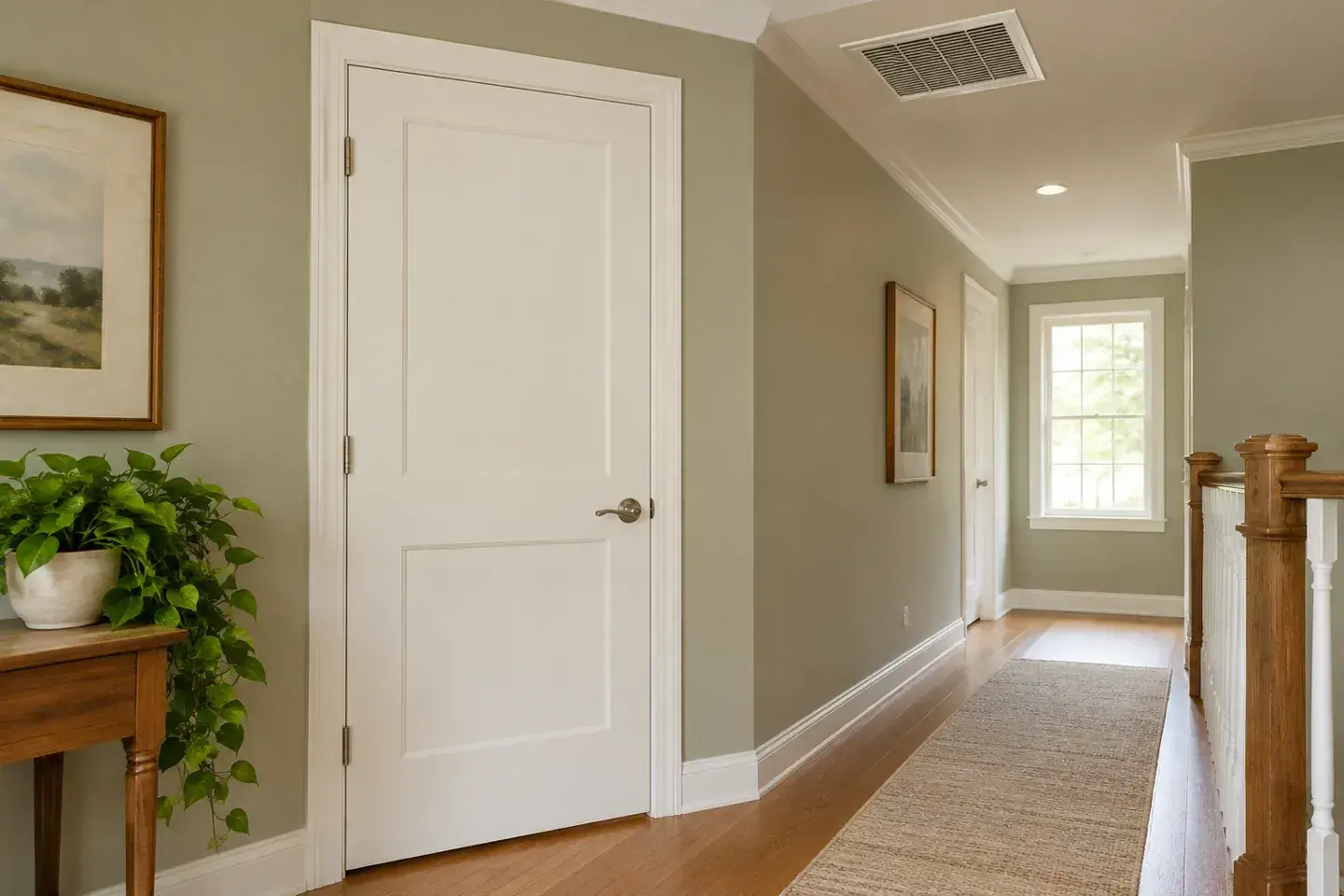
A door that rattles as the air conditioner starts often has a little movement between its latch and strike, while changing air pressure supplies the push. Check the door hardware first, then investigate airflow if the symptom persists. Padding the door until it barely closes can hide the noise while creating a different problem.
Begin by confirming where the sound comes from. The latch, hinges, loose glass, a nearby register, and trim can produce similar noises. Listen during one normal HVAC cycle and note whether the door is open, closed, or fully latched.
Use this guide for an ordinary interior door. Fire-rated, security, automatic-closing, and apartment entry doors may have restrictions on alterations. Ask the building manager or an appropriate professional before changing those assemblies.
1. Check the latched door for free movement
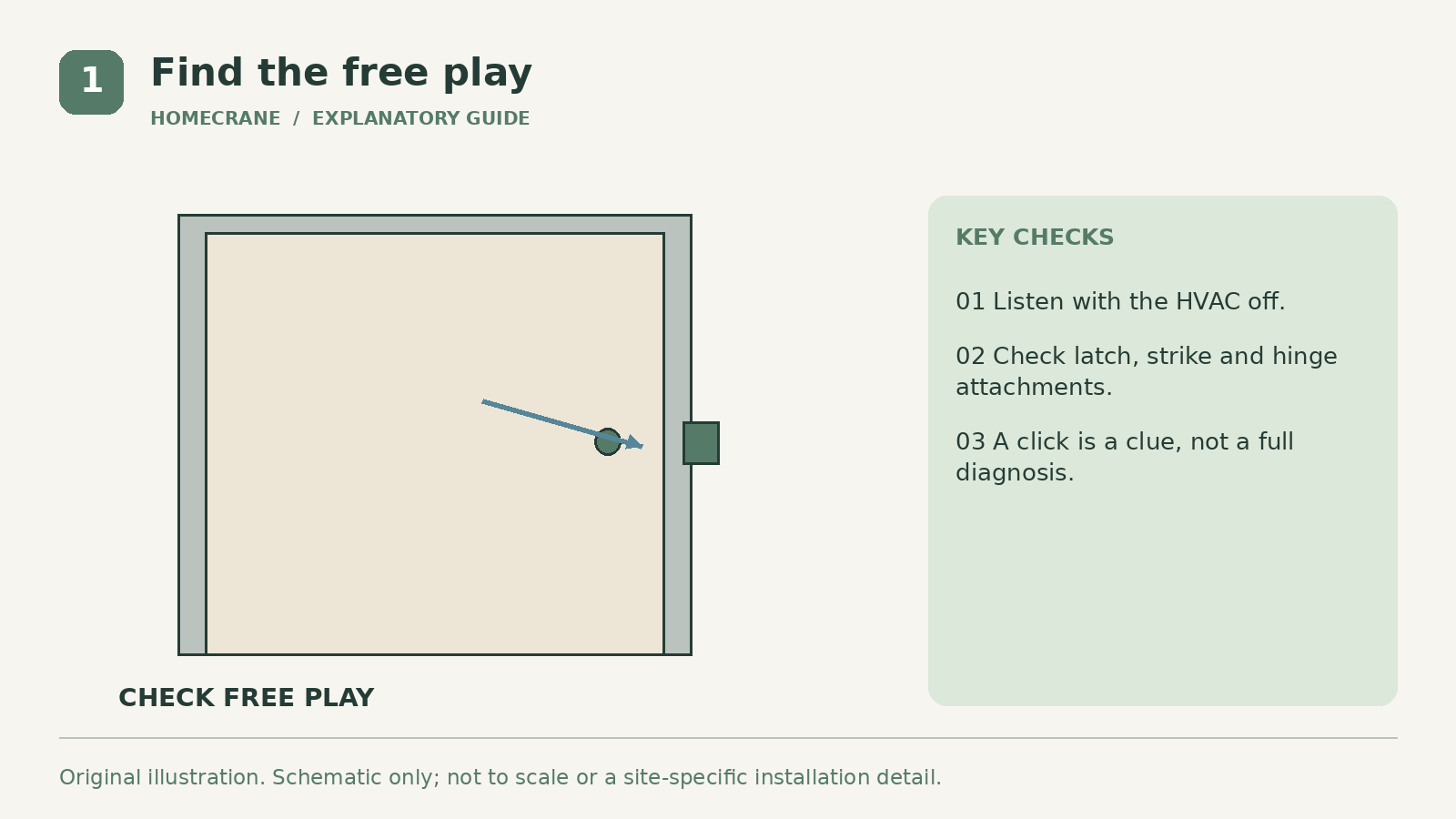
With the AC off, close and latch the door gently. Push and pull lightly near the handle without operating it. A small click at the strike suggests that the latch has room to move in its opening. Movement elsewhere may point toward a hinge, loose stop, or another component.
Check that the handle, strike plate, and visible hinge screws are secure. Tighten loose screws carefully with the correct driver. Do not overtighten or replace screws blindly with longer ones, particularly in metal frames or where concealed components may be present.
Schlage's noisy-door guidance explains the relationship between hinges, latch alignment, and the strike. Its advice supports checking the hardware rather than assuming every noise needs lubricant.
A latch can rattle even when it is well lubricated. Lubrication will not remove excessive clearance or repair a loose mounting. If the screw turns without tightening, the attachment needs a suitable repair rather than repeated tightening attempts.
2. Correct the latch fit without compromising operation
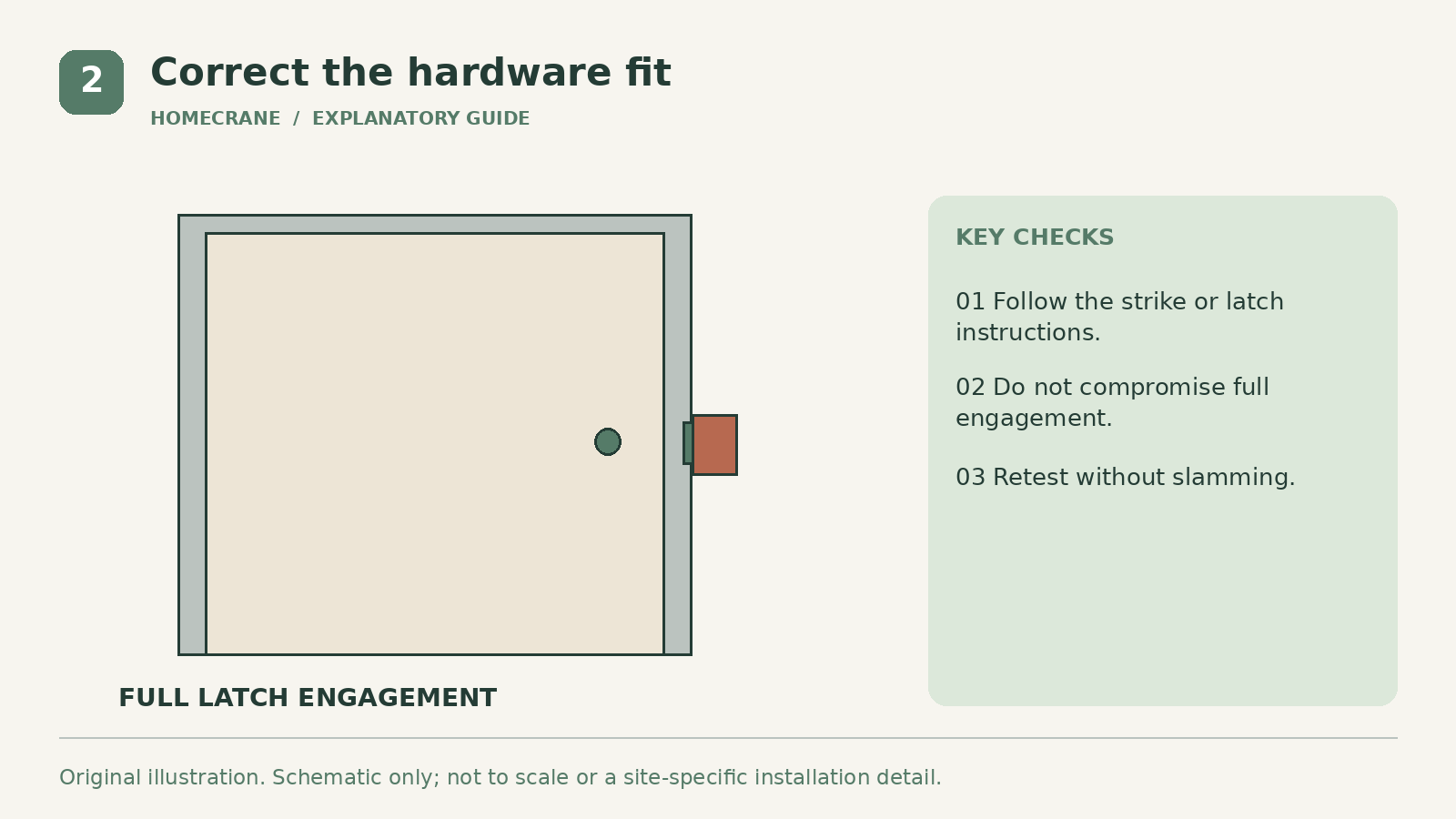
Observe whether the latch fully enters the strike opening. If it catches only at the edge, alignment needs attention. A door should close and release normally without lifting it, slamming it, or turning the handle repeatedly.
Some strike plates have an adjustable feature, while others require a different fitting approach. Follow the hardware instructions. Do not hammer an unfamiliar plate or file away large amounts of metal merely to silence the door.
Schlage's latch troubleshooting guide notes that seasonal movement and overly thick weatherstripping can affect fit. This matters when a door changes behavior through the year: a winter adjustment may be too tight in humid weather.
For a simple interior door, a small compatible stop bumper may cushion contact if it does not interfere with latching. Test the smallest suitable change and check the latch afterward. Do not line the whole frame with thick foam as a first response.
If the strike position, hinge alignment, or frame condition is uncertain, a carpenter or door specialist can correct the fit. The objective is a properly functioning door, not just a silent door under one set of conditions.
3. Check whether closed-room pressure is driving the movement
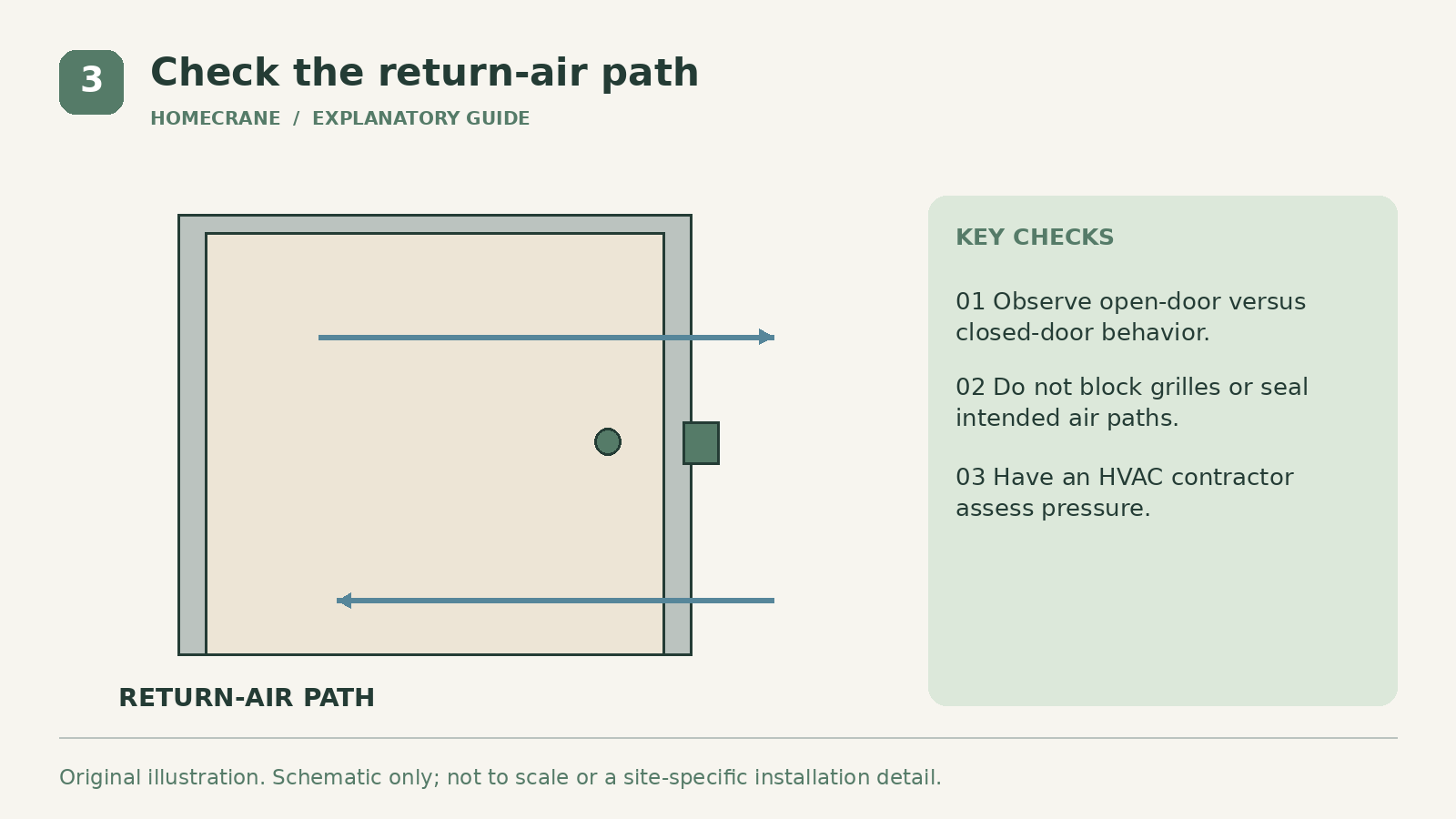
Compare the symptom with the door fully latched and then with it open during normal HVAC operation. A marked difference can suggest that the room's air path deserves assessment. It is a clue, not a pressure measurement or a complete diagnosis.
A supply register adds air to the room. That air also needs an appropriate route back to the return system. Building America guidance on ducted returns describes pressure balancing through designed return paths, including dedicated returns and other approved arrangements.
Check for obvious obstruction of existing grilles by furniture or stored items. Use the system as intended and maintain filters according to the equipment instructions. Do not block a supply register to silence the door or cut an improvised opening through a wall.
A door undercut may be part of the return route, but its adequacy cannot be judged by appearance alone. Sealing it may worsen room pressure. An HVAC contractor can measure the condition and recommend a suitable correction while considering sound, privacy, and fire separation.
Ask for the actual finding: which room is affected, whether the return path is restricted, and what measurement supports the proposed work. That is more useful than replacing equipment because a door rattles.
4. Retest the whole door after a small correction
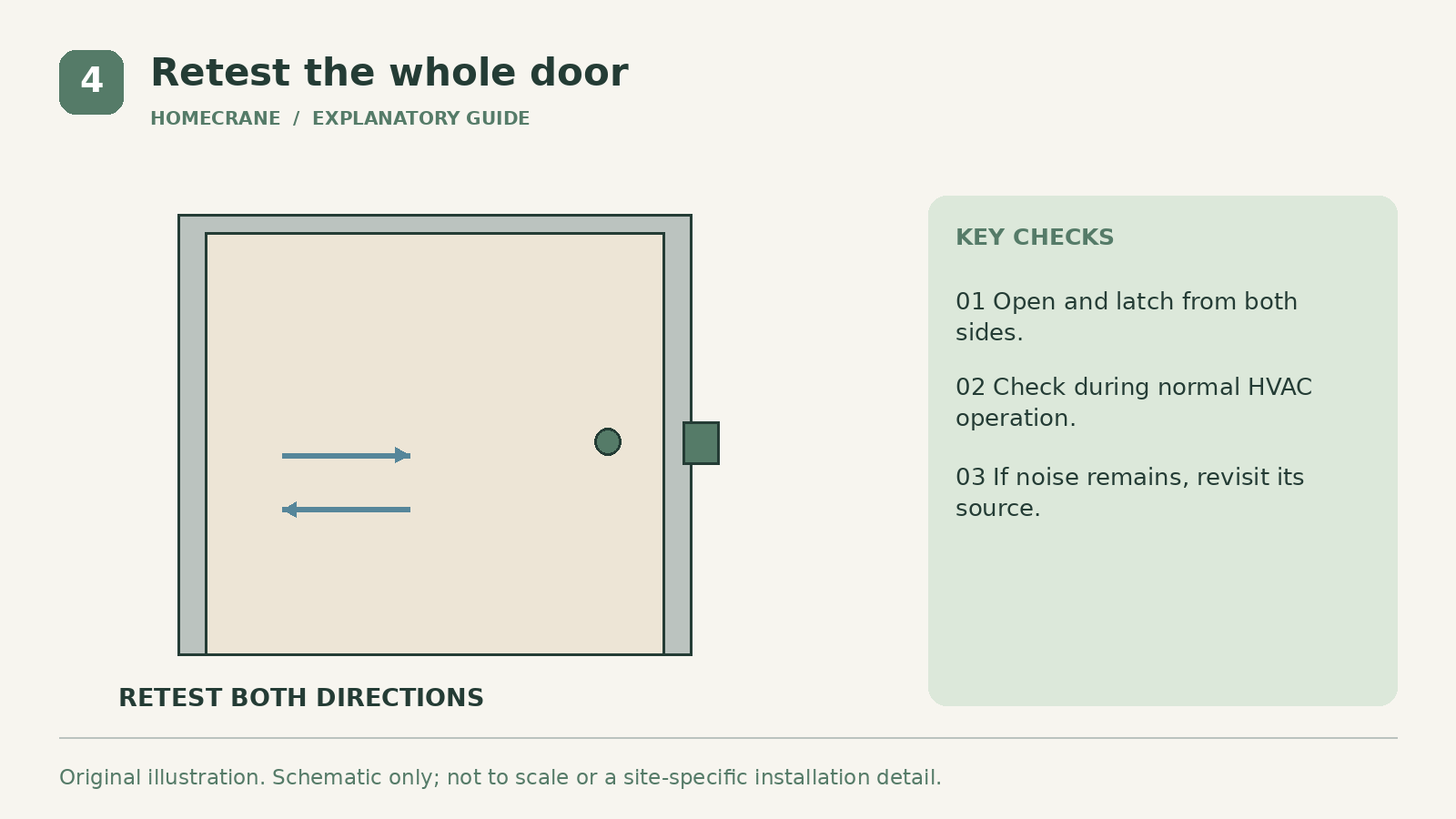
After tightening or an approved adjustment, operate the door several times with the AC off. Confirm that it latches fully, opens easily, and does not rub. Then observe it during normal operation of the system.
Test from both sides. A pad that seems harmless from the hallway can make the handle feel loaded from inside the room. Children and guests should not need unusual force or a special technique to open an ordinary door.
Record which change made a difference. If the sound remains, return to the source rather than adding more padding. A loose register or vibrating panel near the door may have been the actual noise all along.
Match the symptom to the next step
| Feature | Useful next step | |
|---|---|---|
| Click at the strike when lightly pushing the closed door | Inspect latch clearance and attachments | |
| Door rubs or will not latch | Correct alignment before adding bumpers | |
| Rattle mainly with the room closed and HVAC running | Assess the return-air path | |
| Noise persists while the door is held still | Check nearby grille, trim or panel |
Should I weatherstrip an interior bedroom door?
Only after considering its intended airflow path and hardware operation. Weatherstripping is not a universal cure for room-pressure problems.
Is a stronger latch the solution?
Not necessarily. It may restrain movement without correcting loose hardware, poor alignment, or pressure imbalance. Diagnose the mechanism before replacing parts.
Sources
- Schlage's noisy-door guidance. Checked October 11, 2026
- Schlage's latch troubleshooting guide. Checked October 11, 2026
- Building America guidance on ducted returns. Checked October 11, 2026
Share this article
Get new guides by email
Practical home articles and free resources. No spam, and you can unsubscribe at any time.
Keep reading
Painted Kitchen Countertops After Two Years: What to Inspect and Expect
Assess painted countertops after two years with a practical inspection guide for edges, sink areas, scratches, cleaning, and repair decisions.
October 2026, 3 min read

How to Help Prevent Frozen Pipes in Minnesota Winters
Prepare Minnesota plumbing for winter with guidance on vulnerable pipes, heat, insulation, outdoor lines, and when to contact a plumber or utility.
October 2026, 5 min read
Repointing Brick Cost in Pennsylvania: What You Need to Know
Compare Pennsylvania brick repointing costs with Philadelphia context, wall-area calculations, compatible mortar, access, and a clear sample budget.
October 2026, 4 min read