How to Stop Winter Condensation on Single Pane Windows
Reduce winter condensation on single pane windows with humidity checks, ventilation, airflow, and properly fitted interior storm panels.
By Home Crane Editors. . 4 min read.
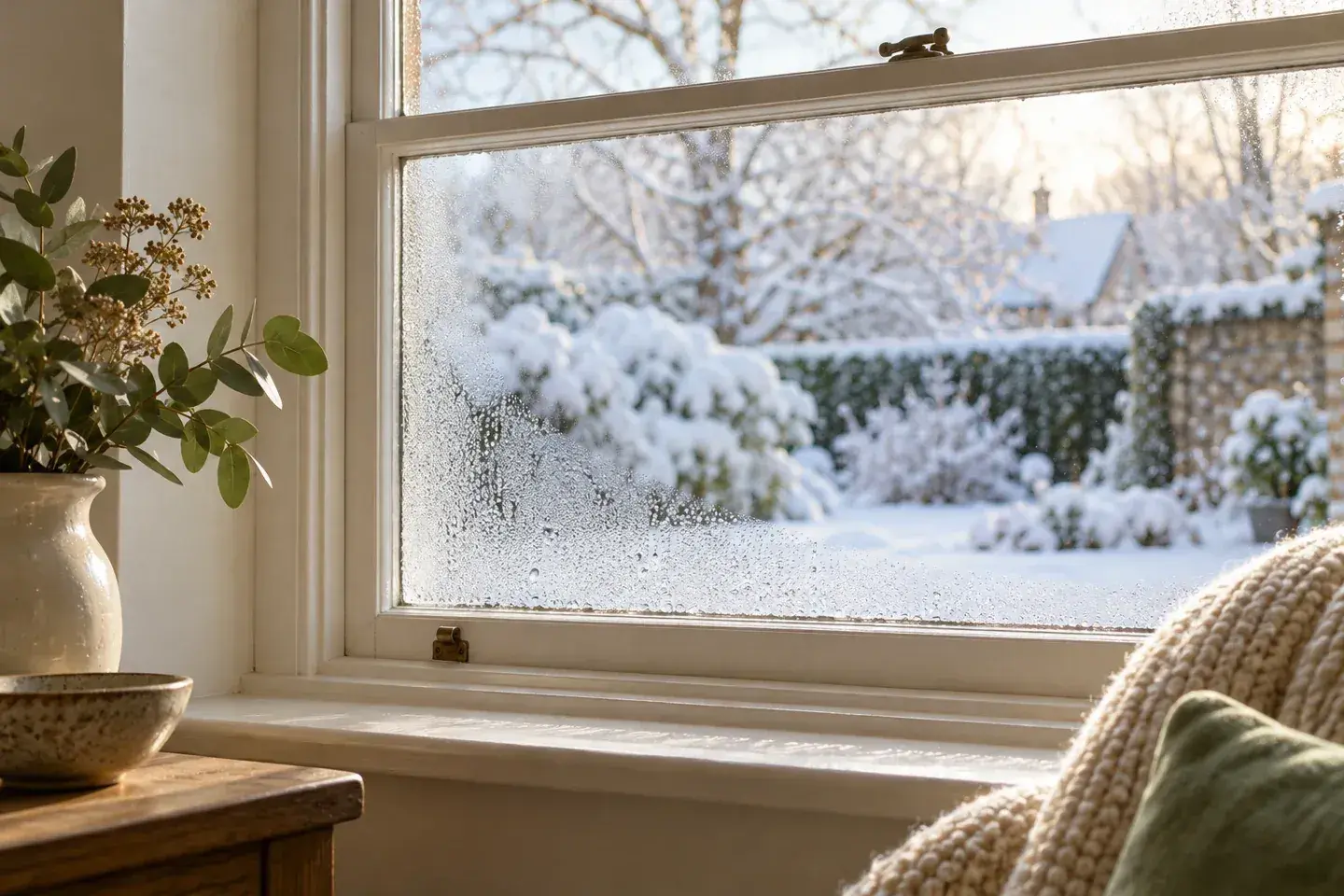
Winter condensation forms when indoor moisture meets glass cold enough for that moisture to turn into liquid. Single pane windows are especially vulnerable because their interior surfaces can become very cold. The practical solution is to reduce moisture reaching the glass, improve conditions around the window, and, where suitable, add a well-fitted storm panel.
Start by checking where the water appears. Moisture on the room-facing glass is different from rain entering around the frame or water trapped between a window and a storm panel. Each needs a different response. Wiping the sill helps protect it, but does not by itself solve the cause.
1. Find the moisture and measure indoor humidity
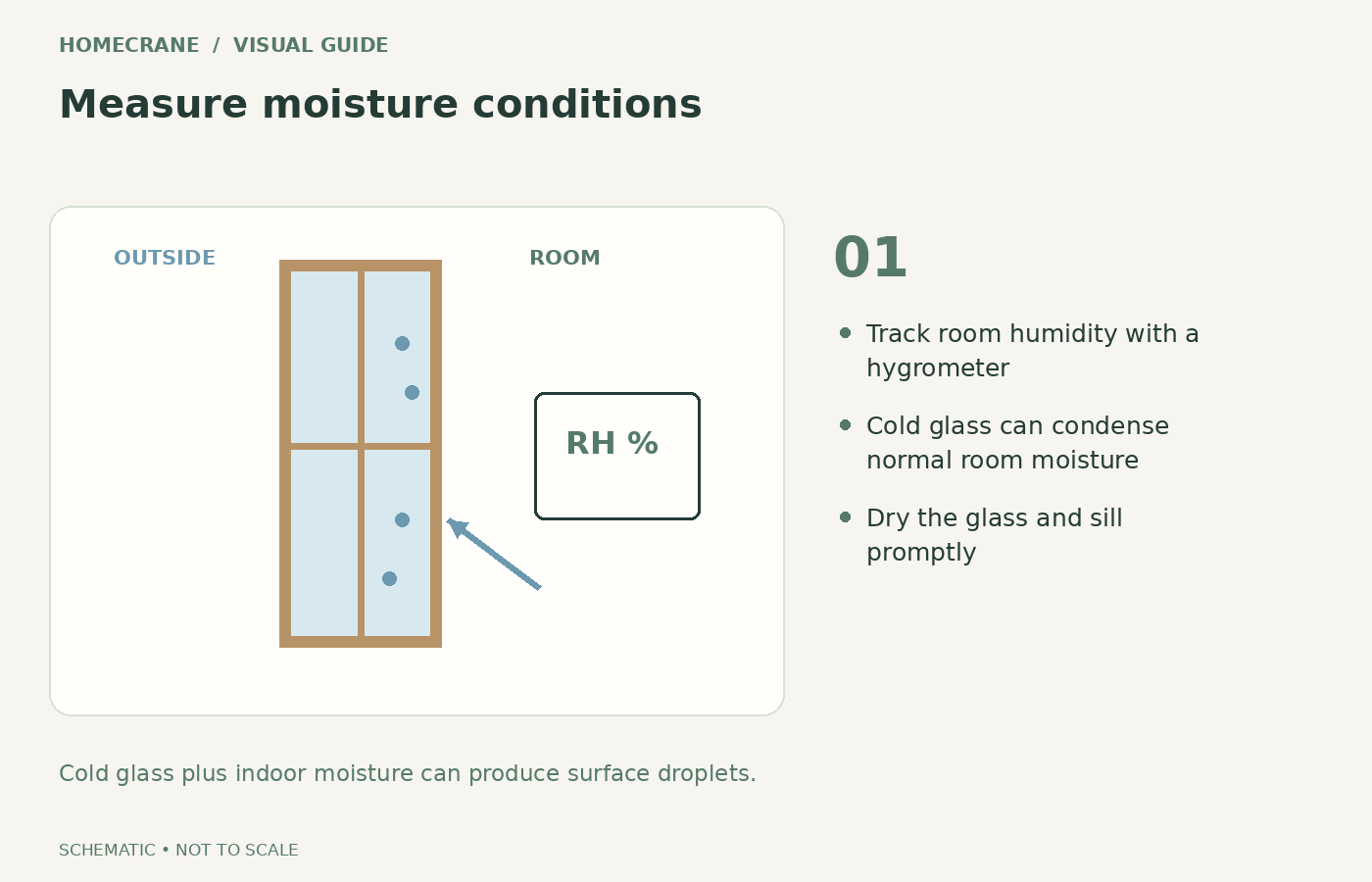
Use a small hygrometer to track relative humidity in the affected room. Put it where it measures room air rather than resting against the cold glass or directly above a radiator. Record the reading and outdoor conditions when condensation is worst, often early in the morning.
The EPA's moisture guidance recommends keeping indoor relative humidity below 60 percent, ideally around 30 to 50 percent. That is general moisture guidance, not a promise that single pane glass will stay dry at 50 percent in severe cold. A colder window can require a lower indoor humidity level.
Dry wet glass and sills promptly with an absorbent cloth. Check painted wood, nearby drywall, and curtains for repeated dampness. If water appears during rain rather than cold weather, investigate flashing, joints, and exterior drainage instead of assuming indoor humidity is the only issue.
2. Reduce moisture at its source
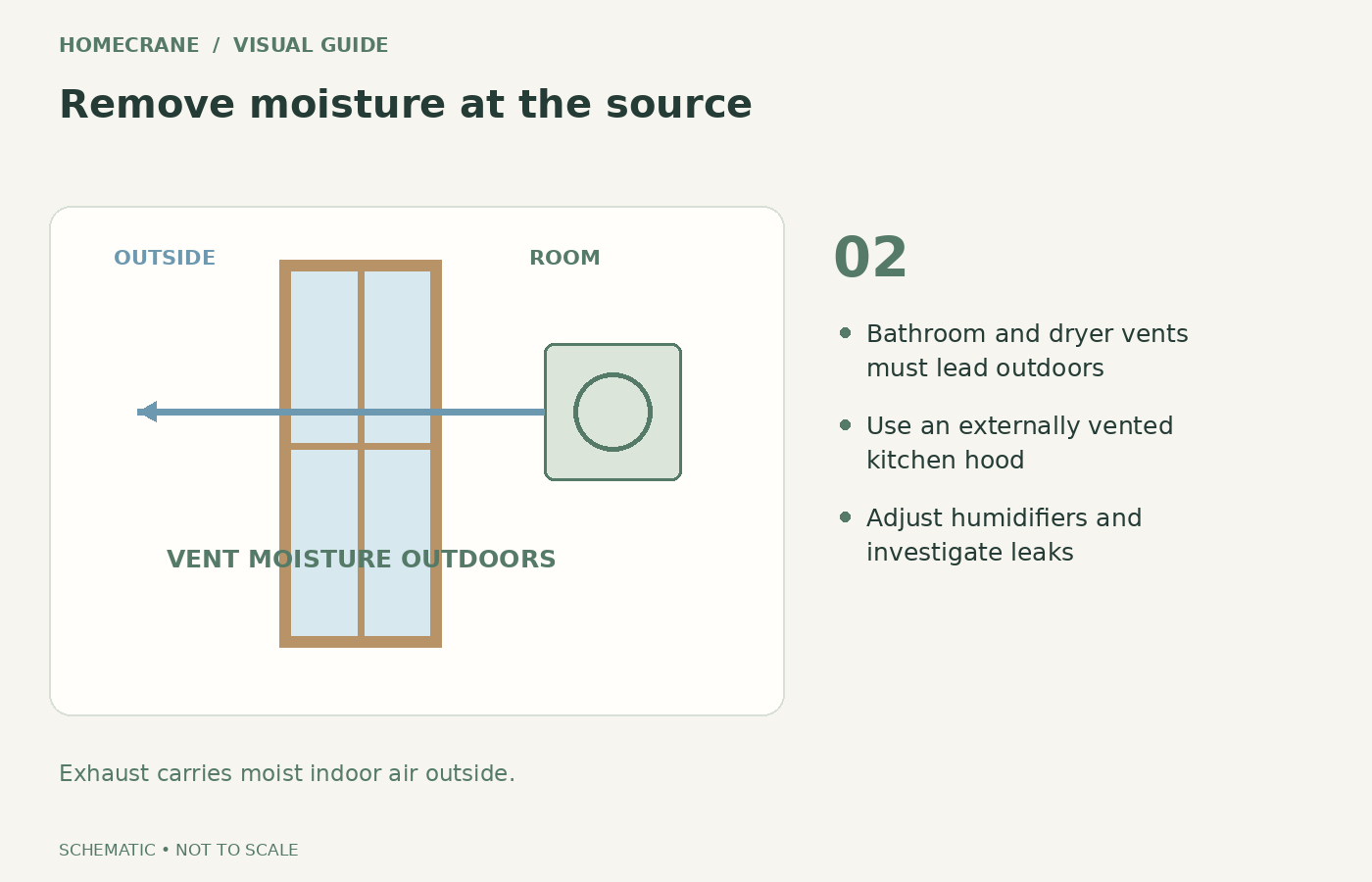
Use a bathroom exhaust fan that actually discharges outdoors during and after showers, as needed to remove the moisture. Use an externally vented kitchen hood while cooking when available. A recirculating hood may filter grease, but it does not carry water vapor outside.
Check that the clothes dryer vents outdoors and that the vent is connected and functioning. Avoid drying large amounts of laundry inside the affected room. If a portable humidifier is running, reduce or stop it while monitoring comfort and condensation.
A dehumidifier may help in suitable room conditions, but it is an additional tool rather than a substitute for repairing leaks or fixing ventilation. Choose equipment suited to the temperature where it will operate and follow its drainage instructions. Empty water containers regularly so collected water does not become another maintenance problem.
Do not block required ventilation to make a room feel warmer. Persistent whole-house moisture problems are worth assessing as a ventilation and building-envelope issue, particularly after air-sealing work changes how the home exchanges air.
3. Let warmer room air reach the glass
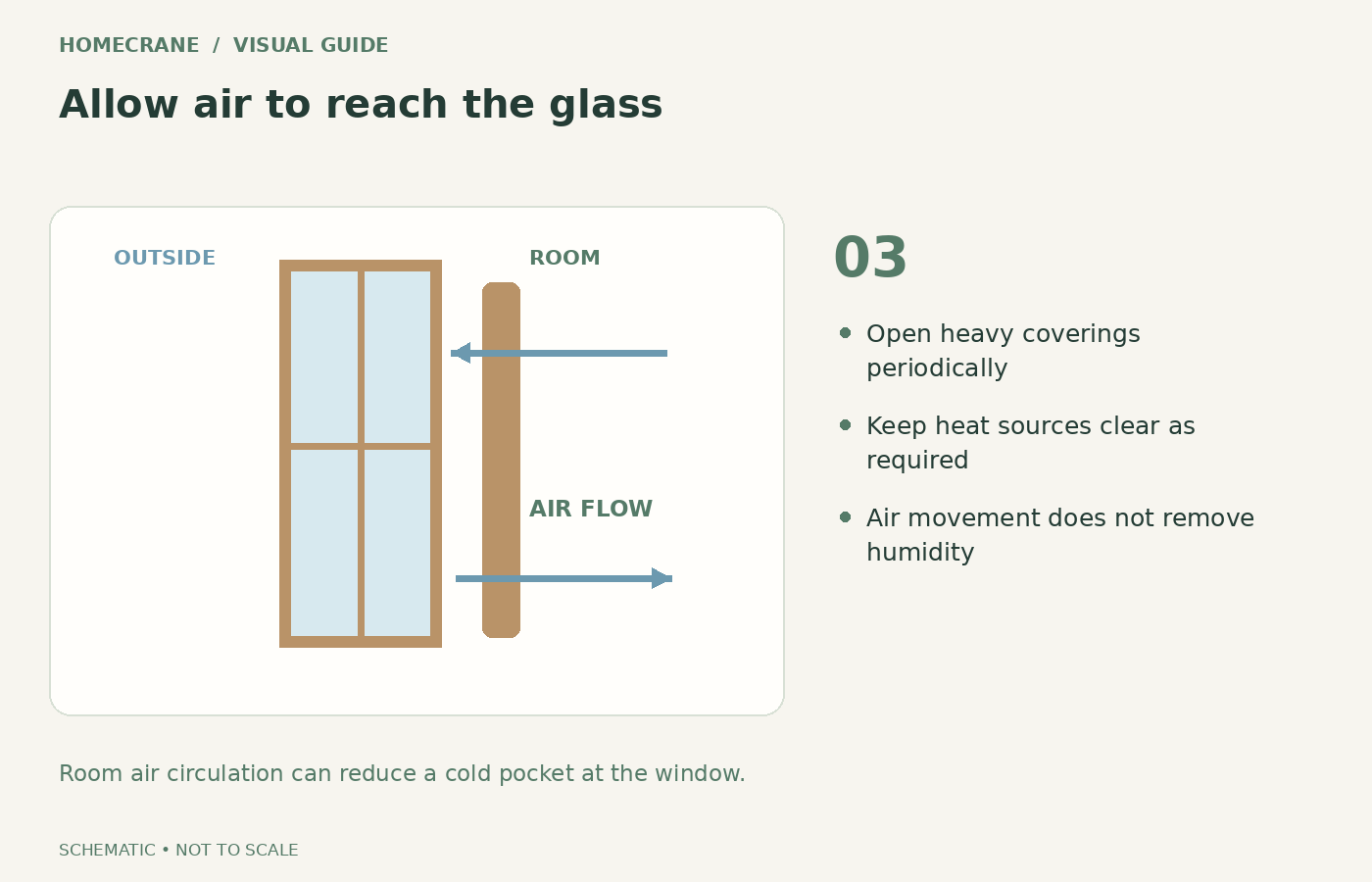
Heavy curtains and tightly closed blinds can isolate a pocket of cold air beside the window. Open coverings periodically and leave space for room air to circulate. Keep furniture from blocking the normal heat source, and follow heater clearance requirements.
This can reduce local condensation, but a fan does not remove water vapor from the house. If humidity remains high, moving the same moist air around has limits. Likewise, turning up the thermostat may warm surfaces somewhat while increasing energy use; it is not automatically the most economical first step.
Inspect weatherstripping and obvious air leakage. Repairing appropriate seals can improve comfort, but distinguish intended drainage openings from gaps that should be sealed. Do not caulk window weep holes shut. If the window is damaged or its operation is unclear, use the manufacturer's details or a qualified repair professional rather than sealing every visible opening.
4. Add a properly fitted interior storm panel
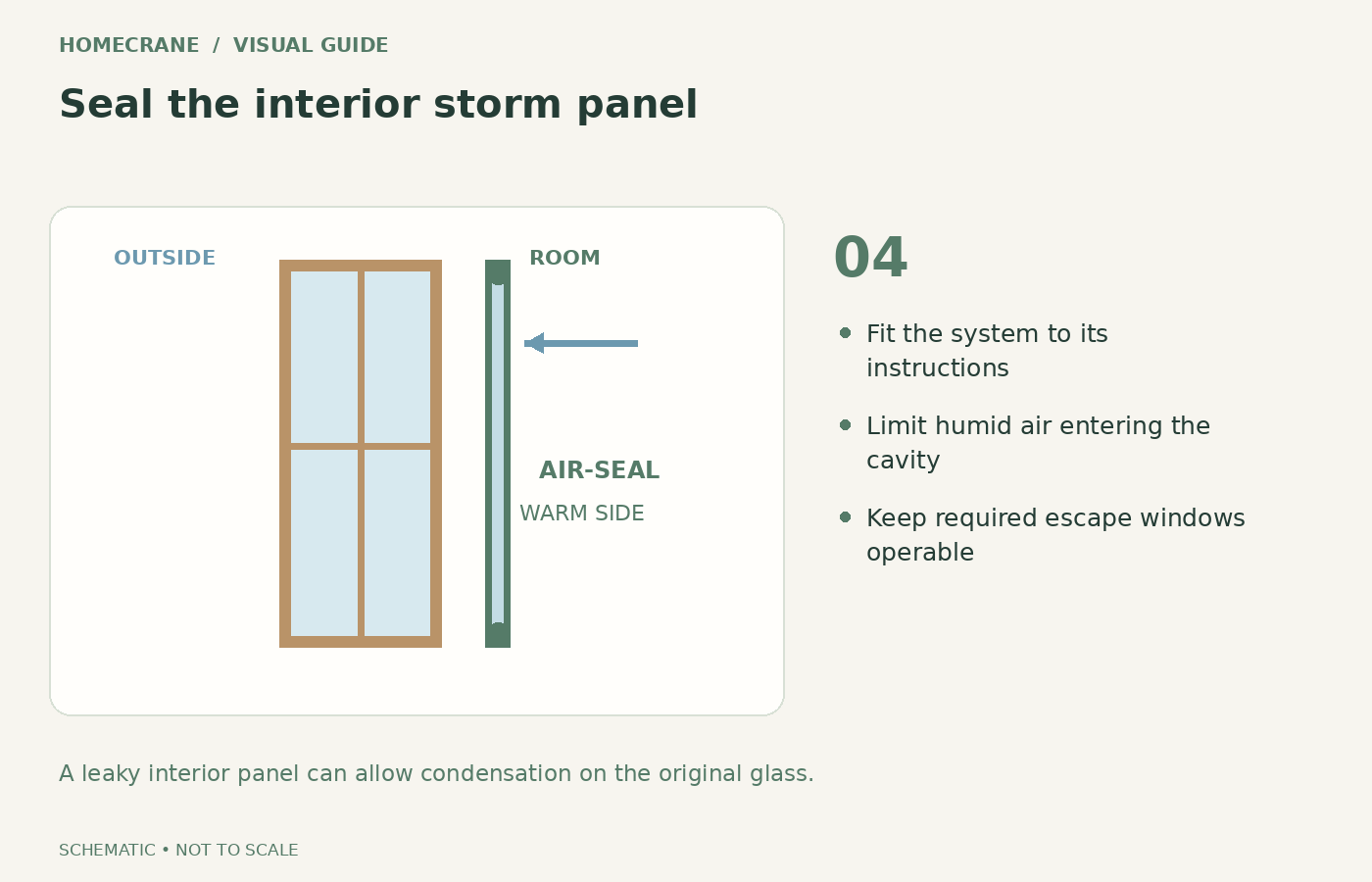
An interior storm window or removable panel adds a layer between the room and the original window. It can improve comfort and make the room-facing surface warmer. The details matter: a leaky interior panel can allow humid air to reach the cold original glass and condense between the layers.
The Pacific Northwest National Laboratory installation guide explains the role of interior storms. Its technical resource on panels emphasizes controlling air leakage that carries indoor moisture into the cavity.
Measure the opening, confirm compatibility, and follow the panel system's sealing and installation instructions. Keep required emergency escape windows usable. Inspect behind removable panels during cold weather, especially soon after installation. A panel that hides moisture from view without controlling it has not solved the problem.
Window insulation film can be a temporary option where suitable, but consider finish damage from tape, rental restrictions, ventilation needs, and access. It is not equivalent to repairing rotten framing or failed exterior weather protection.
Match the symptom to the likely problem
| Feature | What to investigate | |
|---|---|---|
| Interior droplets during cold nights | Cold glass plus indoor humidity | |
| Water after wind-driven rain | Exterior water entry | |
| Moisture between glass and interior panel | Panel air leakage and moisture sources | |
| Persistent damp trim or soft wood | Ongoing damage requiring repair |
Keep a short record before purchasing replacements: room humidity, outdoor temperature, which windows are affected, and whether blinds were closed. A few observations can prevent an expensive fix aimed at the wrong problem.
Questions homeowners ask
Will a dehumidifier stop all window condensation?
It may reduce it, but the result depends on how cold the glass becomes and how much moisture is being generated. Use measured results instead of choosing an arbitrary setting and assuming the job is complete.
Is replacement always necessary?
No. Sound older windows may benefit from repairs, moisture control, and suitable storm panels. Replacement becomes more compelling when damage, operation, comfort, and energy performance cannot be addressed reasonably. Compare the condition of the whole opening, not only the presence of morning droplets.
Sources
- EPA's moisture guidance. Checked October 11, 2026
- Pacific Northwest National Laboratory installation guide. Checked October 11, 2026
- technical resource on panels. Checked October 11, 2026
Share this article
Get new guides by email
Practical home articles and free resources. No spam, and you can unsubscribe at any time.
Keep reading

The Best Energy-Efficient Windows for High-Altitude Colorado
Compare energy-efficient windows for high-altitude Colorado by elevation compatibility, whole-window ratings, solar gain, and installation quality.
October 2026, 4 min read
Best Heating Systems for Upstate New York: Comparing Cost and Comfort
Compare five heating approaches for Upstate New York and learn how energy prices, efficiency, existing equipment, and installation scope affect cost.
October 2026, 5 min read

The Best Energy-Efficient Windows for Minnesota Winters
Choose energy-efficient windows for Minnesota winters using whole-window ratings, glazing, frame and installation comparisons, and practical bid checks.
October 2026, 4 min read