The Best Energy-Efficient Windows for Minnesota Winters
Choose energy-efficient windows for Minnesota winters using whole-window ratings, glazing, frame and installation comparisons, and practical bid checks.
By Home Crane Editors. . 4 min read.

For Minnesota winters, start with a window's verified whole-product performance and the quality of its installation. A low U-factor, a suitable glazing package, reliable operation, and careful installation are more useful buying criteria than a blanket claim that one brand, frame material, or pane count is always best.
ENERGY STAR's current consumer guidance recommends looking for a U-factor of 0.22 or lower in the northern United States, while noting equivalent Northern Zone performance options. Verify the exact product's eligibility for your location. A marketing description such as “cold-climate glass” is not a substitute for the product's actual ratings.
1. Start with whole-window performance
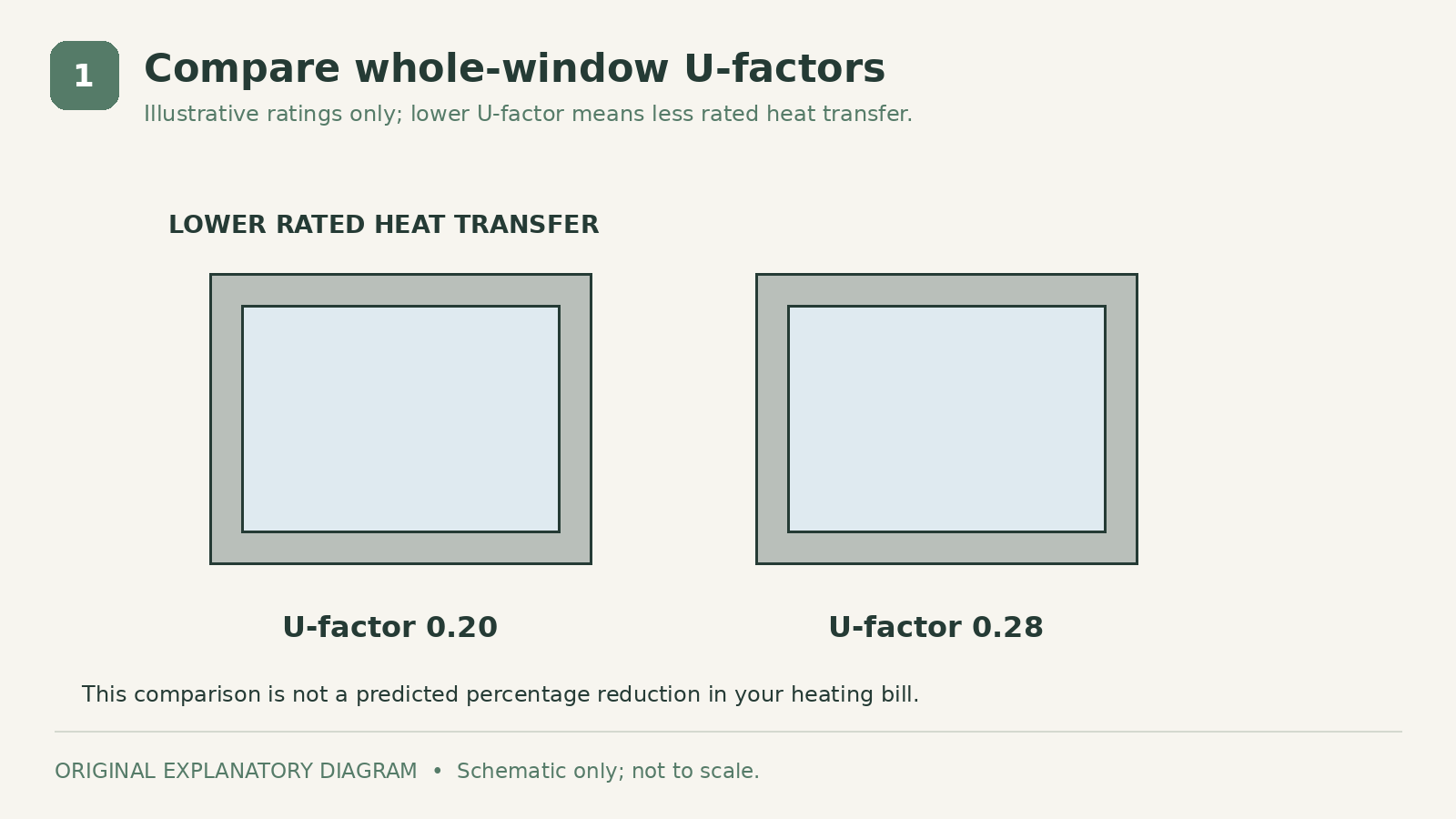
ENERGY STAR's window buying guidance explains that lower U-factor means better resistance to heat transfer. Ask for the rating of the specific window configuration you are being offered, along with its certification information.
NFRC explains whole-window U-factor as a measure that accounts for the glass, edges, frame, and other components. Its older explanatory article remains useful for that definition, but its historical eligibility thresholds should not replace current ENERGY STAR criteria.
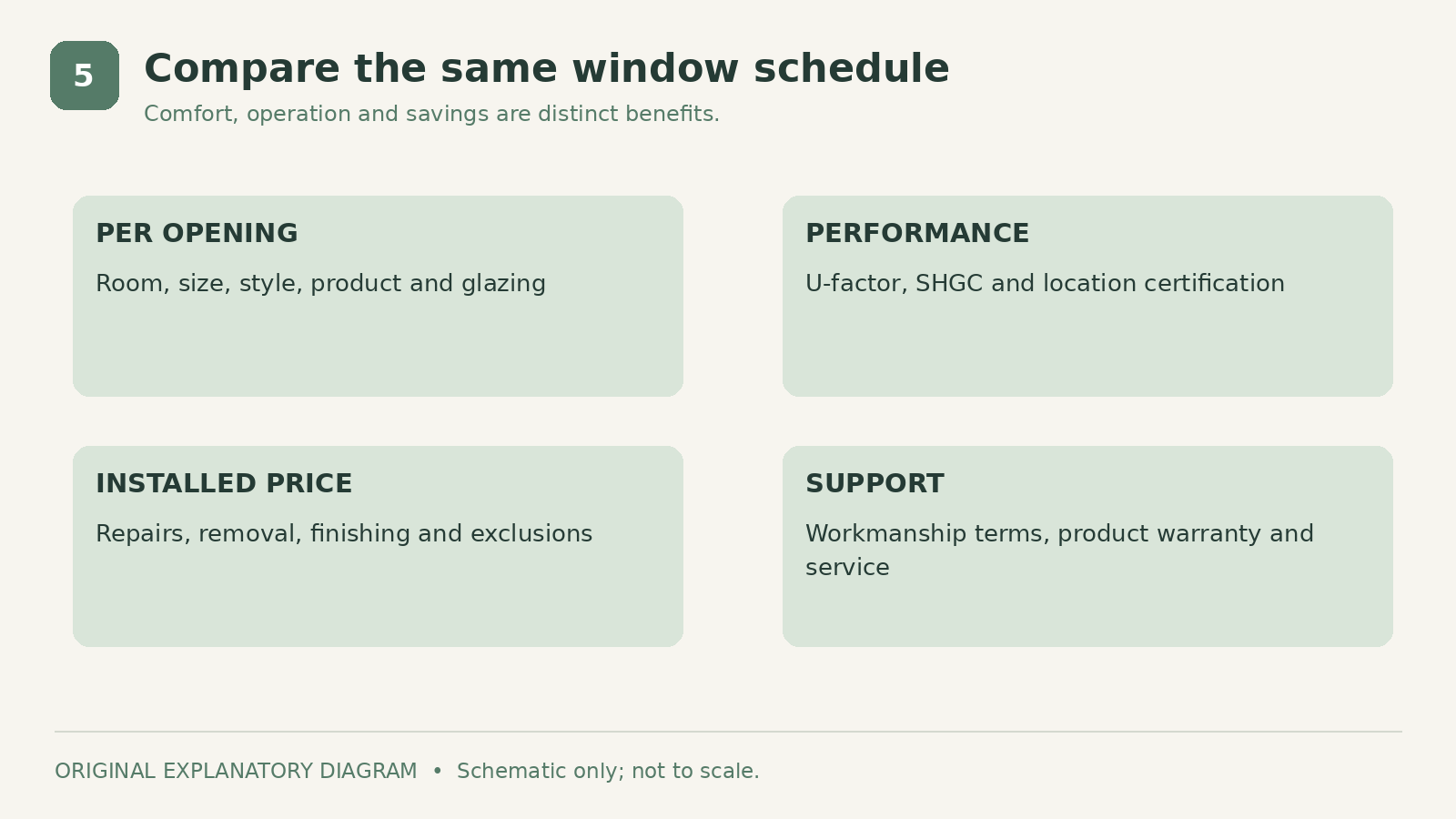
Create a schedule with a row for each opening. Record the room, dimensions, operating style, product line, glazing option, U-factor, solar heat gain coefficient, and installed price. The schedule helps prevent a strong specification in the sales conversation from becoming a different product in the final order.
For illustration, a window rated U-0.20 has lower rated heat transfer than one rated U-0.28 under the same rating framework. That does not mean your whole-house heating bill will fall by the same proportion. Window area, the rest of the building, weather, and how the house is operated all affect the result.
2. Compare glazing without relying on pane count
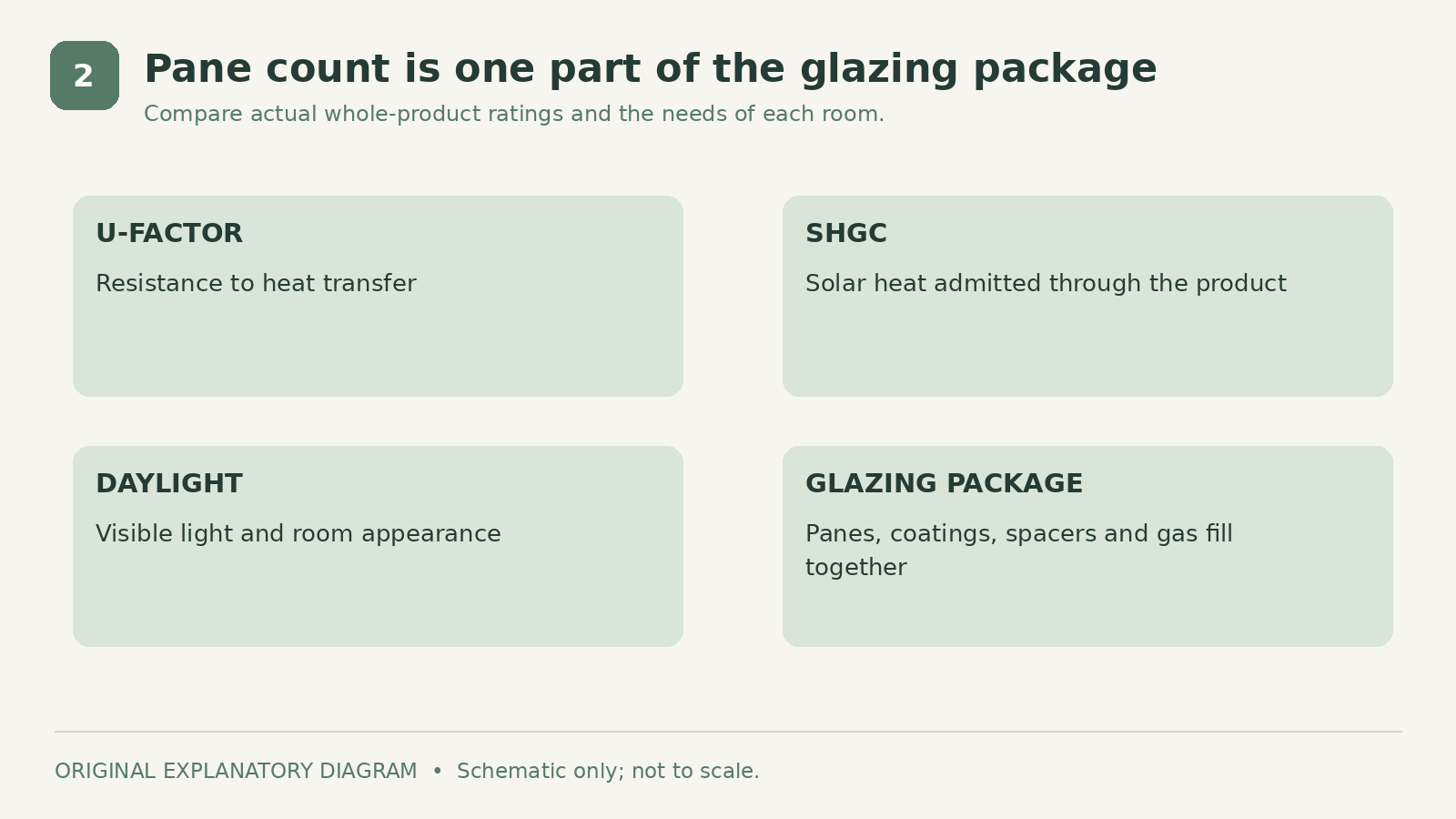
Triple glazing deserves consideration for cold-weather comfort and low heat transfer, but compare the complete rated products. A pane count alone does not capture the effects of coatings, spacers, gas fill, frame design, or the selected window configuration.
The Department of Energy's window purchasing guidance describes how these components influence performance. Use it to understand the variables, then rely on current product ratings and location-specific requirements for the actual purchase.
Solar heat gain coefficient, or SHGC, describes how much solar energy passes through. The right balance depends partly on orientation and shading. Ask the designer or energy professional to consider a sunny living room differently from a shaded bedroom rather than ordering the same glass everywhere by habit.
Visible light also matters. View samples where possible and discuss how the glazing affects daylight and appearance. A room that already feels dark may need a different trade-off from one with uncomfortable afternoon glare.
Request the installed price difference between two suitable glazing packages. Keep the size, frame, operation, and installation scope constant. That gives you a useful upgrade comparison instead of two quotations that differ in several hidden ways.
3. Choose frames and operation for each opening
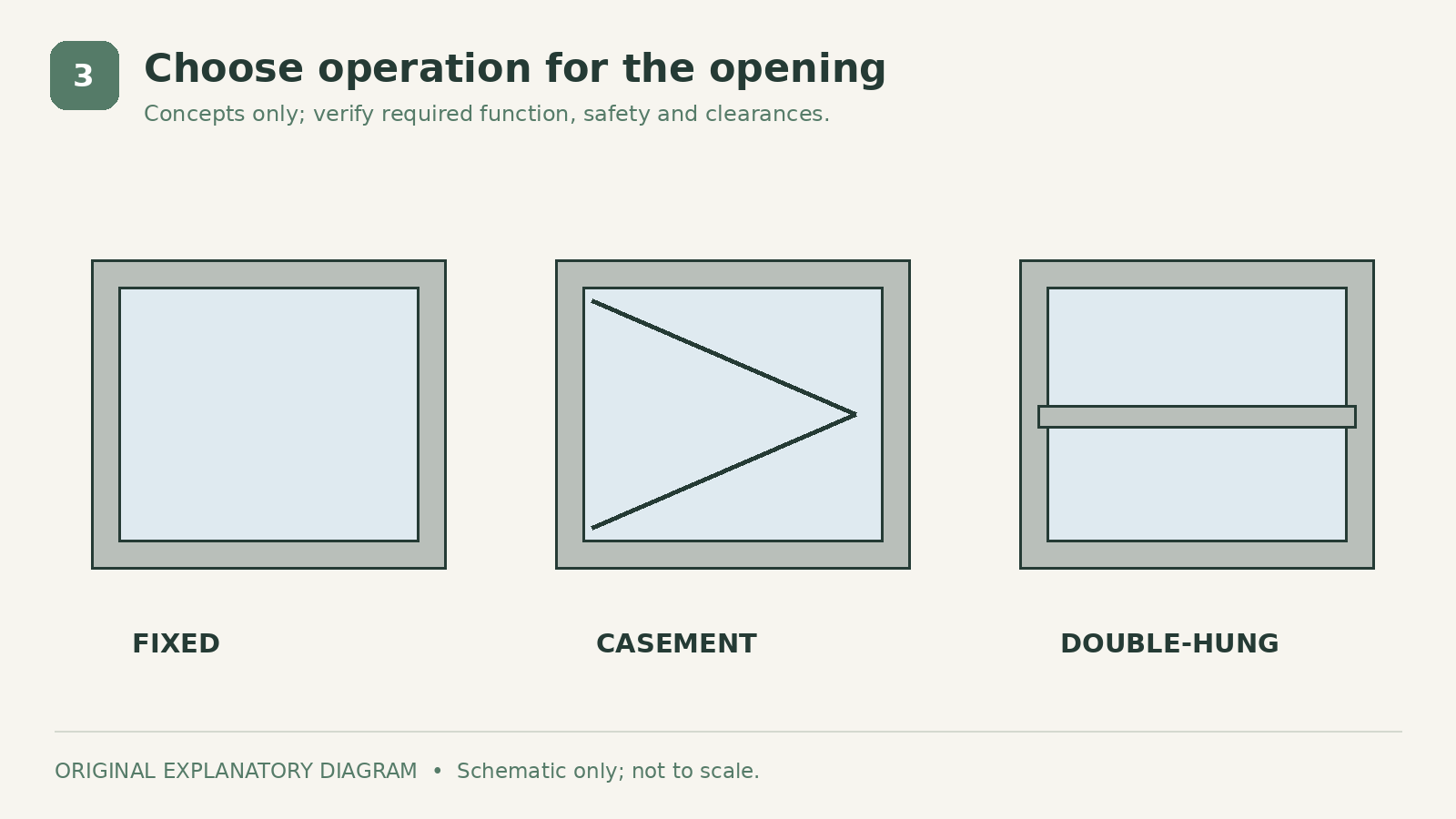
Vinyl, fiberglass, wood, and clad-wood products can all appear in a serious comparison. Choose the exact line based on rated performance, maintenance, appearance, repair options, and the installer's familiarity with it. Material names alone do not establish a universal ranking.
Think about everyday operation. Can you reach the handle over the kitchen sink? Will an outward-opening sash interfere with a walkway? Is the proposed replacement suitable for the opening's required function? Have the project team confirm applicable safety and emergency-opening requirements rather than copying dimensions from a picture.
| Feature | Question for the supplier | |
|---|---|---|
| Low maintenance | Which surfaces and seals need routine care? | |
| Comfortable operation | Can you demonstrate the actual hardware? | |
| Traditional appearance | How much visible glass and frame will remain? | |
| Future service | Who supplies replacement hardware or glass? |
A fixed window can be appropriate where ventilation and other required functions do not demand an operable unit. Elsewhere, opening style and usability may matter more than a small difference in rated performance.
Ask to see the frame profile and finished trim arrangement. Insert replacements and full-frame replacements can produce different sightlines and glass area, even when both fit the same existing opening.
4. Treat installation as part of the purchase
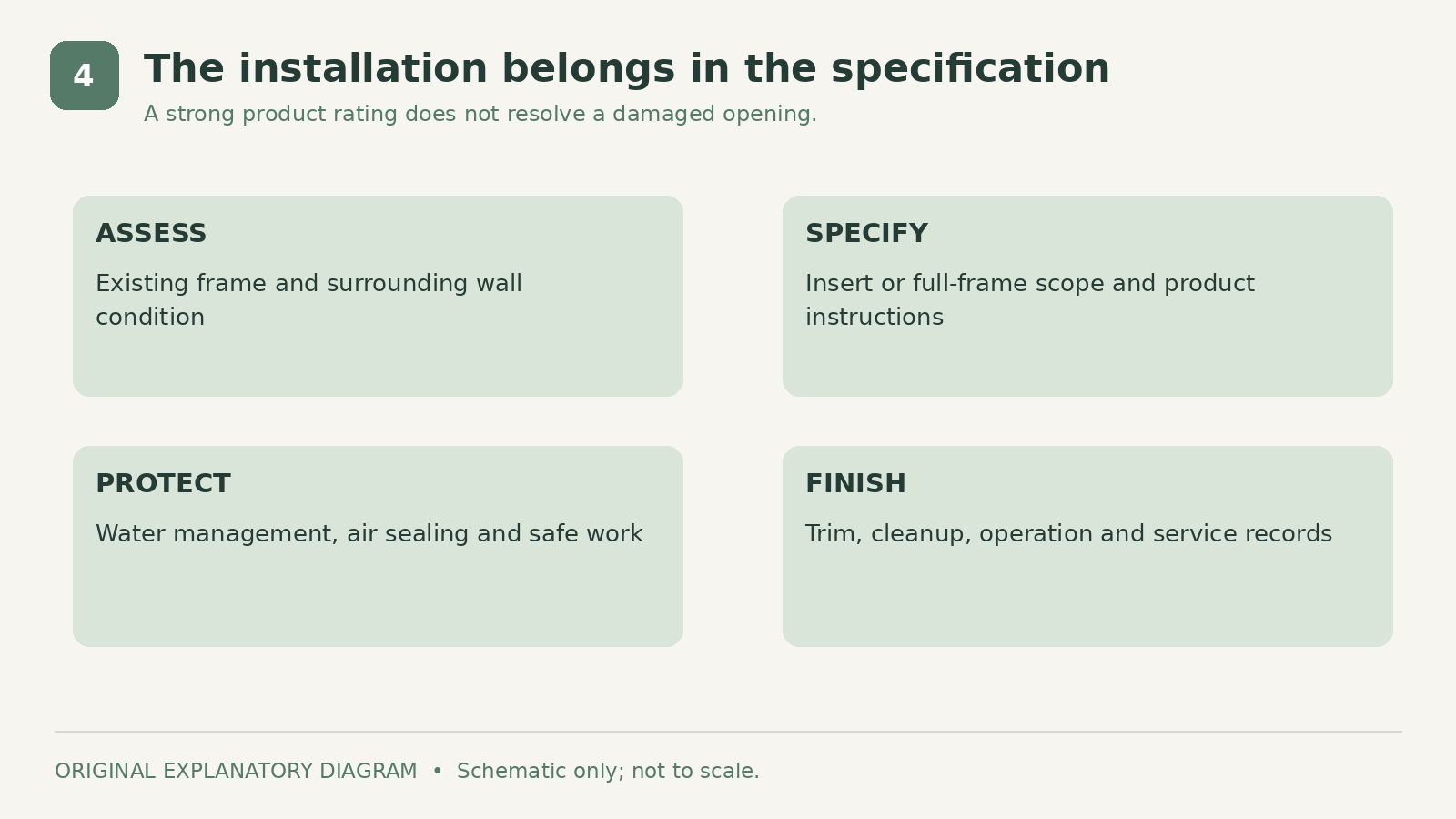
A strong product specification needs a matching installation plan. Ask how the installer will assess the existing opening, manage water, air-seal the perimeter, and restore interior and exterior finishes according to the selected system's instructions.
Discuss insert versus full-frame replacement before comparing totals. Retaining sound existing components may reduce disruption, but it is not a solution for every damaged or unsuitable opening. Ask what evidence supports the proposed approach and what would trigger a change.
EPA's renovation guidance is relevant when old painted surfaces may be disturbed in a pre-1978 home. Include the appropriate lead-safe assessment and work scope in the proposal, rather than treating it as an afterthought once windows are removed.
Ask about the winter installation sequence. The contract should explain temporary protection, room access, cleanup, and how openings will be managed during work. Do not accept a promise of comfort without a practical plan for the occupied house.
At handover, operate every window with the installer. Review locks, screens, trim, visible seals, and outstanding repairs. Keep product labels, warranty documents, and care instructions so later service questions can be tied to the correct unit.
5. Compare complete bids and realistic benefits
Before replacing every window, investigate the cause of the discomfort. Poor operation, failing components, perimeter leakage, and other building-envelope issues can require different responses. A home energy assessment can help you decide where window work belongs among competing improvements.
Compare proposals using the same opening schedule and installation scope. Separate necessary repairs from optional color, grille, hardware, or glass upgrades. Ask whether disposal, permits where applicable, finishing, and any painting are included.
Avoid guaranteed savings or a fixed payback period without a transparent, house-specific analysis. Improved comfort and operation can be valuable even when energy savings alone do not recover the purchase price quickly. Keep those benefits distinct instead of presenting them as a single financial promise.
For Minnesota, the strongest shortlist usually starts with location-certified products, low whole-window U-factors, suitable solar performance, and a contractor who explains the opening details clearly. Choose between those complete options using your room priorities and budget. Buy a documented specification and installation service, not just an impressive glass sample.
Sources
- ENERGY STAR's window buying guidance. Checked October 7, 2026
- NFRC explains whole-window U-factor. Checked October 7, 2026
- Department of Energy's window purchasing guidance. Checked October 7, 2026
- EPA's renovation guidance. Checked October 7, 2026
Share this article
Get new guides by email
Practical home articles and free resources. No spam, and you can unsubscribe at any time.
Keep reading

The Best Energy-Efficient Windows for High-Altitude Colorado
Compare energy-efficient windows for high-altitude Colorado by elevation compatibility, whole-window ratings, solar gain, and installation quality.
October 2026, 4 min read

Best Heating Systems for Upstate New York: Comparing Cost and Comfort
Compare five heating approaches for Upstate New York and learn how energy prices, efficiency, existing equipment, and installation scope affect cost.
October 2026, 5 min read
Best Attic Insulation for Michigan Winters: Choosing the Right System
Compare Michigan attic insulation options, including air sealing, cellulose, fiberglass, batts, and designed foam assemblies, with five explanatory diagrams.
October 2026, 5 min read