Lanai Screen Enclosure Repair Costs in Florida
Plan Florida lanai screen repairs with an attributed local cost range, a transparent sample budget, mesh comparisons, and a contractor quote checklist.
By Home Crane Editors. . 4 min read.
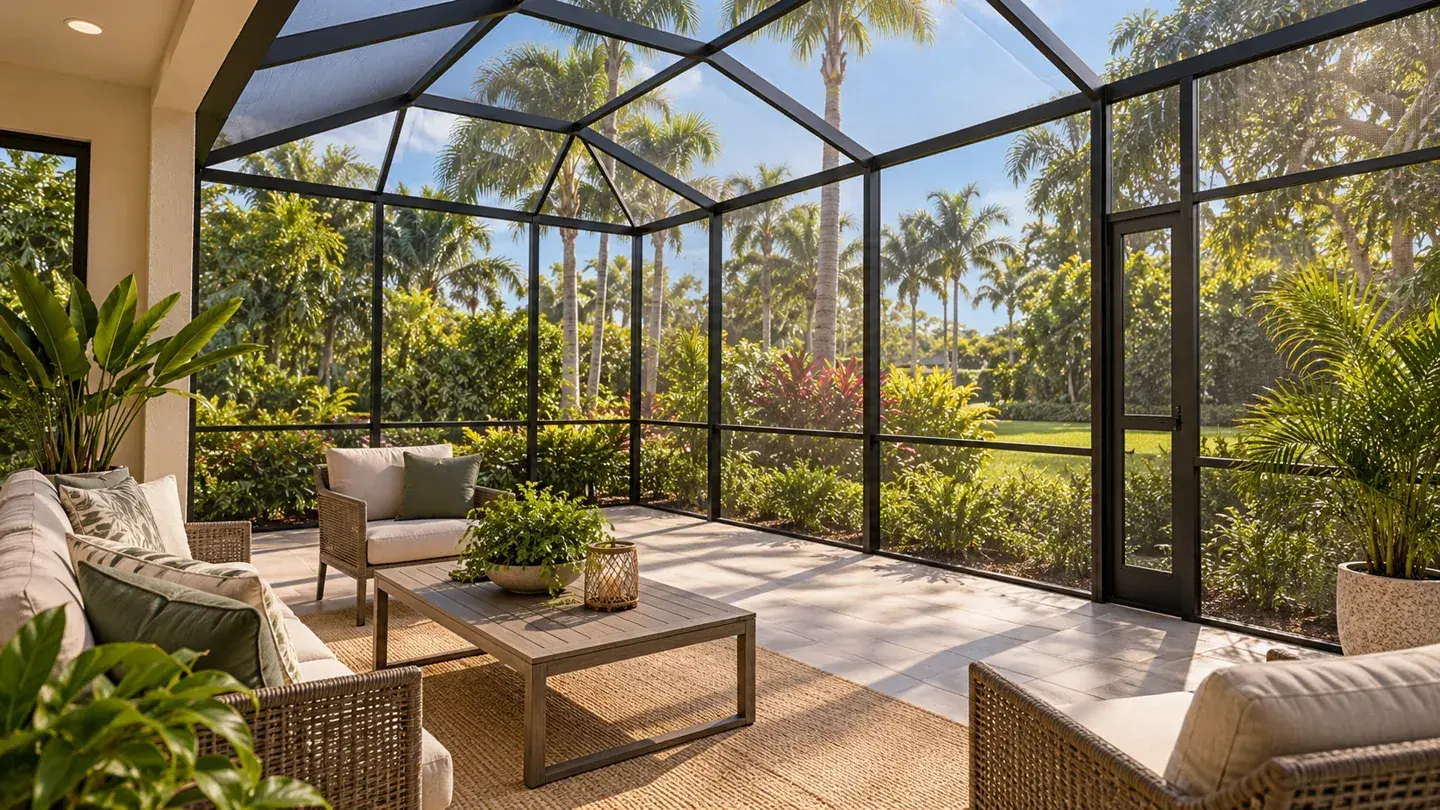
Florida lanai screen repairs can mean replacing one torn panel, rescreening a sound enclosure, or repairing the supporting frame. Those are different jobs with different price drivers. The most useful starting point is a written scope that separates mesh, doors, hardware, access, and structural work.
A Northeast Florida contractor, Ponte Vedra Handyman, publishes approximately $75 to $200 for individual panel replacement and $1.50 to $4 per square foot of screen area for rescreening. Its August 2026 article is a local business estimate, not a statewide survey or a guaranteed quote for your enclosure.
Use that range to prepare questions, not to decide what your repair must cost. Tall roof panels, difficult access, upgraded mesh, and damaged framing can make a project substantially different. The following five planning steps help turn a vague allowance into a quote you can evaluate.
1. Separate mesh damage from structural damage
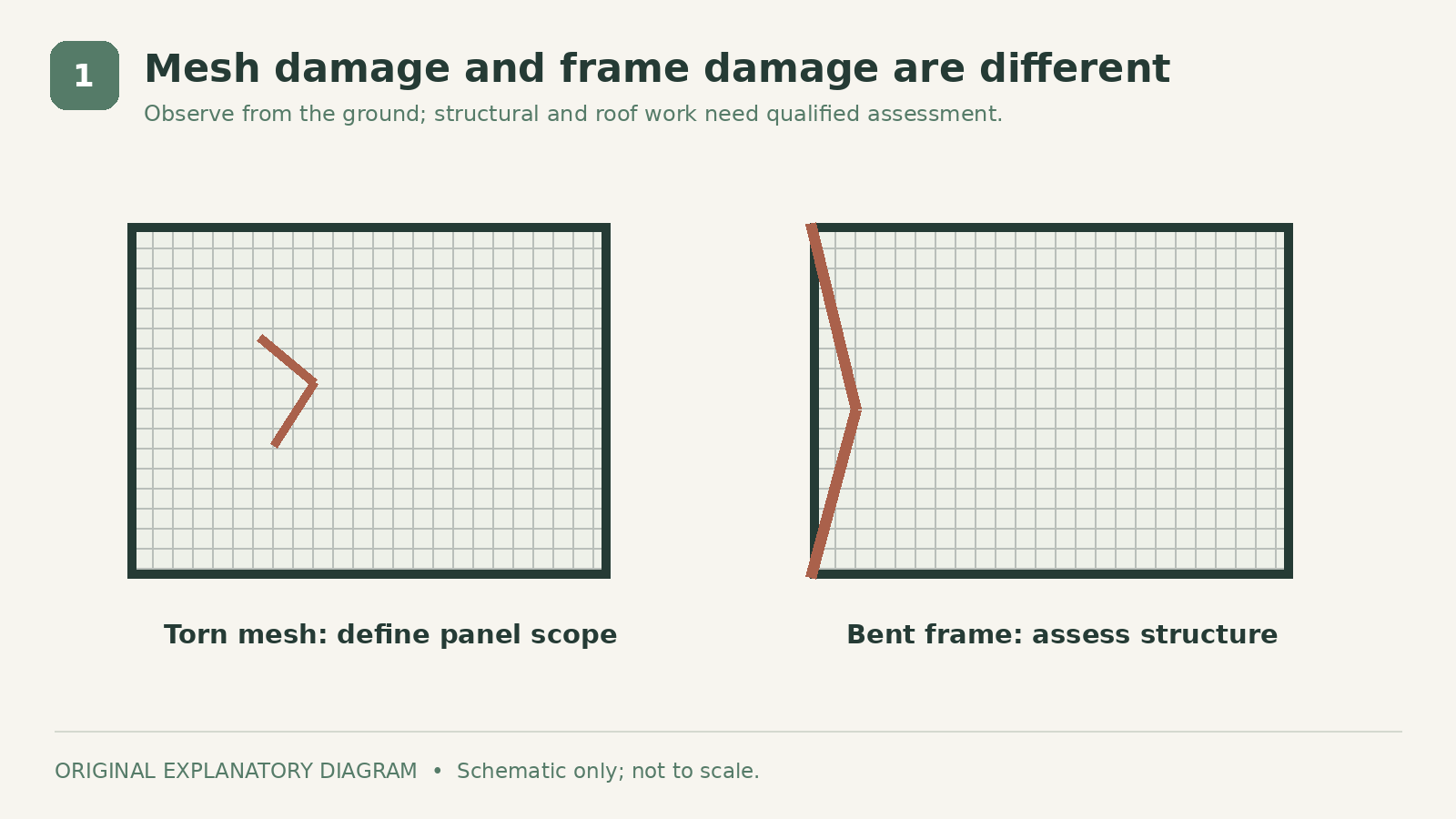
A torn panel with a straight, stable surrounding frame is primarily a screening problem. Bent members, loose connections, extensive corrosion, movement, or storm damage require a different assessment. Photograph what you can see safely from the ground and ask the contractor to distinguish the two scopes.
Do not accept a rescreening price as evidence that the frame is structurally sound. Likewise, one failed panel does not establish that the entire enclosure needs replacement. Ask why each recommended repair is necessary and whether it addresses the cause or only the visible damage.
Roof-level screening and structural work are professional tasks. Screens are insect barriers, not hurricane protection or substitutes for required pool barriers. If a door forms part of a pool safety arrangement, its closing and latching function needs specific attention. Keep that requirement separate from choosing a more attractive mesh.
2. Measure screen area and count panels
Record the number of visibly damaged wall panels, approximate panel dimensions, door condition, and enclosure height. Make a simple sketch that distinguishes walls from the roof. A photo of the whole enclosure helps a contractor understand access, but it does not replace an inspection.
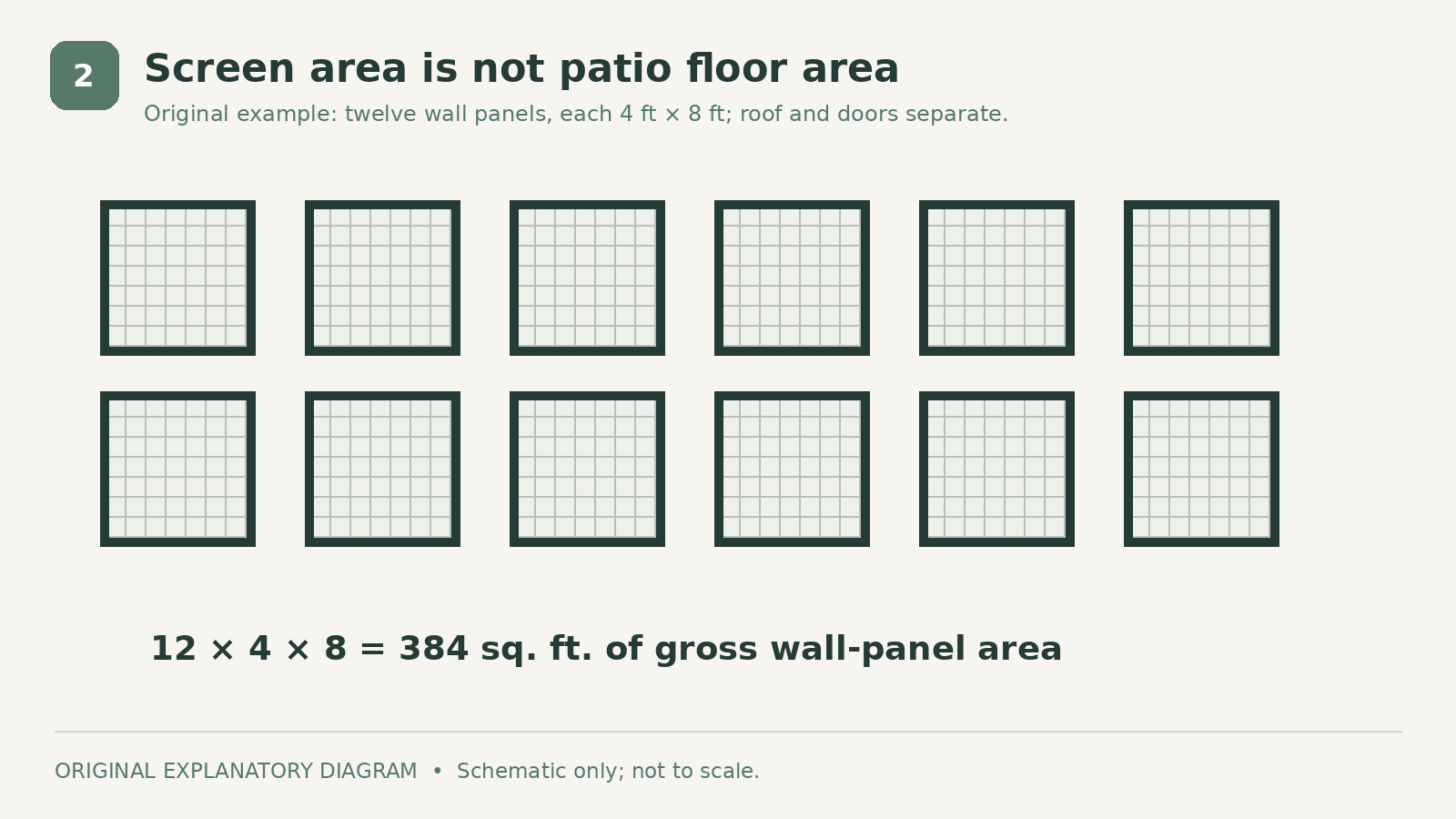
Screen area and patio floor area are different quantities. A 12-by-10-foot patio has 120 square feet of floor area; its walls and roof can contain much more screening. Comparing a quote based on floor area with a quote based on actual mesh area produces a misleading price comparison.
For example, twelve rectangular wall panels measuring 4 by 8 feet contain 384 square feet of gross panel area. Roof panels and doors would be additional, and actual measuring conventions should be confirmed with the installer. Ask which quantity appears in the proposal and whether minimum service charges make per-panel pricing more appropriate for a small repair.
3. Choose mesh for the actual application
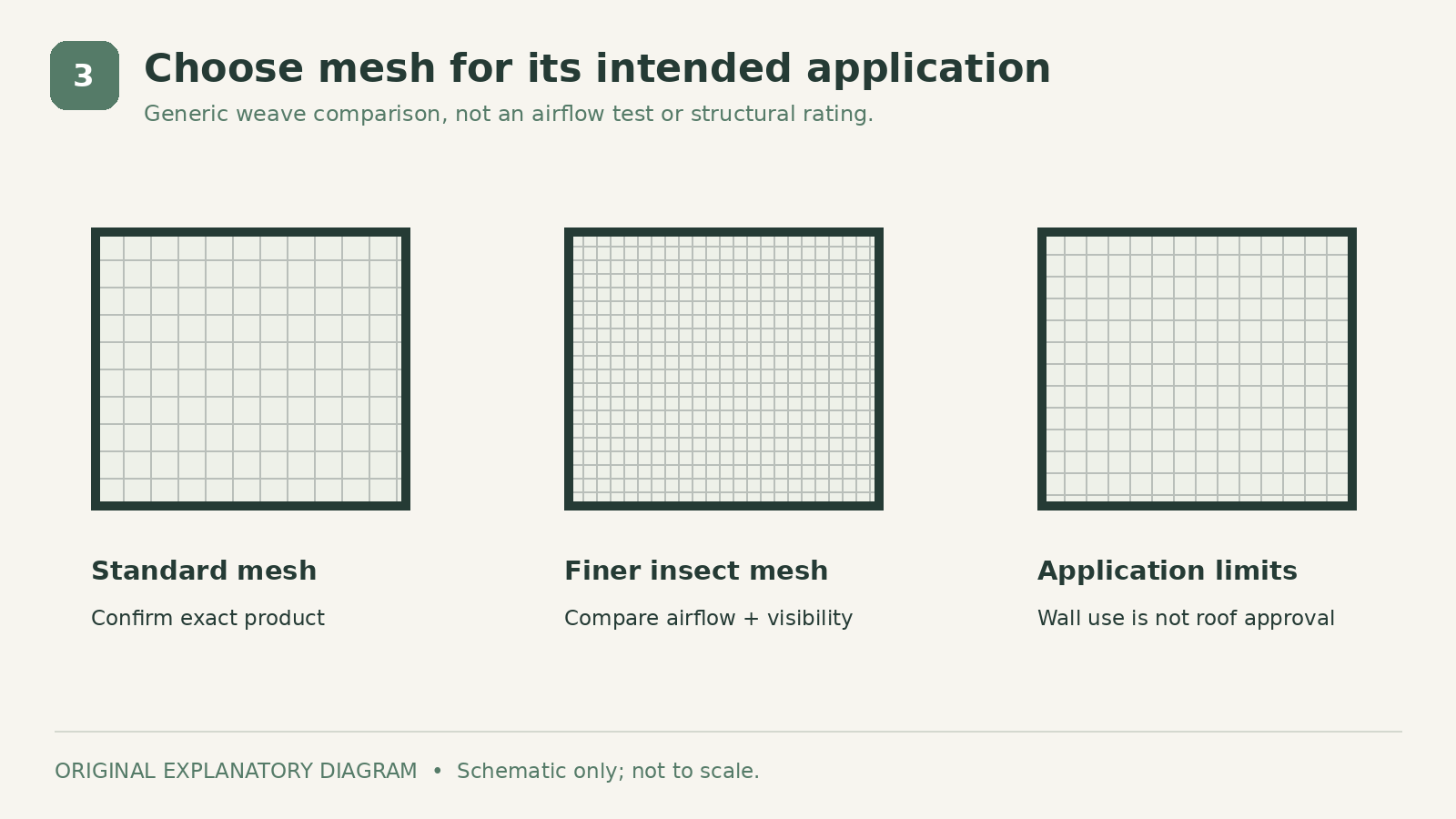
Standard fiberglass, finer insect mesh, and stronger polyester screening are different selections. Compare the precise product, visibility, airflow, intended use, and installed price. A generic description such as premium screen does not identify what you will receive.
Phifer's pool and patio information distinguishes multiple mesh types. It also identifies application limits: its Glas-Shield screening is for vertical applications, not roof panels. Product suitability matters more than assuming that any thicker-looking material belongs anywhere on the enclosure.
Ask for one base specification and a separately priced upgrade. That makes it easier to decide whether the feature is worth the added cost. Stronger screening does not strengthen a compromised frame, and fine mesh should not be described as providing identical airflow to every standard product. If you only replace several panels, ask how closely the new material will match the remaining aged mesh.
4. Build a complete repair budget
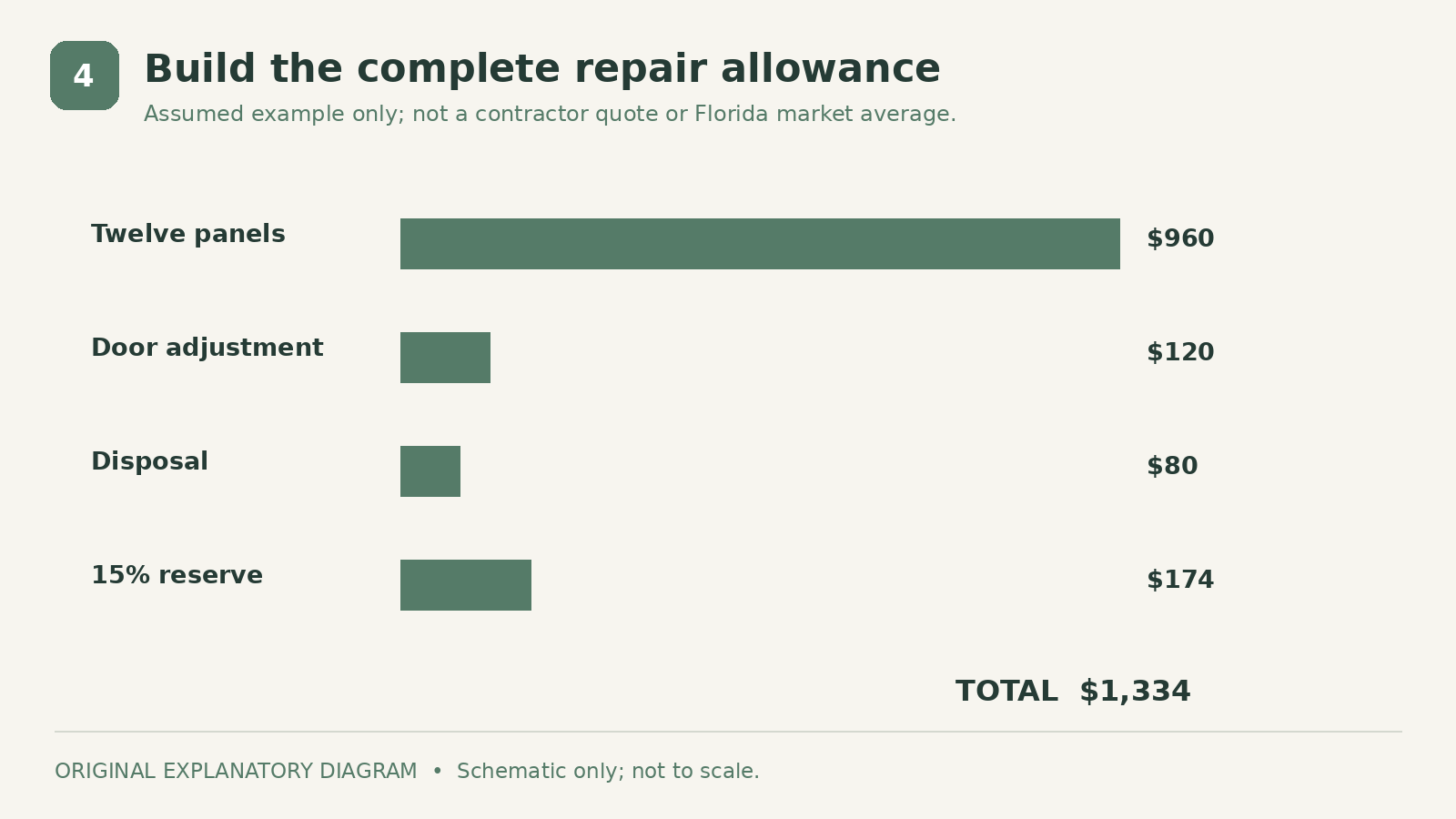
The table below is an original arithmetic example, not a Florida market quote. It assumes twelve accessible panels in sound framing, plus a separately identified door adjustment and disposal charge. Different contractors may bundle those tasks rather than itemize them.
| Feature | Calculation | Amount |
|---|---|---|
| Panel replacement | 12 × $80 | $960 |
| Door adjustment | Assumed allowance | $120 |
| Disposal | Assumed allowance | $80 |
| Quoted-work subtotal | Sum above | $1,160 |
| Planning reserve | 15% of subtotal | $174 |
| Example planning total | Subtotal plus reserve | $1,334 |
This example excludes frame replacement, tall-access equipment, permits if applicable, and any separately charged tax. The reserve is money held for uncertainty, not an automatic contractor fee. Replace every assumption with your local proposal before using the total. If a quote already includes disposal or door work, do not add those items again.
5. Compare local proposals
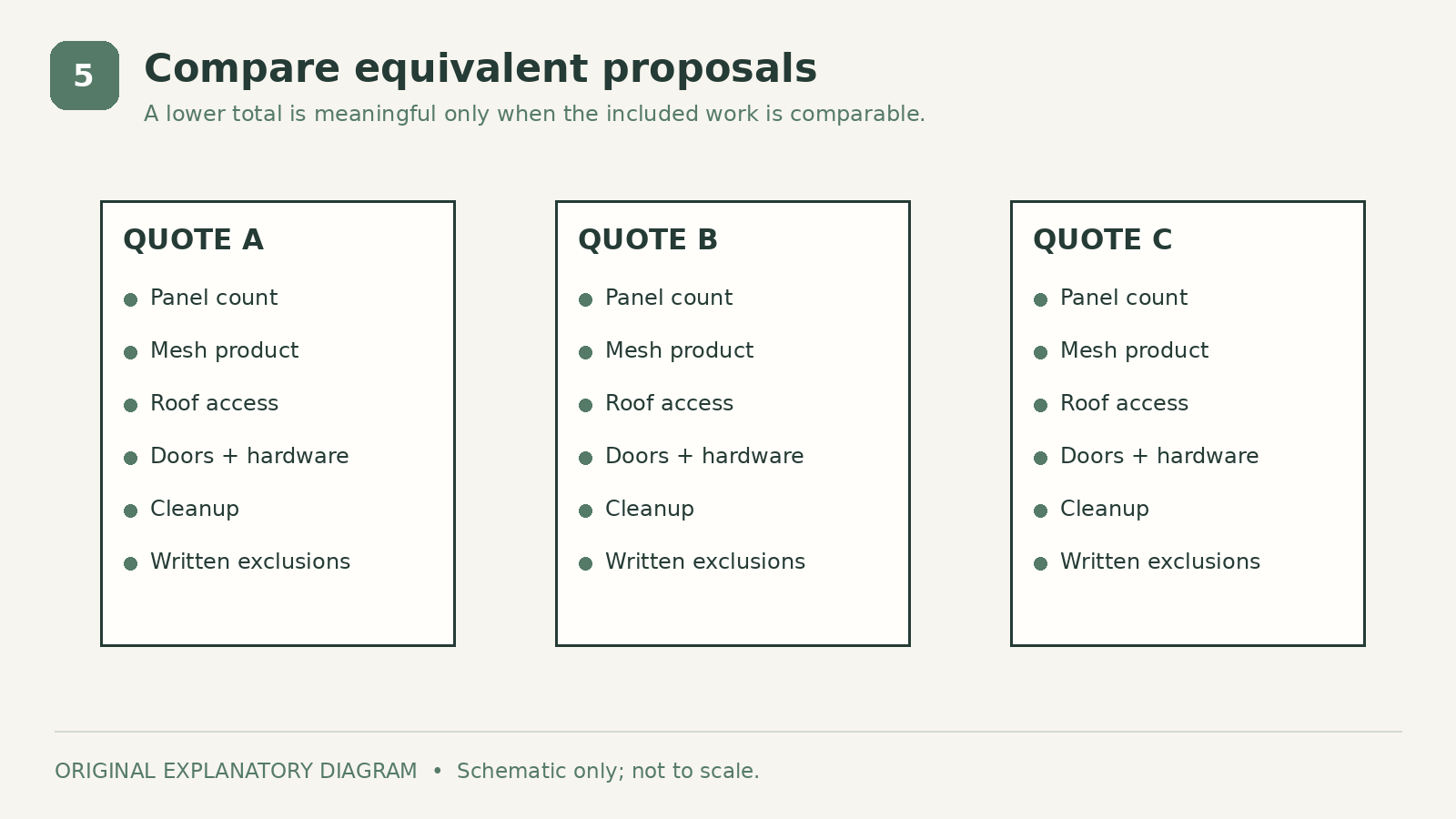
Request proposals with the same panel count, mesh product, roof scope, and door scope. Ask whether the price covers removal, new spline where required, cleanup, and disposal. Confirm how concealed frame damage would be priced if discovered after work begins.
Then compare scheduling, access requirements, payment milestones, workmanship coverage, and exclusions. A lower number can be reasonable when the scope is smaller; it is not a like-for-like saving unless the work is equivalent. Keep written change approvals so the final invoice can be traced back to the agreed work.
For a full rescreen, ask the contractor to explain the economic case against selective repair. The answer should refer to observed mesh condition and the actual panel arrangement, not just a sales package. Where structural repairs or replacement are proposed, verify the appropriate local permitting and contractor requirements before authorizing that expanded scope.
When a full rescreen may make sense
If many panels are brittle or failing, paying repeated minimum callout charges can become inefficient. Ask for both a limited repair and a full rescreen option. Compare what remains untouched in each proposal, particularly doors and framing, rather than treating the larger quote as a complete enclosure renewal.
If only one accessible panel is damaged and the rest remains serviceable, targeted repair may be the more proportionate choice. That is a condition-based decision. An enclosure's age alone does not reveal whether its frame, fasteners, doors, and screening need the same intervention.
What to send when requesting an estimate
Provide your Florida location, overall photos, the damaged-panel count, approximate height, roof access concerns, and your preferred mesh category. Mention storm damage and any door that does not close properly. Ask whether the visit and estimate are chargeable.
Your final budget should identify the repair boundary, the included materials, and the uncertainty that remains. A clear $1,500 scope is more useful than an unexplained $1,000 starting price that omits the work you actually need.
Sources
- Ponte Vedra Handyman: Lanai Rescreening Cost Florida. Checked October 6, 2026
- Phifer: Pool and Patio. Checked October 6, 2026
Share this article
Get new guides by email
Practical home articles and free resources. No spam, and you can unsubscribe at any time.
Keep reading
HVAC Replacement Cost in Texas: Hidden Fees to Check
Compare Texas HVAC replacement costs and hidden-fee risks, with equipment scope, duct assessment, installation allowances, and current incentive cautions.
October 2026, 4 min read
How Much Does a Lanai Screen Enclosure Cost in Florida?
Compare Florida lanai screen enclosure scopes, screen-area versus footprint pricing, frame and mesh choices, and a transparent sample budget.
October 2026, 4 min read
Stucco Repair Cost in Arizona: What Homeowners Should Know
Understand Arizona stucco repair pricing, surface damage versus concealed moisture, access, finish matching, and an illustrated repair budget.
October 2026, 5 min read