Why a 2x4 Isn't 2 Inches by 4 Inches: Nominal vs. Actual Lumber Sizes
Every dimensional lumber size sold in the United States is smaller than its name suggests, and the reason is a manufacturing process, not a marketing trick. Here is the actual size behind each common name.
By Home Crane Editors. . 3 min read.
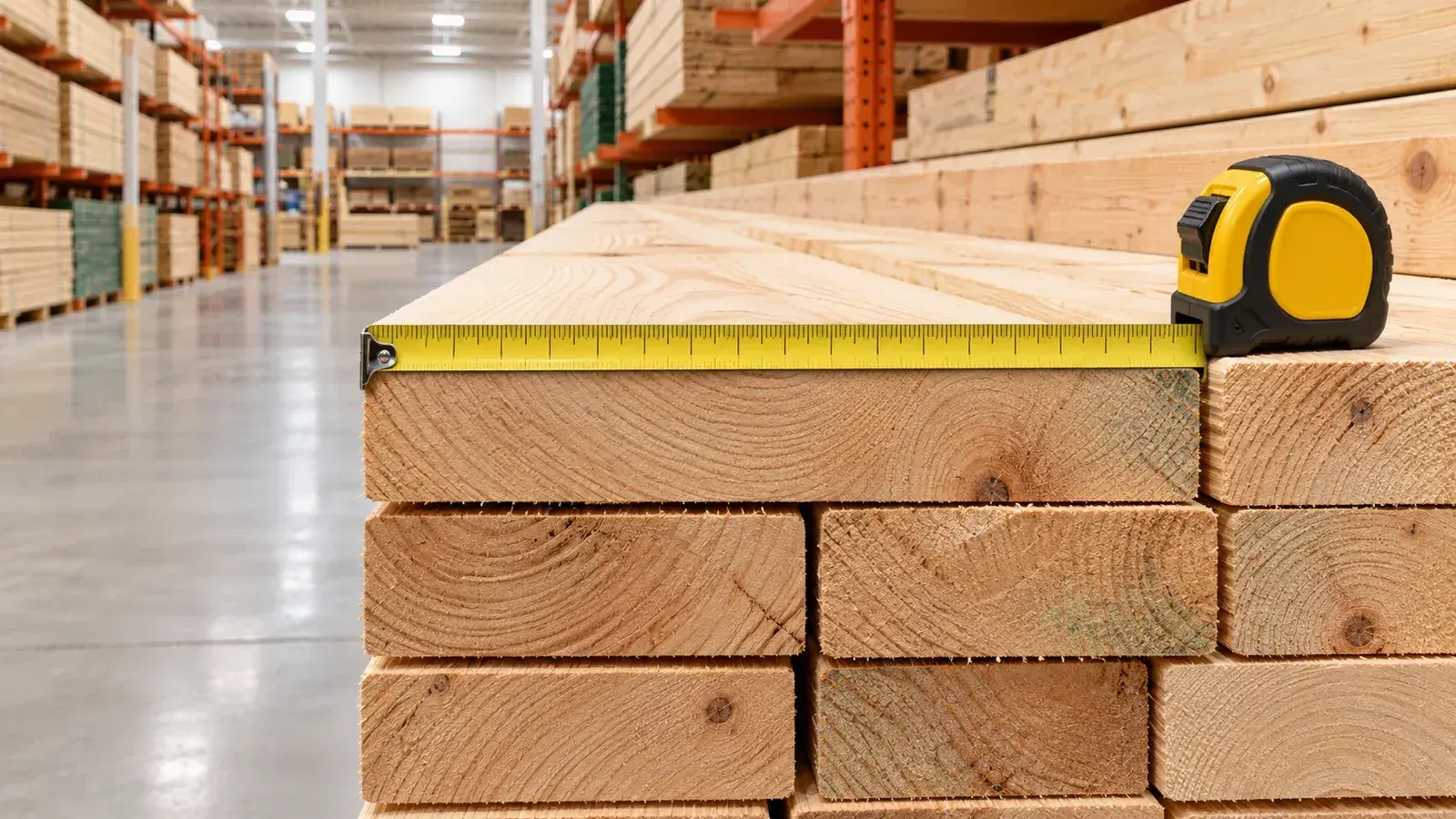
Conceptual illustration of measuring a board's actual size against its nominal label.
A board sold as a 2x4 does not measure 2 inches by 4 inches. Its actual dimensions are 1.5 inches by 3.5 inches. This is not a labeling error or a shrinkage over time. It reflects how dimensional lumber is manufactured: the name refers to the board's size before it is dried and surfaced smooth (a process called surfacing on four sides, or S4S), both of which remove material and reduce the final dimensions below the nominal, or named, size.
The reference table every project needs
Nominal-to-actual conversions are consistent across the dimensional lumber sold at most home improvement retailers and lumberyards in the United States, since they follow long-standing industry manufacturing standards. This is the table worth keeping handy for any framing, shelving or furniture project:
| Feature | Actual size | |
|---|---|---|
| 1x2 | 3/4 in x 1.5 in | |
| 1x4 | 3/4 in x 3.5 in | |
| 1x6 | 3/4 in x 5.5 in | |
| 2x2 | 1.5 in x 1.5 in | |
| 2x4 | 1.5 in x 3.5 in | |
| 2x6 | 1.5 in x 5.5 in | |
| 2x8 | 1.5 in x 7.25 in | |
| 2x10 | 1.5 in x 9.25 in | |
| 2x12 | 1.5 in x 11.25 in | |
| 4x4 | 3.5 in x 3.5 in |
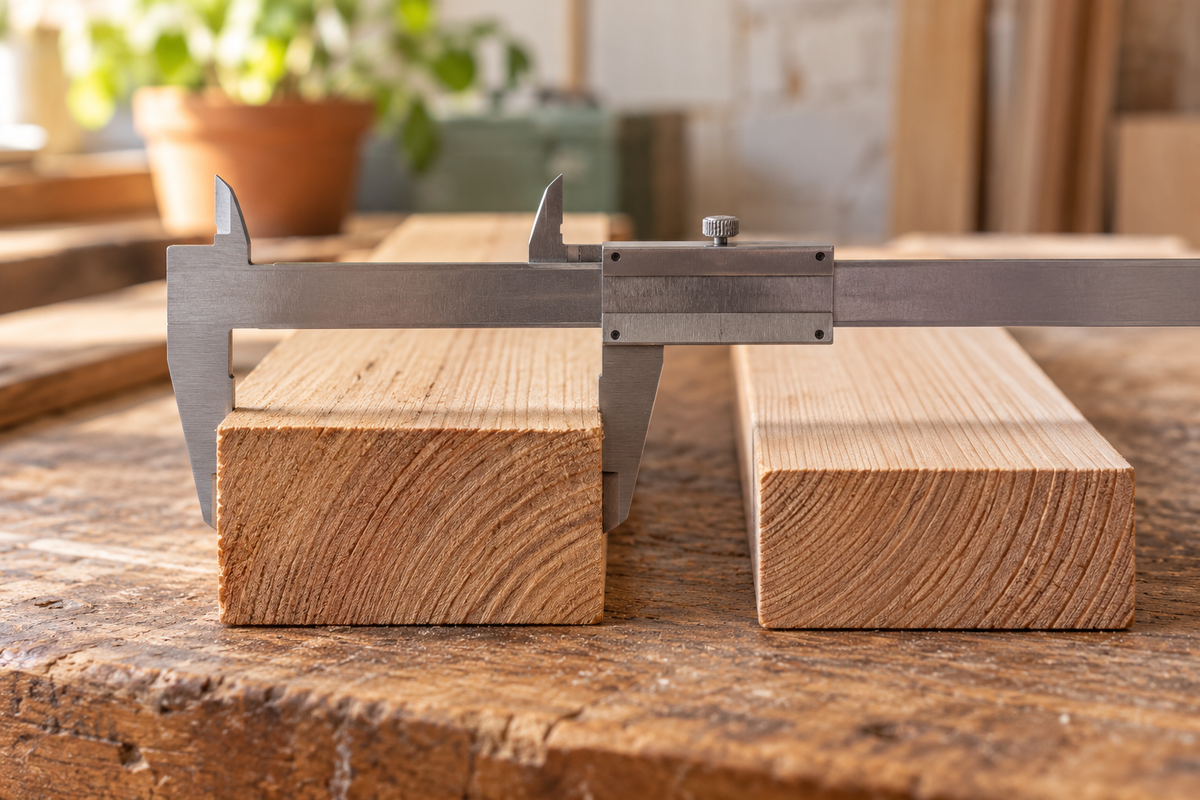
Notice the pattern: the actual dimension is consistently about half an inch less than the nominal size for the smaller measurement, and the gap grows for wider boards. This is a general pattern from milling standards, not a formula to calculate from scratch, so use the table directly rather than trying to estimate.
Why this trips people up
- A calculator or plan that assumes a true 2 by 4 inch cross-section will be wrong for anything requiring a precise fit, such as cabinetry or furniture with tight joinery.
- Spacing calculations, such as how far apart to set studs or joists, depend on the actual board width, not the nominal name, since that determines how much material actually occupies the space.
- Plywood and sheet goods follow a different, generally more accurate sizing convention than dimensional lumber, which can catch people off guard when mixing the two material types in one project.
- Engineered lumber products, such as laminated veneer lumber, sometimes use their own actual-size labeling conventions distinct from traditional dimensional lumber, so check the specific product's specification sheet rather than assuming it follows the same nominal system.
Sheet goods use a different, more accurate system
Plywood, oriented strand board (OSB) and similar sheet products are generally sold much closer to their labeled thickness than dimensional lumber is to its nominal size, though a small amount of variation still exists by manufacturer. A sheet labeled as 3/4 inch plywood is typically very close to that actual thickness, unlike a 2x4's roughly half-inch gap from its nominal name. This difference matters when a project combines both material types, such as building a cabinet frame from dimensional lumber with a plywood back or shelving, since assuming both follow the same sizing convention can throw off a cut list.
Why the naming convention has stuck around
Changing to actual-size labeling might seem like it would reduce confusion, but the nominal system is so deeply embedded in existing building code span tables, architectural plans, historical construction documents and even other trades' assumptions that switching would create a different kind of confusion across an entire industry. Structural engineers, code officials and experienced contractors already think in actual dimensions as a matter of routine, so the nominal name mostly matters for anyone reading a plan, buying materials, or calculating a cut list without that background, which describes most homeowners taking on a DIY project.
Where this matters most
For rough framing, where a structural engineer or the prescriptive building code has already accounted for standard actual dimensions in span tables, this is mostly invisible to a homeowner, since contractors and code officials already work in actual sizes as a matter of course. It matters more directly for a DIY project where you are calculating clearances, cutting to a tight tolerance, or building something like a bookshelf, workbench or deck railing where a half-inch discrepancy per board changes whether the final assembly fits together as planned.
Estimating quantities for a project
Once you know the actual dimensions you are working with, our deck calculator and fence calculator use standard board width assumptions that you can adjust to match your specific lumber choice, which matters most for spacing and coverage calculations where the gap between nominal and actual size would otherwise throw off the count.
Your takeaway: keep the nominal-to-actual table above bookmarked or printed for your workshop, and default to measuring the actual board in hand rather than relying on memory or the label whenever a project depends on a precise fit.
Frequently asked questions
Does this apply to plywood too?
Plywood sizing generally follows a different, closer-to-actual convention than dimensional lumber like 2x4s, though slight variation still exists by product and manufacturer. Check the specific sheet good's labeling rather than assuming it matches dimensional lumber conventions.
Why not just sell lumber at its actual size?
The nominal sizing convention reflects the board's dimensions before drying and surfacing, and the naming system has remained consistent across the industry for so long that changing it would create confusion with existing plans, tools and building code span tables that already assume the standard actual dimensions.
Share this article
Get new guides by email
Practical home articles and free resources. No spam, and you can unsubscribe at any time.
Keep reading
Does Peel and Stick Wallpaper Work on Textured Walls?
Sometimes a manufacturer permits a limited texture, but many peel and stick wallpapers require a smooth, flat surface. Texture reduces the contact area.
October 2026, 3 min read
The Most Durable House Siding Options for Wisconsin Winters
Compare siding options for Wisconsin winters, including fiber cement, engineered wood, steel, and vinyl, with installation and maintenance considerations.
October 2026, 4 min read
15 Eco Friendly Sustainable Architecture Materials to Use in Your Build
Explore 15 sustainable building materials to consider with illustrated concepts, practical design tips, and planning checks for your US home.
October 2026, 5 min read