Modern Composite Deck Color Ideas for a Gray House: 12 Stylish Combinations
Explore modern composite deck color ideas for a gray house, including teak, charcoal, greige, weathered gray, walnut, and two-tone combinations.
By Home Crane Editors. . 10 min read.
Choosing a composite deck color for a gray house is about more than matching two shades. The right deck can make gray siding feel warmer, sharpen a modern exterior, or create a calm transition between the home and the landscape. Because gray siding ranges from pale silver to deep charcoal, there is no single deck color that works for every house.
A useful starting point is to identify the undertone of the siding, then decide whether you want contrast or a coordinated look. Warm gray siding often pairs comfortably with brown, taupe, and weathered wood tones. Cool gray exteriors can look crisp with silver, slate, or charcoal decking. White trim, black windows, stonework, roof color, and landscaping all influence the final result.
This guide explores modern composite deck color ideas for gray houses, explains how to coordinate boards with trim and railings, and shares practical ways to compare samples before making a large purchase.
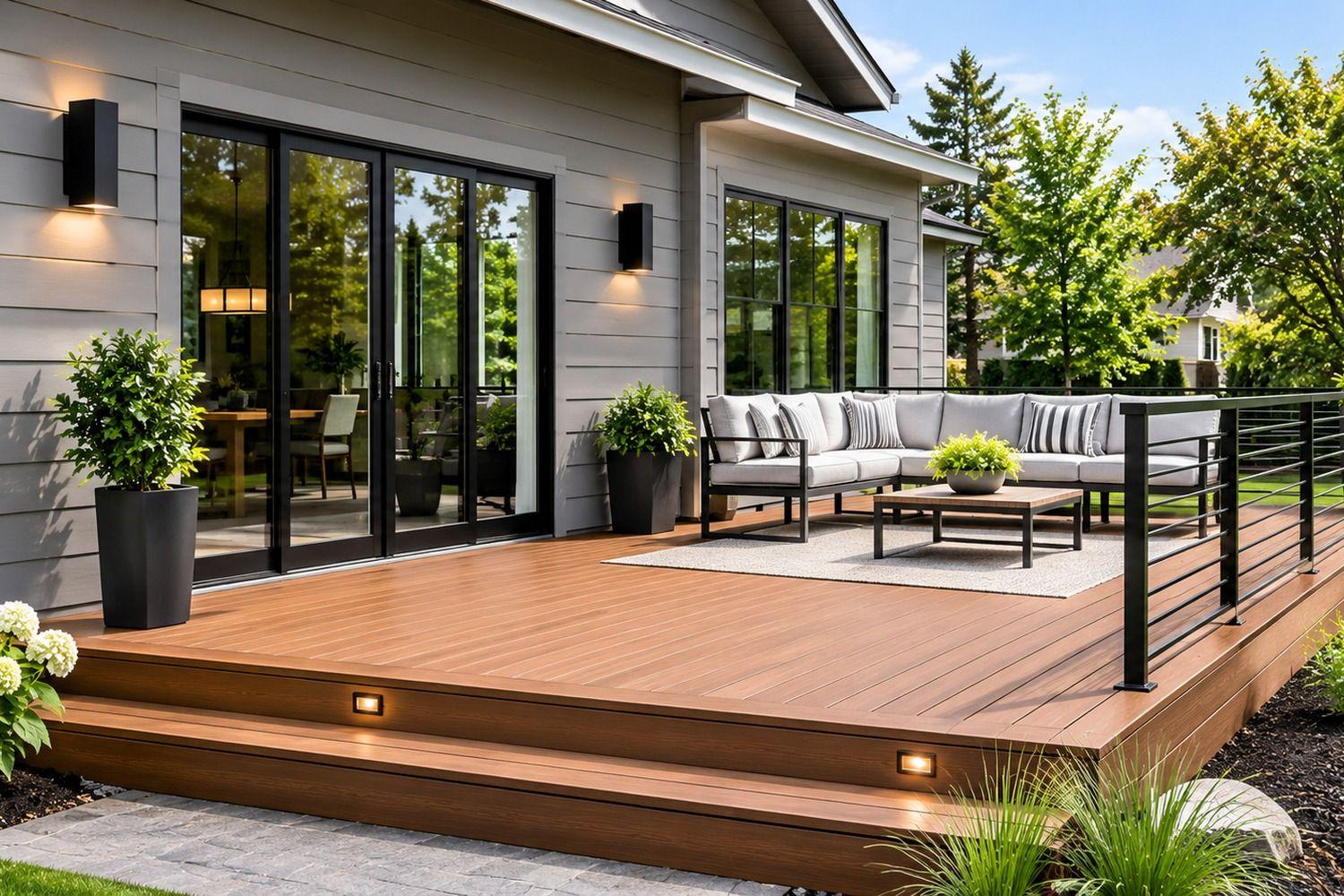
1. Warm Teak for a Welcoming Contrast
Warm teak is a versatile choice when a gray house feels a little cool or flat. Its golden-brown character introduces warmth without making the deck look overly rustic. Against medium-gray siding, teak creates a clear visual contrast while still feeling natural beside green landscaping.
This combination works especially well with black or bronze railings, white trim, and warm outdoor furniture. If the house has a charcoal roof or black window frames, a teak-toned deck can soften those darker accents.
Look for a composite color with a balanced brown base rather than an orange or red cast. Composite boards often have variegated grain patterns, so compare the full board rather than judging a tiny color chip.
2. Light Gray for a Seamless Contemporary Look
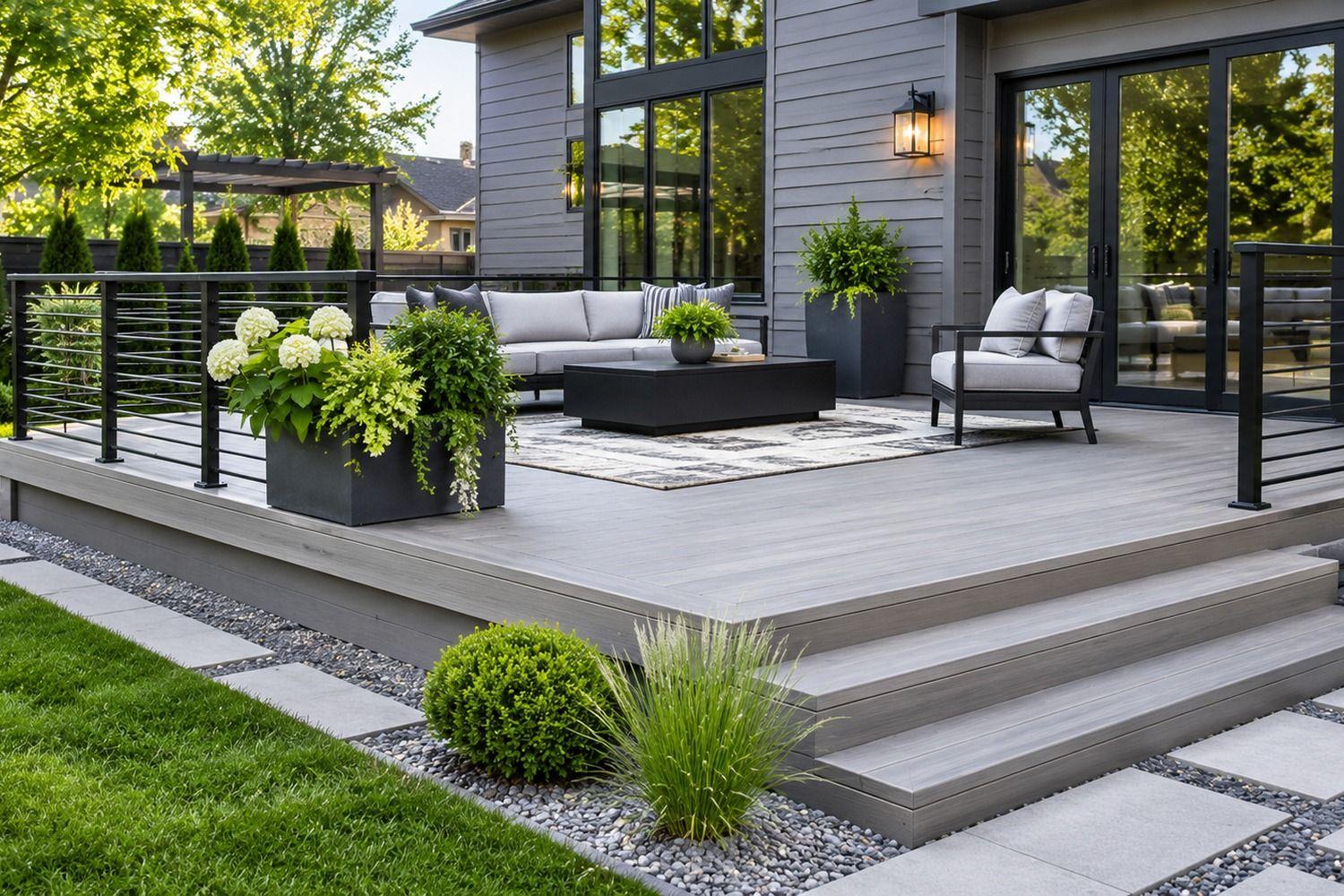
Light gray decking creates a quiet, coordinated appearance with pale gray siding. It is a good option when you want the deck to feel like a natural extension of a modern exterior instead of a contrasting feature.
The key is to avoid making every surface exactly the same shade. A deck that is almost identical to the siding can look flat, especially on a large platform. Choose a deck tone that is a little darker or lighter than the house, and add definition with black railings, white fascia, dark planters, or warm wood furniture.
Light gray can also work beautifully with white trim and simple landscaping. In sunny locations, however, review how the sample looks in direct light because pale colors can appear brighter outdoors than they do in a showroom.
3. Charcoal for Bold Modern Contrast
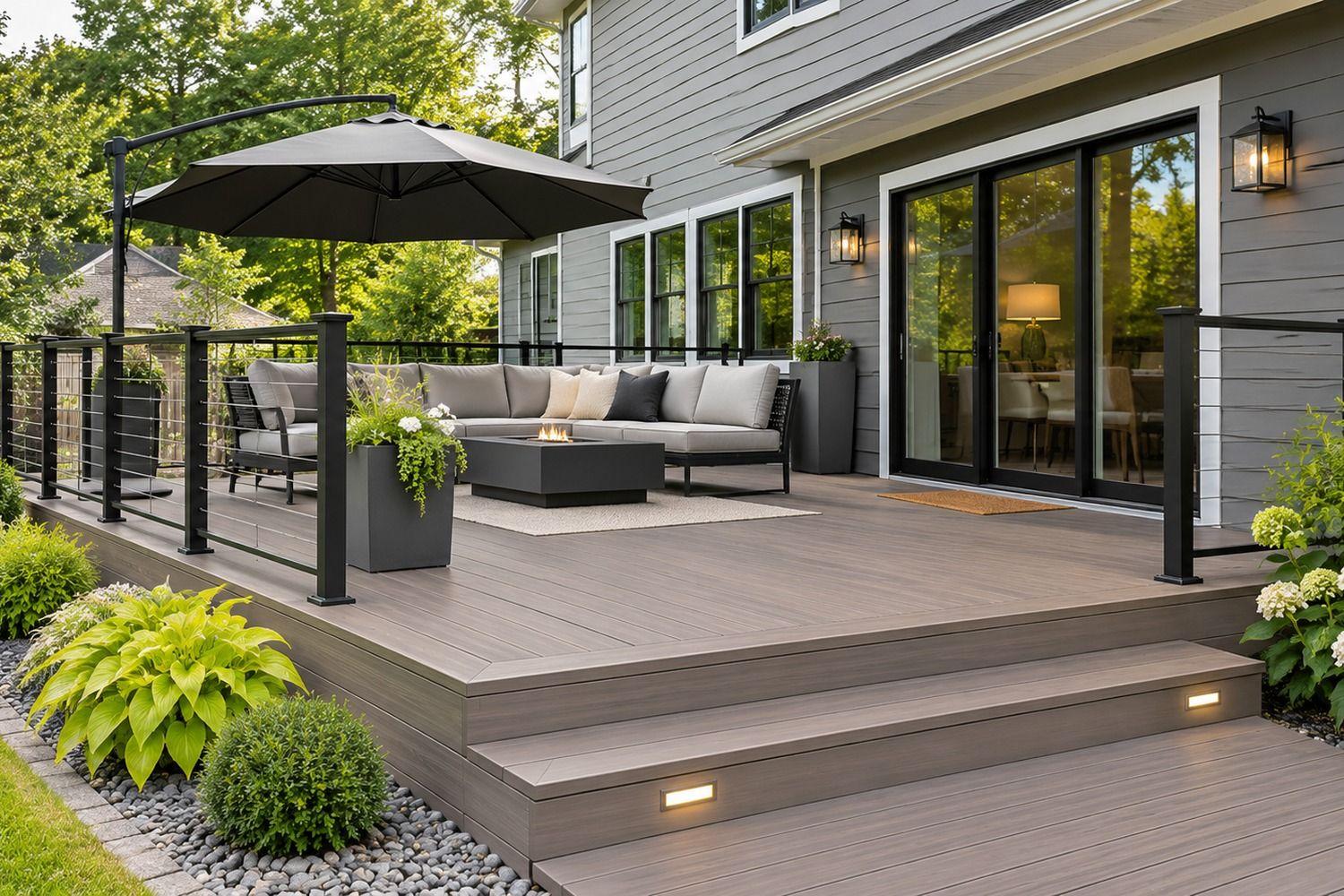
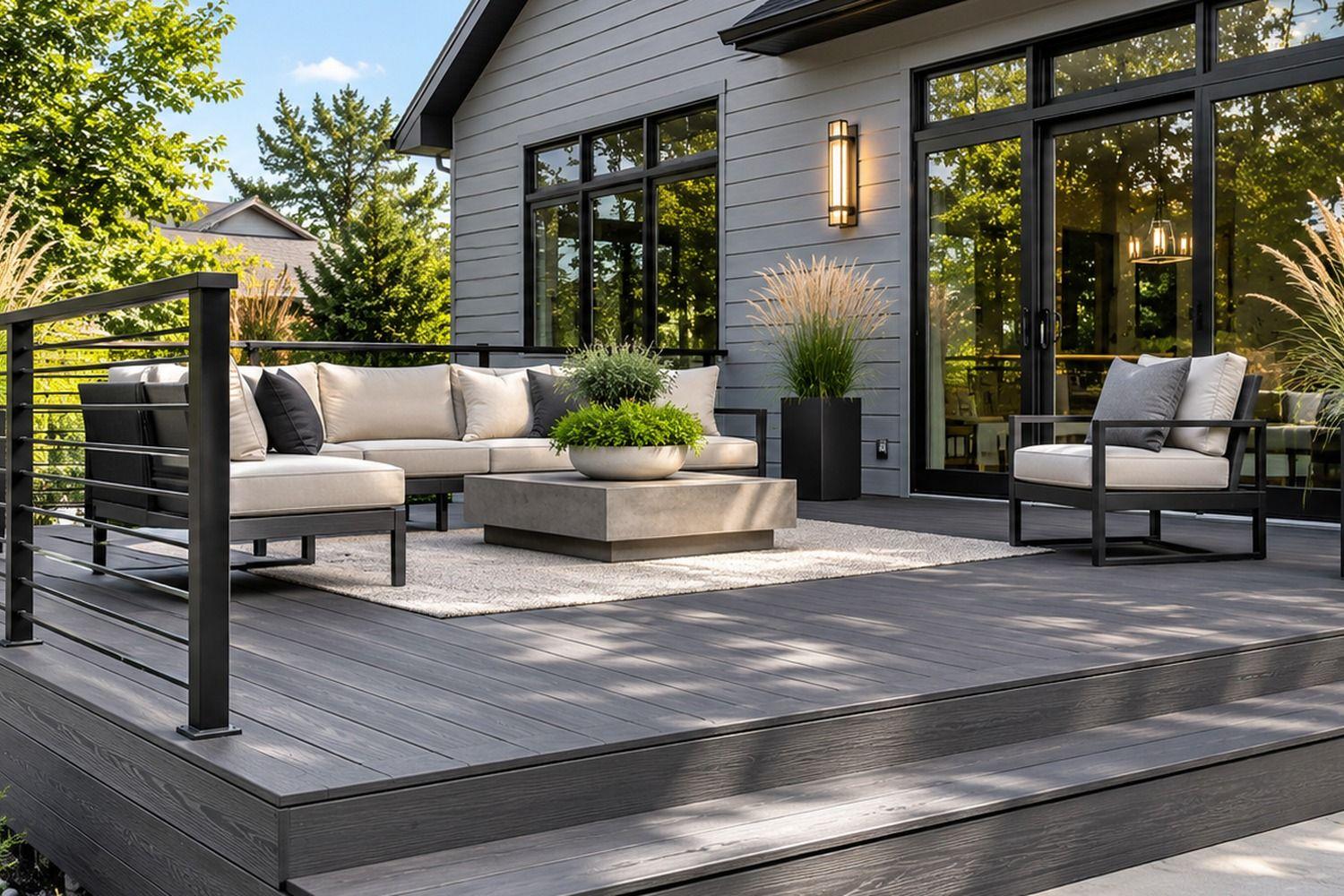
Charcoal composite decking creates a dramatic base for a gray house, particularly one with light or medium siding. The deep tone gives the outdoor space a grounded, architectural look and pairs naturally with black metal railings and dark window frames.
To keep the deck from feeling too dark, balance it with lighter furniture, pale outdoor rugs, cream cushions, and green plants. White trim or a light-colored fascia board can also create a clean outline around the deck.
Charcoal is often chosen for its sleek appearance, but dark surfaces can become hotter in direct sunlight than lighter alternatives. Ask the manufacturer for product-specific heat guidance and consider how much direct sun the deck receives during the hours you use it.
4. Weathered Gray for a Soft, Natural Finish
Weathered gray has the relaxed appearance of aged timber without requiring the same staining routine as traditional wood. It can complement gray siding when the deck has enough tonal variation to remain visually distinct.
This is a particularly attractive choice for coastal, farmhouse, and transitional exteriors. Pair it with white railings for a lighter coastal look, or use black railings and dark planters for a more contemporary result.
Check the undertone carefully. Some weathered-gray boards lean blue, while others have brown or beige undertones. Choose a sample that relates to the siding and stonework rather than assuming all grays will coordinate.
5. Warm Walnut for a Rich, Upscale Look
Walnut-inspired composite decking brings deeper brown color and visible grain to a gray exterior. It can make a simple deck feel more substantial, especially when paired with a light gray house, black railings, and restrained outdoor furnishings.
Walnut works well with cream, tan, and charcoal accessories. It can also tie together a home that has warm wood accents around the entry, garage, or porch ceiling.
Because darker brown boards can visually dominate a small deck, use them strategically. A border in a slightly lighter shade or a pale fascia can help define the deck without introducing too many competing colors.
6. Greige for a Balanced Warm-Cool Palette
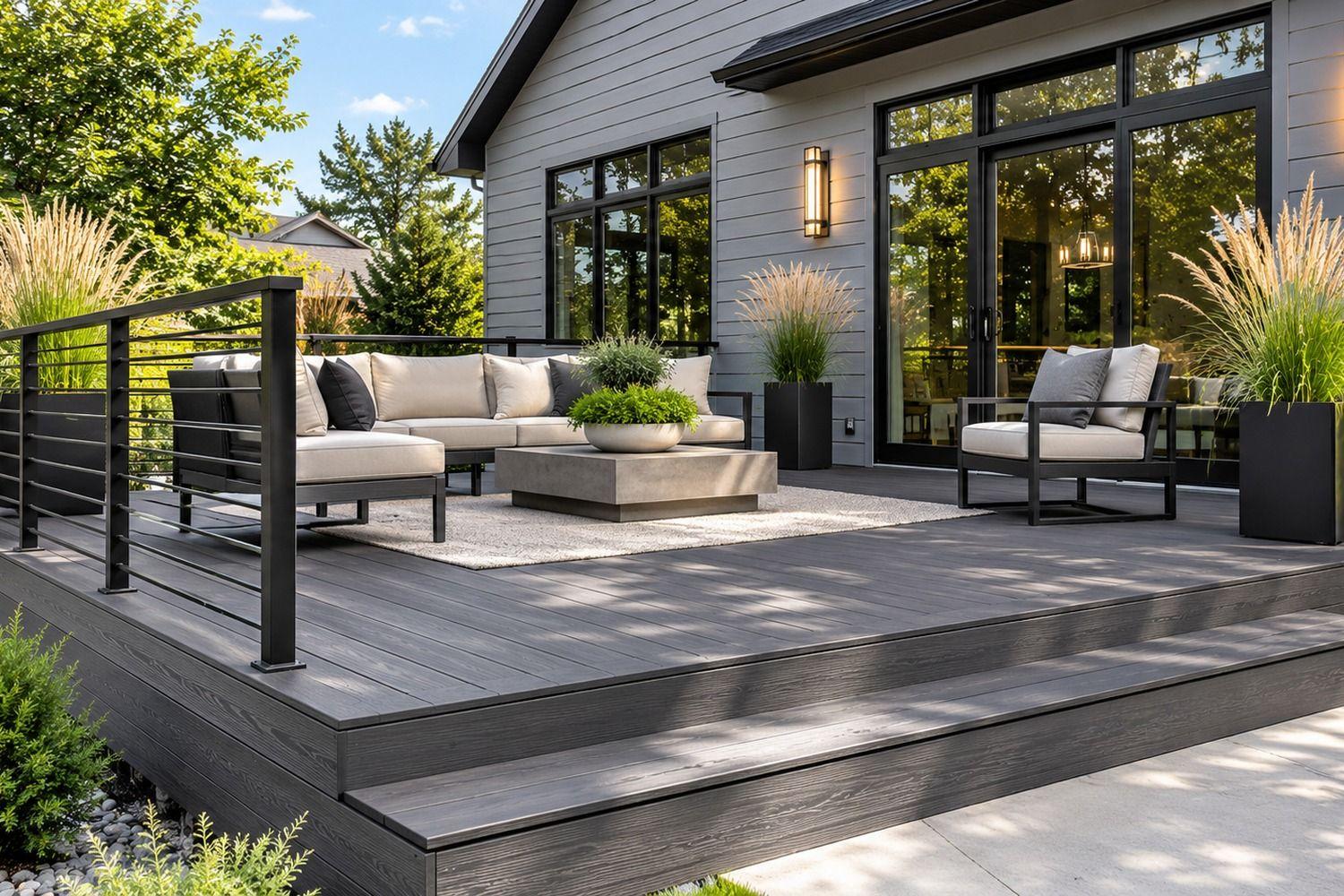
Greige combines gray and beige, making it useful when the house has a gray exterior with warm undertones. It bridges the gap between cool gray siding and natural elements such as stone, brick, wood furniture, and tan landscaping materials.
This is one of the more flexible color directions for a gray home because it does not rely on a strong contrast. It can look understated and sophisticated with white trim, bronze hardware, and greenery.
If the siding is a cool blue-gray, a strongly beige deck may feel disconnected. Compare samples beside the siding and look at them in morning, midday, and late-afternoon light before deciding.
7. Two-Tone Decking With a Picture-Frame Border
A two-tone design can add detail without making the entire deck visually busy. Use one main board color across the field and a second shade around the perimeter as a picture-frame border.
For a gray house, popular combinations include:
- Light gray field boards with charcoal border boards.
- Warm teak boards with a walnut border.
- Weathered gray boards with a darker slate edge.
- Greige decking with a deep brown perimeter.
A border can make the deck look more finished and help emphasize its shape. It does require additional planning, blocking, cuts, and material, so check the decking manufacturer's installation instructions and account for the extra framing and waste.
8. Silver Gray With White Trim
Silver-gray composite decking can create a bright, airy palette when the home has light gray siding and crisp white trim. The combination feels clean and open, especially on decks with glass or slim metal railings.
To avoid a washed-out appearance, introduce a darker accent. Black lighting, charcoal planters, dark outdoor furniture frames, or a contrasting fascia can give the space enough definition.
This palette is particularly suited to modern coastal homes and simple contemporary architecture. It also works with pale stone pavers and understated landscaping.
9. Medium Brown With Black Railings
Medium brown decking is a reliable way to add warmth to gray siding without creating an extreme contrast. Black railings frame the deck and connect it to dark windows, exterior lights, and other hardware.
Choose a medium brown with a natural wood appearance rather than an overly red finish if the home has cool gray siding. If the exterior is a warm greige, a slightly richer brown can create a cohesive palette.
For a polished result, repeat the black accent in two or three places, such as railings, planters, and light fixtures. Repeating a finish makes the choices look intentional.
10. Slate Gray With Natural Wood Accents
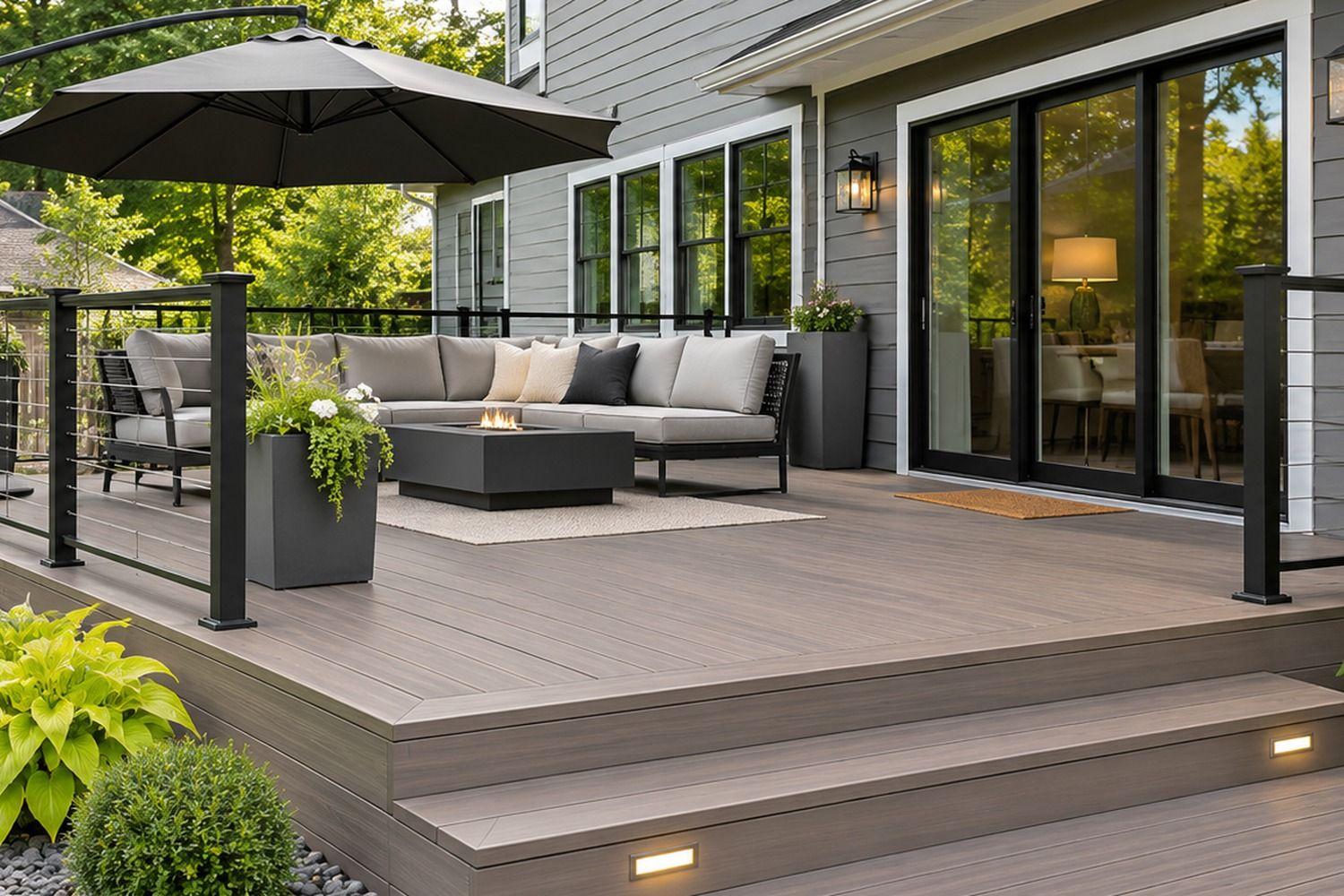
Slate-gray decking has more depth than pale gray but is usually softer than near-black charcoal. It can look sophisticated with gray siding, especially when the deck includes natural wood furniture, a timber pergola, or warm-toned accessories.
The contrast between the cool composite boards and warm natural wood helps the outdoor area feel layered. Keep the number of finishes limited: one main deck color, one railing finish, and one warm accent material are often enough.
If you add a wood pergola or privacy screen, make sure the structure is designed and installed for outdoor exposure and is not attached casually to the deck railing.
11. Choose a Deck Color That Works With the Roof and Stone
The siding is important, but it is not the only exterior finish that matters. A gray house may also have a dark roof, stone veneer, brick foundation, white trim, or a colored front door. The deck should connect these materials rather than compete with them.
Use this simple coordination approach:
- Gray siding and black roof: Teak, walnut, medium brown, or weathered gray can soften the contrast.
- Gray siding and white trim: Light gray, greige, or medium brown can maintain a balanced appearance.
- Gray siding and stone veneer: Pick up one of the stone's undertones in the deck color.
- Gray siding and warm wood accents: Choose teak, walnut, or greige to repeat the warmth.
- Gray siding and a charcoal exterior: Consider a lighter deck to prevent the whole exterior from feeling too dark.
Do not try to match every material exactly. A coordinated palette usually looks more natural when it includes a main color, a supporting neutral, and one or two accents.
12. Coordinate Fascia, Stairs, and Railings
The deck surface is only one part of the finished design. Fascia boards, stair risers, railings, posts, and skirting can either blend in or create contrast.
A same-color fascia gives the deck a continuous, streamlined appearance. A darker fascia can visually outline the platform and complement black railings. White fascia may suit a coastal or farmhouse exterior, but it can show dirt more readily in exposed locations.
For stairs, decide whether you want the treads and risers to match the deck or create a subtle contrast. Consistent stair details often look cleaner than introducing a third deck color.
Railings should relate to the home's windows, doors, and exterior hardware. Black aluminum is a common modern pairing, while white railings can create a softer, brighter look. Follow the railing system's installation requirements and local guard and handrail rules.
How to Choose the Right Composite Deck Color
Identify the siding undertone
Gray can lean blue, green, violet, or beige. Compare the siding in natural daylight and identify whether it looks warm or cool. A warm gray exterior usually pairs easily with teak, walnut, greige, and brown. A cool gray exterior can work with slate, silver, charcoal, or weathered gray.
Compare full-size samples outdoors
Small chips can be misleading. Request full-length samples or larger sample boards and place them beside the siding, trim, roof, and stone. Look at them in bright sun, shade, and at different times of day.
Consider sun exposure and comfort
Decking color can affect surface temperature, but the actual result depends on the product formulation, board profile, location, airflow, and weather. Darker boards may become hotter in direct sun. Ask the manufacturer for product-specific information and consider shade where appropriate.
Review the manufacturer's color range and warranty
Composite boards vary by brand and product line. Check whether the color is available in the board profile you need, whether matching fascia and stair components exist, and what the warranty says about fading, staining, and installation. Keep in mind that product names and color availability can change.
Order enough material from the same production lot
Color variation can occur between product lines and production runs. Confirm quantities before ordering and ask the supplier how to handle additional boards if the project may expand later. Follow the manufacturer's instructions for storage and installation.
Common Composite Deck Color Mistakes to Avoid
Choosing from a screen alone. Photos and online swatches are affected by lighting, display settings, and editing. Always review physical samples.
Matching gray to gray too closely. Similar shades can flatten the exterior. Use a slight contrast or introduce black, white, or warm wood accents.
Ignoring the roof and stone. A deck color that matches the siding but clashes with the roof or foundation can make the exterior feel disjointed.
Choosing a very dark color without considering sun. Dark decking may be less comfortable underfoot in direct sunlight. Compare samples and ask about product-specific surface temperatures.
Mixing too many finishes. Multiple deck colors, railing finishes, furniture metals, and wood tones can make the space feel busy. Keep the palette simple.
Forgetting fascia and stair details. The edges of the deck are visible from the yard and can change the overall appearance. Plan those components before ordering.
Frequently Asked Questions
What is the best composite deck color for a gray house?
There is no single best color. Warm teak, walnut, greige, weathered gray, light gray, and charcoal can all work depending on the siding undertone, roof, trim, and desired contrast. Teak and walnut add warmth, while slate and charcoal create a more contemporary look.
Should a deck be lighter or darker than a gray house?
Either can work. A lighter deck can make a dark gray house feel more open, while a darker deck can ground a pale gray exterior. A modest difference in tone usually helps the deck remain visually distinct from the siding.
Does gray decking look good with gray siding?
Yes, when the undertones and shades are coordinated. Choose a deck that is noticeably lighter or darker than the siding, or add contrast with black railings, white trim, and warm outdoor furnishings.
Does dark composite decking get hot?
Dark surfaces can become hotter in direct sunlight, although actual temperatures vary by product, weather, exposure, and airflow. Review manufacturer information and consider lighter colors or shade for areas used barefoot.
What railing color looks best with a gray house and composite deck?
Black is a versatile choice for modern gray homes, especially those with black windows or exterior lights. White can look bright and coastal, while bronze or dark brown can complement warm deck colors.
Can I mix two composite deck colors?
Many designs use a main field color with a contrasting picture-frame border or stair detail. Confirm that the products are compatible and follow the manufacturer's instructions for framing, fastening, expansion, and installation.
Final Thoughts
The best modern composite deck color for a gray house is the one that connects the siding, roof, trim, and landscaping while creating the atmosphere you want outdoors. Warm teak and walnut bring inviting contrast, greige creates a balanced transition, and slate or charcoal gives the home a crisp contemporary edge.
Before committing, compare physical samples outside and view them beside the house in different lighting. Plan the fascia, stairs, and railings at the same time as the deck boards, and check the manufacturer's installation and warranty guidance. A coordinated palette will make the deck feel like a deliberate part of the home's architecture rather than an afterthought.
Sources
- Trex: Decking Colors. Checked November 7, 2026
- TimberTech: Composite Decking Colors. Checked November 7, 2026
- Fiberon: Composite Decking. Checked November 7, 2026
- Decks.com: Deck Design Ideas and Planning. Checked November 7, 2026
- U.S. Department of Energy: Cool Roofs. Checked November 7, 2026
Share this article
Get new guides by email
Practical home articles and free resources. No spam, and you can unsubscribe at any time.
Keep reading
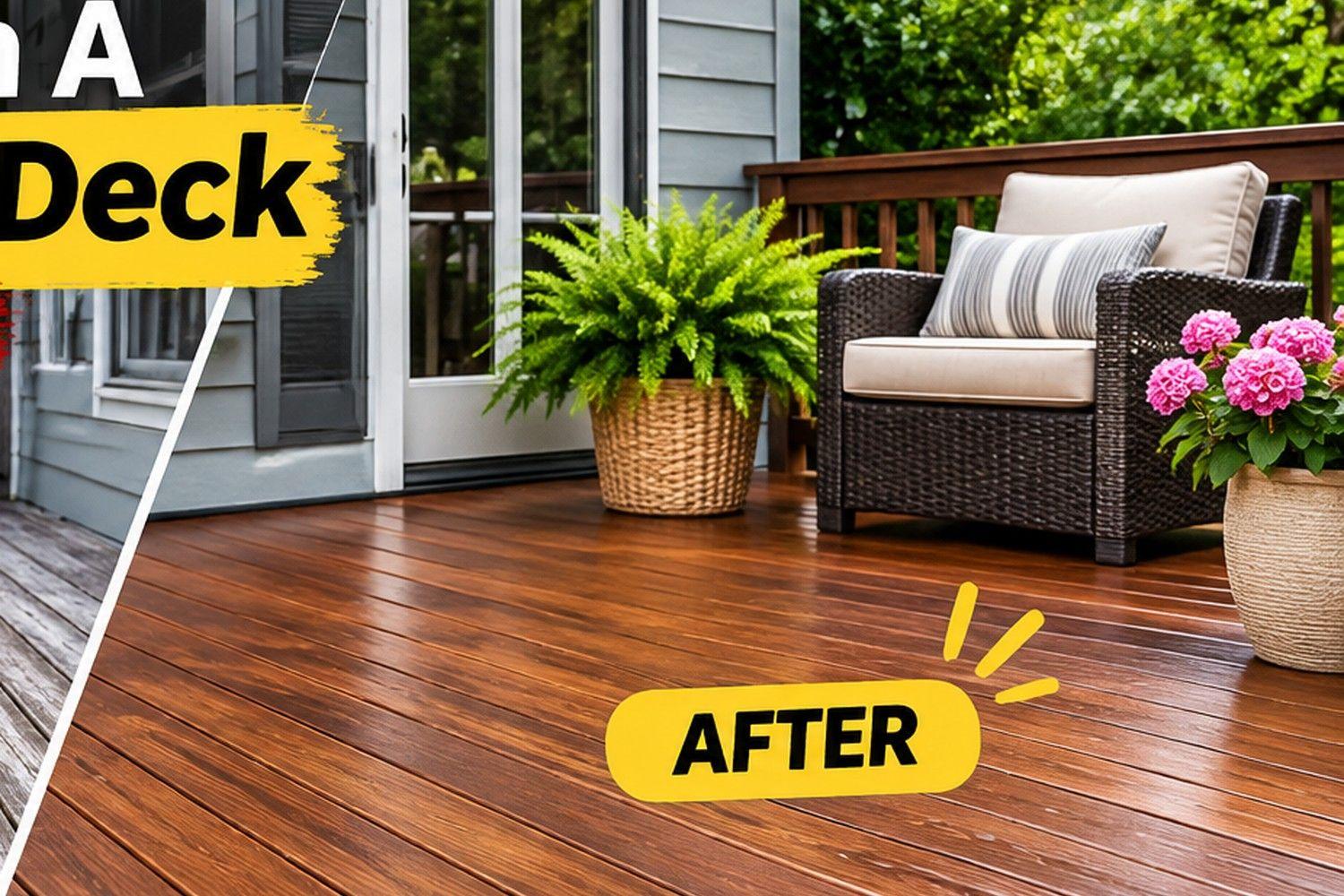
How to Stain a Weathered Deck for Beginners
Learn how to stain a weathered deck for beginners. Get practical steps for cleaning, sanding, choosing deck stain, applying even coats, and avoiding mistakes.
November 2026, 11 min read
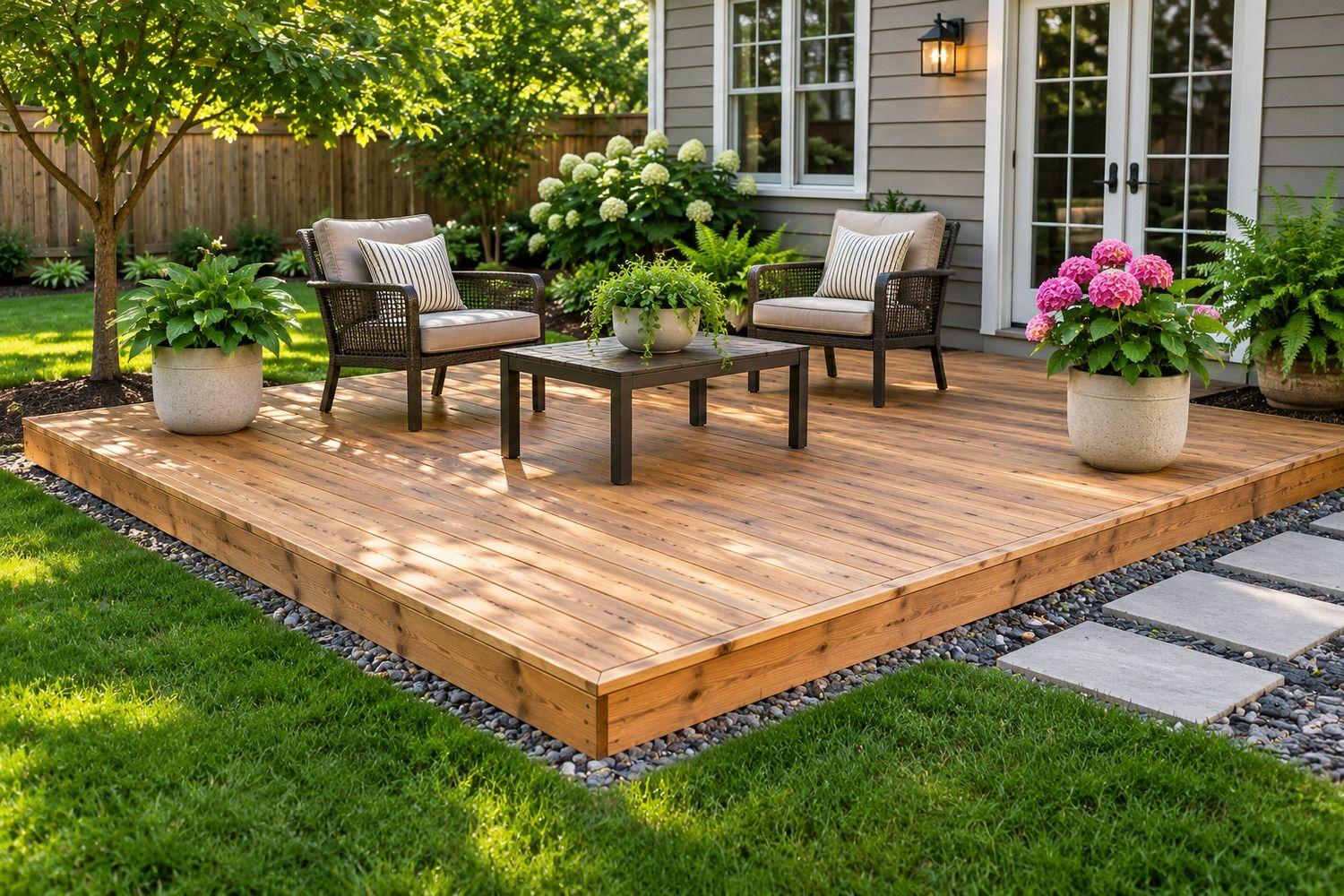
How to Build a Floating Deck at Ground Level: A Practical DIY Guide
Learn how to build a ground-level floating deck, from site preparation and foundations to framing, decking boards, drainage, permits, and safety.
November 2026, 12 min read
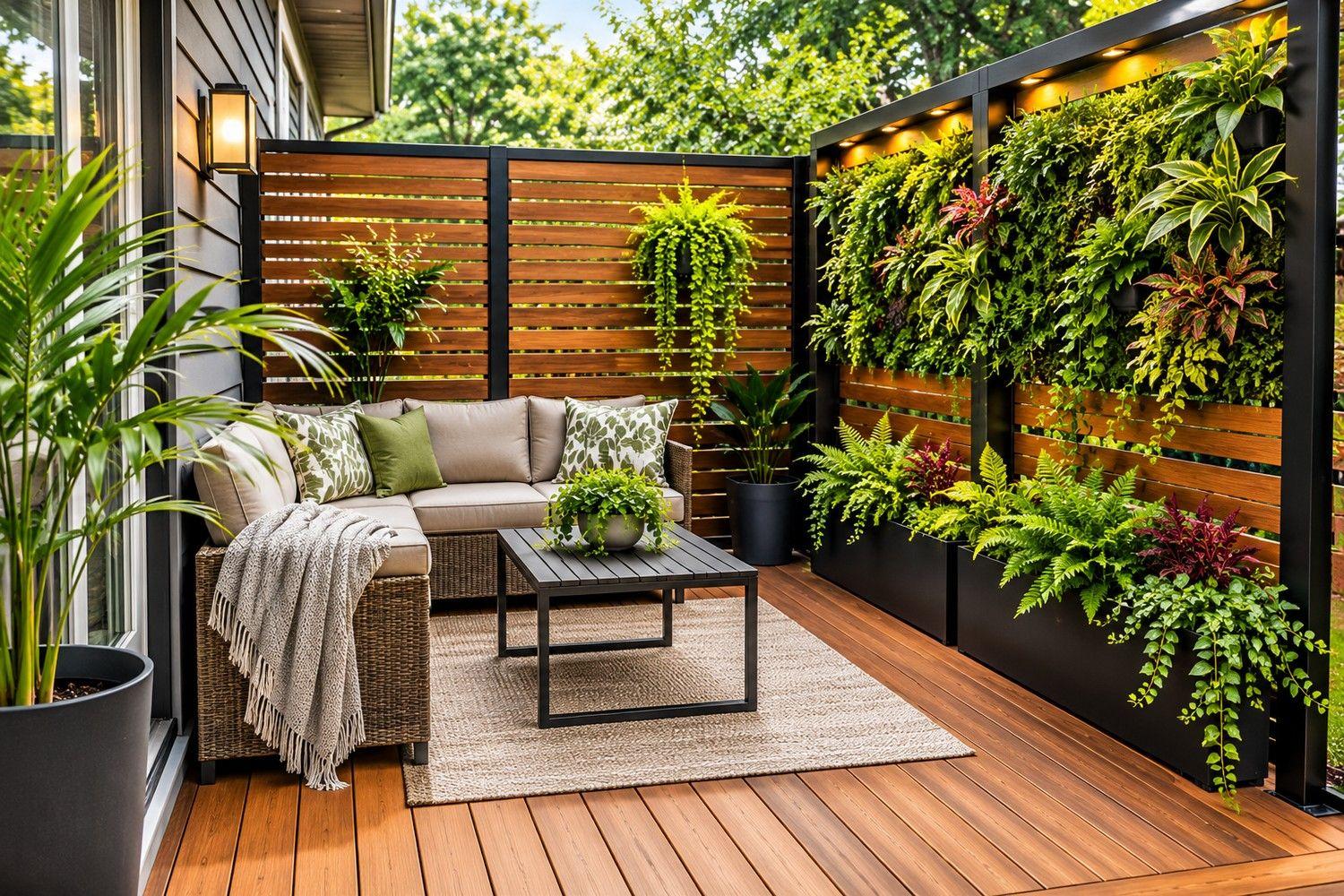
DIY Small Deck Privacy Screen Plant Wall: A Space-Smart Guide
Create a more private small deck with a DIY plant wall. Explore 7 screen ideas, plant choices, materials, build steps, drainage, and safety tips.
November 2026, 12 min read