Patio Drainage and Materials: What Happens to the Water
A solid patio sheds every drop of rain that falls on it. Permeable materials let water soak through instead. Here is how each type works, based on EPA and state stormwater guidance, and how to think about the trade-offs.
By Home Crane Editors. . 4 min read.
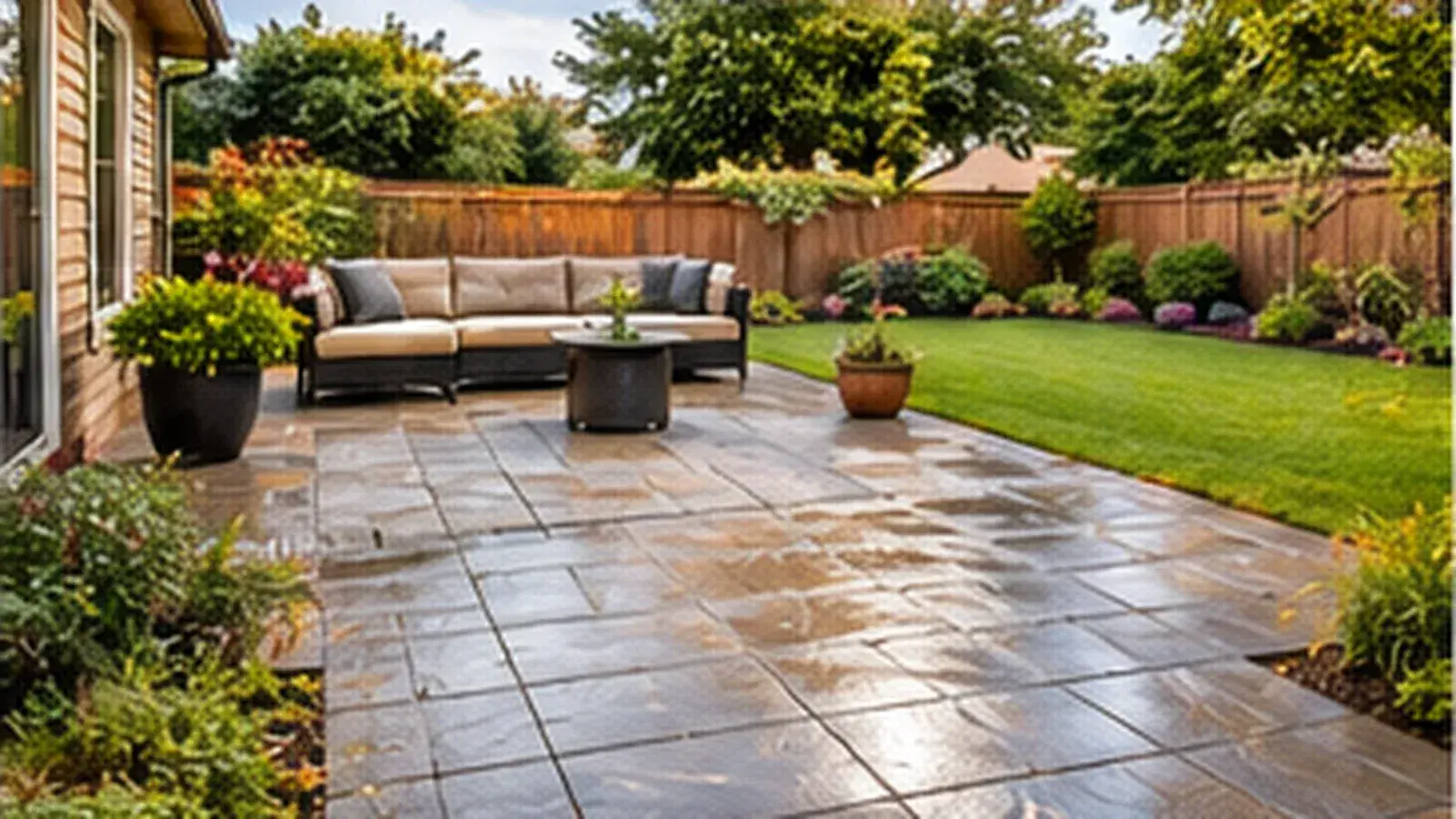
Conceptual illustration of a permeable paver patio.
Every patio does one of two things with rain: it sheds the water off its surface, or it lets some of the water soak through. Solid materials like poured concrete, mortared stone and standard pavers on a compacted base shed water. Permeable materials, including pervious concrete, porous asphalt and permeable interlocking pavers, are designed to let water filter down through the surface. The EPA's overview of permeable pavement describes it as part of a broader set of green infrastructure practices used to manage stormwater.
Why where the water goes matters
A solid patio does not remove water, it relocates it. Rain that lands on a solid surface runs off to wherever the grading sends it, often toward a lawn, a drain, a neighboring property or the street. A state stormwater fact sheet, from Nebraska's Department of Environmental Quality program, explains that stormwater gains speed as it crosses hard, non-absorbent surfaces, picking up sediment, chemicals and debris along the way, and that this runoff can raise the temperature of nearby streams and lakes. None of that is unique to patios, but a patio is one more hard surface added to a yard's existing roof, driveway and walkways.
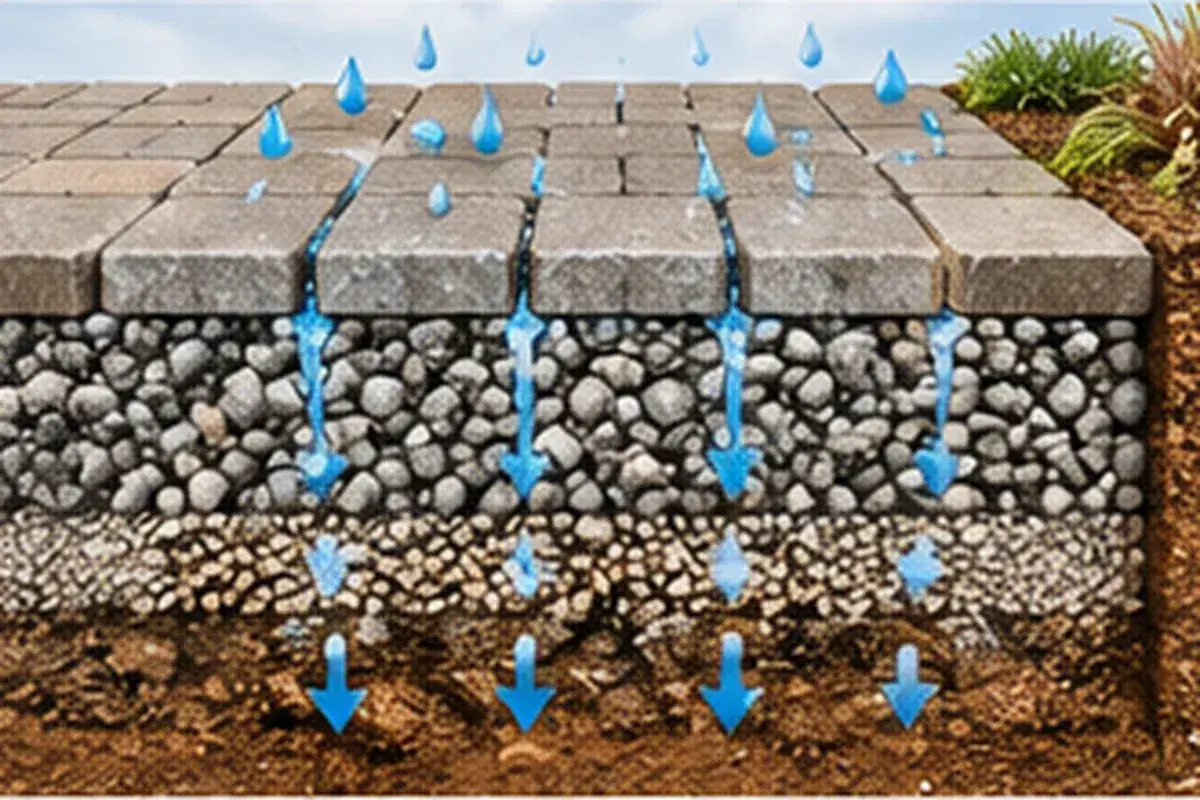
How permeable pavement works
The Minnesota Pollution Control Agency's technical overview describes permeable pavements as surfaces that allow stormwater runoff to filter through surface voids into an underlying stone reservoir, where it is temporarily stored and, over time, infiltrates into the soil below. The three most common types it names are pervious concrete, porous asphalt and permeable interlocking concrete pavers, and it notes these have been used at residential sites including driveways, walkways and patios, not just commercial lots.
| Feature | How it works | |
|---|---|---|
| Pervious concrete | A concrete mix with little or no sand, leaving open voids that let water pass through the slab itself. | |
| Porous asphalt | An asphalt mix designed with open voids, similar in principle to pervious concrete, over a stone reservoir base. | |
| Permeable interlocking pavers | Individual paver units laid with open, gravel-filled joints, so water passes between the units rather than through them. |
Trade-offs to weigh, not a single right answer
The EPA and state agencies present permeable pavement mainly as a stormwater management tool, and industry sources add practical notes worth knowing before you choose. A Delaware state climate adaptation resource notes that permeable pavements can have longer lifespans than traditional pavement in cold climates, because they reduce the freeze and thaw stress that damages solid surfaces, but adds that design engineers and contractors should be involved to ensure the pavement performs as intended. A construction industry publication observes that permeable paving systems typically cost more upfront than conventional pavement, though some of that cost can be offset because less conventional drainage infrastructure, such as extra catch basins, is needed. That publication has a commercial interest in the products it describes, so treat its cost claims as one industry viewpoint rather than independent data.
- Permeable surfaces generally need periodic maintenance, such as vacuuming or pressure washing, to keep the surface voids from clogging with sediment. Ask any installer what maintenance schedule their product needs.
- Site conditions matter. Soil type, slope and how close the patio sits to a foundation all affect whether permeable pavement will drain the way it is designed to. This is a case for a qualified contractor or landscape designer to assess, not a do-it-yourself judgment call.
- Local stormwater rules sometimes give credit for permeable surfaces, and some jurisdictions provide guidance or incentives for homeowners. Check with your local stormwater or public works department.
- A solid patio is simpler to install and often cheaper up front, and it remains the right choice in many situations, particularly small patios where drainage can be handled with proper grading.
Matching material to how you use the space
Beyond drainage, think about how the patio will be used day to day. A dining and grilling area benefits from a flat, even surface that furniture sits level on, which favors poured concrete or tightly fitted pavers. A more informal seating or garden area can tolerate the slightly uneven texture of some permeable paver systems. Color and heat absorption differ by material too: darker solid surfaces can get noticeably hot in direct sun, while lighter pavers and some permeable surfaces stay cooler underfoot. None of this is a drainage question, but it affects satisfaction with the finished patio as much as where the water goes.
If you keep it solid, grading still matters
Choosing a solid patio material does not mean ignoring water. Proper grading, directing runoff away from the house foundation, and coordinating the patio with existing downspouts and drainage are still standard practice for any hard surface. If you are unsure how your patio will interact with drainage on your lot, that is a reasonable question to bring to a landscape contractor as part of getting quotes.
Once you have chosen a material and a size, our concrete calculator and gravel calculator can help estimate quantities for the base and slab, though the calculators handle materials only, not drainage design.
Your takeaway: before you commit to a patio material, ask how the design handles the water that falls on it, whether that means grading a solid surface away from the house or asking a contractor whether a permeable material makes sense for your soil and site.
Frequently asked questions
Is permeable pavement always better for the environment?
It generally reduces stormwater runoff compared with a solid surface, which the EPA and state agencies present as a benefit. Whether it is the right choice for a specific site depends on soil, slope and maintenance, which a landscape professional can assess.
Does permeable pavement need special maintenance?
Most sources describe periodic maintenance, such as cleaning the surface, to prevent the voids from clogging with sediment. Ask your installer for the specific maintenance schedule for the product used.
Sources
- Soak Up the Rain: Permeable Pavement, U.S. EPA. Checked September 24, 2026
- Overview for permeable pavement, Minnesota Pollution Control Agency. Checked September 24, 2026
- Permeable Pavement, Delaware Department of Natural Resources and Environmental Control. Checked September 24, 2026
- Permeable Pavement (fact sheet), Nebraska Department of Environmental Quality funded program. Checked September 24, 2026
- Permeable Paving a Good Option for Green Homebuilding, Pro Builder. Checked September 24, 2026
Share this article
Get new guides by email
Practical home articles and free resources. No spam, and you can unsubscribe at any time.
Keep reading

Boho Small Patio Decorating Ideas for a Cozy Balcony
Explore boho small patio decorating ideas for a cozy balcony, including woven seating, outdoor rugs, plants, privacy, lighting, and renter-friendly layouts.
November 2026, 23 min read
How to Build a Paver Patio for Beginners
Learn how to build a paver patio for beginners, including layout, excavation, base depth, bedding sand, paver patterns, drainage, and finishing tips.
November 2026, 20 min read
Stenciled Concrete Patio Makeover: A Before-and-After Design Guide
A stenciled patio can make a plain concrete slab feel like a patterned outdoor room without adding tile. The most convincing results come from restrained.
October 2026, 4 min read