Stenciled Concrete Patio Makeover: A Before-and-After Design Guide
A stenciled patio can make a plain concrete slab feel like a patterned outdoor room without adding tile. The most convincing results come from restrained.
By Home Crane Editors. . 4 min read.
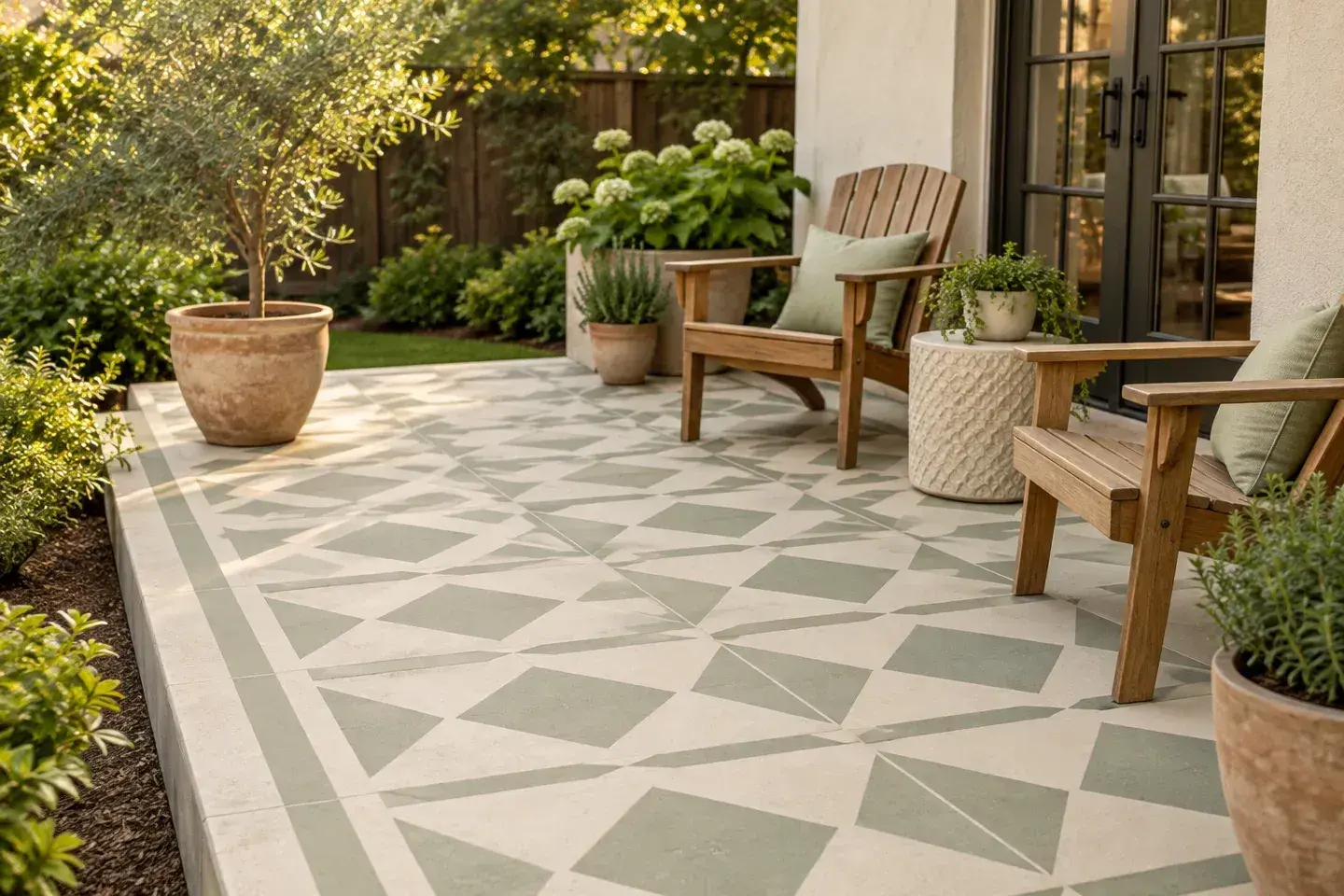
A stenciled patio can make a plain concrete slab feel like a patterned outdoor room without adding tile. The most convincing results come from restrained colors, a layout that fits the slab, and a coating system suited to exterior concrete and foot traffic.
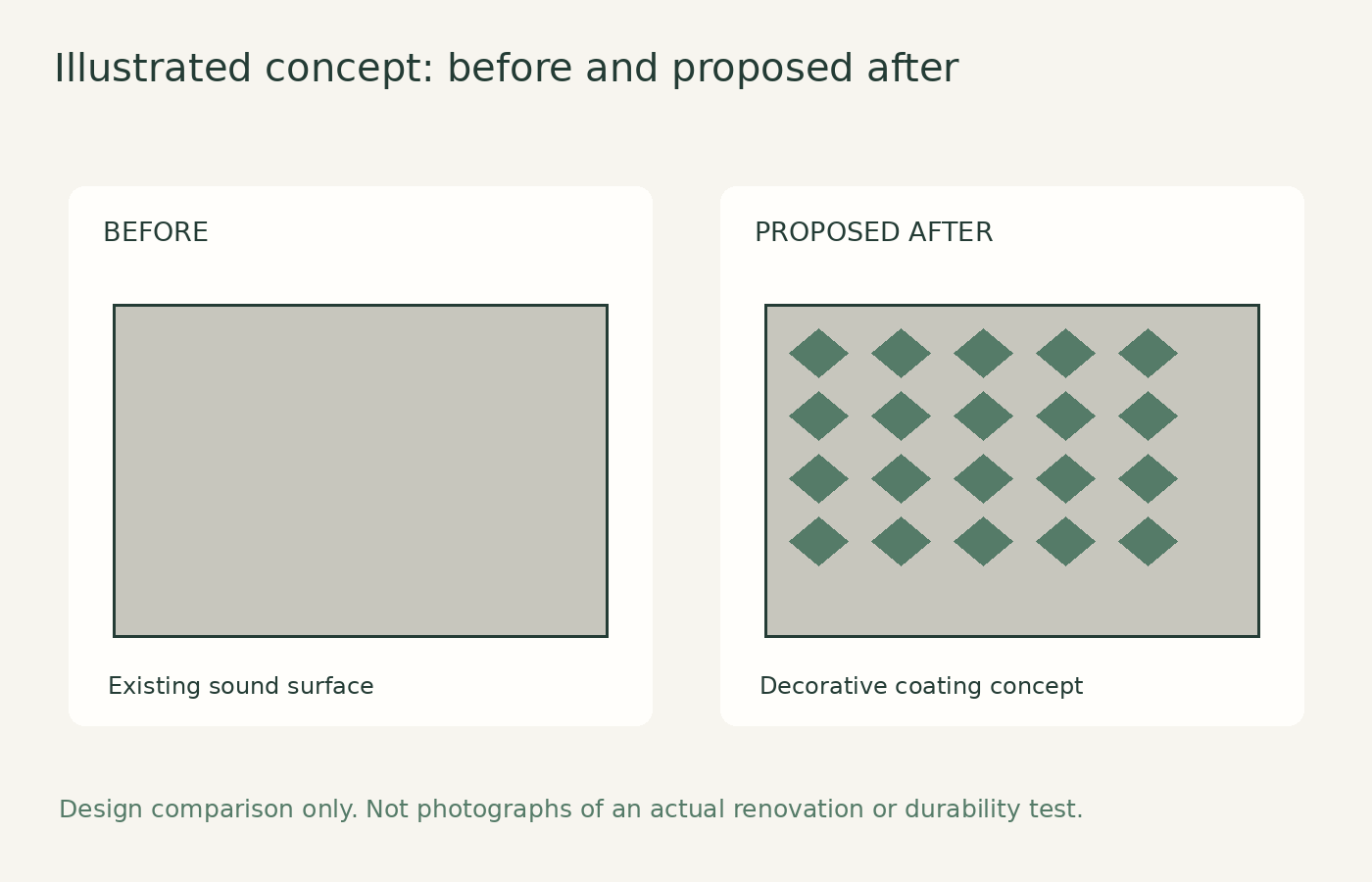
The images in this guide are design illustrations, not photographs of a HomeCrane renovation. The “before” is a typical plain slab; the “after” is a proposed painted finish. They show the visual change you can plan, not proof of durability, a repair result, or a verified project cost.
1. Check the slab before planning the pattern
Inspect the concrete for loose material, active cracks, standing water, contamination, and old coatings. Paint changes the surface appearance. It will not stabilize moving concrete or correct a patio that drains toward the house.
Watch how water leaves the slab after rain. Areas that remain wet need investigation before coating. Also establish whether an existing sealer is present, because it can affect adhesion and the required preparation method.
Choose a coating specifically approved for your surface and use. Behr's concrete preparation guidance distinguishes preparation needs rather than treating every slab alike. Read the current label and technical sheet for the exact product; a photograph of another patio cannot identify the preparation your slab requires.
2. Clean and prepare with the selected system
Clear furniture, protect adjacent plants and finishes, and remove debris. Degrease and rinse as directed, then let the concrete dry sufficiently for the coating. A slab can look dry while still failing a product's moisture requirements.
Surface profiling, repairs, and primer requirements depend on the coating and existing condition. Do not automatically acid-etch a previously painted patio or mix cleaning chemicals. If a preparation product is required, follow its protective-equipment, runoff, and disposal instructions.
Remove unsound coating using an appropriate method, controlling dust and avoiding damage to nearby surfaces. If substantial grinding or coating removal is necessary, professional preparation may be the sensible part of the project to outsource. Decorative paint is only as dependable as the surface it bonds to.
3. Lay out a centered pattern with a border
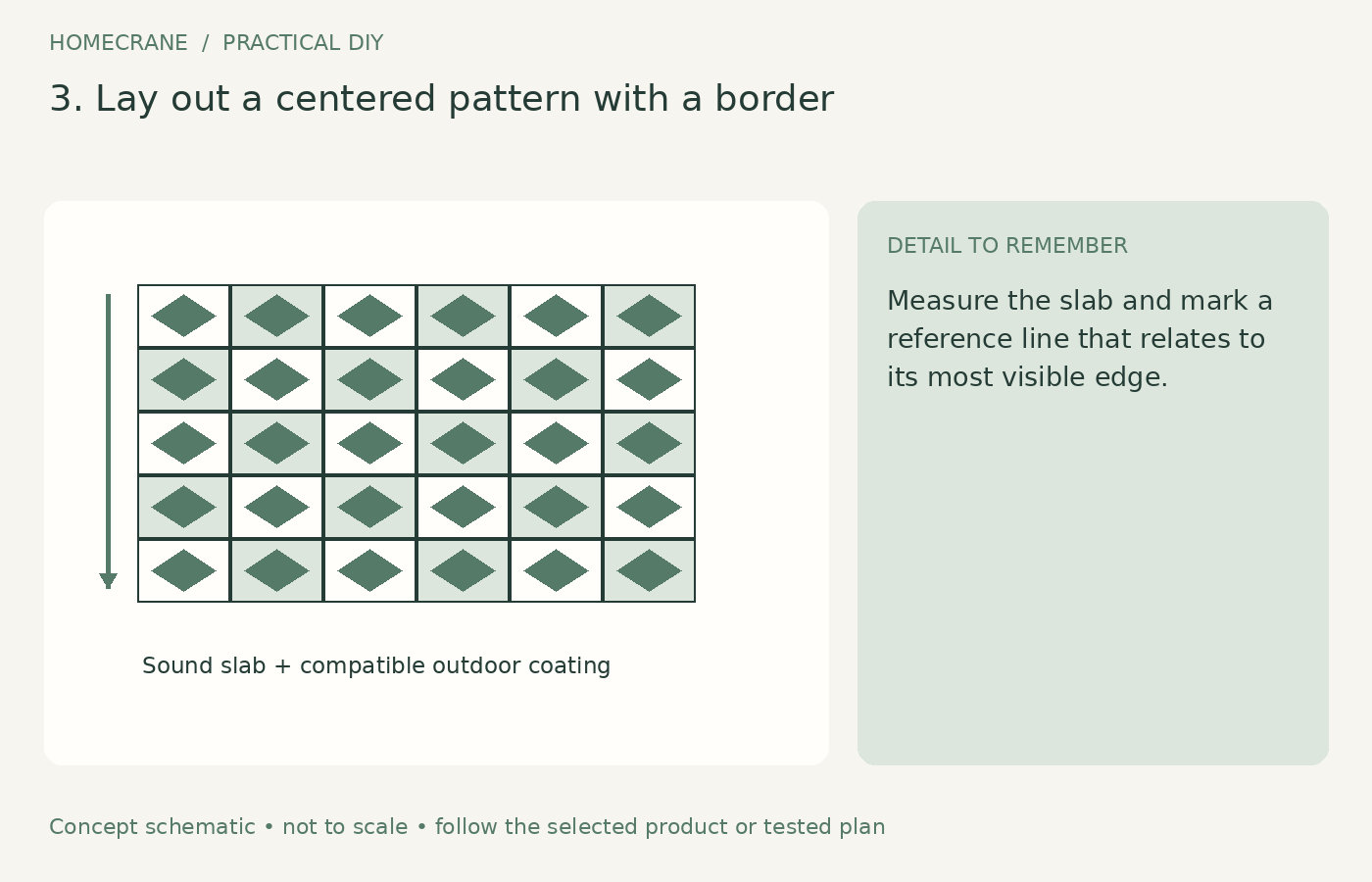
Measure the slab and mark a reference line that relates to its most visible edge. Dry-position the stencil in several rows before applying paint. You want to know where partial motifs will land at the doorway, steps, and perimeter.
A plain border can absorb awkward dimensions and make the pattern look intentional. For an original example, a 10-by-12-foot slab with a 6-inch border leaves a 9-by-11-foot patterned area. That is 99 square feet inside a 120-square-foot slab. Use the actual stencil repeat to determine how the motifs fit within it.
Choose low-contrast colors if the patio is small or already surrounded by visually busy landscaping. Highly detailed patterns require more alignment and touch-up work. A large, simple repeat is often more forgiving for a first attempt.
4. Apply the base and stencil with a light touch
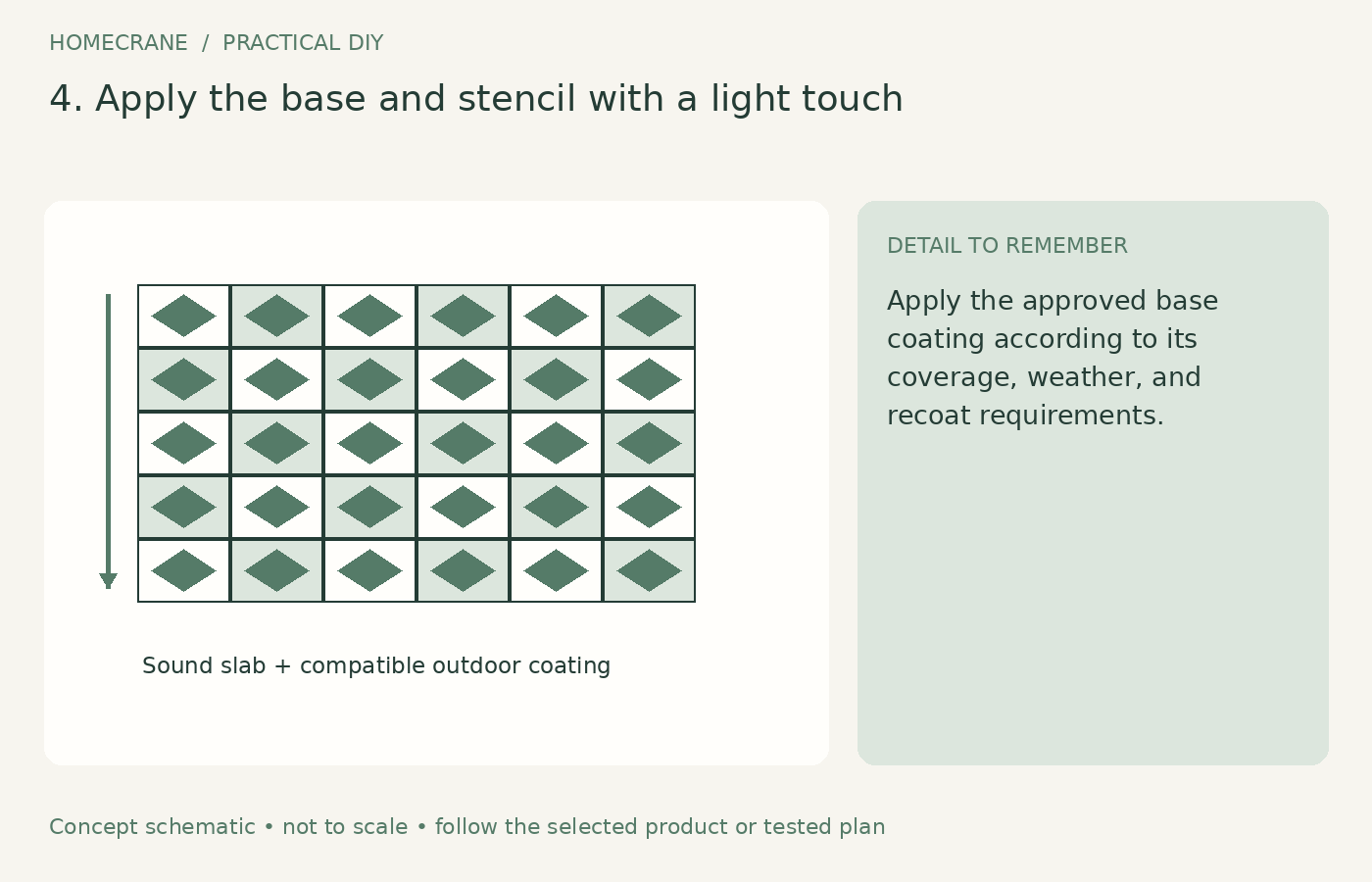
Apply the approved base coating according to its coverage, weather, and recoat requirements. Wait until it is ready for the stencil and temporary positioning method. Paint that feels dry may still lift if tape is applied too soon.
Use a compatible stencil paint or the approved contrasting coating. Load a small roller or stencil brush lightly and remove excess before touching the stencil. Heavy wet paint is more likely to creep underneath the edges.
Lift the stencil carefully and check the first repeat before continuing across the patio. Clean buildup from the stencil as needed and use its registration marks. Do not let one slightly misaligned motif become the reference for every remaining row. Touch up small defects after the surrounding coating is ready.
5. Respect curing time and outdoor traction
Plan the job around a suitable weather window for application and curing. Dew, rain, temperature swings, and direct sun can affect the result. Follow the product's limits rather than using an indoor paint schedule outdoors.
Choose a finish with appropriate traction for the patio's use. Behr's textured porch and patio coating is one example of a product designed with slip resistance in mind, but compatibility with a stencil layer must still be confirmed. No coating makes a wet surface universally slip-proof.
Add a clear sealer only when the coating system permits it. An unrelated glossy topcoat can alter traction, appearance, or adhesion. Keep furniture and planters off the finish until the specified return-to-use stage.
What changes in the proposed makeover?
| Feature | Proposed after | |
|---|---|---|
| Plain, visually uninterrupted slab | Centered pattern with a quiet border | |
| Furniture appears scattered | Pattern defines a seating area | |
| Surface condition is easy to overlook | Repairs and preparation happen first | |
| No planned care routine | Gentle cleaning and prompt touch-ups |
The pattern should serve the furniture layout. Place chairs and a table on the plan before finalizing the border, and avoid locating the most intricate motif where a permanent planter will hide it.
Questions homeowners ask
Will paint hide cracks?
It can change their color, but movement may remain visible or break the coating. Repair and movement-joint requirements come first. Do not fill functioning joints just to make the stencil continuous.
Is this cheaper than tile?
It can be when the slab is sound and preparation is modest. Compare paint, stencil, tools, repairs, and future maintenance with the complete alternative. A cheap can of paint does not establish the total project cost.
Sources
- Behr's concrete preparation guidance. Checked October 11, 2026
- Behr's textured porch and patio coating. Checked October 11, 2026
Share this article
Get new guides by email
Practical home articles and free resources. No spam, and you can unsubscribe at any time.
Keep reading
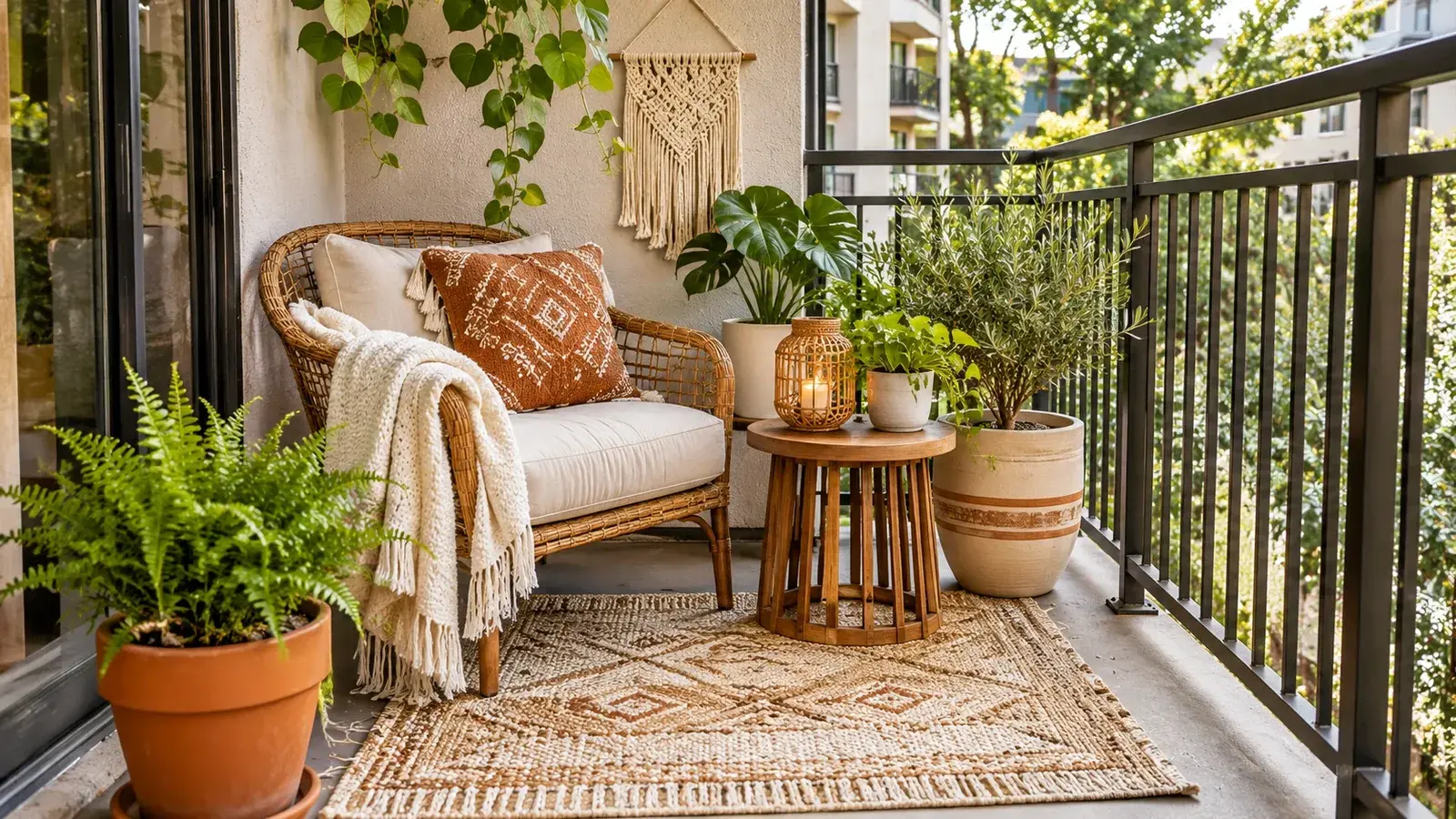
Boho Small Patio Decorating Ideas for a Cozy Balcony
Explore boho small patio decorating ideas for a cozy balcony, including woven seating, outdoor rugs, plants, privacy, lighting, and renter-friendly layouts.
November 2026, 23 min read
How to Build a Paver Patio for Beginners
Learn how to build a paver patio for beginners, including layout, excavation, base depth, bedding sand, paver patterns, drainage, and finishing tips.
November 2026, 20 min read
Patio Drainage and Materials: What Happens to the Water
A solid patio sheds every drop of rain that falls on it. Permeable materials let water soak through instead. Here is how each type works, based on EPA and state stormwater guidance, and how to think about the trade-offs.
September 2026, 4 min read