Remove Hard Water Stains from Glass Shower Doors and Keep Them from Returning
Remove shower-glass mineral deposits with coating-compatible cleaning and reduce recurring spots. Learn when cloudy glass may be etched or damaged.
By Home Crane Editors. . 4 min read.
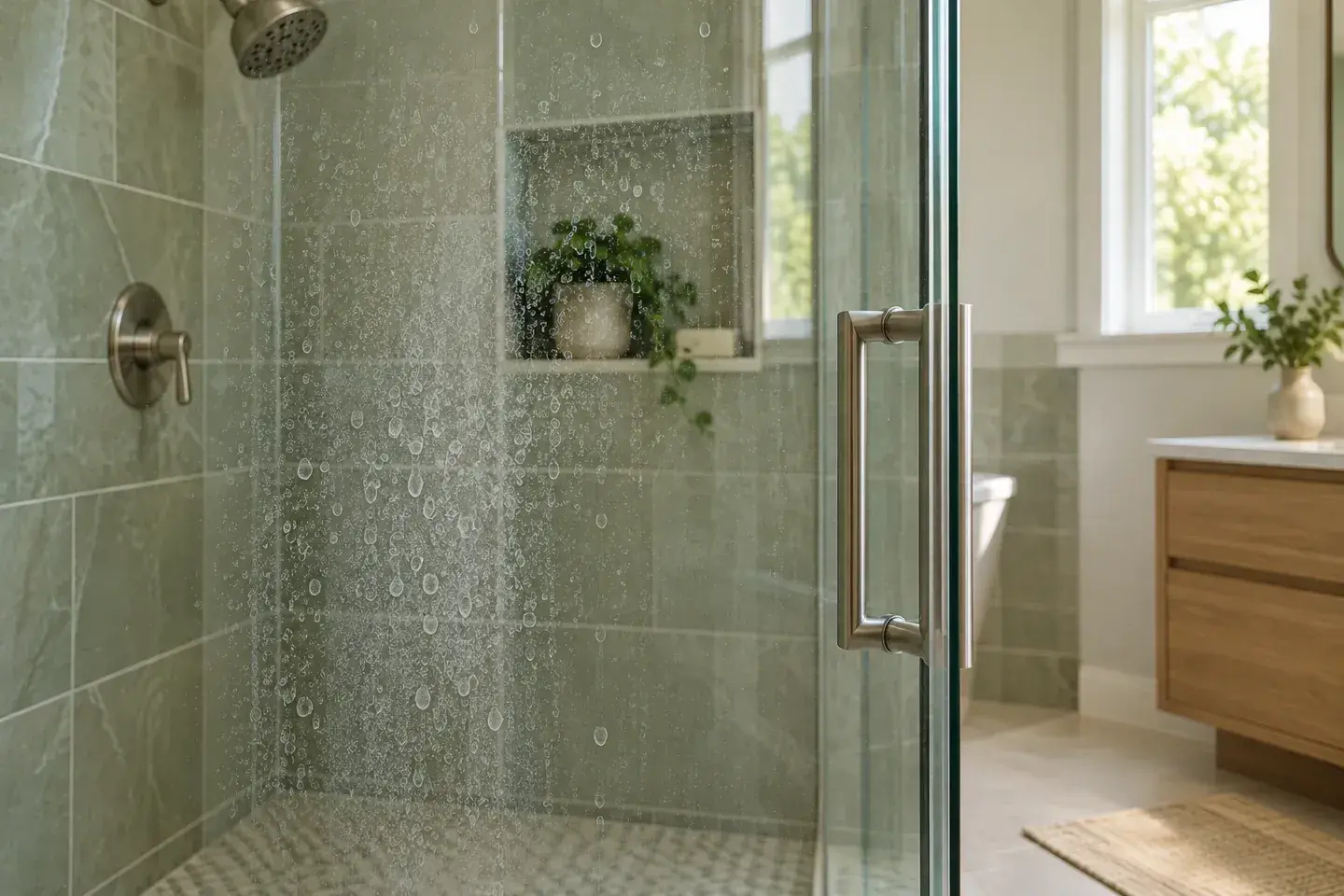
Mineral deposits can often be removed from shower glass, but no cleaning session permanently prevents new deposits when hard water keeps drying on the surface. Lasting clarity comes from suitable cleaning, removing water after use, and dealing with the water source where appropriate. A cloudy area that remains after cleaning may be damaged glass or coating rather than removable scale.
Before buying a stronger cleaner, identify the door and any protective treatment. Check the maker's care instructions and inspect nearby stone, metal, seals, and finishes. A product that suits untreated glass may be unsuitable for coated glass or the frame around it.
1. Separate deposits from damage
Mineral buildup often appears where droplets dry repeatedly. Soap residue may feel different and can coexist with the deposits. Neither appearance alone nor a finger test proves exactly what the haze contains.
Clean a small inconspicuous test area using the door manufacturer's routine method. Rinse and dry it completely before judging the result. Water can temporarily make a cloudy surface look clearer, so inspect it again under normal light when dry.
Kohler describes CleanCoat as a factory treatment that helps water and dirt run off. It also cautions against abrasive cleaners on treated glass. A coating changes the maintenance instructions; it does not mean the door never needs attention.
If a properly cleaned test area remains uniformly hazy, ask the door maker or a glass specialist whether you are seeing etching or coating damage. Do not keep escalating to harder abrasives simply because the surface still looks dull. Cleaning removes material on the glass; it cannot always restore a damaged surface.
2. Choose a cleaner approved for the complete door
Start with the least aggressive method approved for your door. Sterling's shower-door care guidance recommends gentle routine care and warns that abrasive tools and harsh chemicals can damage glass or metal finishes. Its restrictions illustrate why a universal vinegar recipe is not appropriate for every enclosure.
For stubborn mineral deposits, ask the manufacturer which descaling product is permitted on the exact glass treatment. Check the cleaner label for limitations around stone, grout, plated hardware, and anodized aluminum. Protect adjacent materials in the way both manufacturers specify.
Never mix cleaners. In particular, do not combine an acidic product with bleach or use one immediately over unknown chemical residue. Ventilate the room and use the protective equipment required by the label. Keep the floor from becoming a slippery chemical work surface.
If the door's identity is unknown, gather photographs and any installer paperwork before experimenting. A replacement coating or glass panel can cost far more than the time saved by guessing.
3. Work in small sections and inspect after drying
Apply the approved cleaner in the stated amount and manner. Some products require a short contact period, while some door-care instructions prohibit leaving cleaner standing. Follow the combination that is permitted for your actual surface; there is no universal soak time.
Use a soft compatible cloth or sponge. Keep application controlled so cleaner does not collect in tracks or run onto sensitive trim. Do not use razor blades, steel wool, abrasive powders, or a powered polishing pad unless the glass maker specifically approves the process.
Rinse as directed and dry with a clean soft cloth. Inspect for remaining deposits, color change, scratches, or altered coating behavior. If a gentle repeat is permitted, repeat only within the product instructions. Stop if the finish changes.
A concentrated spot treatment is often easier to control than spraying the entire shower. It also lets you decide whether the cleaner is actually improving the problem before using more of it. Keep a note of the product and dilution that worked for future maintenance.
4. Prevent deposits by removing the water
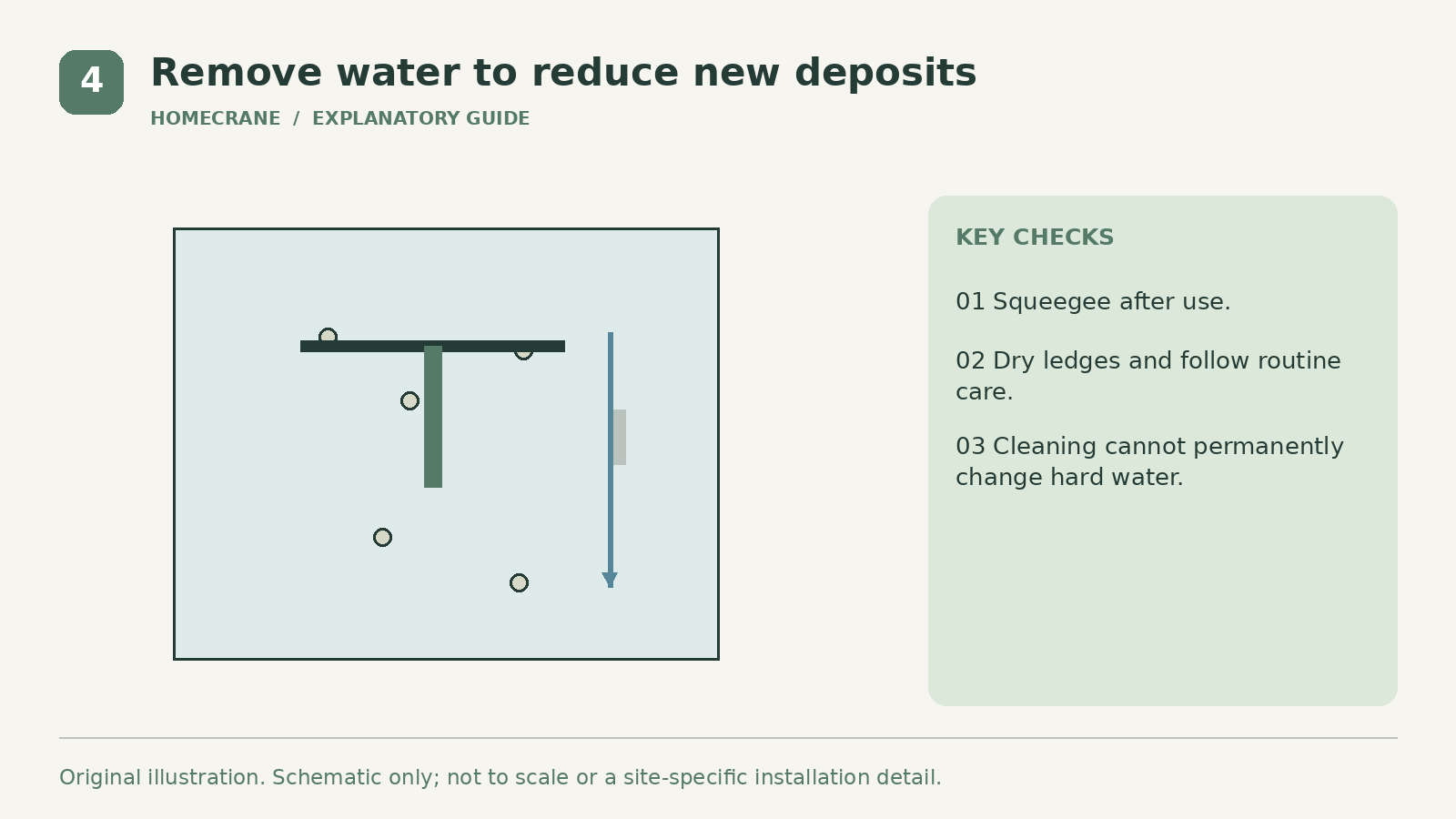
A squeegee after showering reduces the water left to evaporate on the glass. Follow with a soft cloth on ledges and areas where droplets remain, taking care around door seals and moving parts. Keep the enclosure ventilated according to its design.
Routine gentle cleaning before buildup becomes heavy is usually easier than periodic rescue cleaning. Assign a manageable schedule based on your household's use and how quickly spots appear. A door used daily may need different care from a guest shower.
If scale affects several fixtures, investigate actual water hardness before buying treatment. A water softener can reduce hardness-related deposits when correctly selected and maintained, but it does not eliminate soap residue or the need to clean. Ask for a water test and a scoped recommendation rather than treating shower spots as proof that every household needs the same equipment.
Protective treatments also need maintenance. Use only a product compatible with the existing glass and warranty, and observe its renewal instructions. Do not apply automotive coatings, waxes, or improvised mixtures without the door maker's approval.
| Feature | Practical response | |
|---|---|---|
| Fresh spots that clean off easily | Remove water after use and maintain routinely | |
| Heavy deposits on otherwise sound glass | Ask for an approved descaling method | |
| Haze unchanged after suitable cleaning | Assess etching or coating damage | |
| Damage around metal or stone | Stop and review chemical compatibility |
Can I remove the stains permanently?
You may remove existing deposits, but continued exposure can produce new ones. A prevention routine is the honest long-term answer. Permanent glass damage is a separate problem.
Should I use a magic eraser?
Not automatically. Melamine cleaning pads are abrasive at a fine scale and may be unsuitable for protective coatings. The door's care instructions should decide, not a general cleaning video.
Sources
- Kohler describes CleanCoat. Checked October 11, 2026
- Sterling's shower-door care guidance. Checked October 11, 2026
Share this article
Get new guides by email
Practical home articles and free resources. No spam, and you can unsubscribe at any time.
Keep reading
Painted Kitchen Countertops After Two Years: What to Inspect and Expect
Assess painted countertops after two years with a practical inspection guide for edges, sink areas, scratches, cleaning, and repair decisions.
October 2026, 3 min read

How to Help Prevent Frozen Pipes in Minnesota Winters
Prepare Minnesota plumbing for winter with guidance on vulnerable pipes, heat, insulation, outdoor lines, and when to contact a plumber or utility.
October 2026, 5 min read
Repointing Brick Cost in Pennsylvania: What You Need to Know
Compare Pennsylvania brick repointing costs with Philadelphia context, wall-area calculations, compatible mortar, access, and a clear sample budget.
October 2026, 4 min read