7 Space-Saving Shower Installation Ideas for Tiny Bathrooms
Compare seven space-saving shower ideas for tiny bathrooms, with an image for each idea and practical checks for doors, storage, seating, and access.
By Home Crane Editors. . 5 min read.
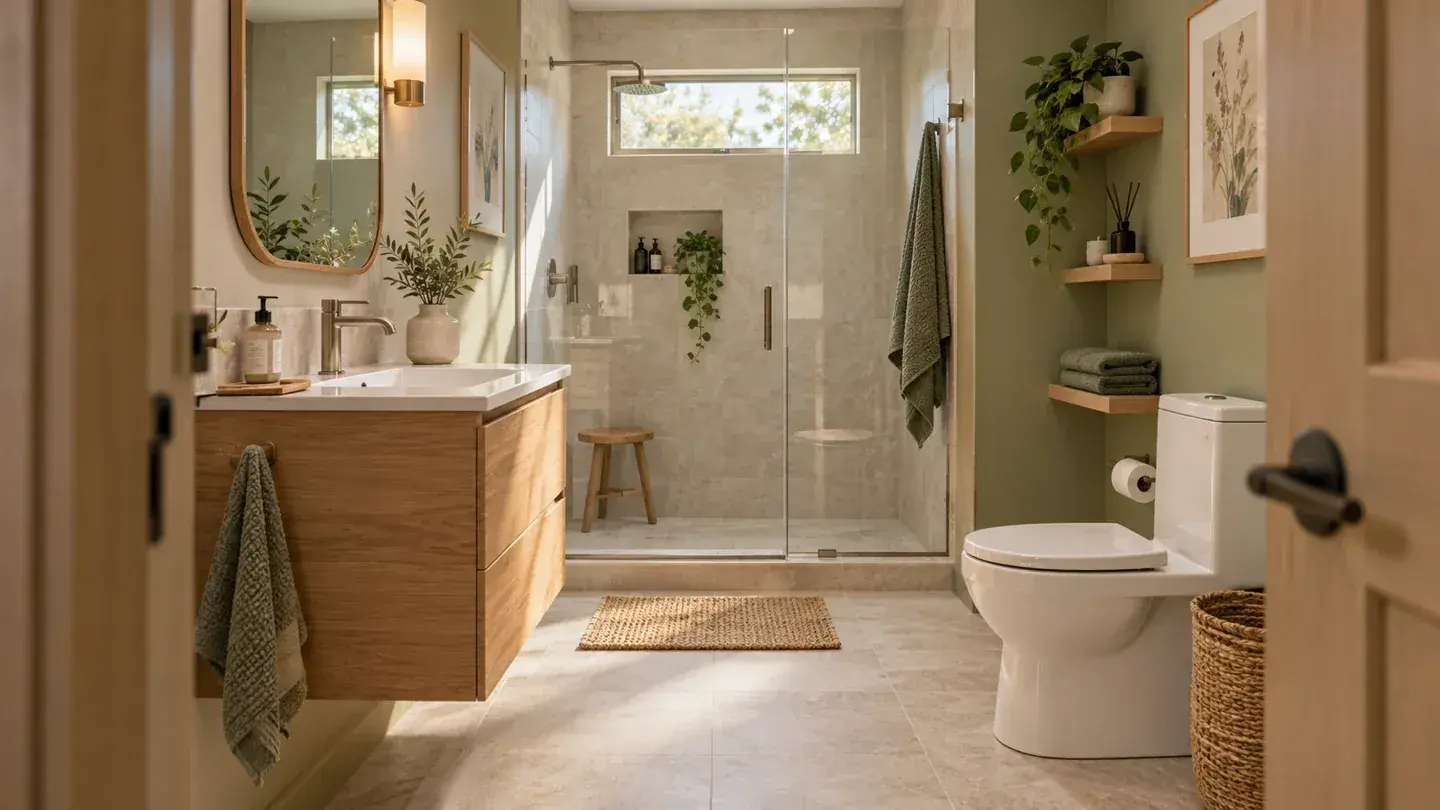
The most useful shower changes solve a specific space problem: a door that hits the vanity, storage that intrudes into the enclosure, or separate fixtures that consume too much floor area. Start with the space needed to enter, turn, reach the controls, and dry off. A smaller shower is not necessarily a more usable bathroom.
These seven ideas cover enclosure choices and fittings to discuss with your installer. Some preserve the existing footprint; others require a remodel. All illustrations are AI-generated design concepts, not measured layouts or construction specifications.
Start With the Finished Opening
Record the shower's finished dimensions, the approach outside it, nearby door movements, and the position of the toilet and vanity. Measure after accounting for the wall finishes, not just the rough framing. Use the selected manufacturer's drawings to check compatibility.
Write down who will use the shower and whether stepping over a curb or tub edge is comfortable. If accessibility is a goal, ask for an assessment of the whole route and shower arrangement. An attractive enclosure or a folding seat alone does not establish accessibility.
1. Replace an Awkward Swing With Sliding Glass
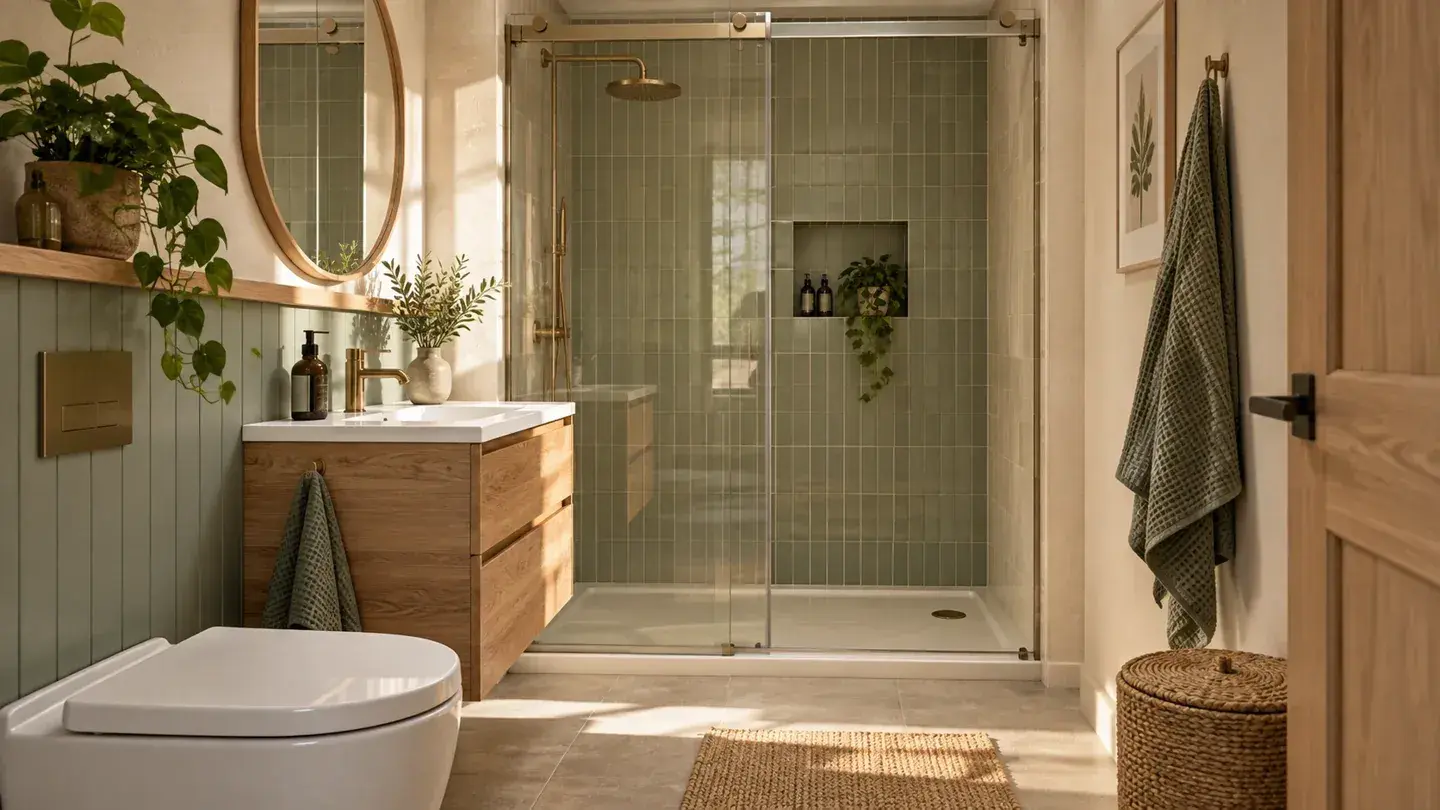
Sliding panels can solve a collision between a shower door and a nearby cabinet. They move along the enclosure rather than requiring a full outward door arc. Clear glass also preserves a view through the room, although that visual effect does not increase its dimensions.
Compare the actual walk-through opening, not just the product's overall width. Overlapping panels leave only part of the enclosure open. Ask to see the door operating in a showroom if you are unsure how the arrangement will feel.
Cleaning matters too. Check whether you can reach the overlapping glass, guides, and track. A design that saves space but makes routine upkeep awkward may be the wrong choice for your household. Keep the handle projection in your measurements.
2. Use a Corner Enclosure With a Clipped Front
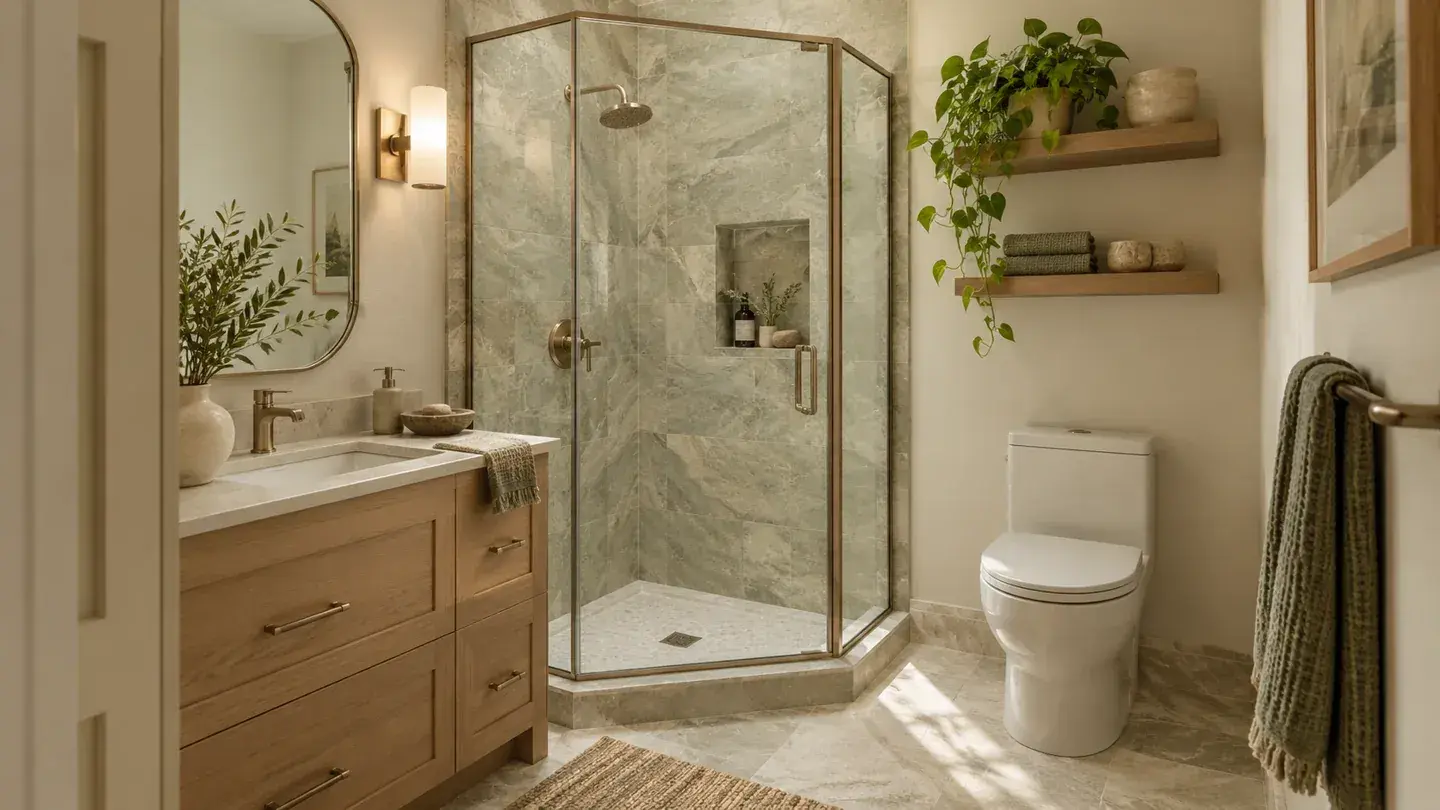
A neo-angle enclosure sits in a corner with its front edge angled across it. That clipped corner can free a useful patch of space outside the shower when a square enclosure would project into the route through the room.
The shape also changes the standing area inside. Draw the proposed footprint on the floor with removable tape and imagine turning, reaching the shower valve, and opening the door. Compare a compatible base and enclosure as a pair rather than choosing them independently.
This idea is worth exploring when the existing corner is underused. It is less compelling if reaching that corner requires expensive plumbing changes or leaves the shower opening facing an obstruction. Have the installer confirm the drain and finished-wall arrangement before ordering.
3. Investigate an Inward-Folding Shower Door
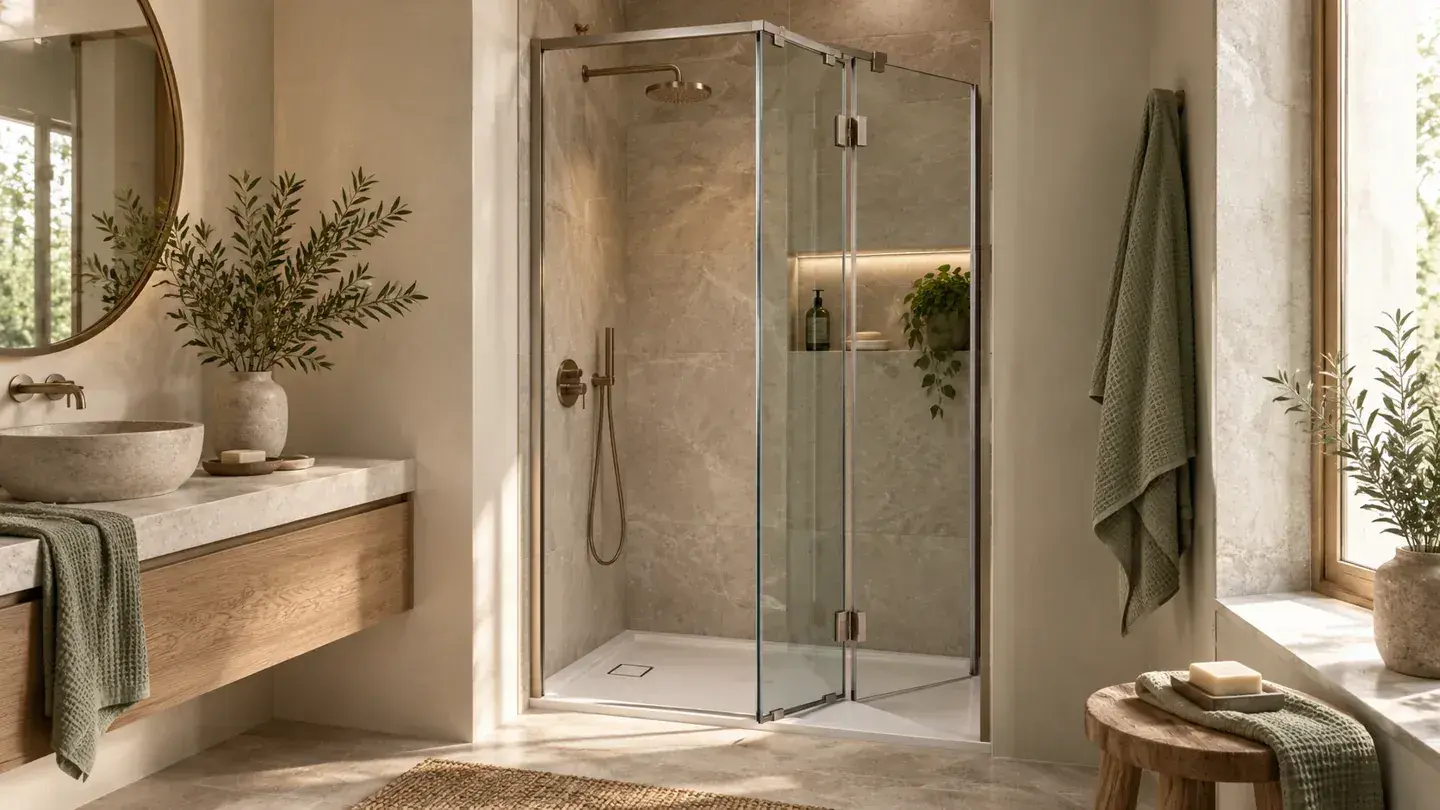
A purpose-built folding enclosure can reduce the space a door occupies outside the shower. For example, DreamLine's Butterfly-S product information describes an inward-gliding bi-fold design. Its details are product-specific, so use the current drawings for the exact model you choose.
The folded panels still need room somewhere. Check their position relative to the user, controls, shelves, and any seat. Ask about the clear opening with the door fully folded and whether the hardware can be cleaned comfortably.
Do not attempt to modify ordinary shower glass into a folding system. Choose a complete enclosure designed for that motion and have it installed to its instructions. The illustration shows the concept, not the named product.
4. Keep a Curtain Where Flexibility Matters
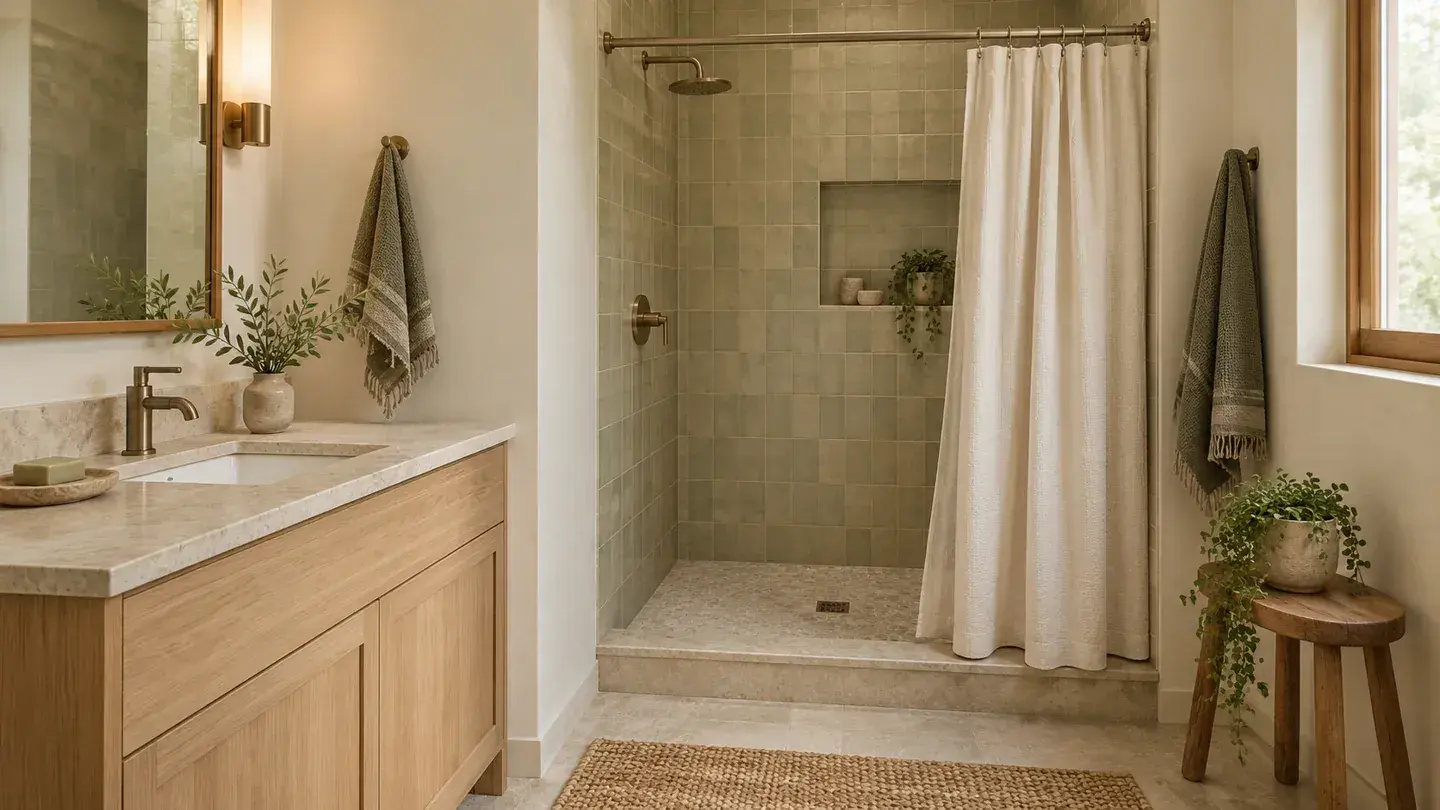
A shower curtain can be a practical option in a tiny bathroom because it does not require rigid glass to swing into the room. It is especially worth considering when a suitable shower base and waterproof surround already exist.
Choose a rod and curtain arrangement that keeps water inside the shower. Test the curtain's hanging position and make sure it does not obstruct the approach. A curved rod may create extra room inside some installations but can also project into an already narrow bathroom.
Keep the curtain easy to move, clean, and replace. This is a simple enclosure choice, not permission to eliminate the shower's water containment. The base, walls, and surrounding details still need to function together. Address water escaping onto the bathroom floor before treating the project as complete.
5. Recess Bottle Storage Into a Planned Shower Wall
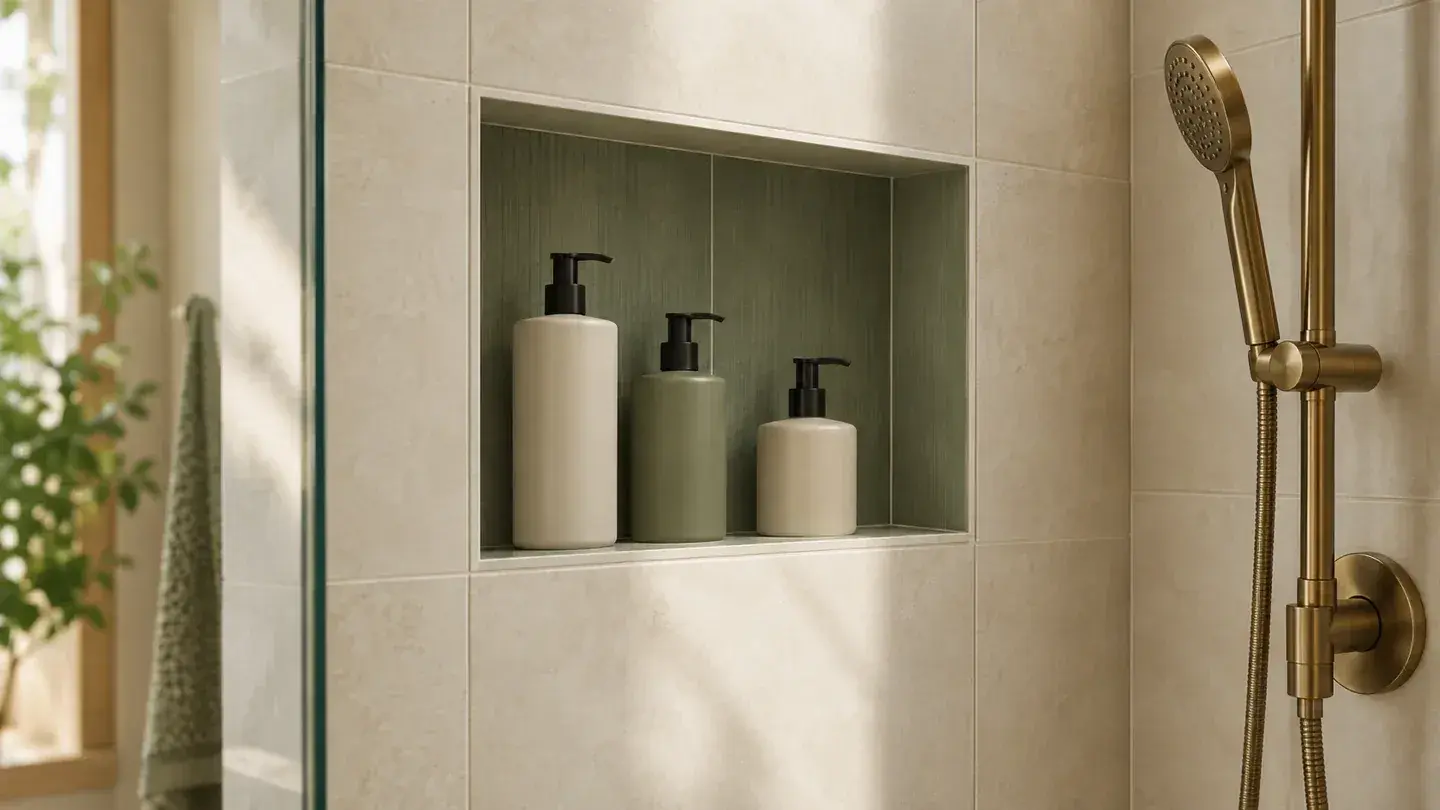
A niche moves bottles off the floor and avoids the projection of a hanging organizer. It is most sensible during a shower rebuild, when the installer can coordinate its position with the framing and waterproofing.
Measure the tallest pump bottle you expect to use, including room to press the pump. Put the niche where it is comfortable to reach without making the shower controls awkward to operate.
Schluter's prefabricated niche documentation explains that the niche-to-wall transition must be waterproofed within its system. A tiled recess is therefore part of the water-management assembly. If the existing shower is staying, ask about compatible surface storage before opening a finished wall solely to add a niche.
6. Choose a Folding Seat When Seating Is Needed
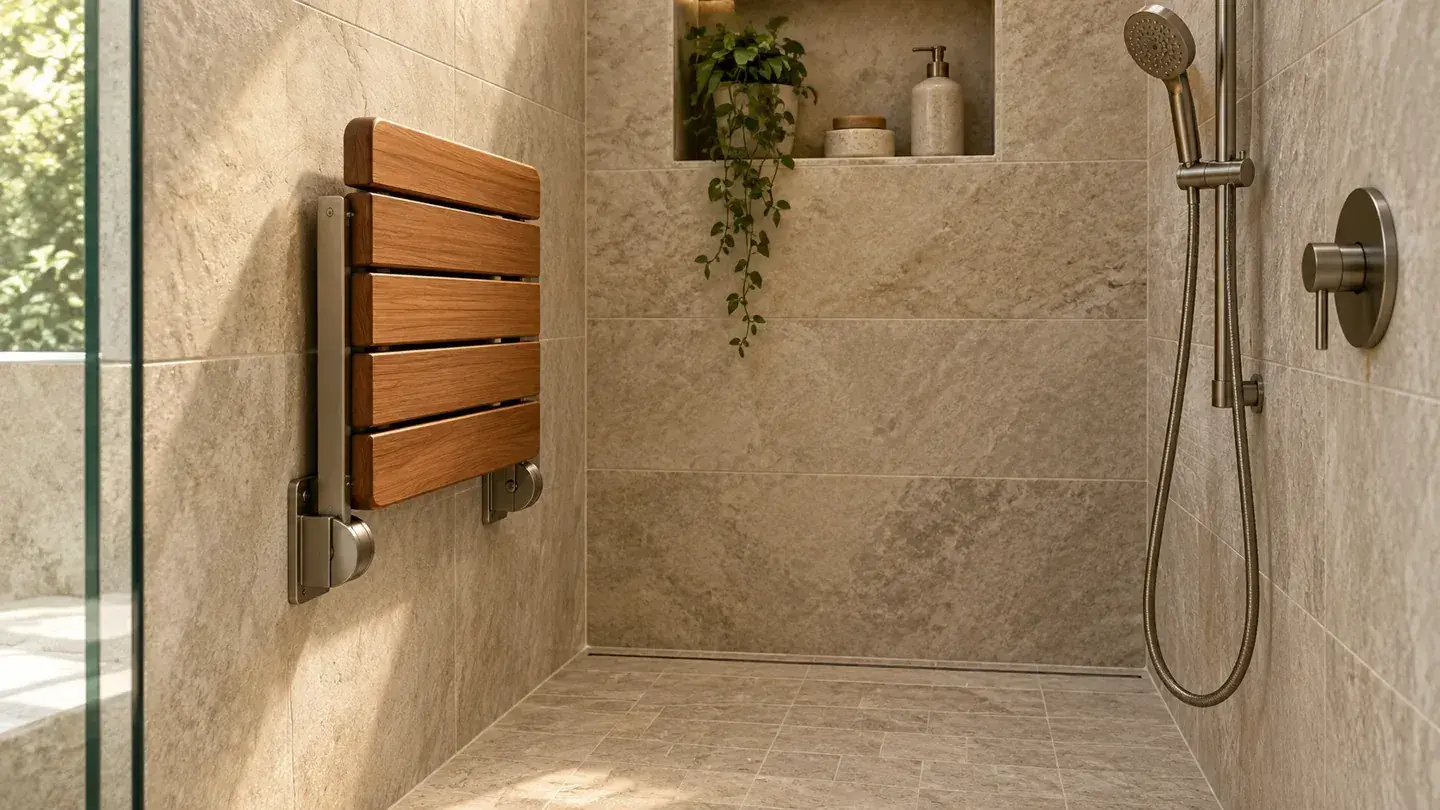
A folding seat can leave more standing room when raised than a permanent full-depth bench. The important question is whether it works safely for the intended user when lowered, with the door closed and controls within reach.
Use a purpose-built product, its current load rating, and its specified support requirements. Moen's shower seating resource provides model-specific installation and support links, including folding seating.
Ask the installer to coordinate backing, fixing, and waterproofing before the wall is finished. Do not choose mounting points from a decorative rendering. If transferring onto a seat or using mobility equipment is involved, get advice specific to the user and layout. A freestanding shower chair may suit some needs better, despite occupying floor area.
7. Combine Bathing and Showering in One Alcove
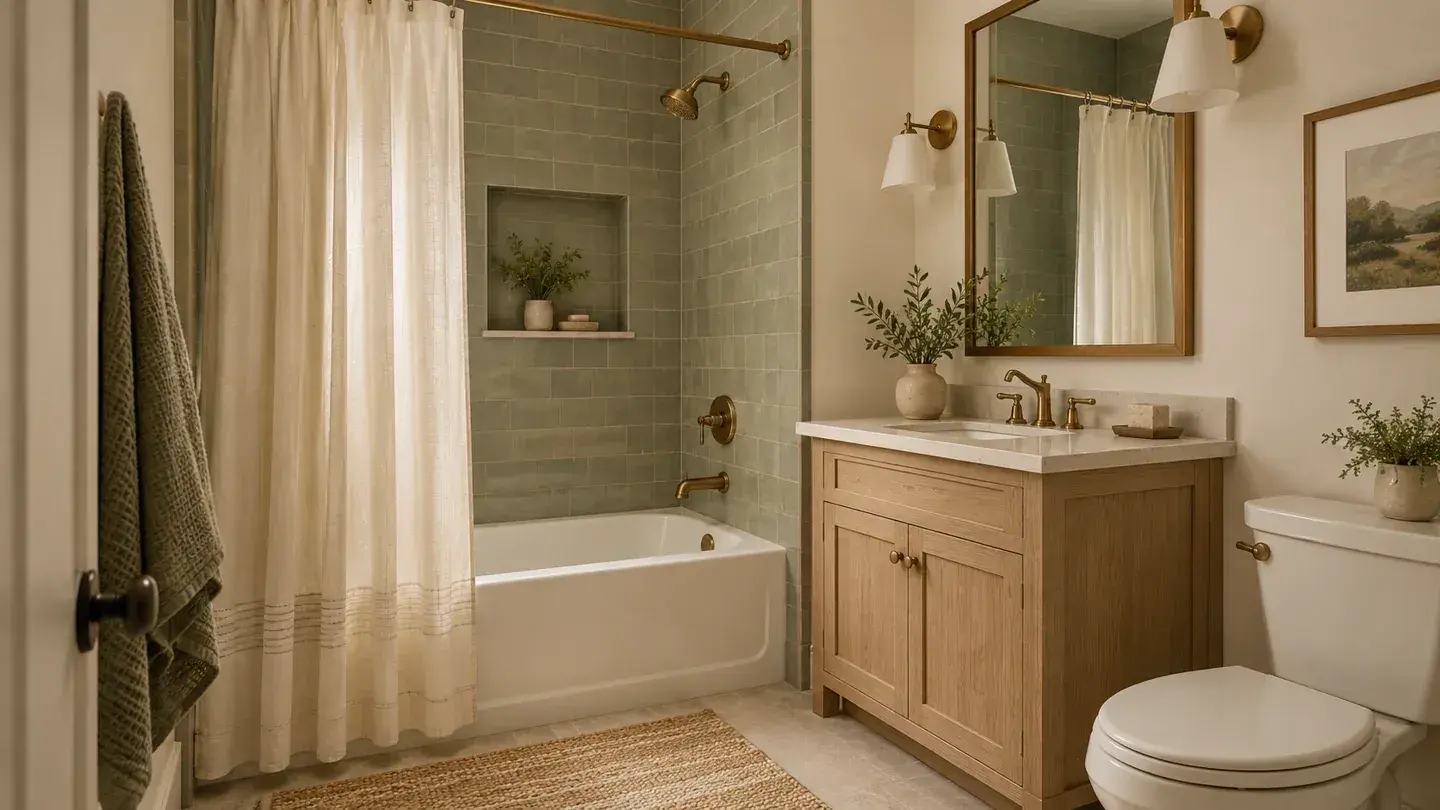
If your household still uses a bathtub, a tub-shower combination can preserve both functions in one footprint. Removing the tub is not the only way to improve a small bathroom.
Consider whether a simpler curtain or compatible bath screen would make the existing arrangement easier to use. Review the landing area beside the tub, towel reach, and storage before buying a new enclosure.
This choice has a clear limitation: users must negotiate the tub side. It may not suit someone who needs easier entry or a level shower approach. Treat the decision as a household-use question rather than an assumption about resale value. Keep the tub if it serves a real purpose and can be used comfortably; explore a dedicated shower if it does not.
Compare the Problem, Not Just the Picture
| Feature | Option to investigate | Essential check |
|---|---|---|
| Shower door hits a fixture | Sliding or inward-folding door | Actual clear opening and hardware movement |
| Enclosure crowds a corner route | Neo-angle enclosure | Standing area and entry direction |
| Rigid glass feels restrictive | Suitable curtain arrangement | Water containment |
| Bottles occupy standing space | Niche during renovation | Waterproofing and reach |
| A fixed bench dominates the shower | Purpose-built folding seat | User needs and structural support |
| You need both bathing functions | Tub-shower combination | Comfortable tub entry |
Choose one change that solves the dominant problem, then ask the installer to show how it interacts with the rest of the bathroom. Include plumbing, waterproofing, ventilation, and applicable local requirements in that review. The best result gives you a comfortable daily routine, not merely the smallest possible enclosure.
Sources
- DreamLine's Butterfly-S product information. Checked October 5, 2026
- Schluter's prefabricated niche documentation. Checked October 5, 2026
- Moen's shower seating resource. Checked October 5, 2026
Share this article
Get new guides by email
Practical home articles and free resources. No spam, and you can unsubscribe at any time.
Keep reading

15 Icy Blue Bedroom Paint Ideas for 2026
Explore 15 icy blue bedroom paint ideas, from accent walls to blue ceilings, with warm pairings and practical sampling tips for 2026.
October 2026, 6 min read
Neo Deco Living Room Ideas: How to Get the Look on a Budget
Create a budget Neo Deco living room with curves, geometric patterns, metallic accents, jewel tones, and balanced furniture styling.
October 2026, 3 min read
15 Smart Small Laundry Room Stackable Washer Dryer Ideas
Explore 15 smart small laundry room stackable washer dryer ideas. Compare illustrated concepts, practical layout tips, and planning checks.
October 2026, 6 min read