The Best Peel-and-Stick Backsplash for Minimizing Wall Damage
Choose a peel-and-stick backsplash by wall condition, removal instructions and heat limits, with a realistic approach to protecting paint in a rental.
By Home Crane Editors. . 4 min read.
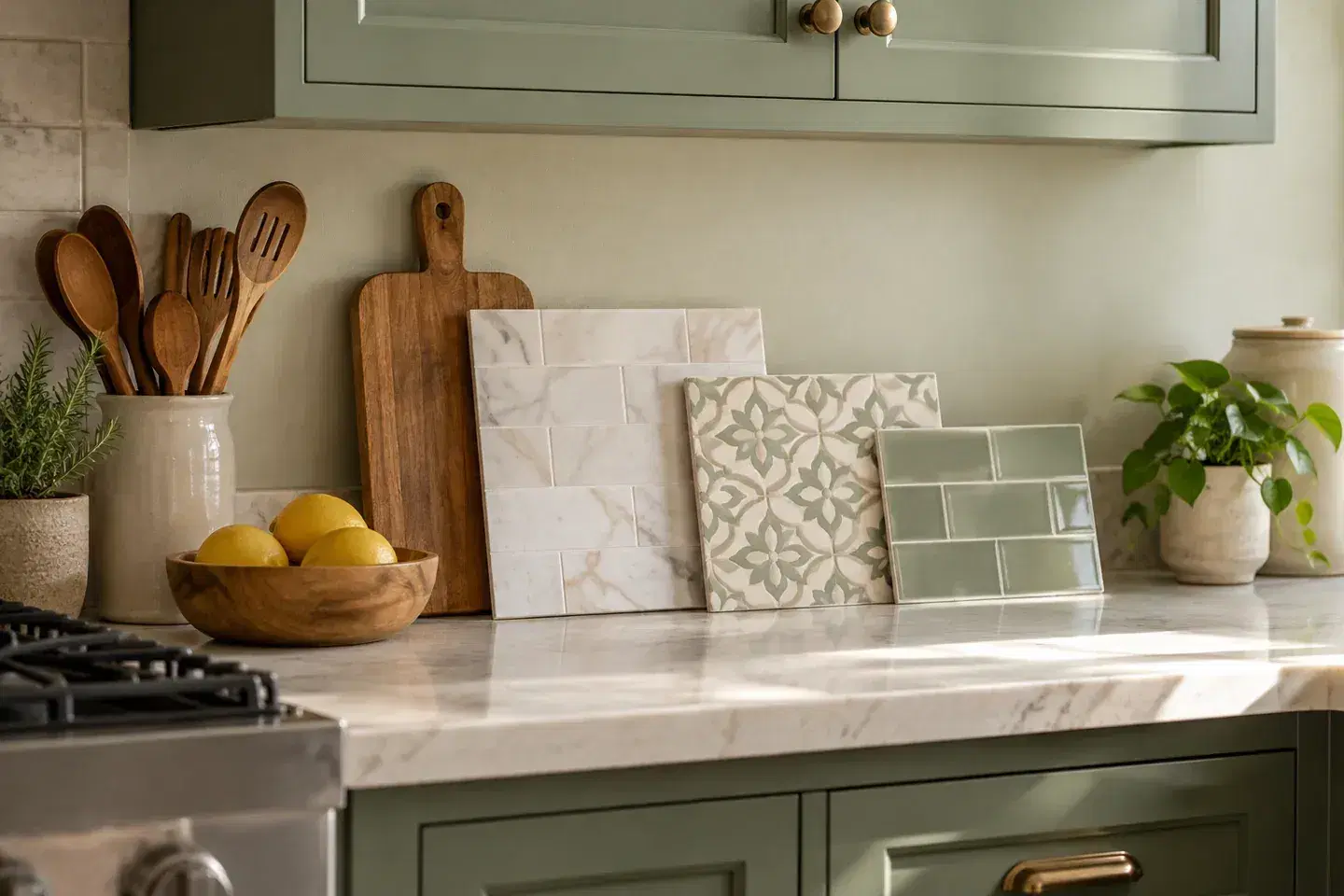
No adhesive backsplash can guarantee damage-free removal from every painted wall. The most useful choice is a lightweight product with clear substrate, preparation, heat, and removal instructions, installed on a sound approved surface. In a rental where even paint repair is unacceptable, a landlord-approved separate panel may be a better approach than sticking tiles directly to drywall.
Smart Tiles is one product line worth evaluating because its manufacturer publishes installation and removal guidance. That is a reason to investigate it, not proof that it will leave your particular wall untouched. This guide compares the conditions that matter rather than claiming hands-on testing or ranking products by unsupported promises.
1. Inspect the wall before choosing the tile
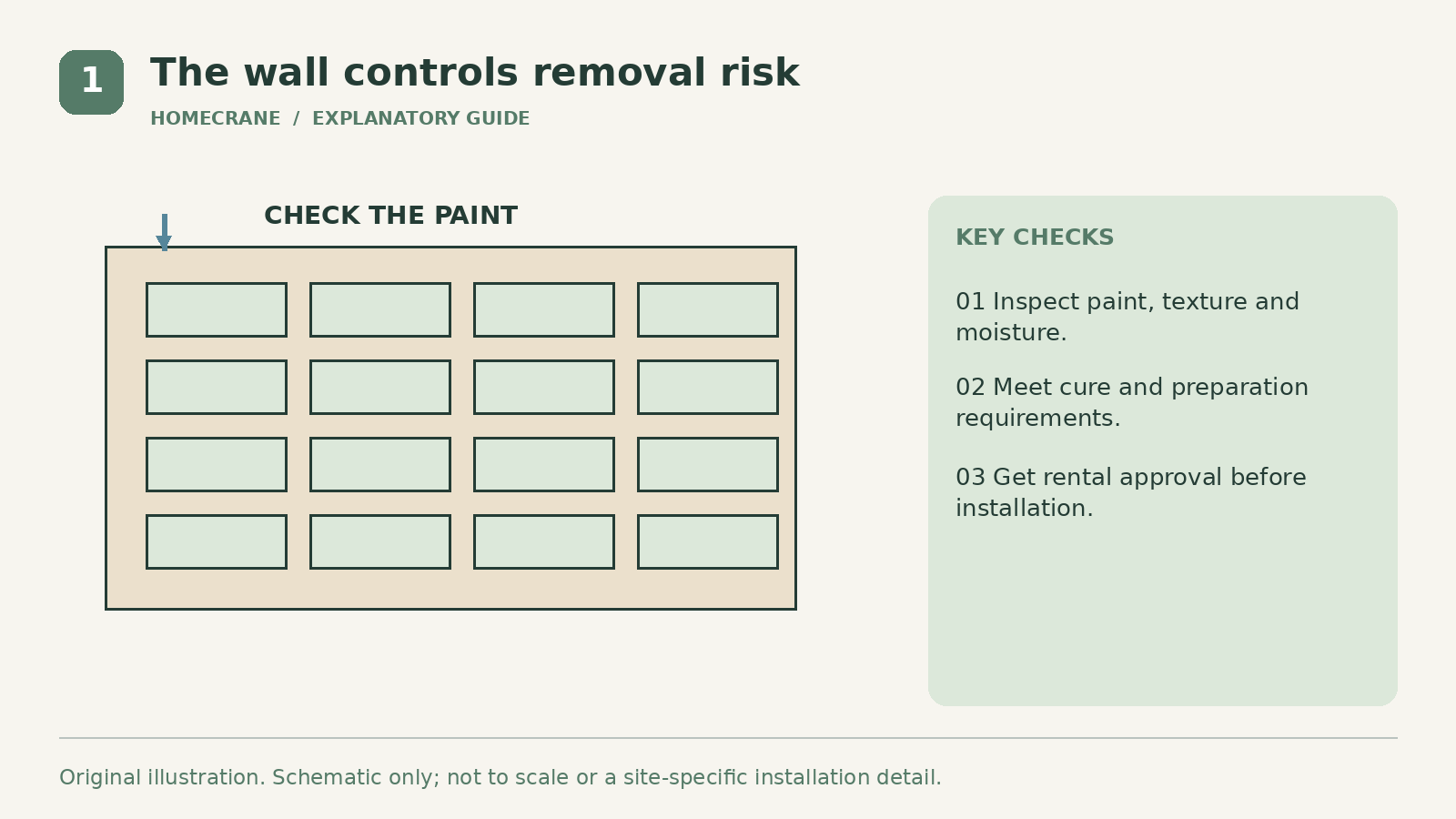
Check for peeling paint, chalky residue, dampness, heavy texture, grease, and loose wallpaper. The adhesive can only hold as reliably as the layer beneath it. A strong bond to weak paint may remove the paint when the tile comes off.
Smart Tiles' surface guidance lists smooth, even surfaces and gives a 21-day wait for freshly painted drywall. That is the company's stated requirement, not a universal cure time for every paint or backsplash. If the paint maker requires longer, resolve the compatibility before installation.
Ask your landlord for approval and clarify what restoration is expected. Save the paint color and finish information if available. A verbal description such as "renter-friendly" is less useful than knowing whether touch-up painting is allowed and who is responsible for it.
Smooth existing tile may provide a more robust substrate than poorly prepared drywall, but removal can still leave residue. Check grout depth, surface texture, and the product's approved preparation method before choosing that route.
2. Compare products by instructions, not the label alone
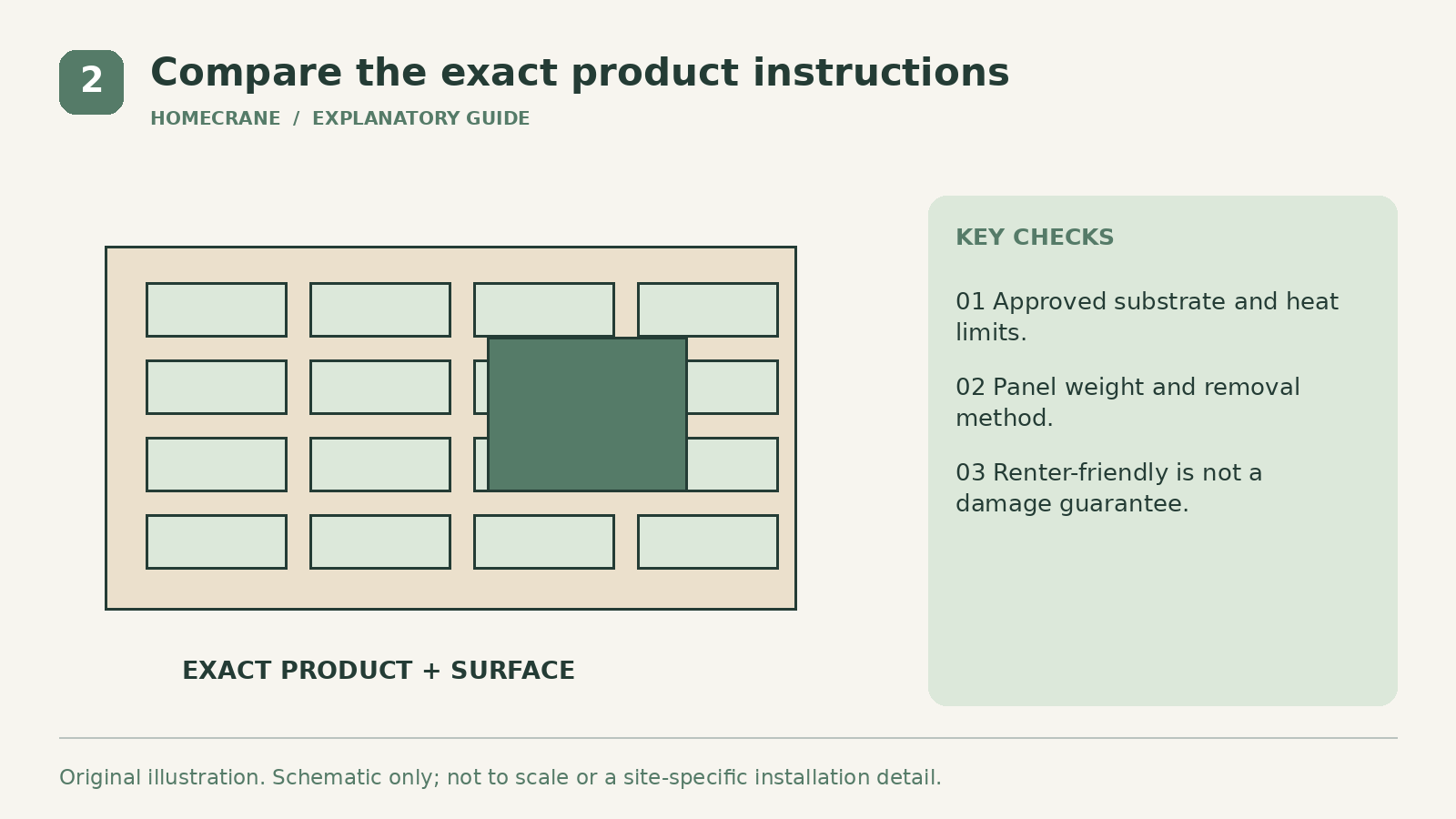
Look for the permitted substrates, temperature limits, cleaning method, and clearance requirements around cooking appliances. Do not assume every peel-and-stick product is suitable behind a range. Appliance requirements and backsplash instructions both matter.
Check the material and panel weight. A thin decorative adhesive sheet is different from a heavy stone-faced or metal tile. They can require different preparation, edge treatments, and removal methods. Buy the exact product you researched, not a visually similar substitute with different instructions.
| Feature | What a useful answer includes | |
|---|---|---|
| Can it go on my wall? | Specific approved substrate and preparation | |
| Can it go behind the stove? | Written heat and clearance requirements | |
| How is it removed? | A defined method and surface limitations | |
| What happens to paint? | An honest damage caveat | |
| Can I test it? | A small sample and realistic removal trial |
Avoid relying on online before-and-after photographs as evidence of long-term removal performance. They rarely show paint quality, installation duration, humidity, or the repair work after removal.
3. Run a small installation and removal trial
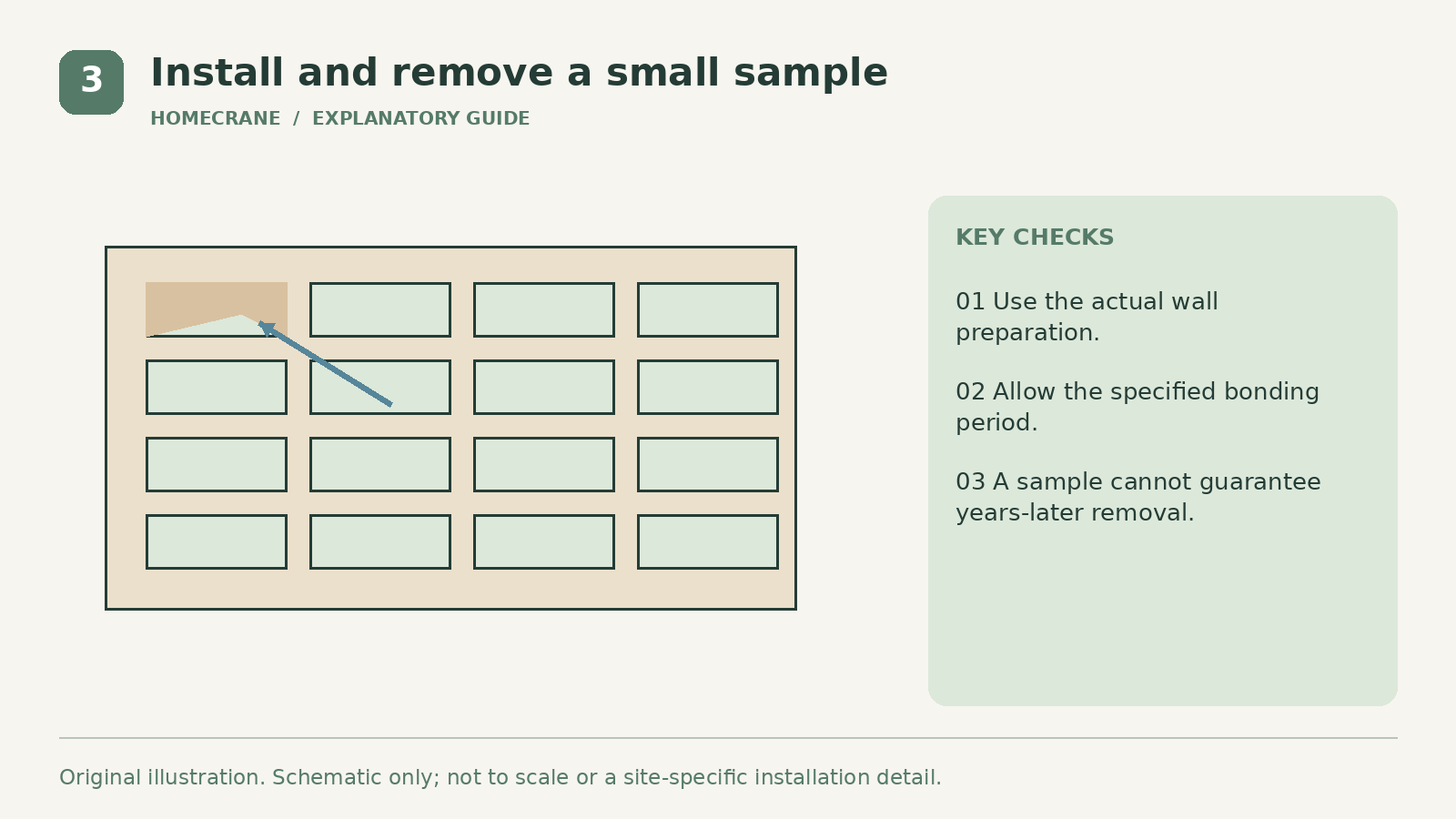
Choose a discreet area on the same wall with the same finish. Prepare it exactly as directed and install a sample. Follow the product's bonding instructions before attempting a removal trial. A corner peeled off immediately may not represent an adhesive that has been in place for months.
Smart Tiles' FAQ describes warming tiles with a hair dryer and peeling them carefully, while qualifying removal by the original surface. Follow the current product method and avoid excess heat around outlets, finishes, or nearby materials.
Inspect the test area for paint lifting, paper damage, residue, and changed sheen. Photograph the result. A successful sample reduces uncertainty, but it cannot promise identical results after years of heat, moisture, and aging.
Do not introduce a layer of ordinary masking tape, contact paper, or another improvised barrier unless the backsplash maker approves the complete arrangement. The barrier can fail, damage paint itself, or change heat performance. An untested sandwich of adhesives is not automatically safer.
4. Plan removal and restoration before covering the wall
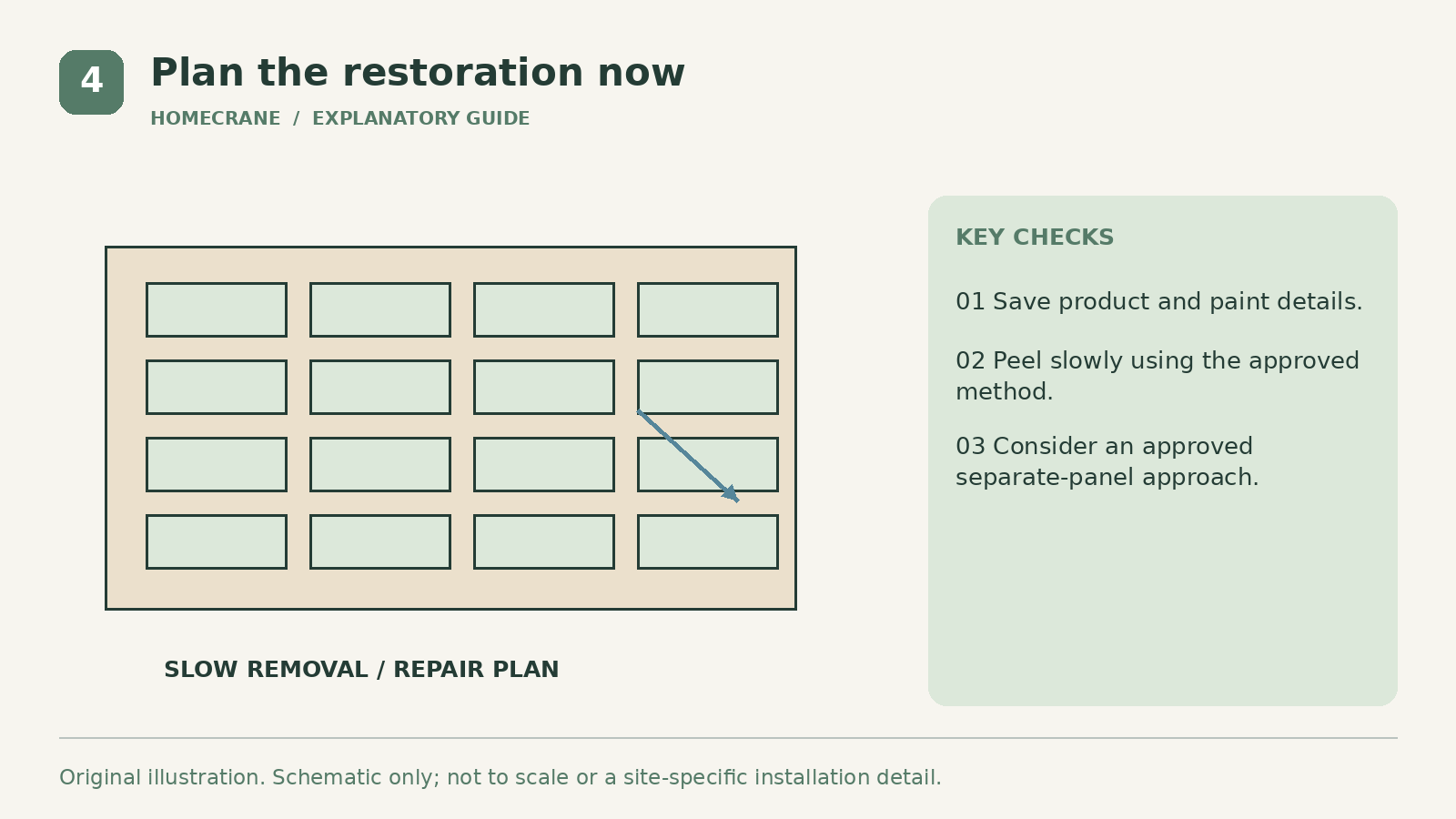
Keep the product name, instructions, remaining sample, and wall-paint information. Those records matter when the room changes hands or you move. Test any adhesive remover on the finish and confirm compatibility with the wall and nearby surfaces.
Remove slowly using the specified technique. Support the material as it releases and stop if drywall paper or paint begins tearing. Do not pull a large panel rapidly away from the wall in the hope that speed will reduce damage.
If direct adhesion is unsuitable, discuss a separate backsplash panel with the landlord or installer. It still needs secure, appropriate attachment and appliance clearance, so it is not automatically a no-damage option. Its advantage is that the attachment and restoration scope can be defined in advance.
For a property you own, accepting a little future patching may be reasonable. For a rental with a strict deposit policy, the same product may be the wrong choice. The best option depends on how much restoration risk you can accept.
What is the best brand that definitely will not damage walls?
There is no defensible universal answer. A documented product such as Smart Tiles can be evaluated on an approved surface, but the wall condition and removal process remain decisive.
Can I install it over fresh paint this weekend?
Only if both the coating and tile instructions permit the actual cure time. Dry-to-touch paint is not necessarily ready for a strong adhesive.
Will it waterproof the wall?
Do not treat a decorative backsplash as a shower waterproofing system. Use it only in the environments and exposure conditions the manufacturer allows.
Sources
- Smart Tiles' surface guidance. Checked October 11, 2026
- Smart Tiles' FAQ. Checked October 11, 2026
Share this article
Get new guides by email
Practical home articles and free resources. No spam, and you can unsubscribe at any time.
Keep reading
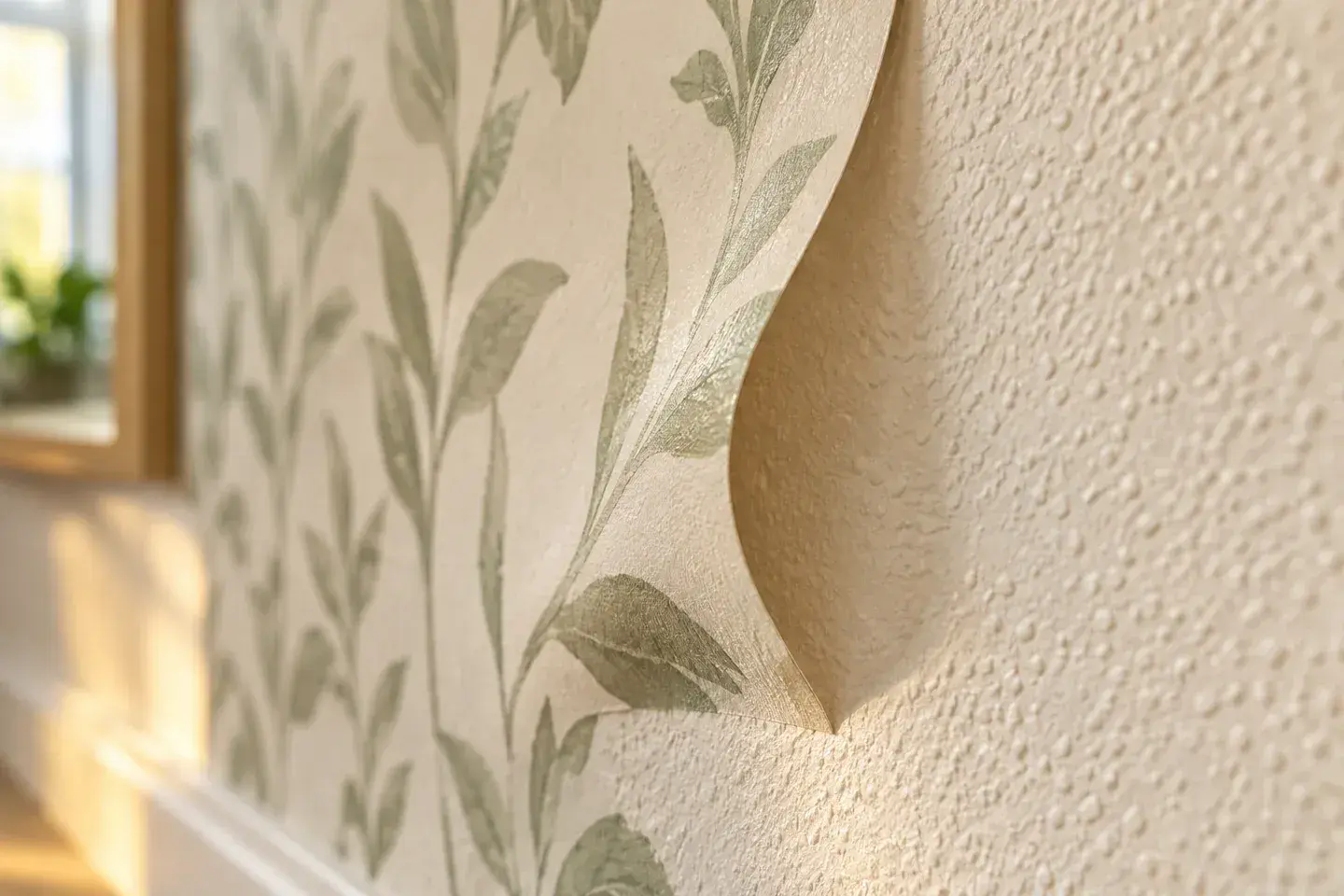
Does Peel and Stick Wallpaper Work on Textured Walls?
Sometimes a manufacturer permits a limited texture, but many peel and stick wallpapers require a smooth, flat surface. Texture reduces the contact area.
October 2026, 3 min read

The Most Durable House Siding Options for Wisconsin Winters
Compare siding options for Wisconsin winters, including fiber cement, engineered wood, steel, and vinyl, with installation and maintenance considerations.
October 2026, 4 min read
15 Eco Friendly Sustainable Architecture Materials to Use in Your Build
Explore 15 sustainable building materials to consider with illustrated concepts, practical design tips, and planning checks for your US home.
October 2026, 5 min read