The Best Soundproofing Material for Thin Shared Apartment Walls
Understand apartment wall soundproofing materials, absorption versus transmission, approved wall assemblies and realistic options for renters.
By Home Crane Editors. . 4 min read.
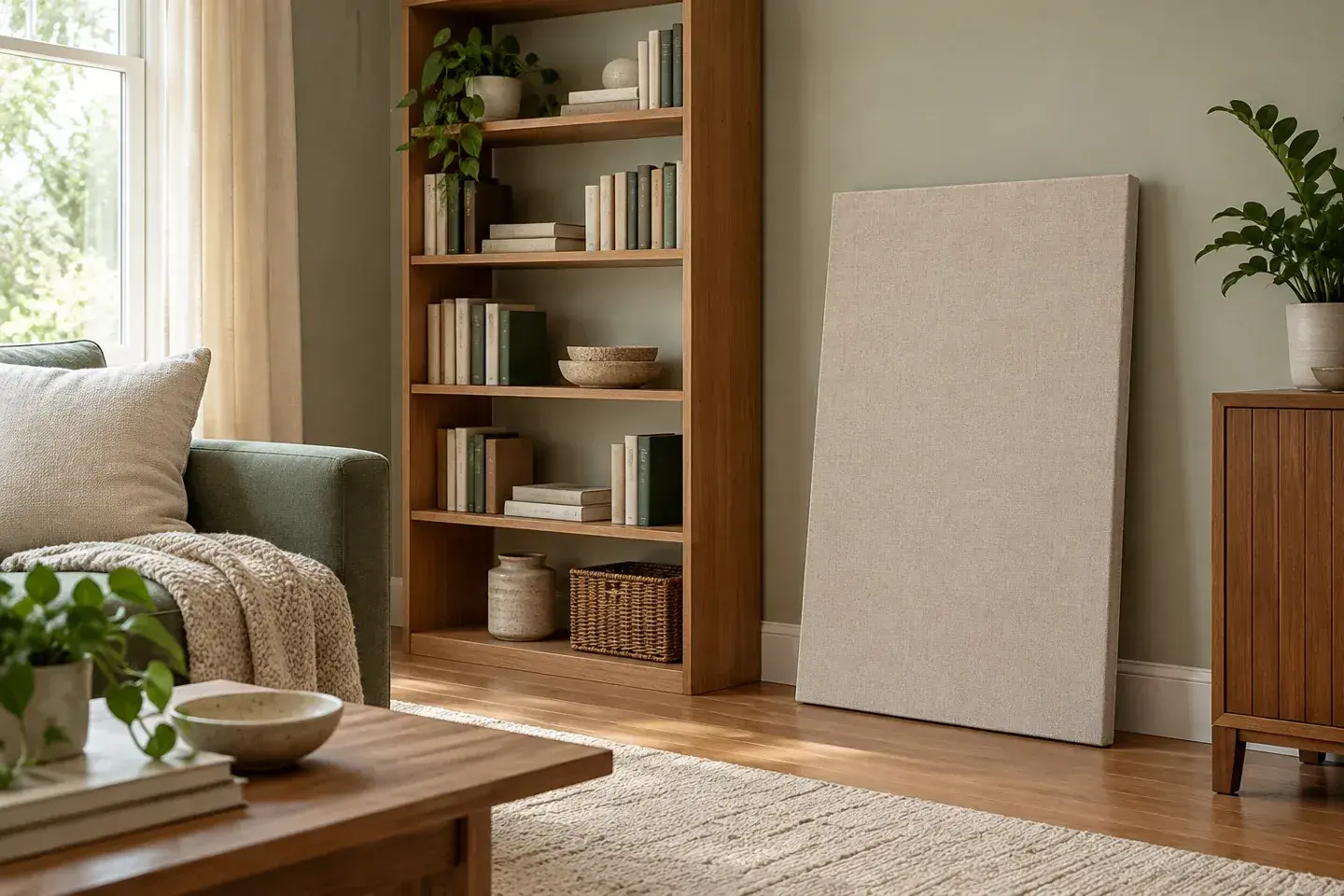
There is no single material that reliably soundproofs a thin shared wall by itself. For an authorized wall renovation, cavity insulation can contribute to a tested assembly that also controls gaps, mass, and structural connections. For a renter who cannot alter the wall, practical improvements are more limited.
The first question is what you hear. Voices through a gap, bass through the building structure, footsteps above, and echo inside your own room are different problems. Buying foam panels before identifying the path can spend money without addressing the noise.
This guide does not promise a decibel reduction or rank products from firsthand testing. It explains which material roles are worth discussing with a landlord, contractor, or acoustics professional.
1. Separate room echo from sound coming through the wall
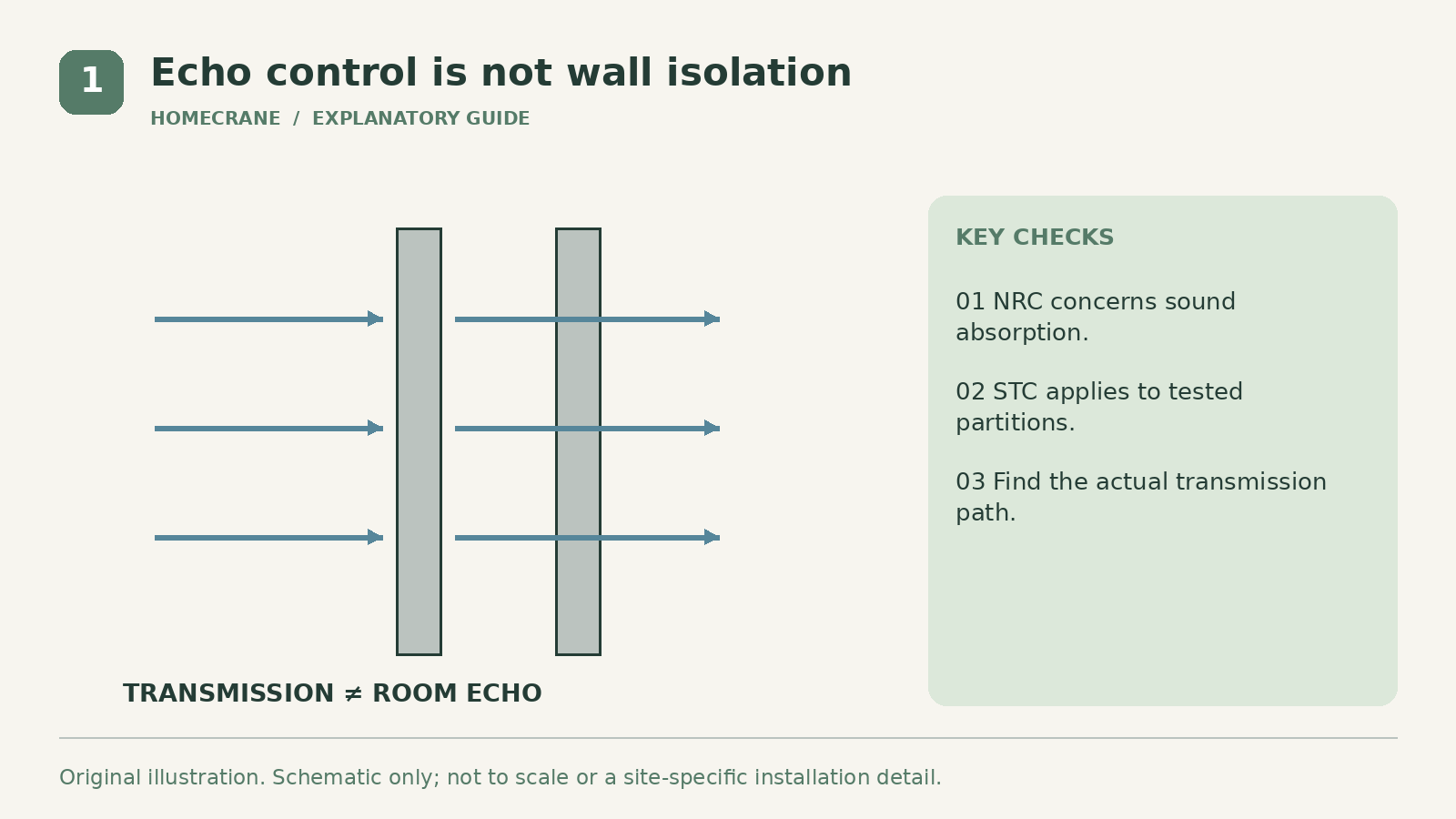
Soft furnishings and acoustic panels absorb some sound within a room. That can improve speech clarity and reduce reverberation, but it does not automatically prevent a neighbor's sound from reaching you.
USG's Acoustics 101 distinguishes sound absorption from sound transmission. NRC is associated with absorption, while STC describes airborne sound isolation of a tested partition or assembly. A high NRC label on a decorative panel is not proof of high wall isolation.
Listen at normal room locations and note when the noise occurs. Does it seem concentrated at a door, vent, wall junction, or service penetration? Do not open electrical boxes or remove firestopping to investigate. Record observations for the building manager instead.
Bass and impact noise can travel through connections outside the apparent shared wall. Improving only one surface may leave those paths unchanged. An acoustic assessment is useful when the disturbance is substantial or an expensive renovation is proposed.
2. Use cavity insulation as part of a complete approved assembly
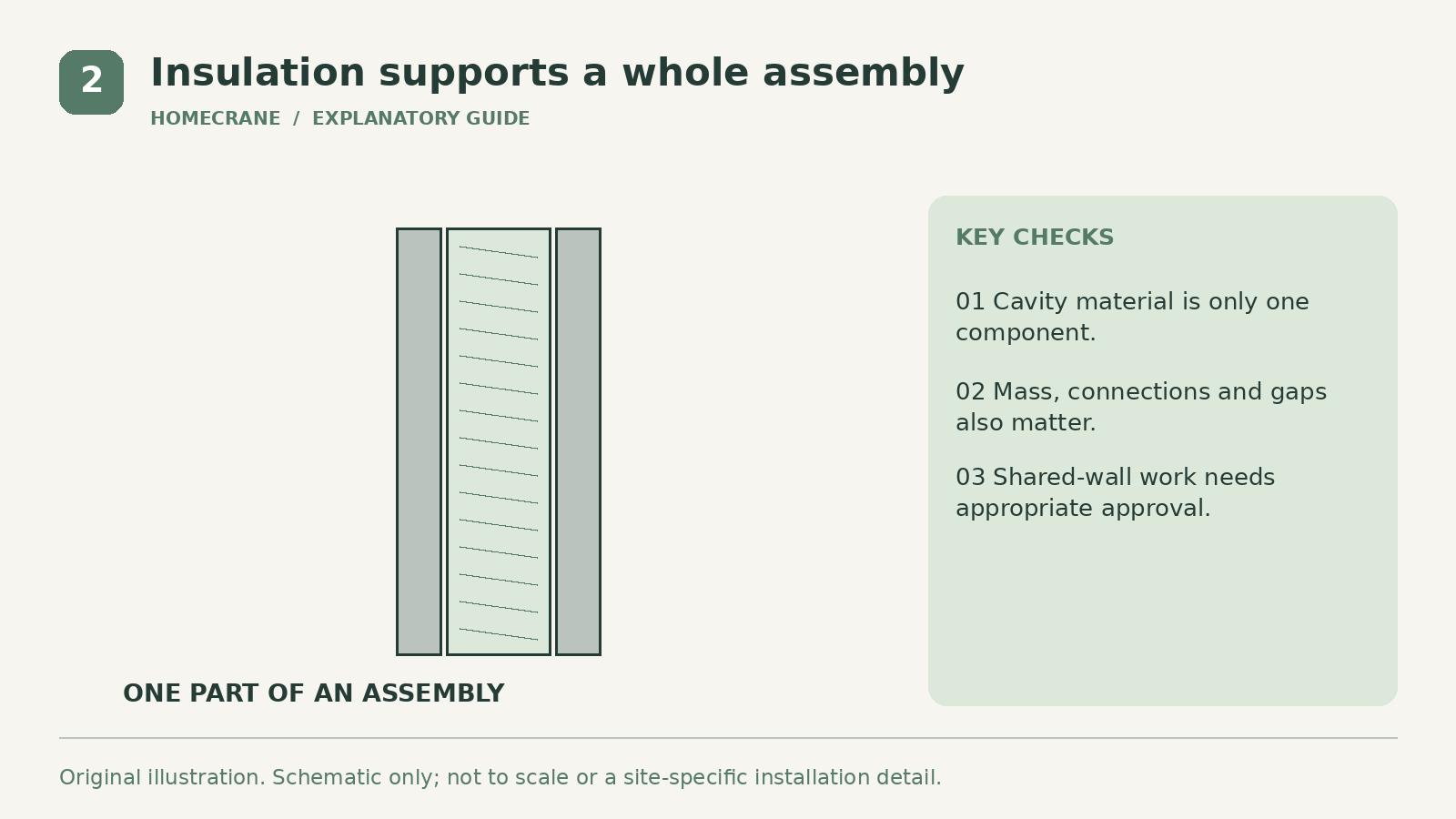
Mineral wool and fiberglass can absorb sound energy within suitable wall cavities. Their performance depends on the wall design, installation, and other layers. Neither should be described as a magic sheet that blocks all neighbor noise.
ROCKWOOL's acoustic-wall guidance describes cavity insulation as part of wall systems. It is a relevant example of the material's role, but manufacturer claims for particular assemblies should not be transferred to an unknown apartment wall.
For an authorized renovation, ask for a tested wall assembly and the exact materials and installation details. Extra board layers, decoupling components, and appropriate perimeter treatment may be considered together. A change to one part can affect acoustic and fire performance.
Do not install exposed insulation as a decorative wall covering or stuff it into electrical openings. Shared apartment walls can be fire-resistance-rated assemblies. Changes require the owner's approval and appropriate design and installation.
Ask how the proposed work handles floor, ceiling, sidewall, and service connections. A high-performing center section with untreated leakage paths may disappoint in the actual room.
3. Treat gaps and penetrations without damaging fire protection
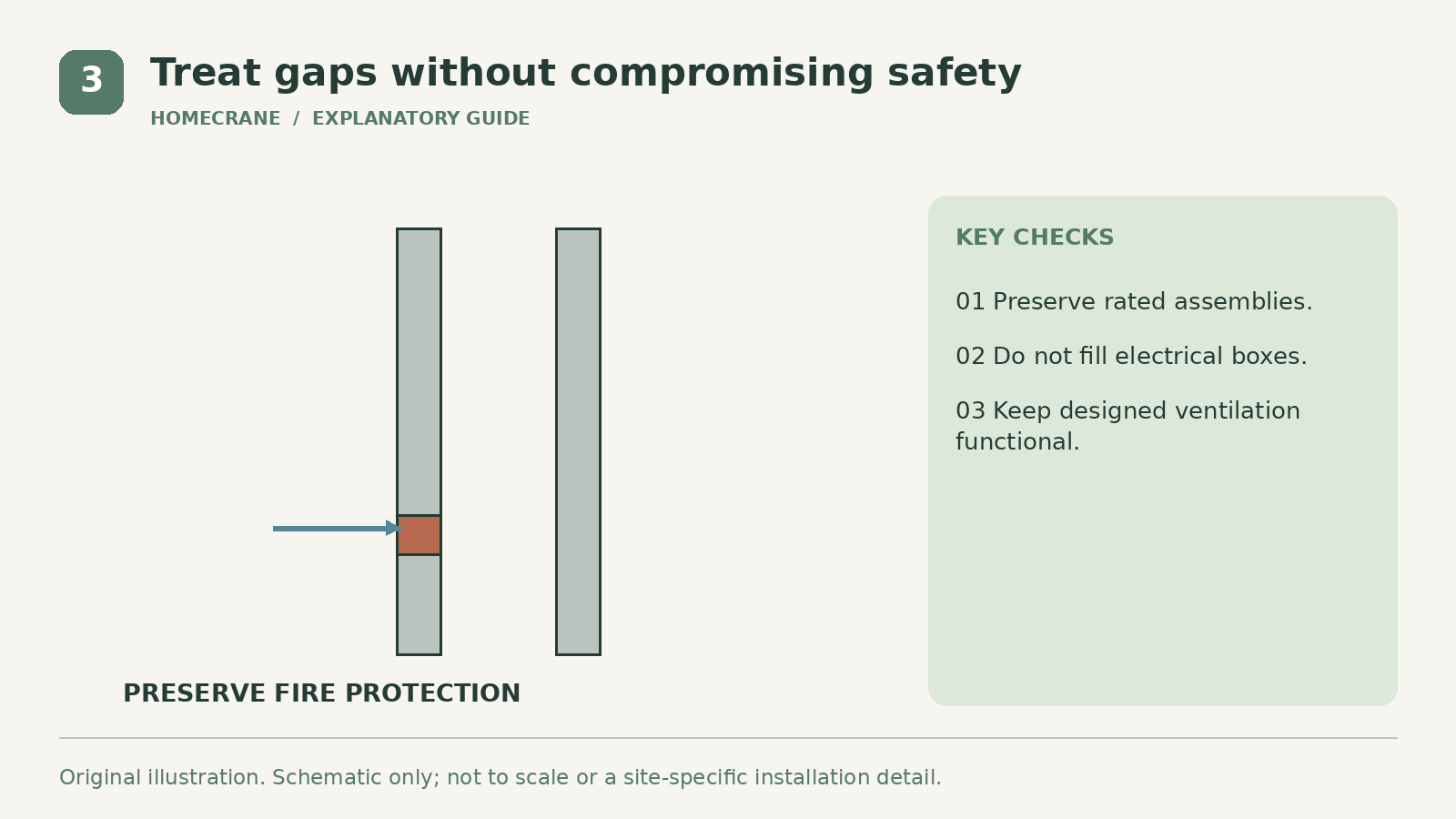
Air paths can carry sound, but sealing them requires the correct materials and details. Ordinary craft foam is not a substitute for a specified acoustic or firestop product. Some gaps are intentional ventilation paths and should not be blocked.
Have the building manager assess damaged seals, missing covers, or obvious construction defects. Electrical and plumbing penetrations should be handled by qualified personnel where required. Do not fill an outlet box or spray foam around unknown wiring.
If sound mainly enters through the apartment entry door or a connecting door, wall panels may address the wrong location. Door seals and thresholds must preserve required operation, fire performance, and ventilation. The building's approved repair method should control the work.
Ask the contractor to document the assembly before it is closed. Request product names and the tested detail used, not just a receipt for a product marketed as "soundproof." That documentation helps distinguish a designed improvement from a collection of materials.
4. Set realistic expectations for renter-friendly measures
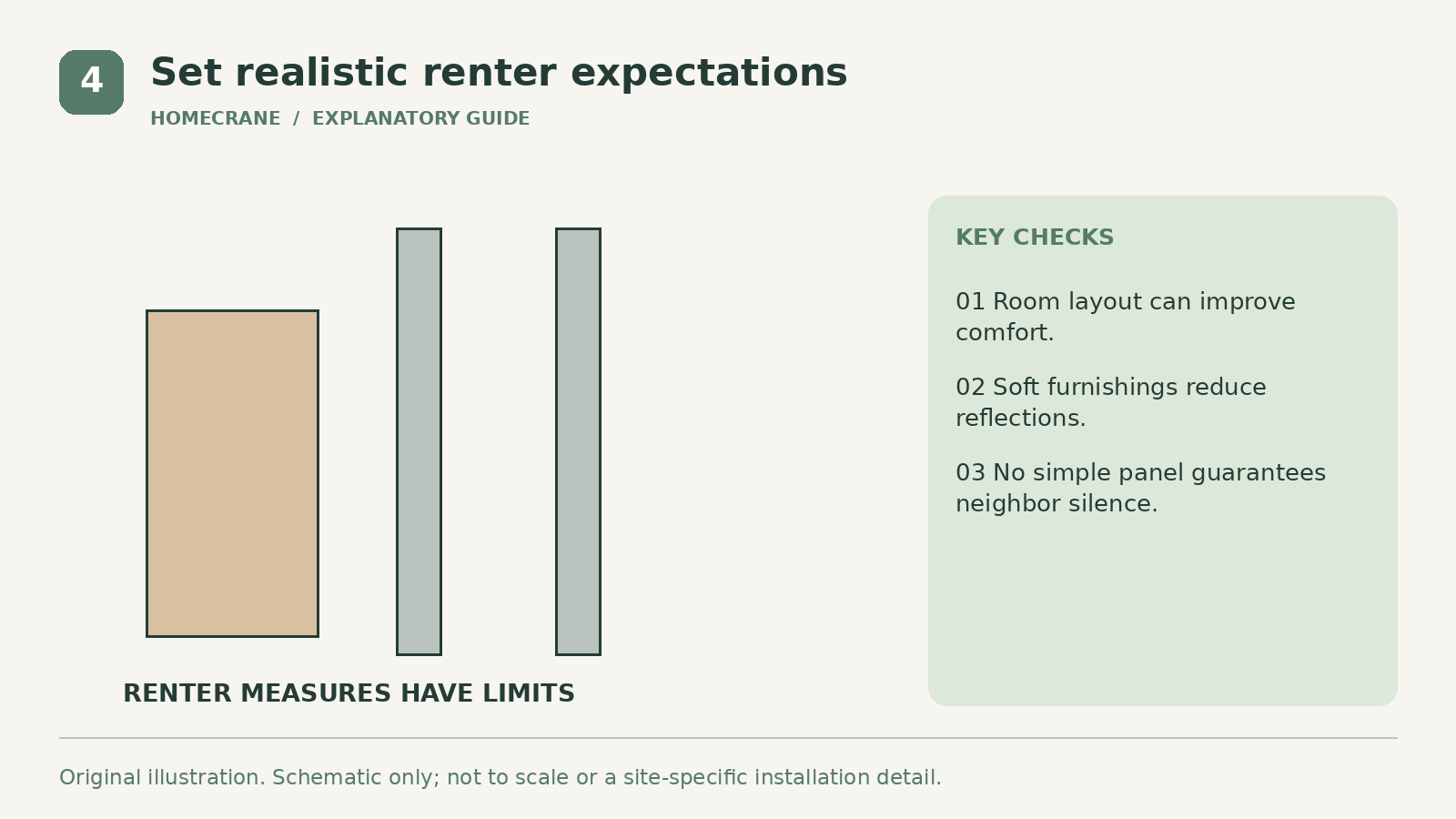
Moving the bed or desk away from the shared wall can reduce how intrusive the sound feels at the main listening position. A well-filled bookcase may change room acoustics, but it is not a rated wall upgrade. Secure furniture appropriately and do not block exits, heaters, or ventilation.
Rugs, curtains, and soft furnishings can reduce echo in your own room. They are useful for comfort, especially in a sparsely furnished space, but do not promise that they will stop loud voices or bass through the structure.
Sound masking at a comfortable level can make intermittent noise less noticeable for some people. It does not reduce transmission through the wall, and raising playback volume excessively is not a good solution. Address the source and building conditions where possible.
Keep a factual noise log with times, type of sound, and its effect. Use it in a practical conversation with management. A repair request describing a suspected gap or loose door is easier to investigate than a general demand for a "soundproof room."
| Feature | Main role | Limitation |
|---|---|---|
| Acoustic panel | Reduces room reflections | Usually modest effect on wall transmission alone |
| Cavity mineral wool or fiberglass | Supports suitable wall assembly performance | Requires access and approved construction |
| Additional board or decoupling system | Can improve a designed assembly | Installation details and flanking paths matter |
| Appropriate gap treatment | Addresses a specific leakage path | Must preserve fire and ventilation requirements |
Which material should I buy first?
For a rental, start with diagnosis and owner permission before buying construction materials. For a renovation, buy the components of a specified assembly rather than selecting insulation in isolation.
Does the highest STC guarantee silence?
No. Laboratory assembly ratings do not fully predict every building, frequency, or flanking path. Ask what improvement is realistic for the actual noise source.
Sources
- USG's Acoustics 101. Checked October 11, 2026
- ROCKWOOL's acoustic-wall guidance. Checked October 11, 2026
Share this article
Get new guides by email
Practical home articles and free resources. No spam, and you can unsubscribe at any time.
Keep reading
Does Peel and Stick Wallpaper Work on Textured Walls?
Sometimes a manufacturer permits a limited texture, but many peel and stick wallpapers require a smooth, flat surface. Texture reduces the contact area.
October 2026, 3 min read

The Most Durable House Siding Options for Wisconsin Winters
Compare siding options for Wisconsin winters, including fiber cement, engineered wood, steel, and vinyl, with installation and maintenance considerations.
October 2026, 4 min read

15 Eco Friendly Sustainable Architecture Materials to Use in Your Build
Explore 15 sustainable building materials to consider with illustrated concepts, practical design tips, and planning checks for your US home.
October 2026, 5 min read