The Most Durable Paint Finish for High-Traffic Hallways
Compare satin, eggshell, and semi-gloss for busy hallways. Learn how preparation, paint formulation, curing, and cleaning affect durability.
By Home Crane Editors. . 4 min read.
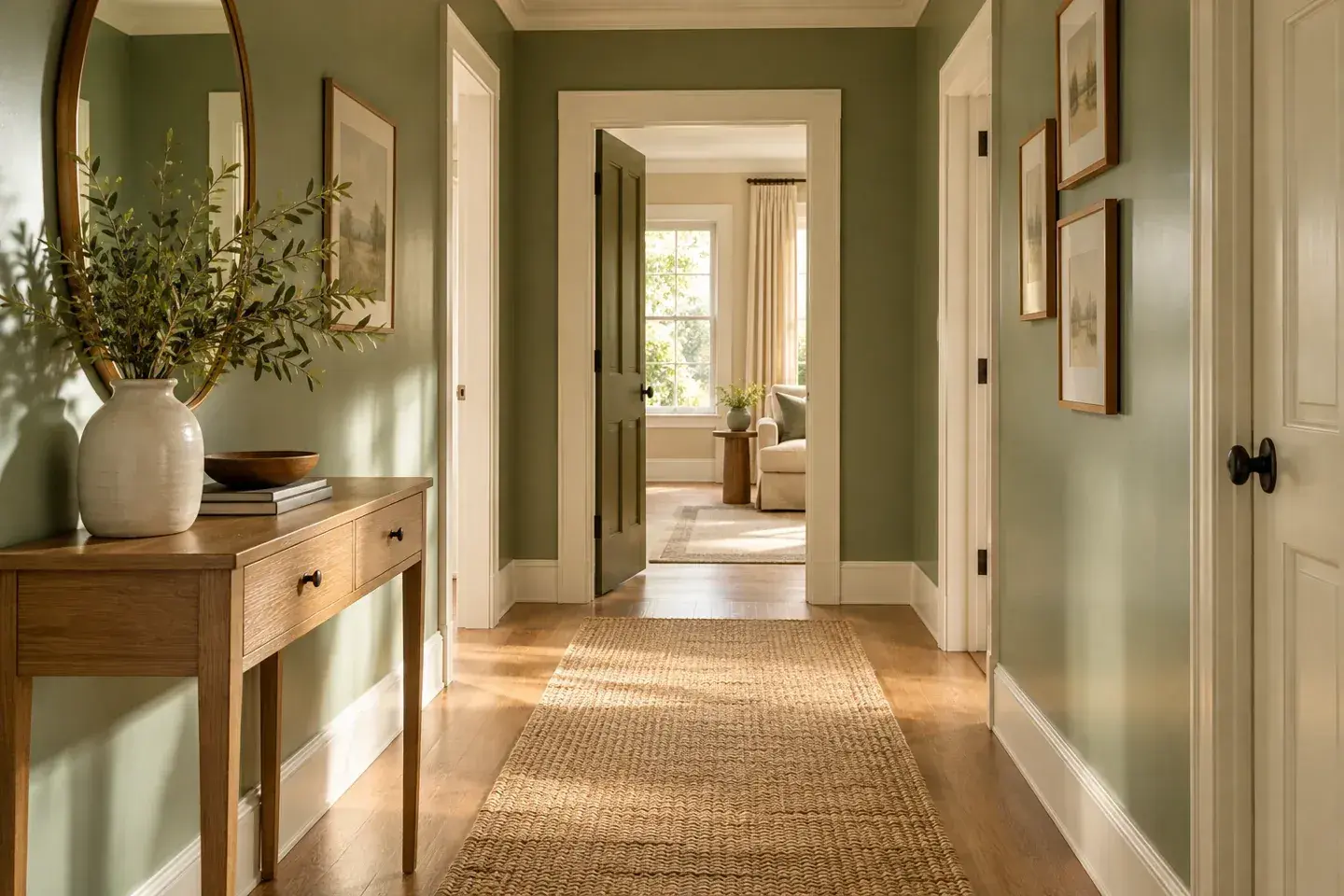
For most busy hallways, a washable satin wall paint is a practical starting point. It balances cleaning ability with a moderate sheen. A high-performance eggshell can be preferable when side lighting reveals wall imperfections, while semi-gloss is often better reserved for trim and doors.
Sheen alone does not determine durability. The paint formulation, surface preparation, cure time, and cleaning method all affect how the finish holds up. A quality scuff-resistant eggshell may be a better hallway choice than a basic satin selected only because it looks shinier.
1. Choose satin for a balanced everyday finish
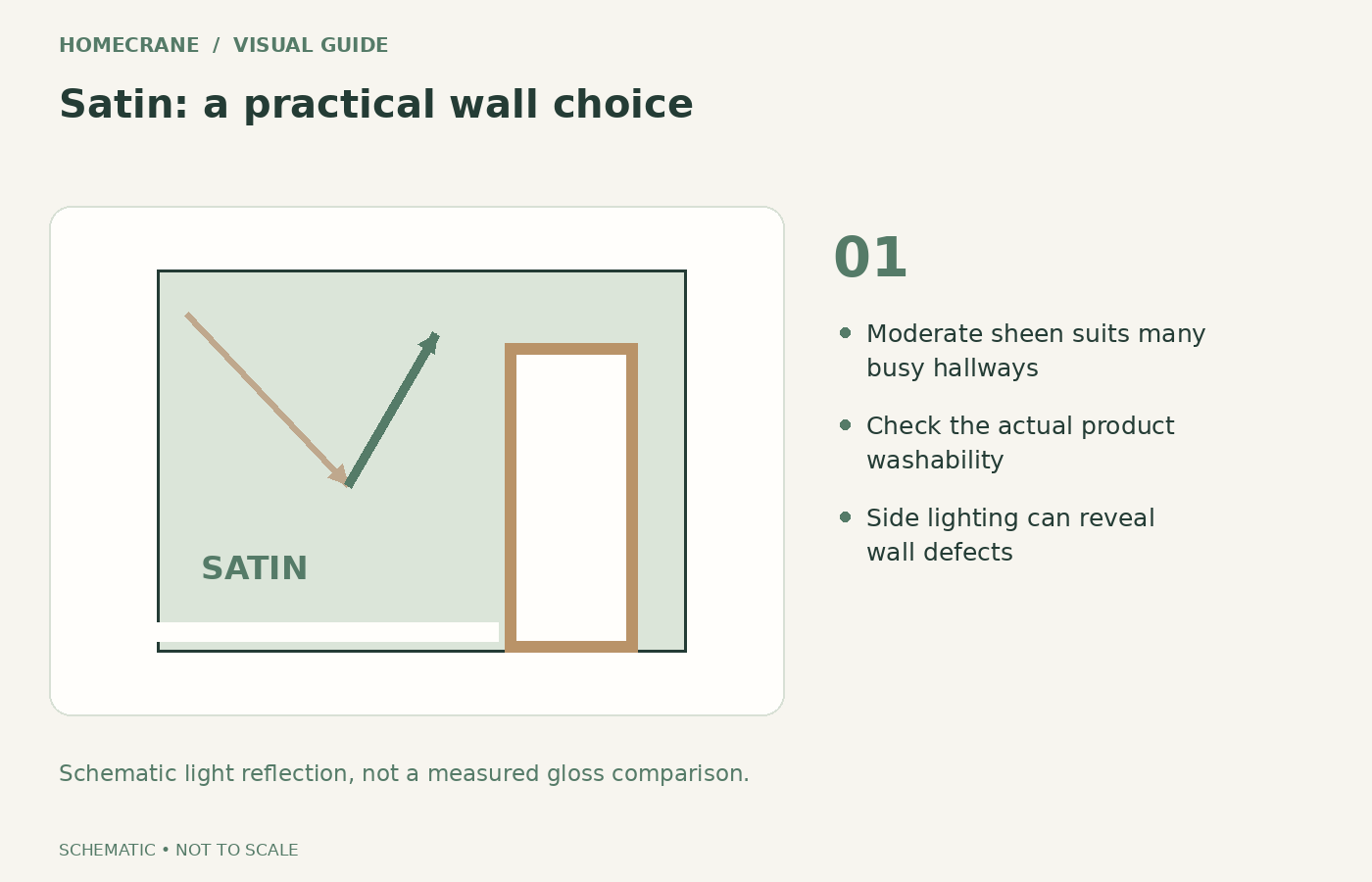
Satin offers a gentle reflection and is commonly used on surfaces that need regular cleaning. In a family hallway, that can make fingerprints and everyday marks easier to manage without the pronounced shine of semi-gloss.
It also reveals more surface texture than flat paint. Before choosing a color and sheen, examine the wall when daylight enters from the end of the hall. Patches, roller texture, and old repairs can become more obvious under that light.
Benjamin Moore's finish guide lists eggshell and pearl/satin among high-traffic wall options. Use that as a selection starting point, not a guarantee that every manufacturer's satin looks or performs identically. Buy a sample or test area in the actual product line when possible, and inspect it both during the day and under evening lighting.
2. Consider performance eggshell for imperfect walls
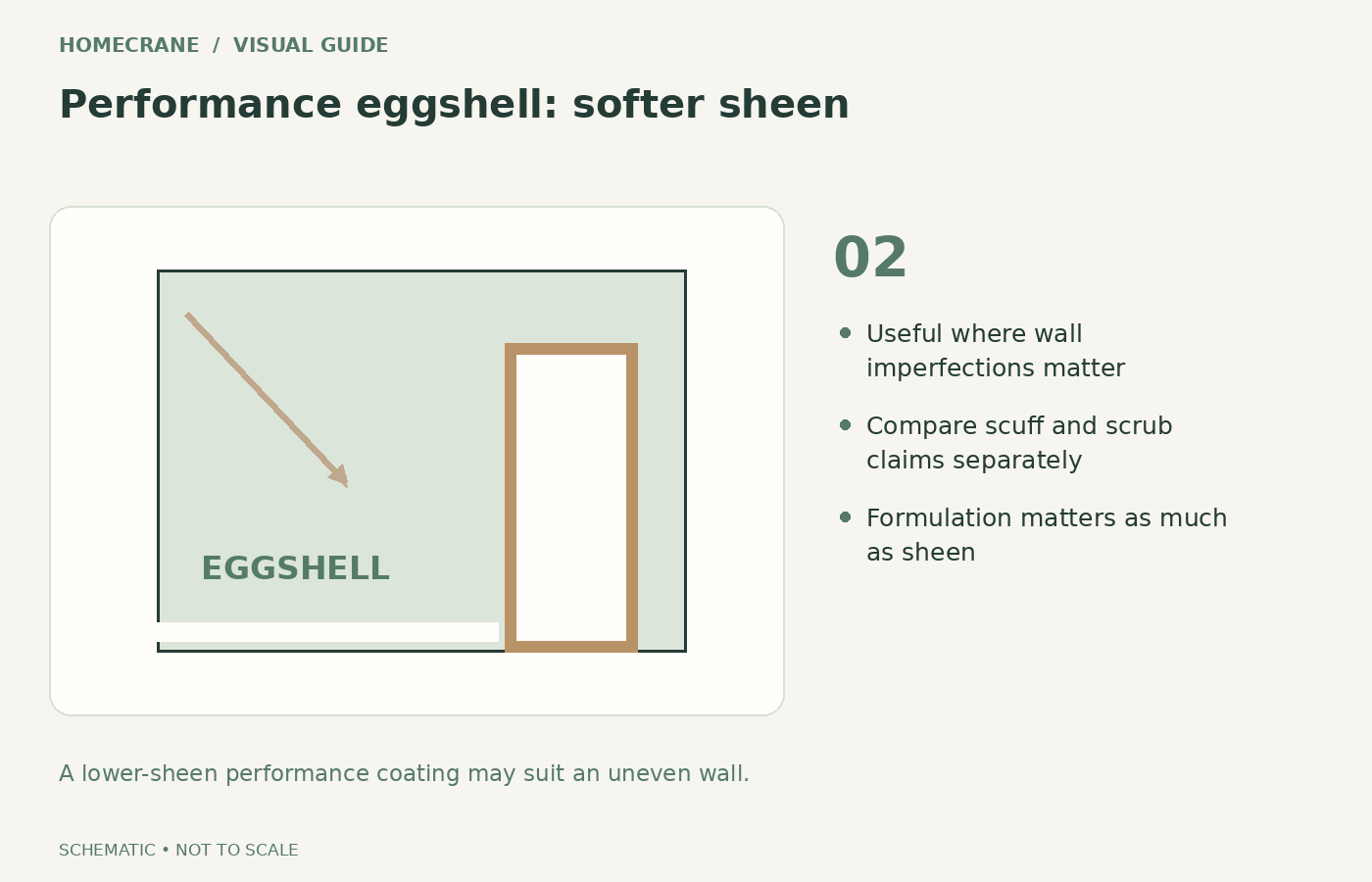
Eggshell can be a good compromise where frequent cleaning matters but a higher sheen would emphasize uneven plaster or old drywall repairs. Look specifically for washability, scrub resistance, and scuff resistance in the manufacturer's description and technical information.
Those terms describe related but different concerns. A mark that washes off easily is not the same as a surface that resists the mark in the first place. A coating that withstands repeated cleaning may still be damaged by a sharp object or a heavy furniture scrape.
As one documented example, Benjamin Moore Scuff-X eggshell is marketed for high-traffic areas and repeated washing. This is a manufacturer-supported example, not an independent ranking or a claim that HomeCrane.com has tested it against every competitor. Compare the current data sheet and availability with other suitable wall coatings before purchasing.
3. Use semi-gloss strategically on trim and doors
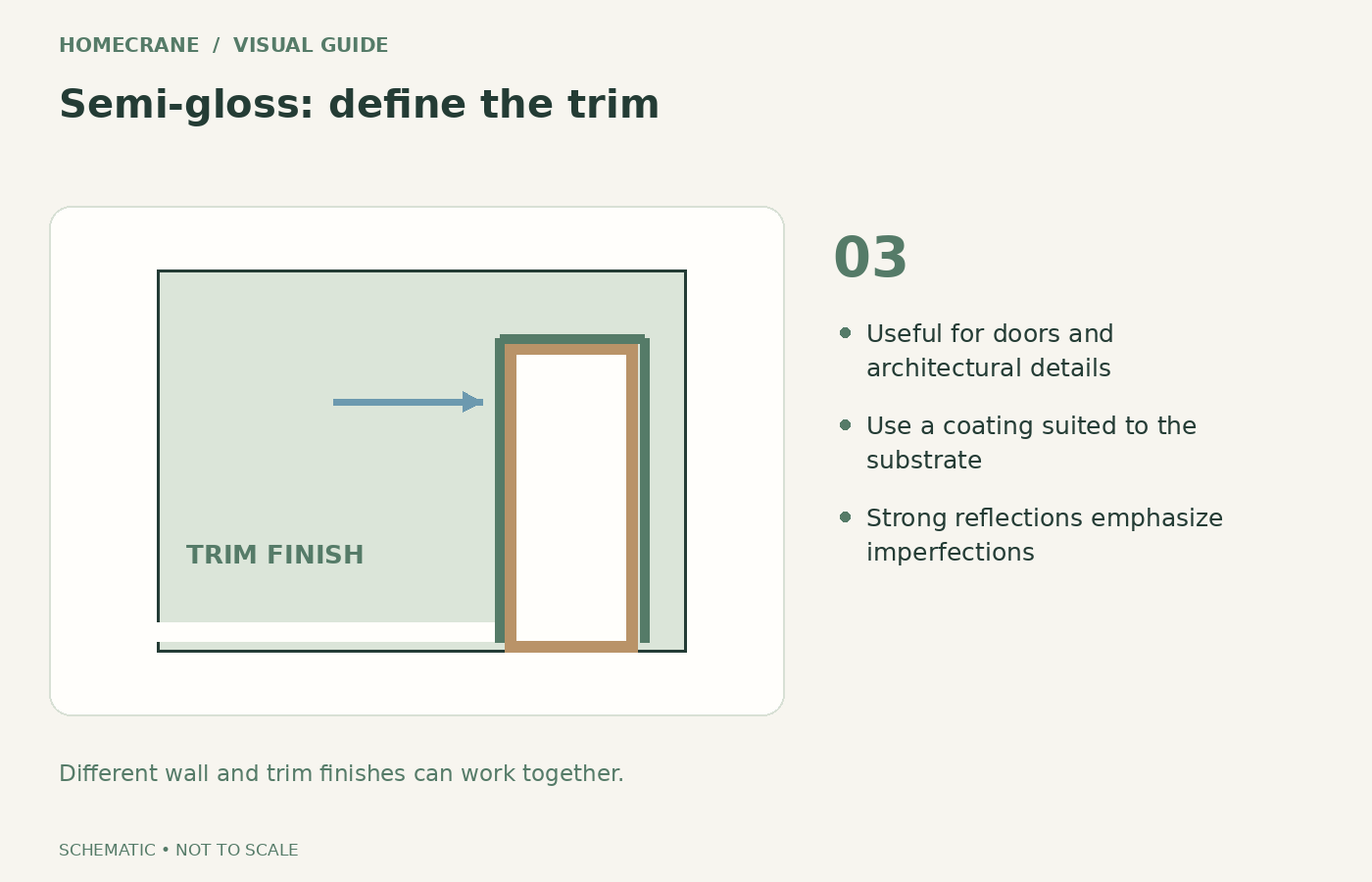
Baseboards, door casings, and doors often benefit from a separate trim coating selected for their surfaces and handling. Semi-gloss gives these details definition and can provide a cleanable finish.
Using it on every hallway wall is a design choice rather than an automatic durability upgrade. Reflections can exaggerate seams, dents, and uneven application. A narrow hall with a bright ceiling fixture may feel much shinier than a paint chip suggests.
Consider a coordinated approach: washable satin or eggshell on the walls and an appropriate semi-gloss enamel on trim. Confirm compatibility with the existing coating and substrate. A glossy, poorly bonded old finish needs proper preparation; applying a shiny new coating over contamination does not create a durable system.
Use a door stop or other practical protection where a handle repeatedly hits the wall. Paint cannot substitute for preventing direct impact.
4. Protect the finish with preparation and gentle cleaning
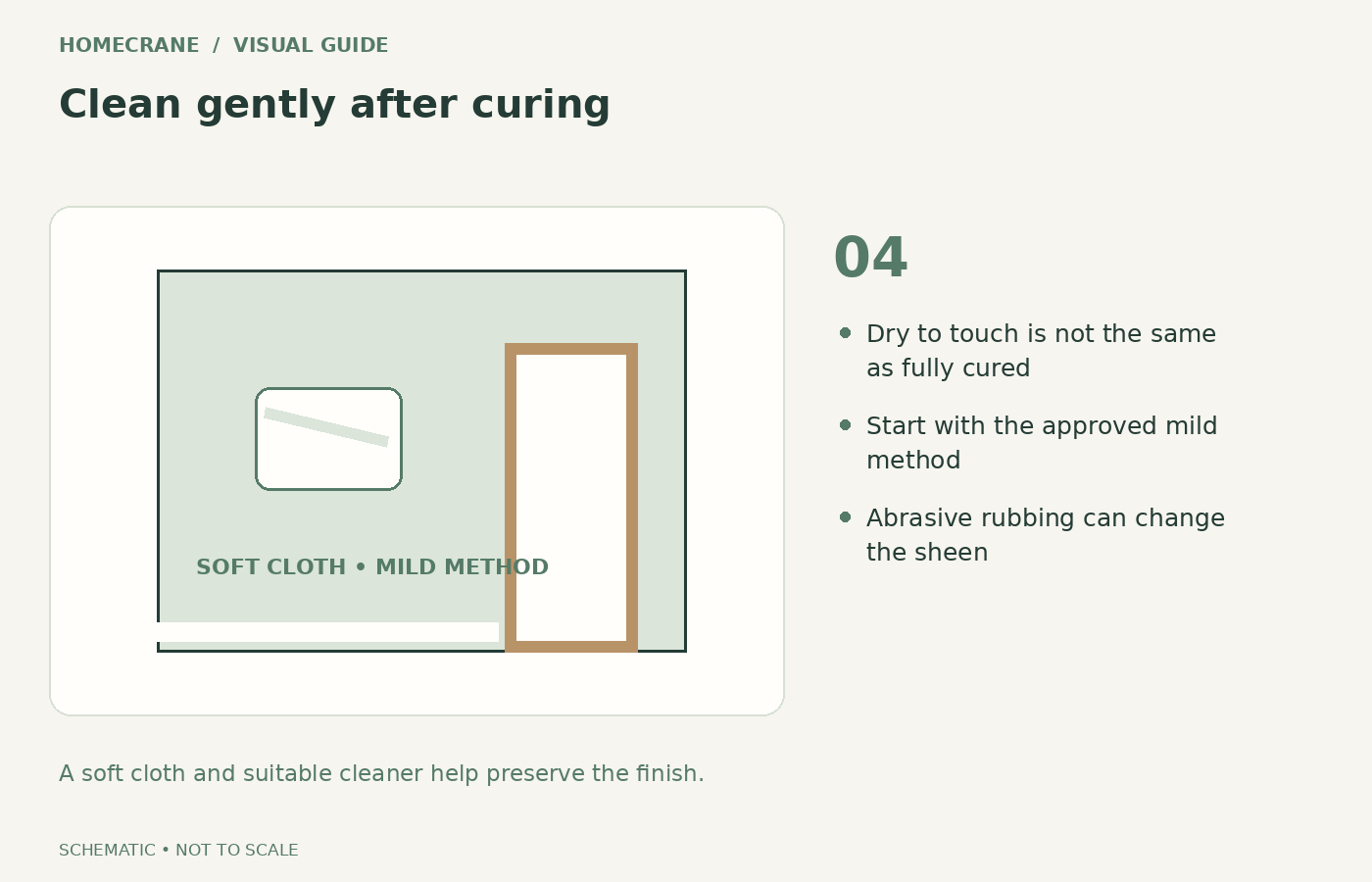
Remove grease and surface dirt before painting, rinse when the cleaning product requires it, and let the wall dry. Repair defects and use a suitable primer where needed for patches, stains, or the existing surface. Follow the selected coating's coverage and recoat instructions rather than stretching one thin coat across an oversized area.
Dry-to-touch time is not the same as full cure. Keep bags, furniture, and repeated rubbing away from a new finish while it develops its intended properties. Check the product's stated cleaning and cure guidance instead of assuming every wall is ready for scrubbing the next morning.
For routine marks, start with a soft cloth and the mild method the manufacturer permits. Abrasive pads can alter sheen. Benjamin Moore's burnishing guidance explains how repeated rubbing can change the appearance of a paint film. Test any cleaner in an inconspicuous spot before treating a visible area.
A practical finish comparison
| Feature | Useful hallway role | Trade-off |
|---|---|---|
| Standard flat | Hiding imperfections | May mark or burnish easily |
| Washable matte | Low-sheen appearance in a suitable formula | Product performance varies |
| Performance eggshell | Busy walls with subtle reflection | Still needs careful preparation |
| Satin | General high-traffic wall choice | Shows more defects |
| Semi-gloss enamel | Trim, doors, selected accents | Stronger reflections |
Treat names as categories, not standardized performance scores. One brand's pearl may not match another brand's satin visually. If you are repainting only one wall, an apparently identical sheen name may still produce a noticeable mismatch.
Budget for the coating system, not only the gallon
Measure the paintable wall area and subtract large openings where appropriate. Use the product's published coverage to estimate material, allowing for the required coats and surface condition. Primer, patching supplies, rollers, protection, and cleanup can affect the project as much as a small difference in paint price.
Do not buy a larger quantity merely because it is on sale before confirming the color and finish. A sample that prevents repainting a long hallway is usually a better economy. Keep the label, color formula, and purchase details for future maintenance, plus a properly stored small amount of leftover paint if the manufacturer allows it.
Questions homeowners ask
Can I touch up a satin hallway invisibly?
Sometimes, but sheen, aging, texture, and application can make a patch visible. If a test touch-up flashes under side light, repainting to a natural boundary may give a more even result.
Is washable matte a bad choice?
Not necessarily. Some premium matte formulas are designed for cleaning. Choose from the product's documented intended use and your tolerance for marks, rather than treating all low-sheen paints as identical.
Sources
- Benjamin Moore's finish guide. Checked October 11, 2026
- Benjamin Moore Scuff-X eggshell. Checked October 11, 2026
- Benjamin Moore's burnishing guidance. Checked October 11, 2026
Share this article
Get new guides by email
Practical home articles and free resources. No spam, and you can unsubscribe at any time.
Keep reading
Does Peel and Stick Wallpaper Work on Textured Walls?
Sometimes a manufacturer permits a limited texture, but many peel and stick wallpapers require a smooth, flat surface. Texture reduces the contact area.
October 2026, 3 min read

The Most Durable House Siding Options for Wisconsin Winters
Compare siding options for Wisconsin winters, including fiber cement, engineered wood, steel, and vinyl, with installation and maintenance considerations.
October 2026, 4 min read
15 Eco Friendly Sustainable Architecture Materials to Use in Your Build
Explore 15 sustainable building materials to consider with illustrated concepts, practical design tips, and planning checks for your US home.
October 2026, 5 min read