The Truth About Peel and Stick Floor Tile Over Linoleum
Can peel and stick tile go over linoleum? Check substrate approval, old flooring risks, preparation, rolling, and rental-friendly limitations.
By Home Crane Editors. . 4 min read.
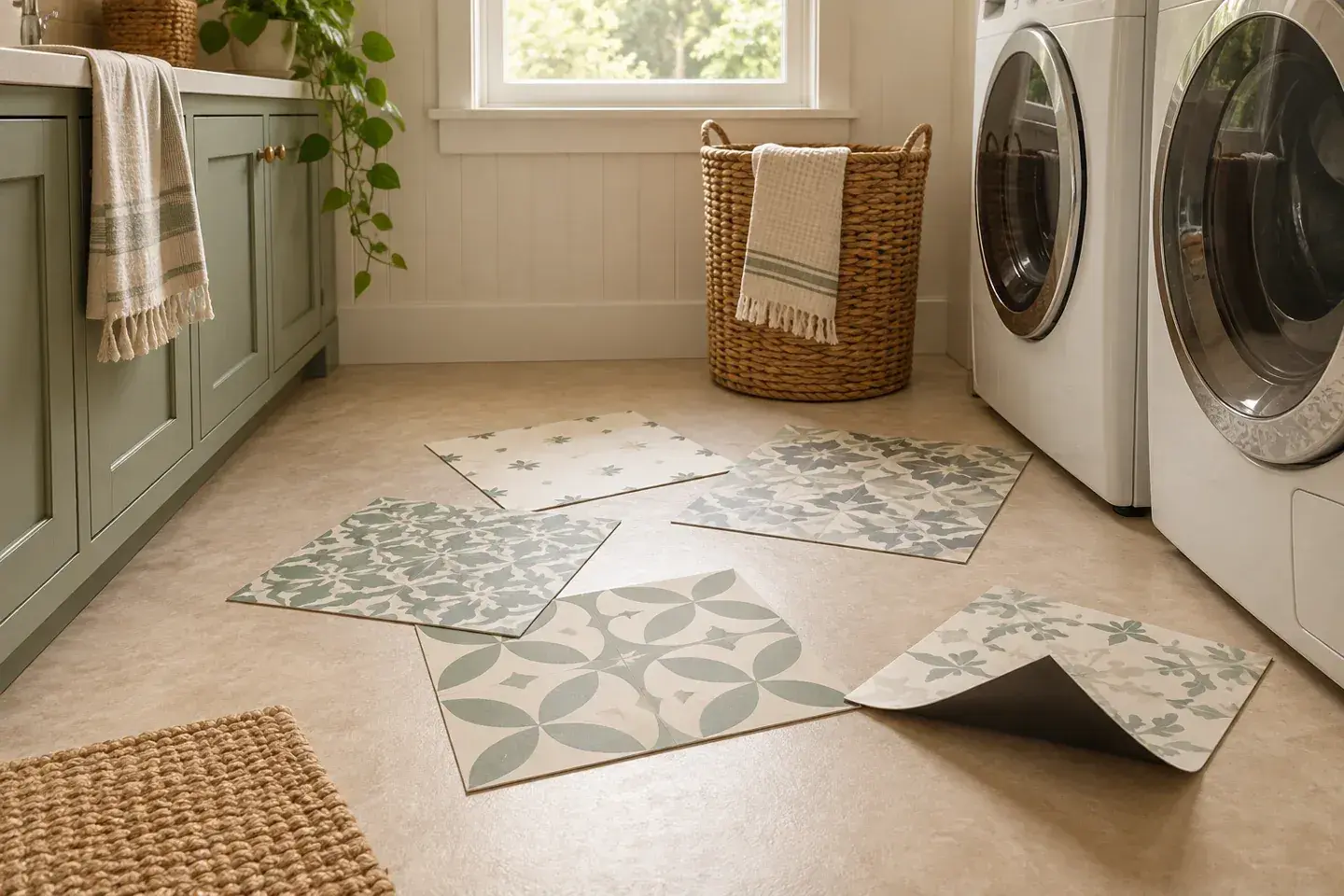
Peel and stick tile can sometimes go over an existing resilient floor, but “over linoleum” is not a universal approval. The new tile's instructions must permit the exact existing surface, and that surface must be firmly bonded, suitably smooth, dry, and free of incompatible coatings.
Many homeowners use “linoleum” to describe any sheet flooring. True linoleum and sheet vinyl are different materials, and some floors include cushioning that makes them unsuitable for an overlay. Identify what you have before treating a successful social-media makeover as installation guidance for your room.
1. Identify the old flooring before disturbing it
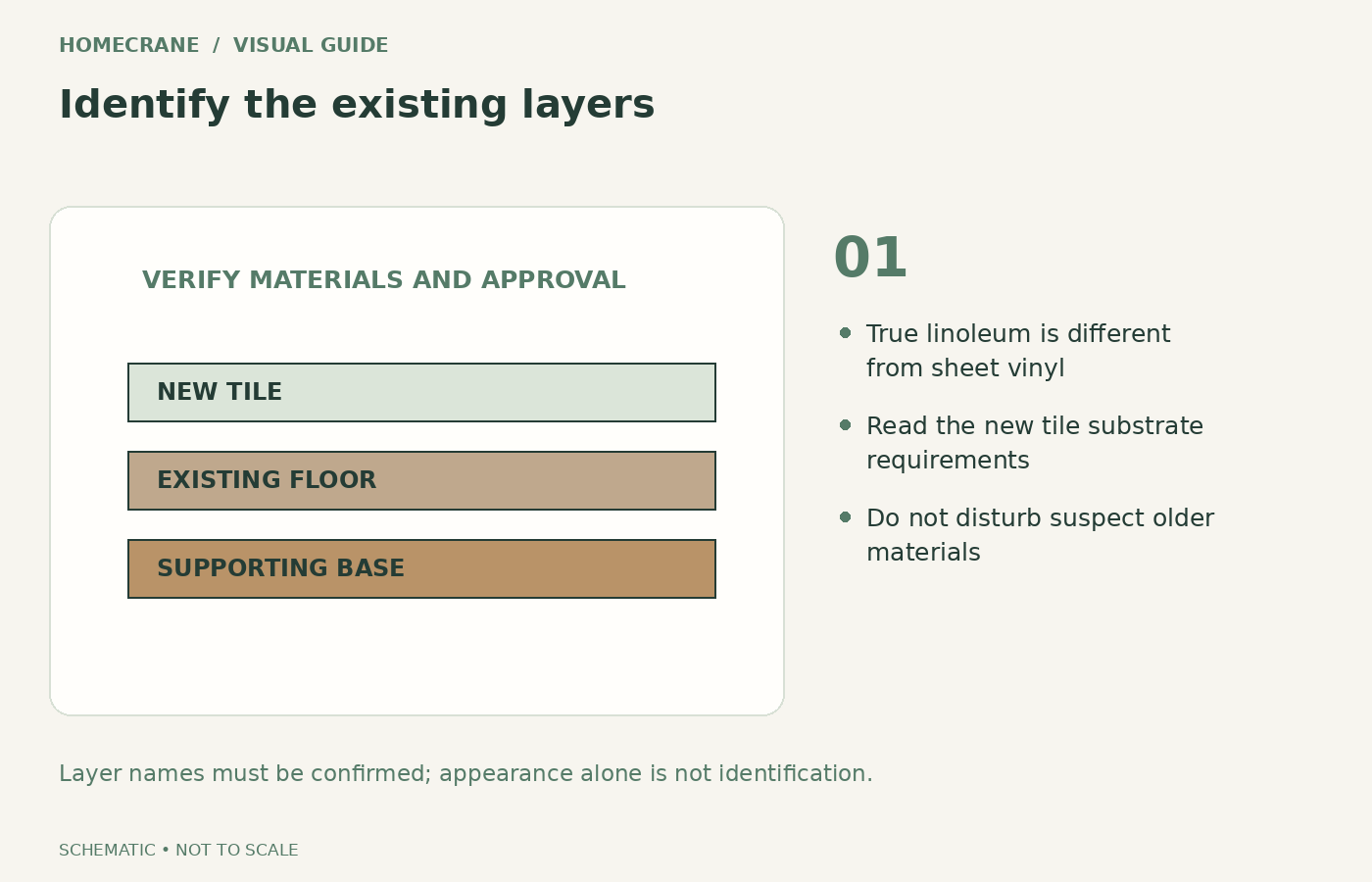
Look for purchase records, spare material, manufacturer markings on an accessible offcut, or professional identification. Do not cut, scrape, or sand an unknown old floor just to discover its layers.
Older resilient flooring, backing, and adhesives can contain asbestos. The EPA advises against sanding or otherwise disturbing suspect material. Its testing guidance explains that appearance alone cannot confirm whether asbestos is present and that sampling should be handled by a trained professional when warranted.
Once the material is identified and any necessary assessment is complete, compare it with the new product's approved substrates. Instructions that permit existing vinyl do not automatically approve true linoleum, cushioned flooring, multiple layers, or every old adhesive. Ask the flooring manufacturer about your precise situation if the wording is unclear.
2. Check whether the existing floor is a stable base
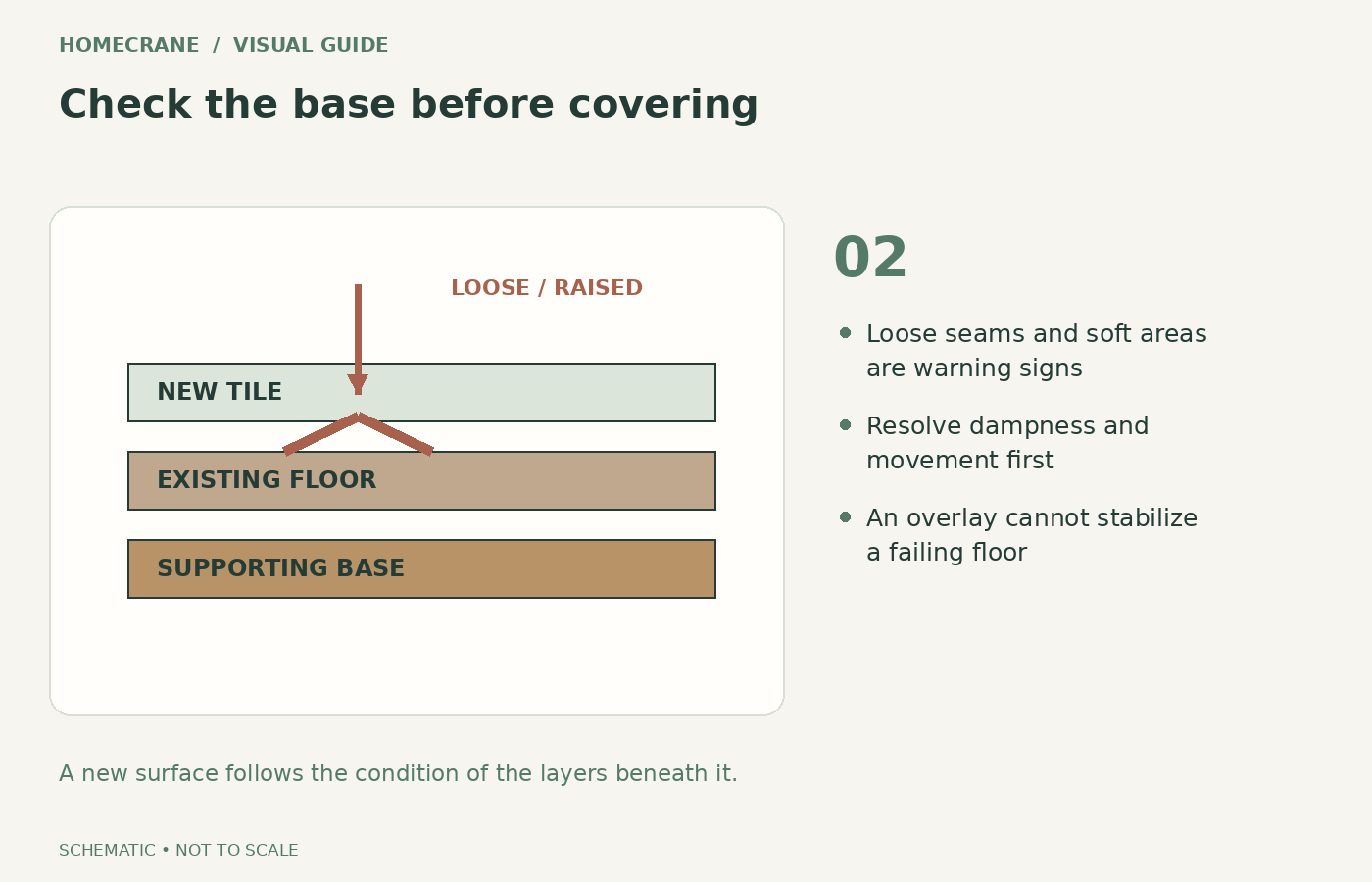
Walk the room and inspect accessible edges without damaging them. Loose seams, bubbles, soft areas, dampness, and movement are warning signs. Peel and stick adhesive cannot make a failing lower layer structurally sound.
Pressing a new tile over a raised seam may temporarily hide the color difference, but the ridge can remain visible and stress the new material. Cushioned flooring can also allow movement beneath a relatively thin tile. The overlay is only as reliable as the permitted layers supporting it.
Check the room's moisture conditions, particularly over concrete or near appliances. A waterproof-looking tile face does not make the entire floor assembly waterproof. Water can enter through joints and at edges. Resolve the source of dampness before installation rather than relying on an extra primer or adhesive to conceal it.
3. Follow the exact preparation system
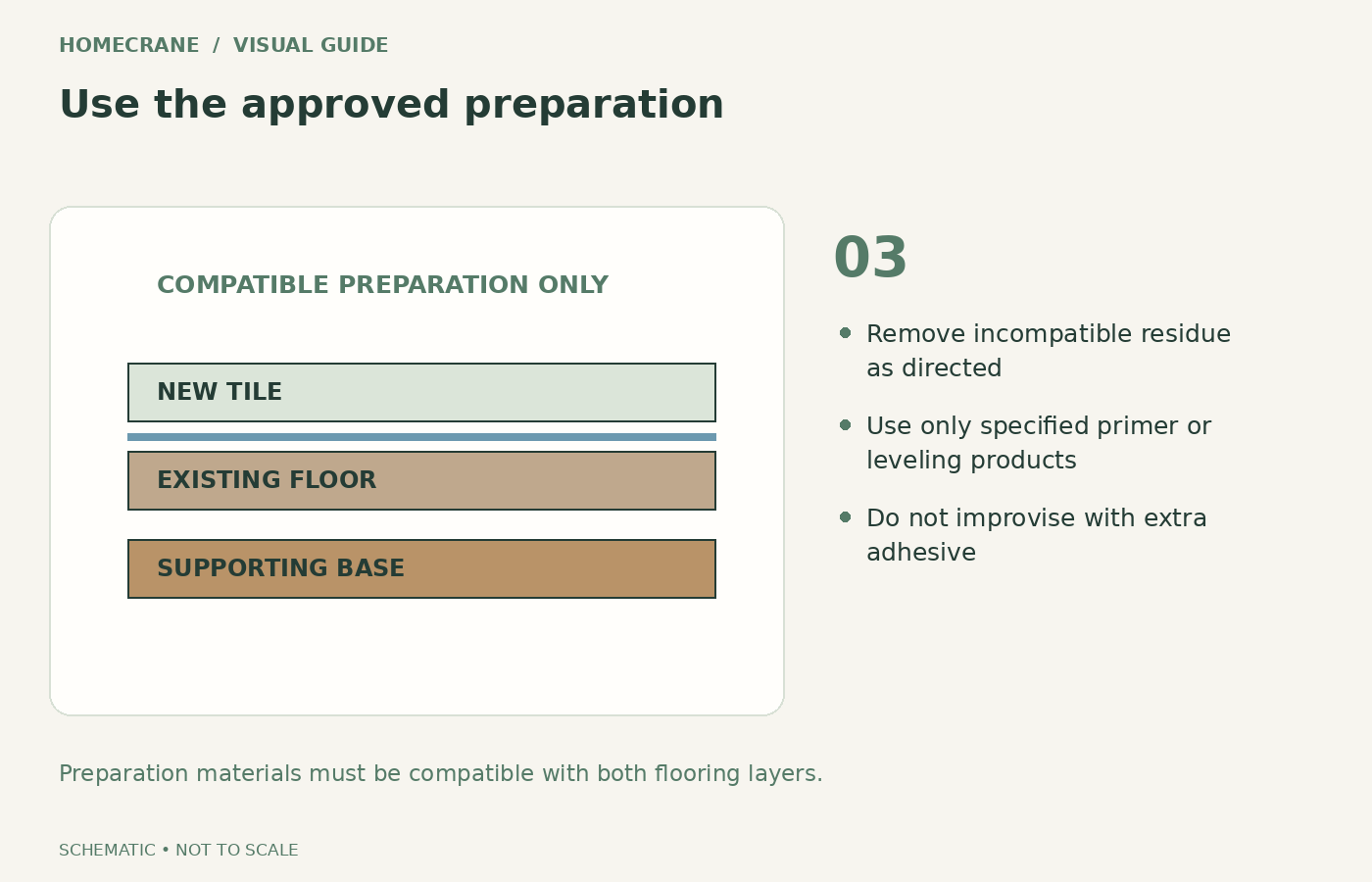
Cleaning is essential, but the approved method matters. Wax, polish, grease, soap film, and incompatible cleaner residue can interfere with adhesion. Use the new flooring manufacturer's specified cleaning and preparation products for the existing substrate.
Some approved installations require an appropriate patching or embossing-leveling compound, a specified primer, or another preparation step. Others prohibit the substrate altogether. Do not improvise by sanding old flooring smooth, applying a random bonding primer, or adding construction adhesive under self-stick tiles.
Armstrong's installation overview emphasizes reading the detailed product instructions and preparing a clean, dry, flat base. Its flooring FAQ describes installation over existing sheet vinyl as possible only in some circumstances. Neither statement replaces the current instructions supplied with your chosen tile.
4. Plan the layout, roll, and allow the required time
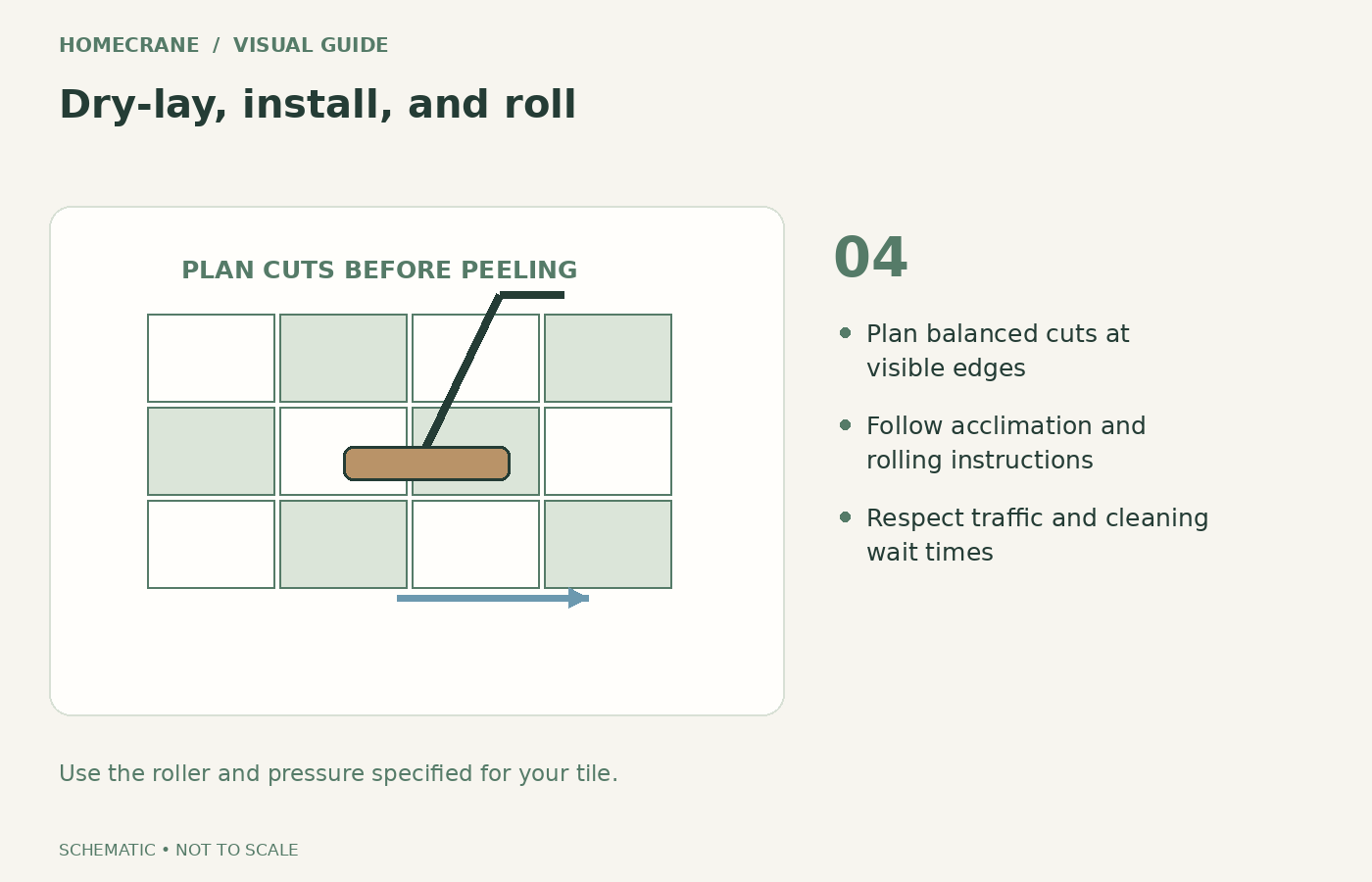
Before removing backing paper, dry-lay a few rows. Check the cut widths at opposite walls, doorways, and visible transitions. Avoid creating a narrow strip at the most noticeable edge when a small layout adjustment would improve the result.
Acclimate the material for the period and conditions its manufacturer specifies. Apply tiles in the required sequence and use the specified roller and rolling method. Hand pressure alone may not provide the contact required by a pressure-sensitive adhesive.
Respect restrictions on traffic, furniture placement, and wet cleaning. Do not slide a heavy refrigerator across a newly installed floor or assume a quick bond test proves long-term performance. A small test area can reveal an obvious incompatibility, but it does not override a prohibited substrate or establish a warranty.
Save spare tiles from the same production run and record the product details. Future patching is easier when the replacement material matches both the dimensions and pattern.
Reasons to choose another route
| Feature | Why an overlay is questionable | |
|---|---|---|
| Loose or bubbling floor | The lower layer can keep moving | |
| Unknown old flooring | Disturbance may need assessment | |
| Cushioned surface | Compression may affect the new tile | |
| Moisture problem | Adhesive and lower layers may fail | |
| Manufacturer excludes substrate | Installation is unsupported |
A permitted underlayment or a different flooring system may be an option, but each has its own requirements. Adding layers also changes finished height. Check door clearance, transitions, dishwasher removal space, toilet details where relevant, and trip edges before committing.
Is peel and stick flooring renter-friendly?
Do not assume it is removable without damage. Adhesive can leave residue, pull at coatings, or damage the existing floor during removal. Heat and solvents used to remove residue can create additional problems.
Obtain the landlord's written approval for the actual product and removal plan. A product being inexpensive or marketed for DIY installation does not make it suitable for a rental. If reversibility is essential, consider only options explicitly compatible with your existing floor and tenancy agreement.
Questions homeowners ask
Will extra glue keep the edges down?
Not reliably. Lifting may come from contamination, movement, temperature, moisture, or an unsuitable base. Extra adhesive can be incompatible. Diagnose the cause and use only a manufacturer-approved remedy.
Is this the cheapest flooring makeover?
It can be economical on an approved, sound base. Once repairs, assessment, leveling, transitions, and labor are included, another flooring system may offer better value. Price the complete installation rather than the tile box alone.
Sources
- EPA advises against sanding or otherwise disturbing suspect material. Checked October 11, 2026
- testing guidance. Checked October 11, 2026
- Armstrong's installation overview. Checked October 11, 2026
- flooring FAQ. Checked October 11, 2026
Share this article
Get new guides by email
Practical home articles and free resources. No spam, and you can unsubscribe at any time.
Keep reading
Painted Bathroom Ceramic Floor Tile: What to Check After One Year
Painting ceramic bathroom floor tile can be a cosmetic alternative to replacement when the tile is sound and the coating system permits the application. A.
October 2026, 3 min read

The Easiest DIY Flooring to Install for Total Beginners
Compare five beginner-friendly flooring approaches, with illustrations, subfloor checks, installation tradeoffs, and a practical buying checklist.
October 2026, 4 min read
How to Fix Squeaky Hardwood Floors Underneath Carpet
Find the cause of squeaks beneath carpet, confirm the hidden floor layers, and choose a suitable repair while protecting the hardwood underneath.
October 2026, 4 min read