5 Cheap Ways to Update Old Wood Paneling Besides Painting
Explore five illustrated ways to refresh old wood paneling with cleaning, textiles, lighting, artwork, and a properly prepared wallpaper feature.
By Home Crane Editors. . 5 min read.
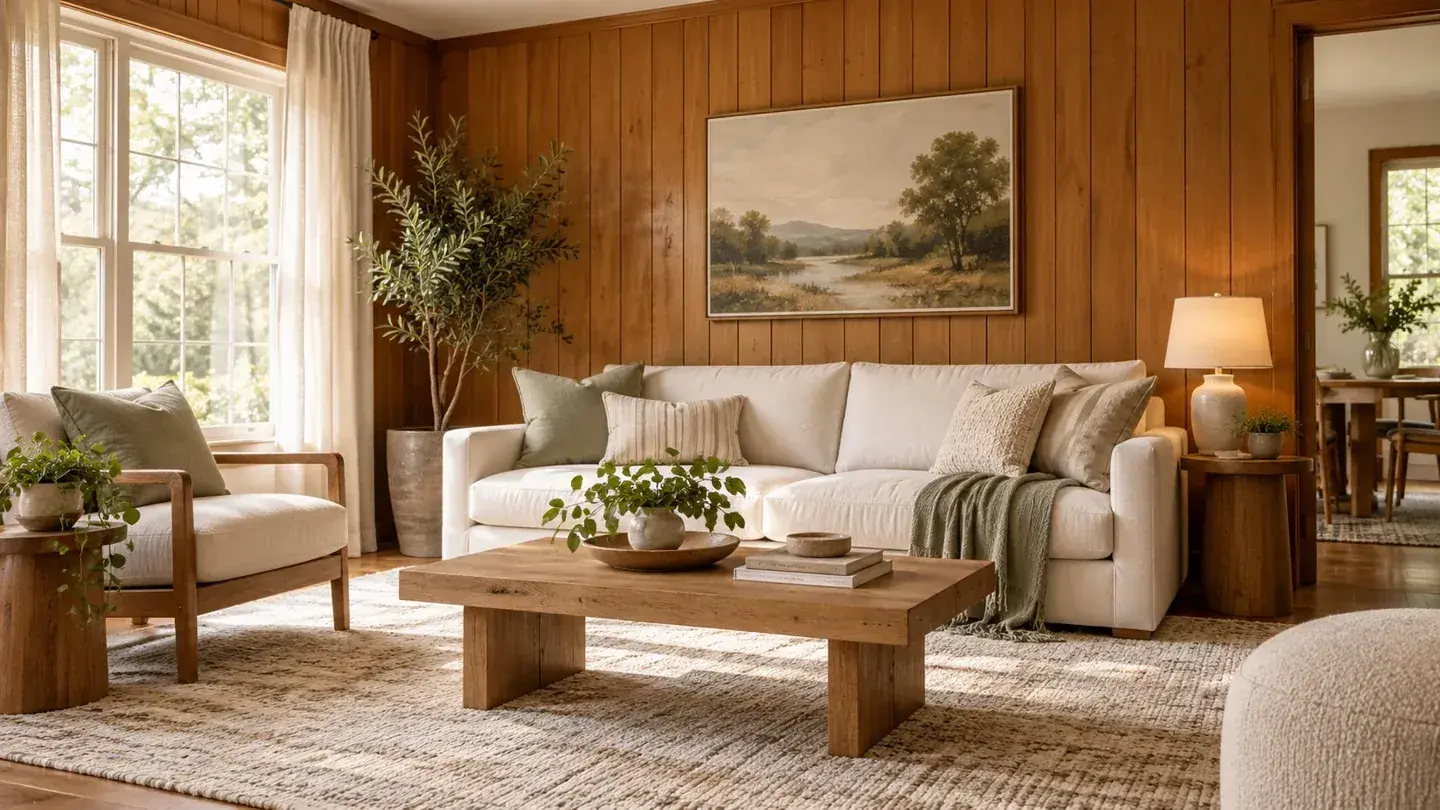
Old wood paneling does not have to be painted to feel at home in a fresher room. Cleaning, lighter textiles, better-positioned lighting, larger artwork, and a carefully prepared wallpaper feature can all change the way the space looks. Start with the least permanent option and spend only after you see what the room still needs.
The cheapest first move is often rearranging what you already own. A pale curtain from another room or a lamp moved out of a dark corner can show whether the paneling itself is the problem. The ideas below range from simple styling changes to a more involved wall treatment.
Check the Paneling Before Decorating
Look for loose sections, swelling, water marks, or a deteriorating finish. Decoration should not cover unresolved moisture or damage. Identify whether you have solid wood, veneer, or a wood-look panel, and test any cleaner or adhesive in a discreet area before using it broadly.
If you rent, confirm permission for attachments and surface treatments. Removable products are not guaranteed to leave every old finish untouched. The first four ideas can often be tried with little intervention; the wallpaper option may require substantial preparation and is not automatically reversible.
1. Clean the Existing Finish and Edit the Room
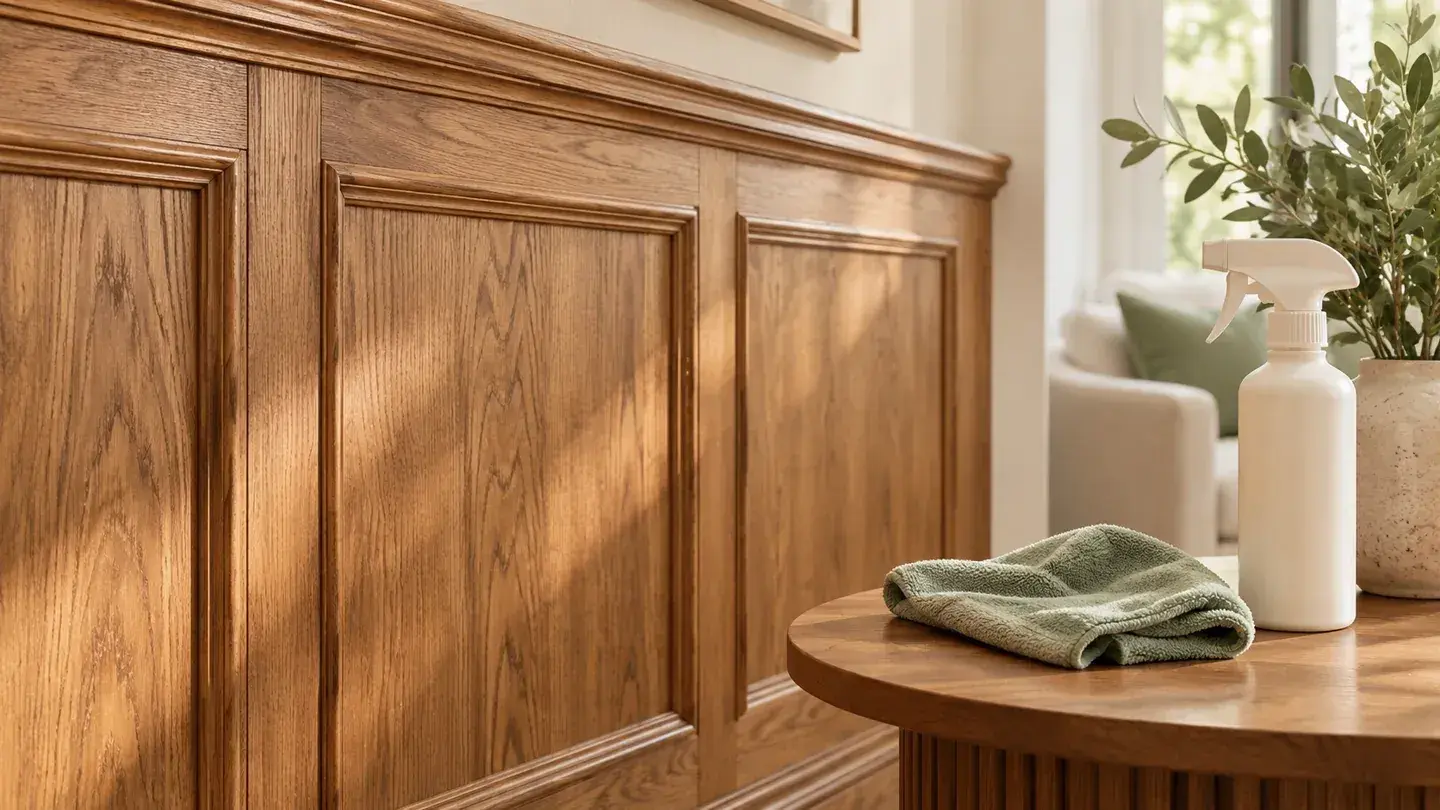
Dust the paneling with a suitable soft tool, paying attention to grooves and trim. Then use a cleaner approved for the actual finish, following dilution and application instructions. Test first, avoid soaking joints, and stop if the surface changes unexpectedly.
Murphy's Original Oil Soap product information lists finished wood among its applications, but that does not establish compatibility with every old panel or coating. A product chosen for sound finished wood should not be assumed suitable for an unknown or damaged surface.
Once the wall is clean, remove a few competing objects and reassess. Small dark frames, heavy curtains, and several different wood tones can make the whole room feel busier. Put back the pieces that serve a purpose or work together visually. You may discover that the grain looks intentional once the surrounding clutter is reduced.
Best use: a room where the wood is sound and you want the lowest-cost starting point. Cleaning will not erase damage or turn one wood color into another, so judge it as maintenance and editing rather than refinishing.
2. Add Contrast With Light Textiles
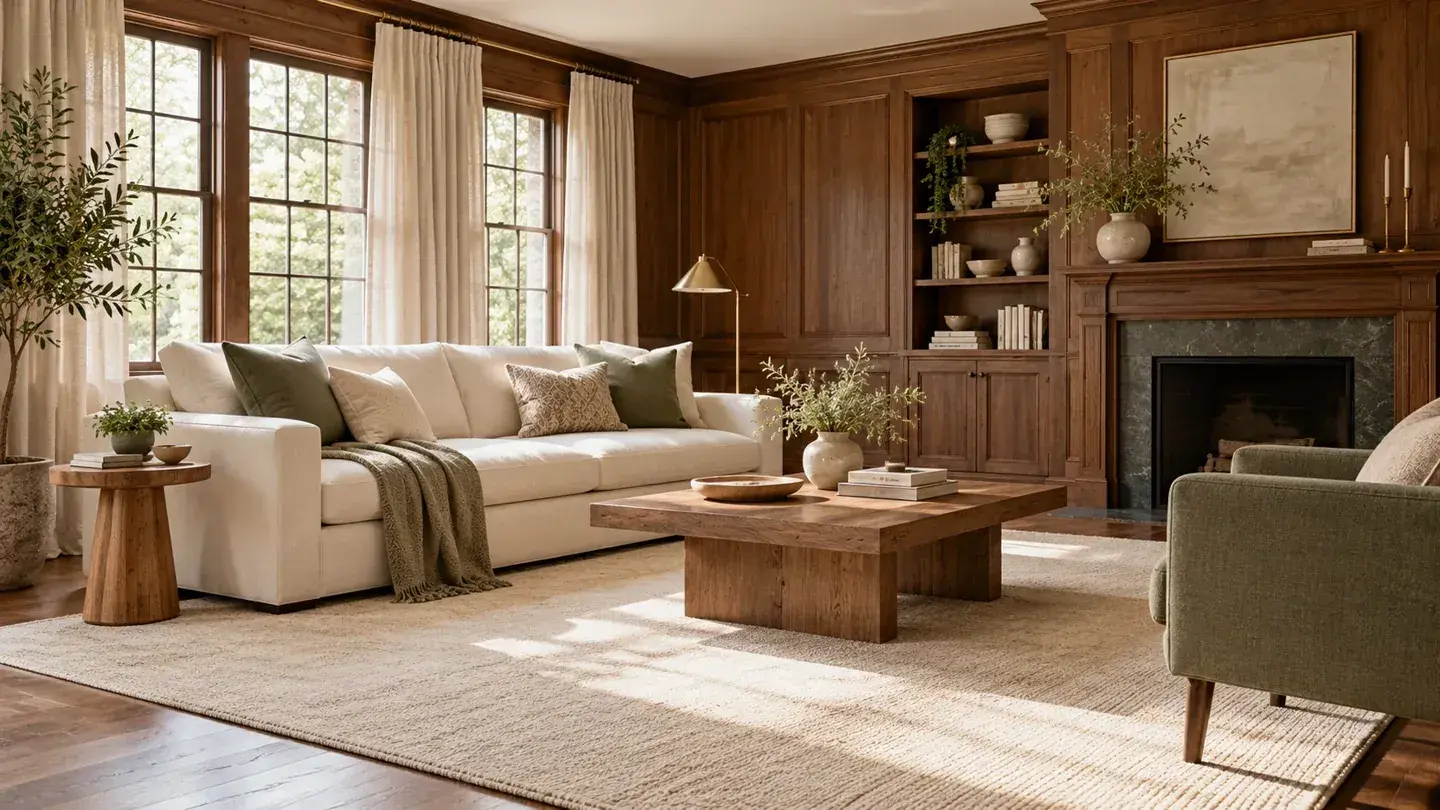
A light rug, cream curtain, or pale sofa throw can balance a dark wall without covering its texture. Choose one or two larger areas of contrast instead of scattering many small white accessories around the room. The larger shapes are easier to read from the doorway.
Start with existing textiles or secondhand options where practical. Compare colors beside the paneling before buying: warm ivory may sit comfortably with honey-colored wood, while a cooler pale neutral may work with a different finish. There is no need to force a single palette onto every species or stain.
Check practical needs as well as appearance. Curtains should operate freely, and rugs need suitable placement and support so edges do not create a trip problem. A light textile that cannot tolerate the room's normal use may become an expensive short-lived choice.
Best use: a room that feels visually heavy but already has functional furniture. A slipcover or throw can test the idea before you replace upholstery. Keep the paneling visible so the contrast feels deliberate.
3. Improve Lighting With Lamps You Can Move
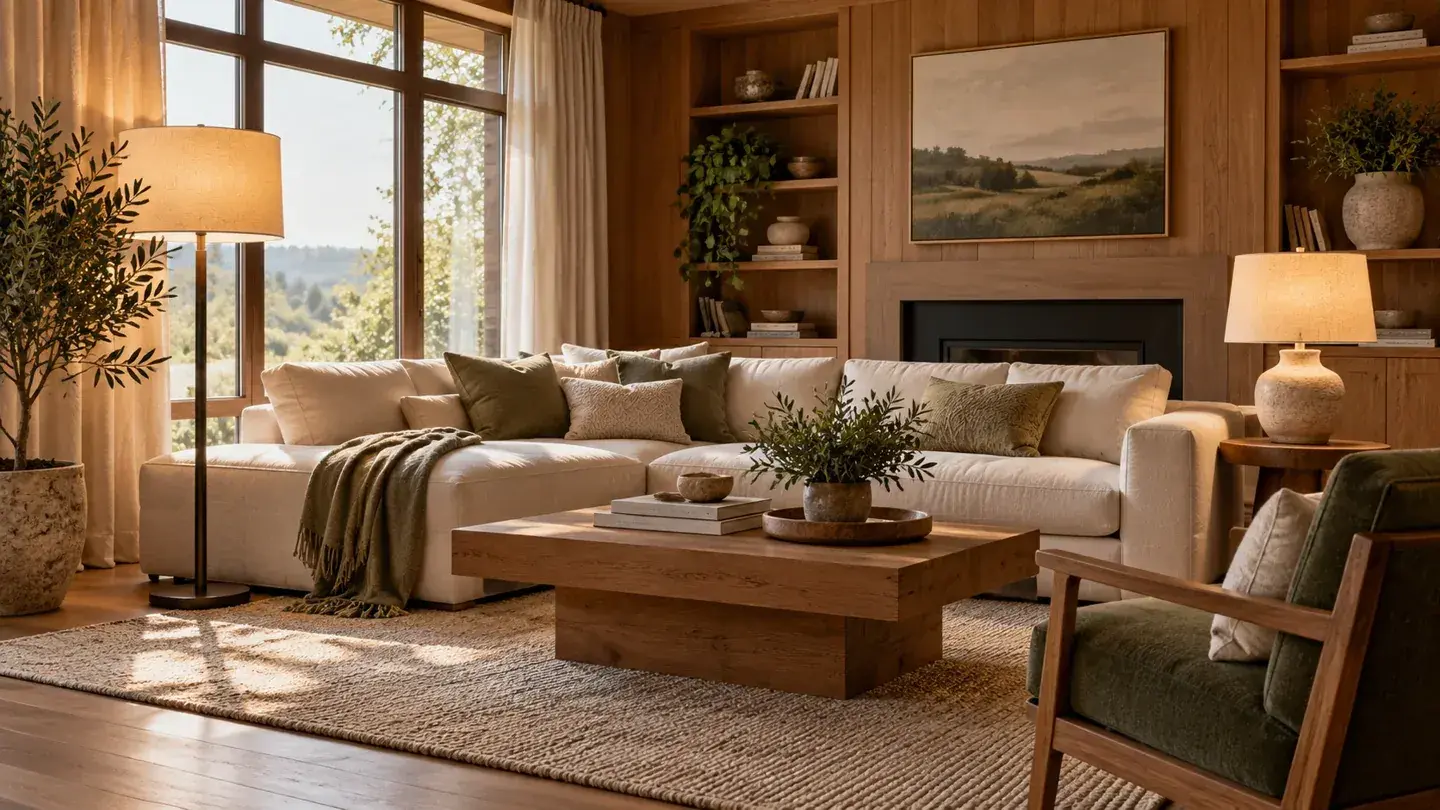
Try a shaded table lamp or floor lamp where the room feels dim, using fixtures and bulbs that are compatible and in good condition. A second light source can make a seating corner more useful and change how the wood grain is perceived in the evening.
Move the lamp around before buying another one. Compare light directed toward a wall with light placed close to a chair or table. The best arrangement may be less about brightness everywhere and more about putting useful light where the room is actually used.
Keep cords out of walking paths and away from heat sources. Follow fixture ratings and do not treat an overloaded outlet or extension arrangement as a decorating solution. If the room needs permanent wiring changes, separate that work from the low-cost styling project.
Best use: a paneled living room, den, or bedroom that looks acceptable in daylight but feels gloomy at night. Try lighting before deciding the wood must be covered; it is an easy way to test a different atmosphere.
4. Hang One Larger Piece of Art
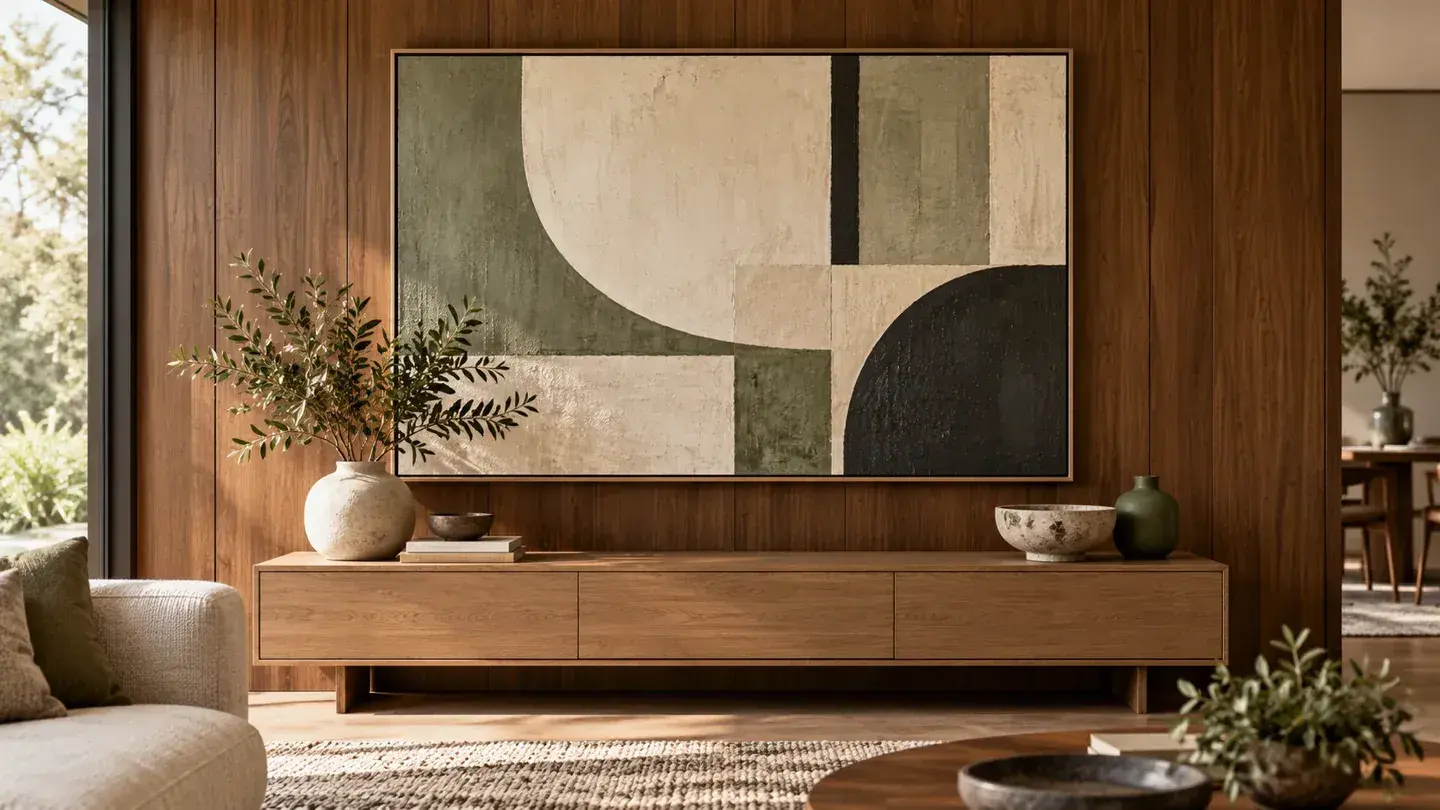
A larger artwork can interrupt a broad field of grooves and create a clear focal point. Try a restrained abstract print, a landscape, or another image you actually want to live with. A light mat or a simple frame can help it stand apart from the wall.
Use paper templates to test size and placement before making holes. View the arrangement from the usual seating position and the entry, not just while standing directly in front of the wall. One considered piece may feel calmer than several small frames with unrelated spacing.
Choose mounting hardware suited to the artwork's weight and the actual wall construction. Thin decorative paneling alone may not provide the support you need. Do not assume adhesive strips are harmless on an old finish or appropriate for every load.
Best use: a wall that feels repetitive or lacks a focal point. Reframe an existing print or use a secondhand frame if cost is the priority. The artwork changes the composition without pretending to repair the underlying paneling.
5. Wallpaper One Properly Prepared Section
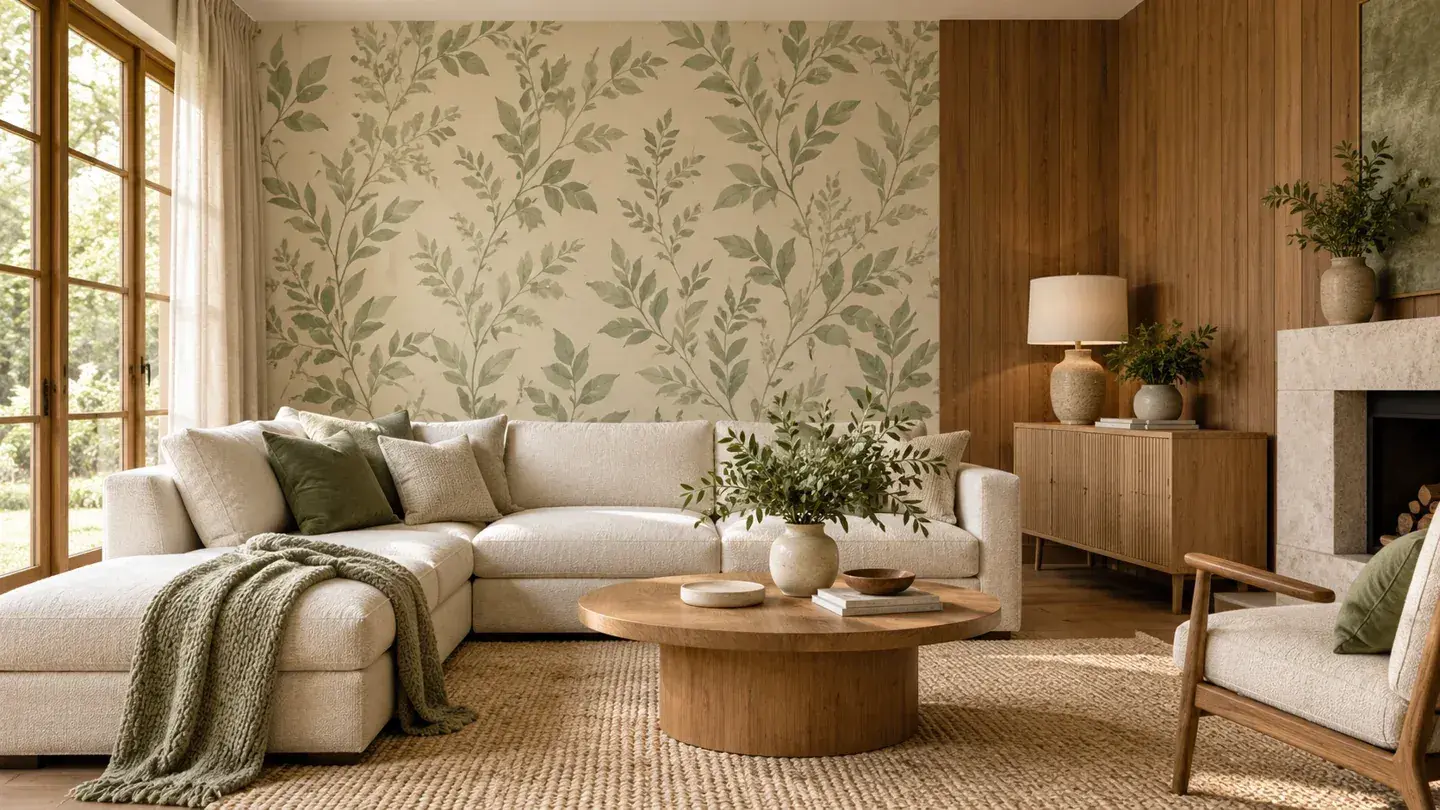
Wallpaper can create contrast while leaving the remaining wood visible. Choose a wall with a clear boundary, such as a dining nook or the area behind a bed, and compare a sample with the existing wood tone. A quiet pattern often gives you more flexibility with furniture and textiles.
This is the most involved option here. Brewster's guidance for wallpaper over paneling includes groove preparation, primer, and a heavy-duty liner. It does not support simply applying any peel-and-stick paper over any grooved panel.
Confirm the complete preparation system with the wallpaper and liner manufacturers. Budget for those materials and the work, not just the decorative roll. If preparation would disturb older paint, consult EPA lead-safe guidance. If your goal is absolutely no primer, coating, or permanent alteration, choose one of the first four ideas instead.
Best use: a homeowner who wants a more substantial change on one wall and accepts the preparation. It is an alternative to a painted finish, but not necessarily an alternative to all coating products.
Choose the Smallest Change That Solves the Problem
| Feature | First idea to try | |
|---|---|---|
| The room looks dusty or cluttered | Clean and edit | |
| Too many dark surfaces | Add a larger light textile | |
| The room feels gloomy after sunset | Reposition suitable lamps | |
| A long wall looks repetitive | Test one larger artwork | |
| You want a distinct feature wall | Price a properly prepared wallpaper system |
Take a photograph after each change before adding another. That makes it easier to see which purchase improved the room and which was unnecessary. The most convincing update often keeps the wood's character while making the rest of the room feel more intentional.
Sources
- Murphy: Original Oil Soap. Checked October 5, 2026
- Brewster Wallcovering: Hang Wallpaper Over Paneling. Checked October 5, 2026
- US EPA: Lead Safe Renovations Diyers. Checked October 5, 2026
Share this article
Get new guides by email
Practical home articles and free resources. No spam, and you can unsubscribe at any time.
Keep reading
15 Icy Blue Bedroom Paint Ideas for 2026
Explore 15 icy blue bedroom paint ideas, from accent walls to blue ceilings, with warm pairings and practical sampling tips for 2026.
October 2026, 6 min read
Neo Deco Living Room Ideas: How to Get the Look on a Budget
Create a budget Neo Deco living room with curves, geometric patterns, metallic accents, jewel tones, and balanced furniture styling.
October 2026, 3 min read
15 Smart Small Laundry Room Stackable Washer Dryer Ideas
Explore 15 smart small laundry room stackable washer dryer ideas. Compare illustrated concepts, practical layout tips, and planning checks.
October 2026, 6 min read