Curb Appeal Projects That Also Recoup Value at Resale
Some of the highest-recouping projects in national remodeling data are also the most visible from the street. Here is what the Cost vs. Value report shows about doors, garage doors, siding and stone veneer.
By Home Crane Editors. . 3 min read.
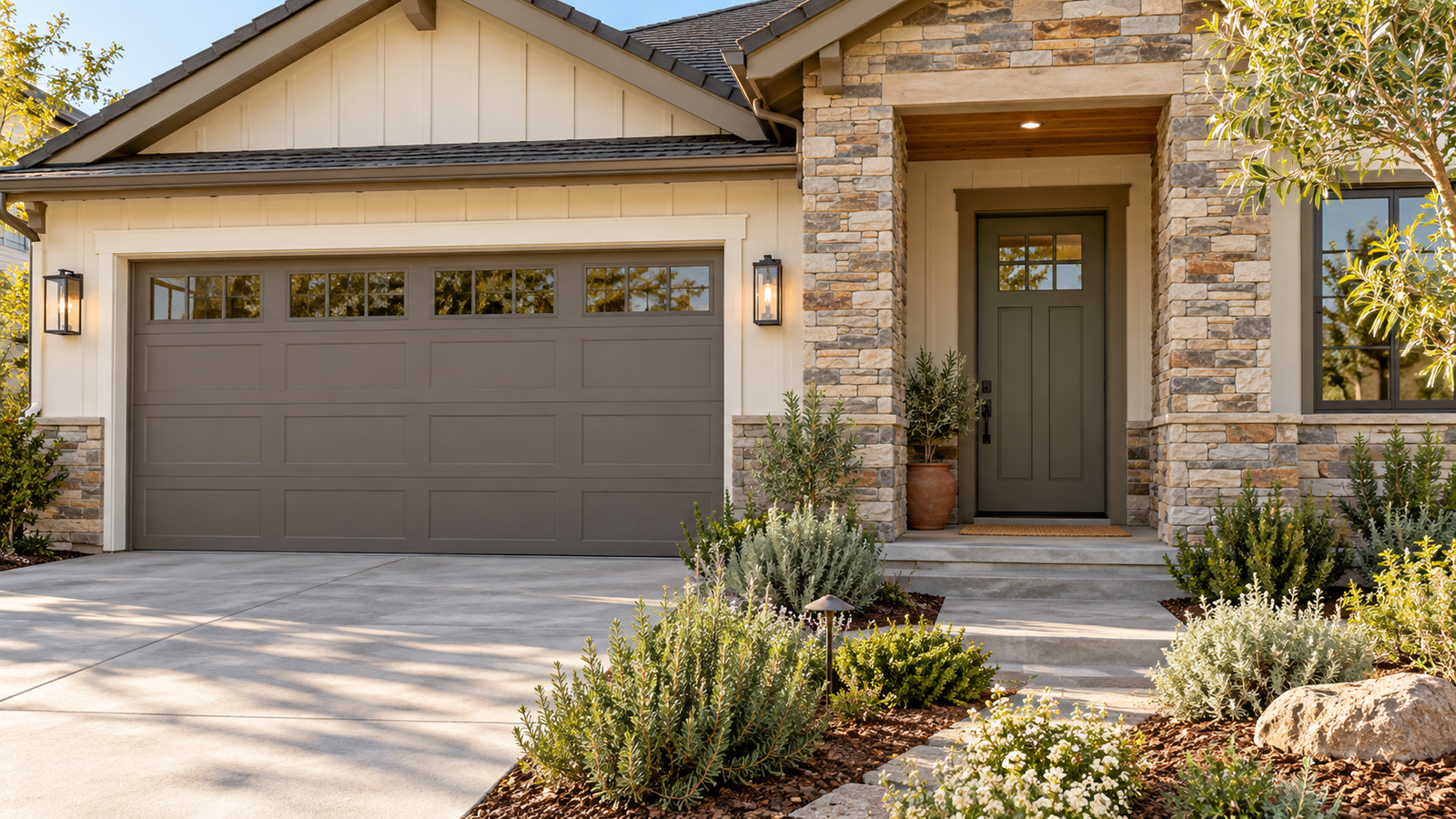
Conceptual illustration of exterior curb appeal projects.
Curb appeal projects are not just about looking nice from the street. In Remodeling magazine's Cost vs. Value report, the highest-recouping national projects are almost all exterior work: garage doors, entry doors, manufactured stone veneer and siding replacement. This article looks at what the data shows, and why exterior projects tend to outperform interior remodels in this particular measure.
What tops the list, and why that makes sense
In the 2025 national averages, garage door replacement recouped an estimated 268 percent of its job cost, steel entry door replacement recouped about 216 percent, and manufactured stone veneer recouped about 208 percent. These figures come from the report's estimate of resale value added compared with an average job cost, in 119 U.S. markets, and are read from the report's published national averages page.
| Feature | Job cost | Resale value | Cost recouped |
|---|---|---|---|
| Garage door replacement | $4,672 | $12,507 | 268% |
| Steel entry door replacement | $2,435 | $5,270 | 216% |
| Manufactured stone veneer | $11,702 | $24,328 | 208% |
| Fiber-cement siding replacement | $21,485 | $24,420 | 114% |
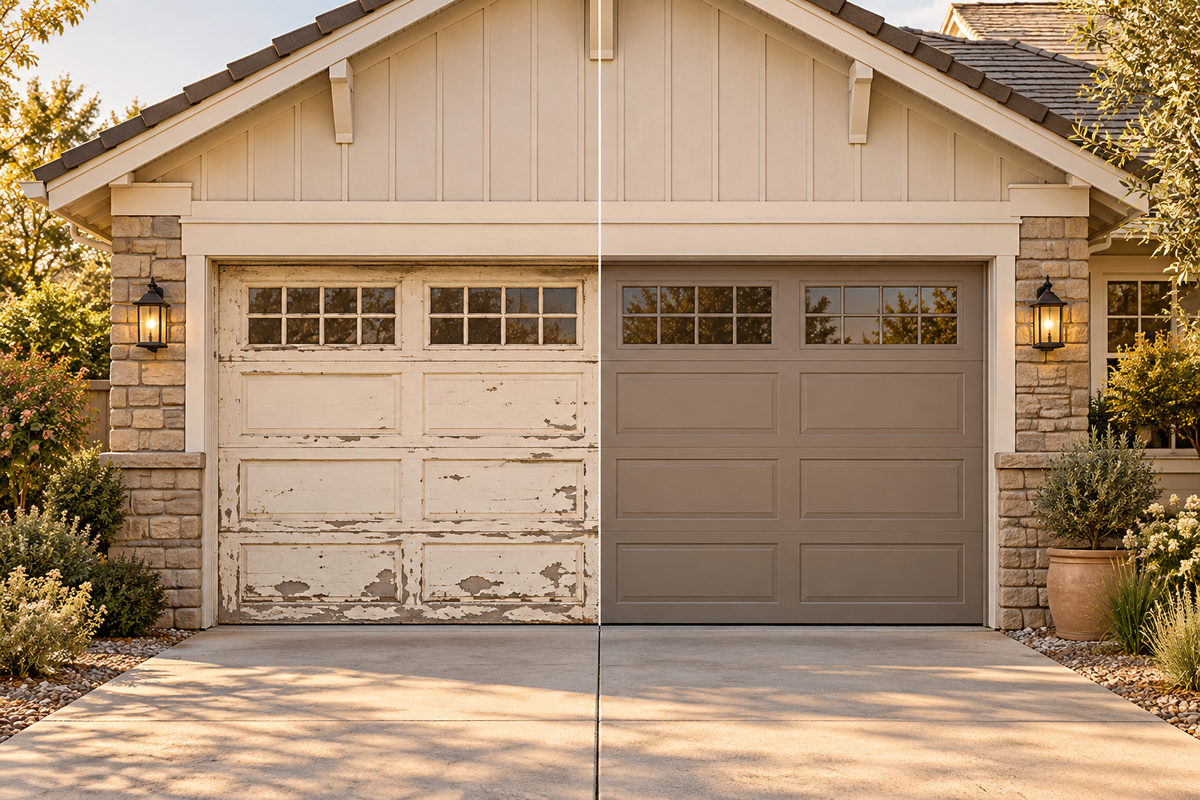
There is a pattern here worth understanding, not just admiring. These are relatively low-cost, highly visible projects. A garage door often covers a large share of a home's front facade, so replacing a worn one changes the whole first impression for a few thousand dollars. That combination of low job cost and high visual impact is a plausible reason these projects perform well in the report's resale-value estimates, though the report itself does not explain the mechanism, only the outcome.
This is not unique to one year
Garage doors and entry doors were near the top of the report in earlier years too, which suggests this is a consistent pattern rather than a one-year fluke. In the 2024 national averages, garage door replacement recouped about 194 percent and steel entry door replacement recouped about 188 percent. In 2023, those figures were lower, at 103 percent and 101 percent respectively, showing the size of the return moves with the market even when the ranking of which projects perform well stays fairly consistent.
Why interior projects usually recoup less
Compare the curb appeal figures with a large interior project. The 2025 national average for a midrange major kitchen remodel was a job cost of $82,793 against a resale value of $42,130, recouping about 51 percent. That is a respectable project by many measures, but it illustrates the general shape of the data: smaller, highly visible exterior projects tend to recoup a larger share of their cost than large interior remodels, even though the interior remodel adds more in absolute dollars. Our article on Cost vs. Value data goes into this pattern across more project types.
Beyond the report: curb appeal you actually notice
The Cost vs. Value report only tracks a defined list of remodeling projects, so plenty of genuine curb appeal work never appears in its data at all: fresh paint, updated house numbers and light fixtures, a cleaned or resealed driveway, and basic landscaping upkeep such as trimmed hedges and a healthy lawn. These are typically far cheaper than any project in the report's tables, and while they are not measured the same way, real estate agents commonly point to a tidy, well-maintained exterior as one of the simplest ways to improve a buyer's first impression, independent of any single tracked project.
Think of it as two separate lists. The report's tracked projects are useful for larger, planned exterior work where you want a data point on typical recoup. Maintenance-level curb appeal, cleaning, paint, trim and plantings, is worth doing regardless, and is not captured in the percentages above.
Using this to prioritize
- If your goal includes resale value and your budget is limited, the data suggests starting with what is visible from the street rather than the most expensive room in the house.
- A worn garage door, a dated entry door or aging siding are also often the first things a buyer notices, before they ever walk inside.
- None of this means skip the kitchen if you actually need it. It means know that a kitchen remodel is more of a lifestyle investment than a value-recouping one, based on this data.
- Stone veneer and siding are bigger jobs than a door swap, so weigh the job cost against your own budget, not just the percentage.
Planning the work
If you are comparing exterior finishes, our home renovation cost calculator can help build a full budget including design and permit fees. For hiring help with exterior work, the questions in our guide to hiring a remodeling contractor apply just as much to a siding or door installer as to a kitchen remodeler.
Your takeaway: if resale value is part of your decision, look at the exterior of your house first. The Cost vs. Value data consistently shows visible, moderate-cost exterior projects recouping a larger share of their cost than most interior remodels, even though both kinds of projects can be worth doing for reasons the report does not measure.
Frequently asked questions
Does this mean I should never remodel a kitchen for value?
No. It means the Cost vs. Value data shows kitchen remodels typically recoup a smaller share of their cost than smaller exterior projects. A kitchen remodel can still be worthwhile for daily use and overall home value, just not necessarily as a percentage-recouped strategy.
Are these figures accurate for my house?
They are national averages from a specific report methodology. Your local market, your home's condition and your specific project can all produce a different result. Use them to compare project types, not to predict your own return.
Sources
- 2025 Cost vs. Value Report, national averages, Remodeling magazine, via JLC Online. Checked September 24, 2026
- 2024 Cost vs. Value Report, Remodeling magazine, via JLC Online. Checked September 24, 2026
- 2023 Cost vs. Value Report, Remodeling magazine, via JLC Online. Checked September 24, 2026
Share this article
Get new guides by email
Practical home articles and free resources. No spam, and you can unsubscribe at any time.
Keep reading
Step-by-Step Guide: How to Limewash a Brick Exterior
Learn when exterior brick suits limewash, how to test a finish, prepare the masonry, and plan application without hiding moisture problems.
October 2026, 3 min read

Painted Brick Exteriors: Pros, Cons, and Maintenance Costs
Weigh painted-brick benefits, moisture concerns, treatment options, and US costs, with a sample budget and a practical maintenance plan.
October 2026, 4 min read

9 Historically Inspired Exterior Paint Colors for Chicago Bungalows
Explore nine historically inspired Chicago bungalow paint palettes for trim and accents, with illustrations, sample-testing advice, and preservation context.
October 2026, 5 min read