DIY Home Project Safety: Ladders, Power Tools and Knowing When to Stop
Hundreds of thousands of people are treated in emergency rooms each year for home improvement injuries. Here is what CPSC data shows about where those injuries happen, and the basic habits that prevent most of them.
By Home Crane Editors. . 3 min read.
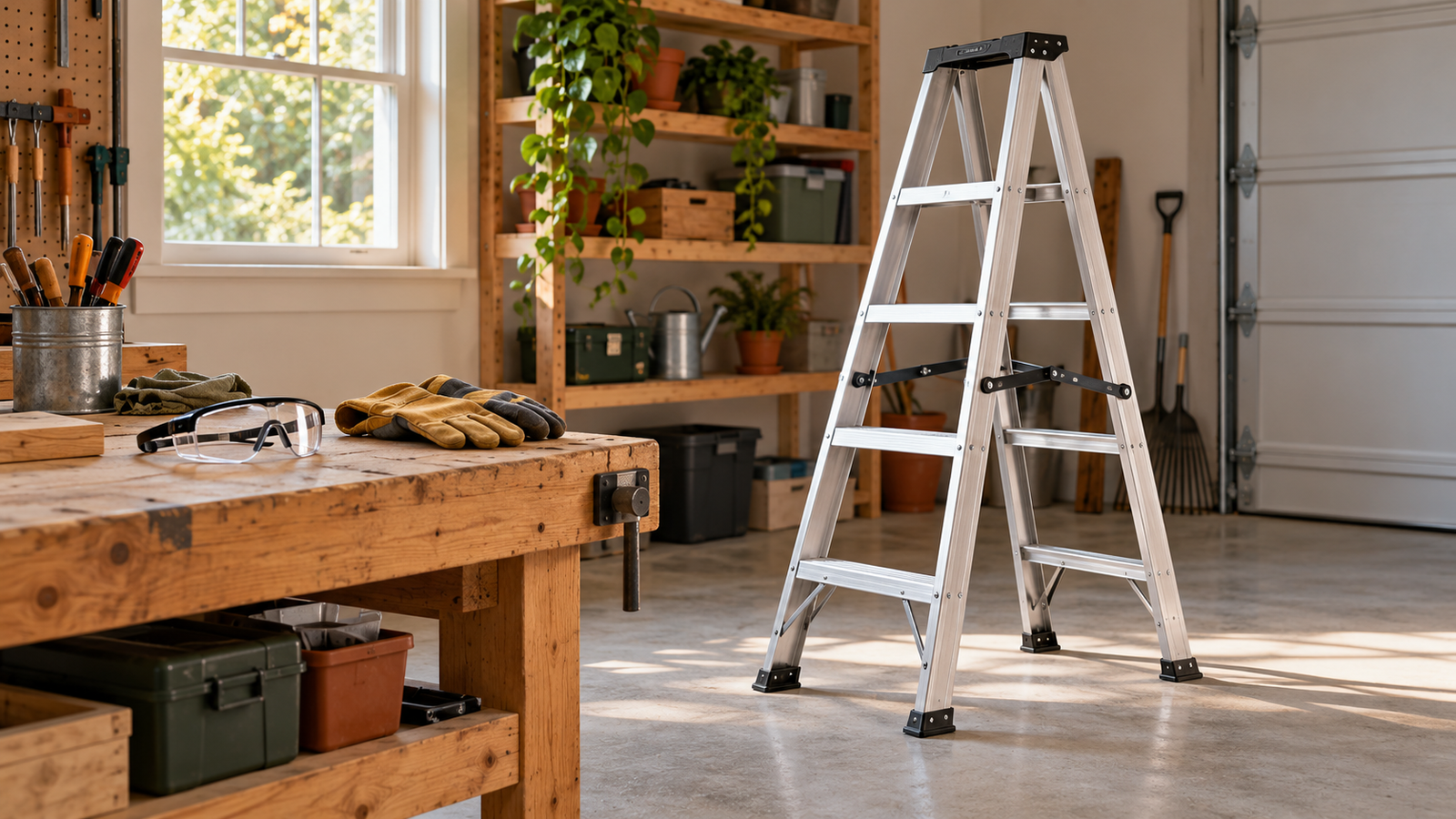
Conceptual illustration of basic DIY safety equipment.
Home improvement projects send a large number of people to the emergency room every year, and the pattern in the data is consistent: falls from ladders and injuries from power tools, particularly saws, account for a disproportionate share. The U.S. Consumer Product Safety Commission publishes safety guidance specifically aimed at homeowners doing their own repairs, and its core message is simple: most of these injuries are preventable with a handful of consistent habits, not specialized equipment.
What the injury data shows
An analysis by Clearsurance of CPSC's National Electronic Injury Surveillance System data found that in 2021, 209,599 people were treated in emergency rooms and released for home improvement injuries, while another 20,534 required hospital admission. Manual tools topped the list at over 107,000 injuries, with power saws close behind at over 84,000. The same analysis noted that home improvement injuries spike in summer months, when more people take on projects.
| Feature | What the data shows | |
|---|---|---|
| Ladders and step stools | CPSC estimates that hundreds of thousands of people are treated annually for ladder-related injuries, a large share involving falls | |
| Manual tools | The single largest category in the Clearsurance analysis of 2021 CPSC data, likely because they are the most commonly owned and used | |
| Power saws | The second largest category in the same analysis, consistent with saws being one of the more dangerous common power tools | |
| Nail guns | Send tens of thousands of people to emergency rooms annually according to CDC-based estimates cited in industry safety summaries |
Ladder safety, since falls are so common
CPSC's own outdoor repairs safety checklist gives specific, concrete guidance rather than general caution. It recommends having a helper hold the base of the ladder while you climb, positioning the ladder away from power lines before you start, never standing on the top rung of any ladder, and keeping people and pets from walking underneath a ladder in use. It also flags that people 65 and older are 80 percent more likely than other adults to visit an emergency room for a ladder or step stool injury, a reminder that experience does not eliminate the risk.
- Set the ladder on stable, level ground before climbing, and check that it is fully open and locked if it is a stepladder.
- Keep the ladder well clear of power lines, both overhead and where you might swing a tool or extension while working.
- Never stand on the top rung or the top platform of a stepladder.
- Use a helper to stabilize the base whenever possible, especially for extension ladders leaned against a structure.
Power tool habits that matter most
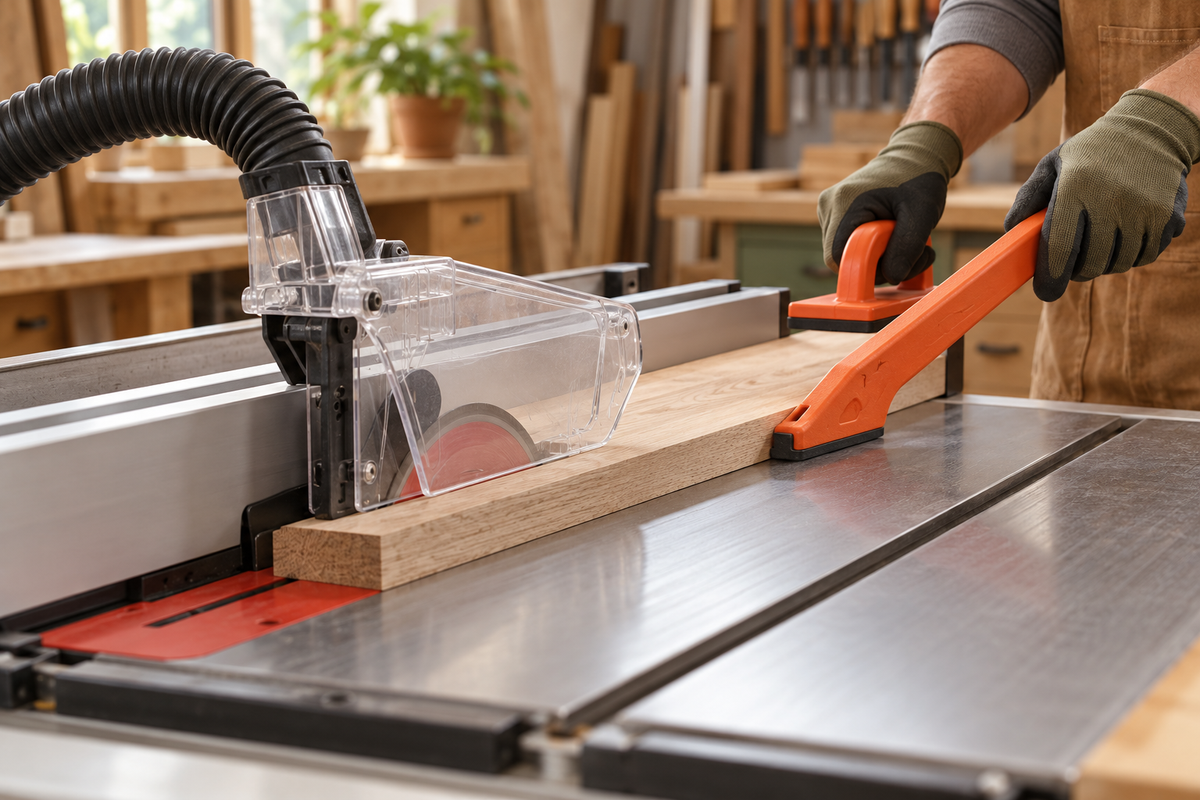
CPSC's guidance singles out eye protection and table saw technique specifically. It recommends always wearing safety goggles to protect against flying debris when using power tools, and for table saws in particular, always using the blade guard for through cuts and a push stick to guide small pieces, regardless of how experienced the user is. That last point is worth sitting with: CPSC's advice does not say this only applies to beginners. Complacency after years of comfortable use is a real factor in serious tool injuries.
- Read the tool's manual before first use, even for a tool you have used before but not recently.
- Wear safety goggles for any task involving cutting, drilling, grinding or striking materials.
- Use the blade guard on a table saw for through cuts, and use a push stick for small pieces rather than your fingers.
- Check extension cords for damage before use outdoors, and confirm they are rated for outdoor use and plugged into a properly grounded receptacle.
Knowing when a project has outgrown DIY
Not every project should be a DIY project, and the line is not always obvious in advance. A few signals worth taking seriously: the project requires a permit, which often signals structural, electrical or plumbing work with real safety stakes; the task requires equipment you do not own and are unfamiliar operating; or you find yourself improvising a workaround for a step the instructions assume standard equipment for. None of these mean stop immediately, but they are all reasons to pause and honestly assess whether hiring a professional is the safer and, often, ultimately cheaper choice. Our guide to hiring a remodeling contractor covers how to find and vet one when a project reaches that point.
If your project involves working around your home's structure or systems, our deck safety inspection guide is a useful companion for anything involving an existing deck, and our home renovation cost calculator can help you compare the real cost of DIY materials against a professional quote once safety, not just cost, is part of the decision.
Your takeaway: before your next project, check your ladder setup against CPSC's basic checklist, commit to wearing eye protection for any cutting or drilling task, and use the signals above to decide honestly whether this particular job belongs to you or to a professional.
Frequently asked questions
Are older adults really more at risk from DIY injuries?
CPSC data cited in its own safety guidance notes that people 65 and older are 80 percent more likely than other adults to visit an emergency room for a ladder or step stool injury, so extra caution is warranted regardless of experience level.
Do I need safety goggles for a quick, simple task?
CPSC's guidance recommends eye protection for any power tool use involving flying debris, without carving out an exception for quick jobs. Eye injuries can happen in seconds, which is the reasoning behind that blanket recommendation.
Sources
- Home Safe Outdoor Repairs (safety checklist), U.S. Consumer Product Safety Commission. Checked September 24, 2026
- DIY or Deadly for You? Home Improvement Projects That End in the ER, Coverager, analyzing CPSC NEISS data. Checked September 24, 2026
Share this article
Get new guides by email
Practical home articles and free resources. No spam, and you can unsubscribe at any time.
Keep reading

DIY Fluted Headboard Made Out of Pool Noodles
Plan a decorative fluted headboard using covered foam channels, a stable backer, careful material checks, and secure independent mounting.
October 2026, 3 min read

4 Renter-Friendly Ways to Hang Curtains Without Drilling
Compare tension rods, adhesive curtain hooks, magnetic rods, and floor-to-ceiling systems for curtains in a rental without drilling.
October 2026, 3 min read
Genius Under-Stairs Pull-Out Storage Ideas You Can DIY
Explore five under-stairs storage approaches with practical guidance on access, drawer hardware, stability, and existing openings.
October 2026, 3 min read