How to Read the EnergyGuide Label When Shopping for Appliances
The yellow EnergyGuide label is a federally required disclosure, not a marketing sticker, and it is designed to let you compare operating costs before you buy. Here is what each part means.
By Home Crane Editors. . 3 min read.
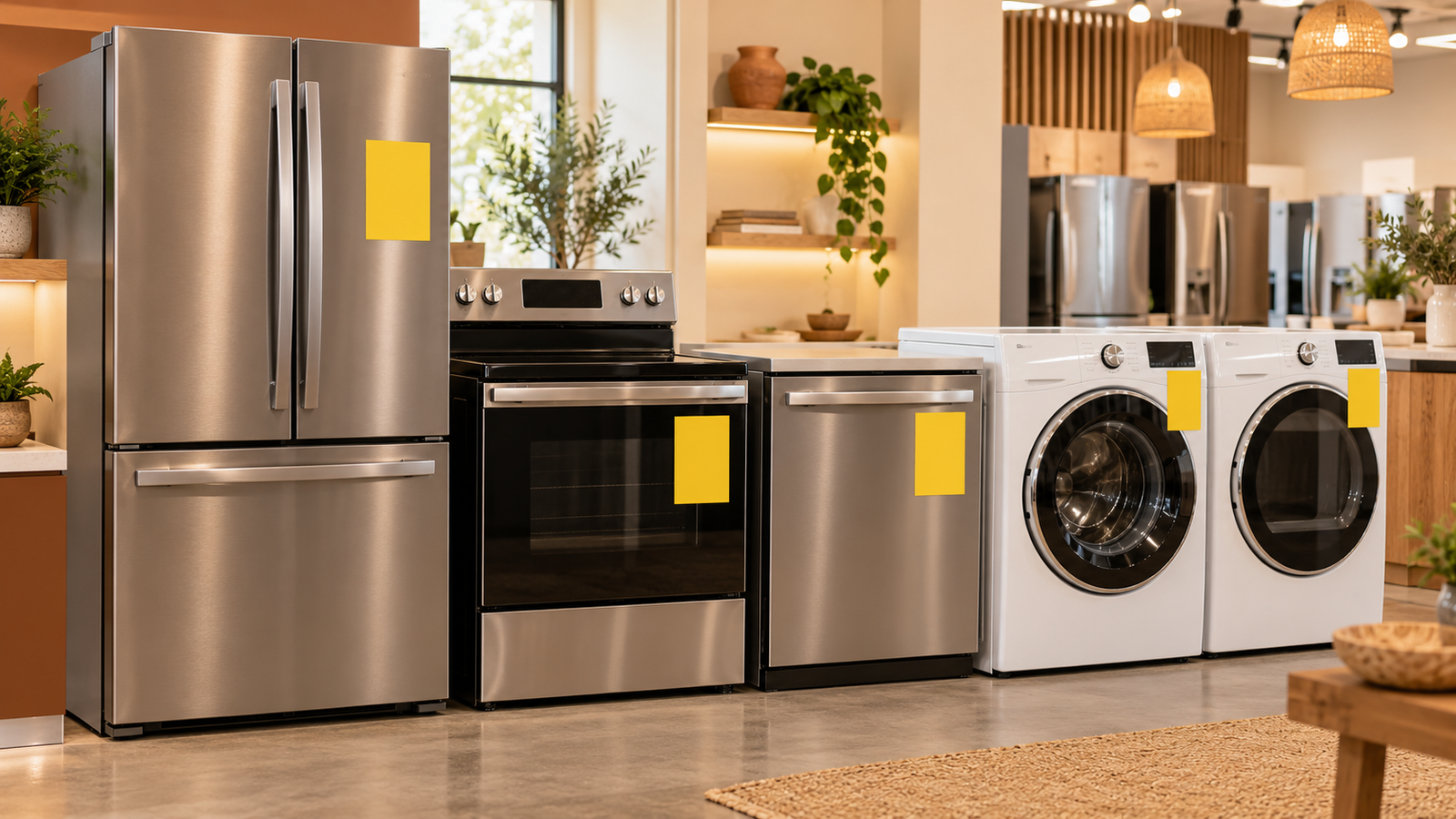
Conceptual illustration of an EnergyGuide label on a major appliance.
That yellow tag on a refrigerator, washer or air conditioner is not a promotional sticker. It is a federally mandated disclosure. The Federal Trade Commission requires the EnergyGuide label on many major appliances specifically so shoppers can compare energy use and estimated operating cost across different models before buying, the same way a nutrition label lets you compare food products.
What appliances carry the label
Not every appliance has one. According to the FTC, EnergyGuide labels appear on boilers, ceiling fans, central air conditioners, clothes washers, dishwashers, freezers, furnaces, heat pumps, pool heaters, refrigerators, televisions, room and portable air conditioners, and water heaters. Some categories, such as ranges and ovens, are exempt from the requirement. If you do not see a label on a covered appliance, the FTC suggests checking inside the unit itself, or the seller's or manufacturer's website.
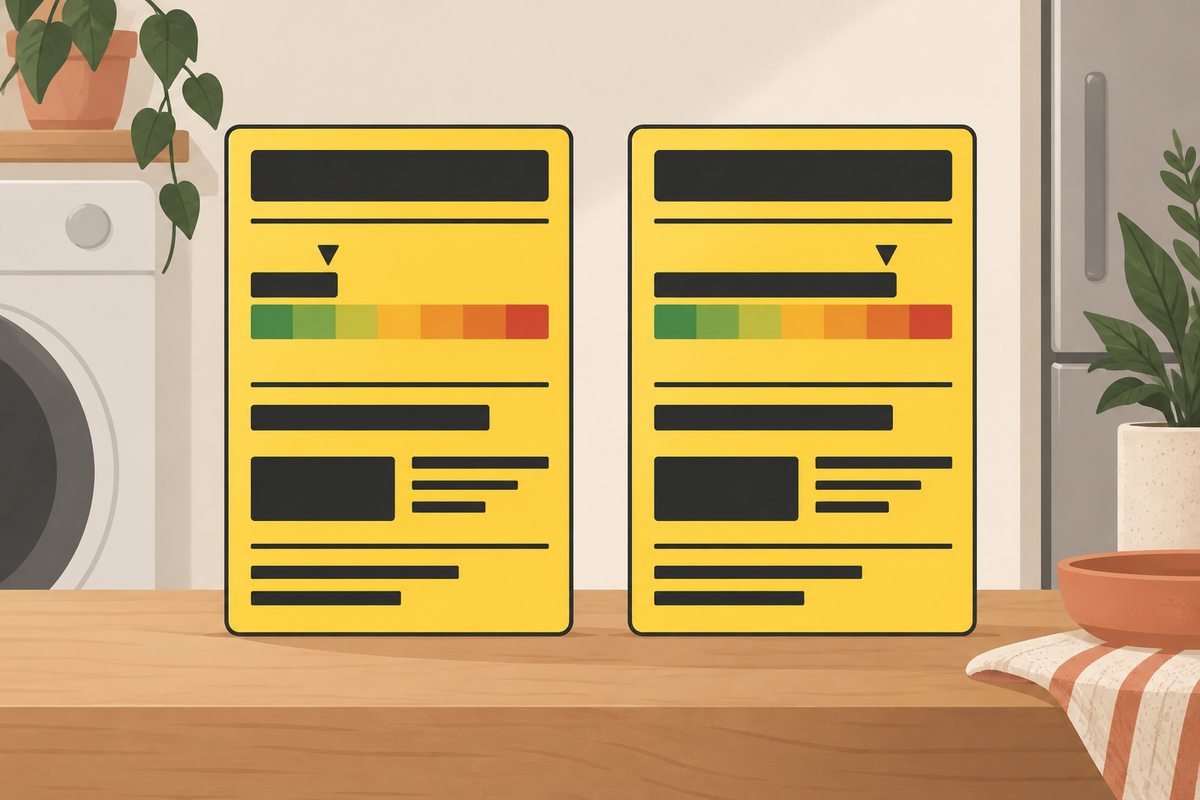
What the estimated cost actually means
The number on the label is not a personal prediction. The FTC states plainly that the estimated operating cost is only an estimate, based on typical use and a national average price for energy, and that your actual cost depends on how you use the appliance and your local energy price. Two households can buy the identical model and see different real-world bills, because usage patterns and local electricity or gas rates vary. Treat the number as a comparison tool between models, not a guarantee of what you personally will pay.
| Feature | EnergyGuide label tells you | |
|---|---|---|
| Comparing models | How this model's energy use compares with similar models, which is its main purpose | |
| Your exact future bill | No. It uses a national average energy price and typical use, not your rate or habits | |
| Whether it is ENERGY STAR certified | Sometimes. The ENERGY STAR logo appears on the label only if the model qualifies |
EnergyGuide versus ENERGY STAR: two different things
These are commonly confused, but they come from different programs with different purposes. The FTC's EnergyGuide label is a required disclosure covering all appliances in its covered categories, showing relative energy use. The ENERGY STAR label, by contrast, is a voluntary certification. The FTC explains that to qualify for ENERGY STAR, a product must meet energy efficiency guidelines set by the U.S. Environmental Protection Agency, and only qualifying models carry that additional logo, which may appear within the corner of an EnergyGuide label on a certified model.
- Every covered appliance category has an EnergyGuide label. Not every appliance has earned ENERGY STAR certification.
- EnergyGuide is about comparing this specific model with similar models on the market.
- ENERGY STAR is a threshold: a model either meets the EPA's efficiency bar or it does not.
- A model without the ENERGY STAR logo is not necessarily inefficient. It may simply not have pursued certification, or may fall just short of the threshold.
What changed with the 2023 label redesign
The label itself has been updated over time to stay useful as products change. A summary of the FTC's Appliance Labeling Rule notes that the Commission has periodically revised the label's design, including updates to how ranges of comparability are displayed and how the ENERGY STAR logo is positioned on the label, so a label you see on a new appliance today may look somewhat different from one you remember on an older purchase. The underlying purpose, disclosing energy use for comparison shopping, has stayed consistent even as the visual design has evolved.
A related but separate detail worth knowing: some categories, such as light bulbs, use a different disclosure format called the Lighting Facts label rather than the yellow EnergyGuide tag, since lighting products are regulated somewhat differently under the same broader labeling framework. If you are shopping for bulbs specifically, our guide to lumens and color temperature covers what to look for on that label format instead.
Using the label alongside your own numbers
Because the label's cost estimate uses a national average energy price, it is most useful for comparing models against each other, not for predicting your actual bill. To translate a specific appliance's energy use into your own real cost, using your actual electricity rate and expected hours of use, our energy cost calculator can help, and our utility cost calculator can put that single appliance into the context of a full monthly utility bill.
Your takeaway: next time you shop for a major appliance, compare the estimated yearly operating cost on the EnergyGuide labels of the models you are considering, not just the sticker price, and treat the ENERGY STAR logo as a separate, additional signal rather than assuming every appliance without it is inefficient.
Frequently asked questions
Is the EnergyGuide label the same as ENERGY STAR?
No. EnergyGuide is a required FTC disclosure showing energy use for comparison. ENERGY STAR is a separate, voluntary EPA certification that only some models earn. A model can have an EnergyGuide label without ENERGY STAR certification.
Will the number on the label match my actual bill?
Not exactly. The FTC states the estimated cost is based on typical use and a national average energy price, so your real cost depends on your own usage and local rates.
Sources
- Shopping for Home Appliances? Use the EnergyGuide Label, Federal Trade Commission. Checked September 24, 2026
Share this article
Get new guides by email
Practical home articles and free resources. No spam, and you can unsubscribe at any time.
Keep reading
9 Easy DIY Washer and Dryer Decal Makeover Ideas
Explore DIY washer and dryer decal makeover ideas with practical design ideas, planning advice, safe installation notes, and helpful tips for your US home.
November 2026, 10 min read
13 Best Vintage Countertop Toaster Oven Aesthetic Looks
Explore vintage countertop toaster oven aesthetic with practical design ideas, planning advice, safe installation notes, and helpful tips for your US home.
November 2026, 10 min read

10 Clever Ways to Hide Small Kitchen Appliances on the Counter
Explore ways to hide small kitchen appliances on counter with practical design ideas, planning advice, safe installation notes, and helpful tips for your US home.
November 2026, 10 min read