HVAC Filter Maintenance: How Often and Why It Matters
A dirty air filter is one of the most common, most preventable causes of HVAC strain and poor indoor air quality. Here is how often to change one, based on DOE and EPA guidance, and how to tell when yours needs it.
By Home Crane Editors. . 3 min read.
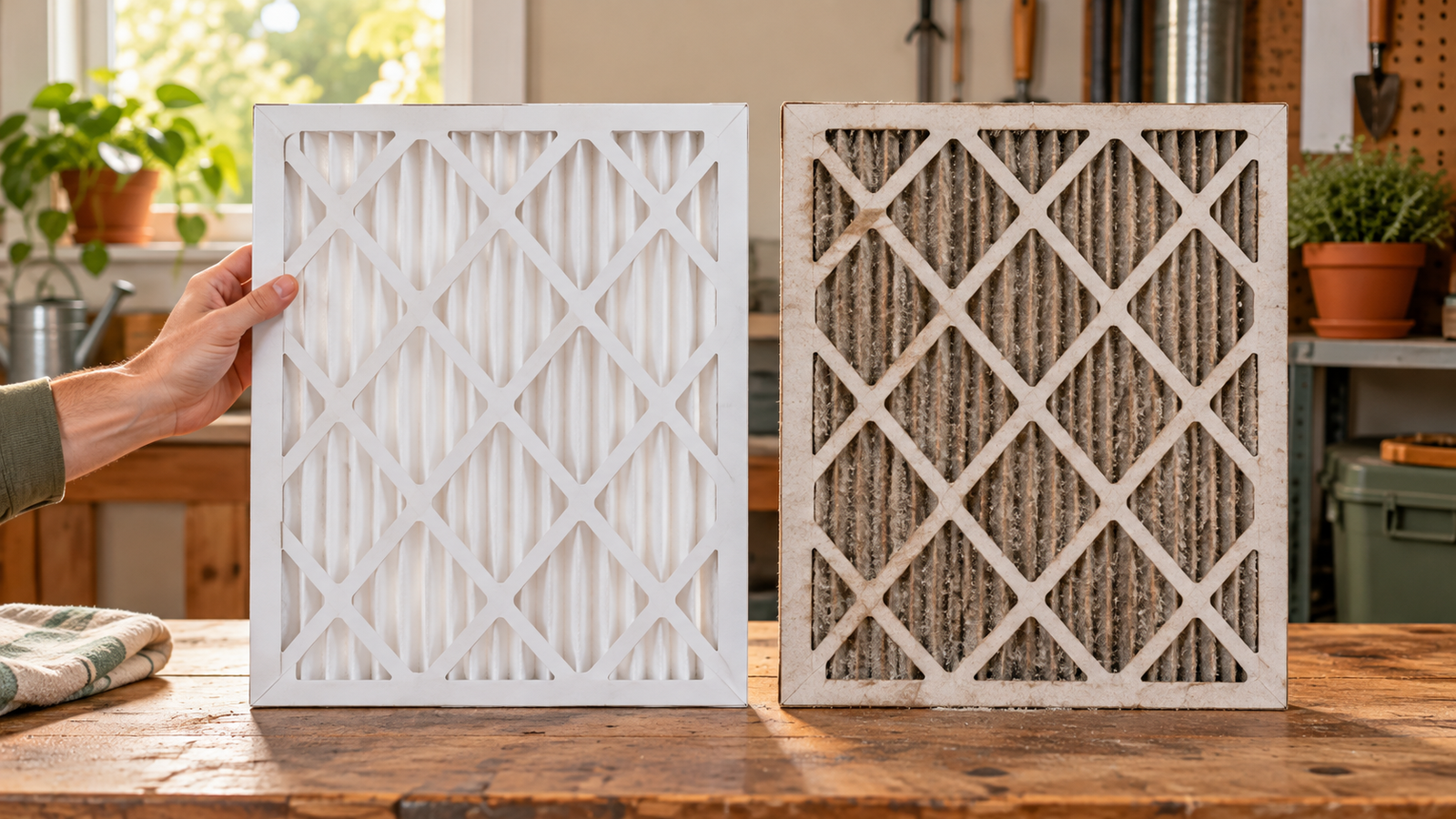
Conceptual illustration comparing a clean and a dirty HVAC filter.
Check your HVAC filter monthly and replace it every one to three months as a general guideline, more often if you have pets, allergies or run the system heavily. The U.S. Department of Energy includes filter maintenance in its home energy guidance because a dirty filter restricts airflow, forcing the system to work harder and use more energy to heat or cool the same space.
Why a dirty filter causes more than dust buildup
An air filter's job is to catch dust, pet dander and other particles before they enter your HVAC system and circulate through your home. As it accumulates debris, airflow through the filter drops, which makes the blower motor work harder to move the same amount of air. That extra strain translates directly into higher energy use, and over time, added wear on system components that were designed to move air against a clean filter's resistance, not a clogged one.
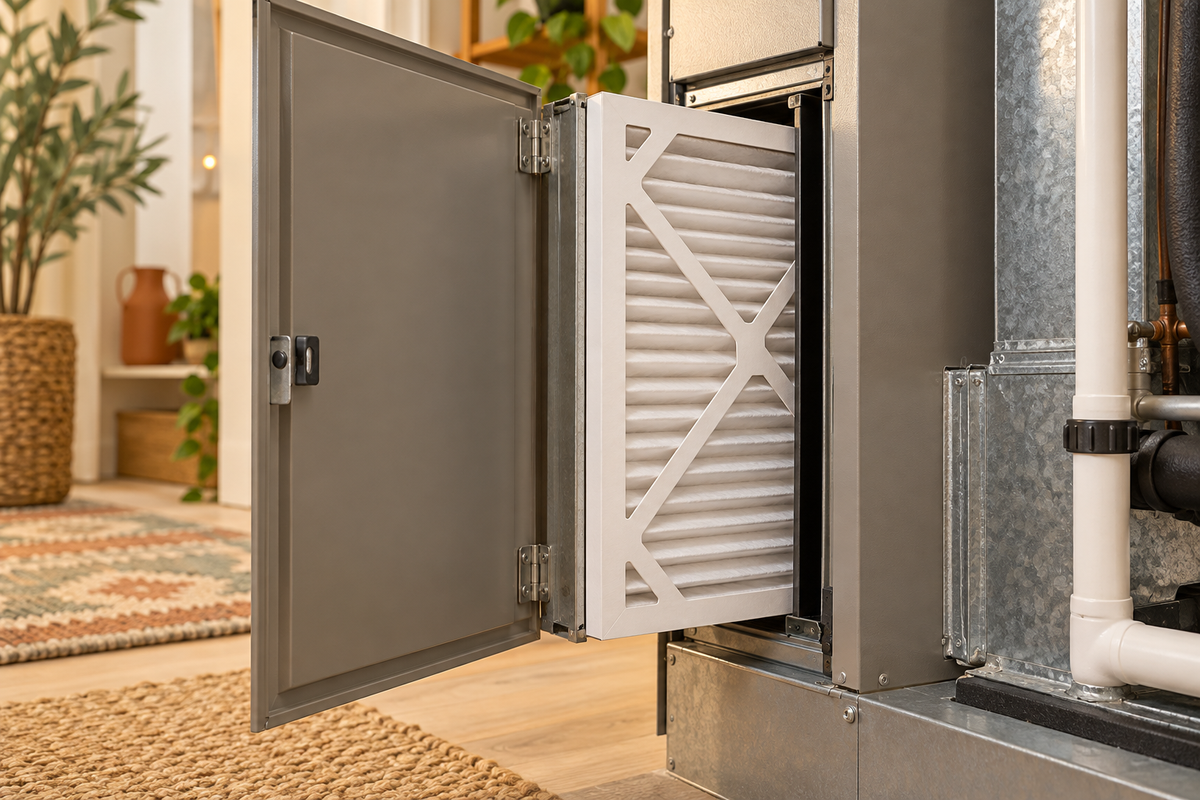
How often, really
The one to three month range is a general guideline, not a fixed rule, because actual filter life depends on several factors specific to your household:
| Feature | Effect | |
|---|---|---|
| Pets in the home | Pet dander and hair accumulate faster, often requiring monthly changes | |
| Allergy or asthma concerns | More frequent changes help maintain better filtration for sensitive household members | |
| Heavy system use | Homes running heating or cooling nearly continuously load the filter faster than occasional use | |
| Higher-efficiency filter types | Denser, higher-MERV-rated filters can catch more but sometimes need more frequent replacement depending on the manufacturer's specification | |
| Renovation or construction dust nearby | Temporarily increases the load on the filter well beyond normal household dust |
Different filter types, different considerations
| Feature | Typical replacement pattern | |
|---|---|---|
| Basic fiberglass panel | Inexpensive, generally changed monthly, lower filtration efficiency | |
| Pleated filters | Moderate cost, typically changed every one to three months, better particle capture than basic fiberglass | |
| High-efficiency pleated (higher MERV rating) | Captures finer particles, follow the manufacturer's specific replacement interval since designs vary | |
| Washable or reusable filters | Require regular cleaning per manufacturer instructions rather than replacement, but still need consistent attention |
If you are unsure which type is installed in your system, check the filter's frame for printed sizing and specification information, or consult your HVAC system's manual, since the correct replacement interval and compatible filter types can vary by equipment manufacturer.
What to look for between scheduled changes
- Hold the filter up to a light source. If light struggles to pass through an area that used to be clearly visible, it is due for replacement.
- Check for visible gray or brown buildup across the filter's surface, particularly if it looks noticeably different from when it was installed.
- Notice if your system seems to run longer than usual to reach the same temperature, which can be a sign of restricted airflow.
- Set a recurring reminder rather than relying on memory. Many filters have a suggested change date printed on the frame that you can write over each time.
A recurring reminder tied to a fixed date, such as the first of every month, tends to work better than an interval counted from the last change, since it removes the need to remember exactly when that was.
Households that run their system on a fixed schedule, such as a programmable thermostat cycling continuously through a hot summer or cold winter, often find that filters load up faster during those peak months than during shoulder seasons like spring and fall when the system runs less. Adjusting your check frequency seasonally, rather than applying one flat interval year round, better matches how quickly a specific filter actually accumulates debris in your home.
Indoor air quality is part of this too
Beyond energy use, the EPA's guidance on indoor air quality identifies HVAC filtration as one factor among several that affect the air circulating through a home. A filter that is clogged is doing a worse job trapping particles that would otherwise be filtered out, which matters more in households with allergies, asthma or other respiratory sensitivities. This is a separate reason to stay on schedule beyond the energy savings angle, and it is worth taking seriously if anyone in the household has a respiratory condition.
This is one piece of a bigger maintenance picture
Filter changes are a small, recurring task, but they are exactly the kind of item that belongs in a broader home maintenance plan. Our guide to budgeting for home maintenance covers how to plan for both small recurring items like filters and larger system replacements like the HVAC unit itself, and our home energy audit guide covers a wider check of where a home loses energy beyond just the filter.
Your takeaway: check your filter this week regardless of when you last changed it, hold it up to a light to judge its condition honestly, and set a recurring monthly reminder to check again rather than trusting yourself to remember.
Frequently asked questions
Does a more expensive filter mean I can change it less often?
Not necessarily. Higher-efficiency filters can capture more particles, but manufacturer guidance on replacement frequency still varies by product. Check the specific filter's packaging rather than assuming a higher price means a longer interval.
Can a dirty filter damage my HVAC system?
Restricted airflow from a clogged filter forces the system to work harder, which increases energy use and adds wear over time. In more severe or prolonged cases this added strain can contribute to premature component failure.
Sources
- Do-It-Yourself Home Energy Assessments, U.S. Department of Energy. Checked September 24, 2026
Share this article
Get new guides by email
Practical home articles and free resources. No spam, and you can unsubscribe at any time.
Keep reading

Painted Kitchen Countertops After Two Years: What to Inspect and Expect
Assess painted countertops after two years with a practical inspection guide for edges, sink areas, scratches, cleaning, and repair decisions.
October 2026, 3 min read

How to Help Prevent Frozen Pipes in Minnesota Winters
Prepare Minnesota plumbing for winter with guidance on vulnerable pipes, heat, insulation, outdoor lines, and when to contact a plumber or utility.
October 2026, 5 min read

Repointing Brick Cost in Pennsylvania: What You Need to Know
Compare Pennsylvania brick repointing costs with Philadelphia context, wall-area calculations, compatible mortar, access, and a clear sample budget.
October 2026, 4 min read