Fire Pits and Grills: Clearance Distances and Safety Basics
Grills cause thousands of home fires a year, and fire pits carry similar risks. Here are the clearance distances and safety habits fire safety organizations recommend for an outdoor living space.
By Home Crane Editors. . 4 min read.
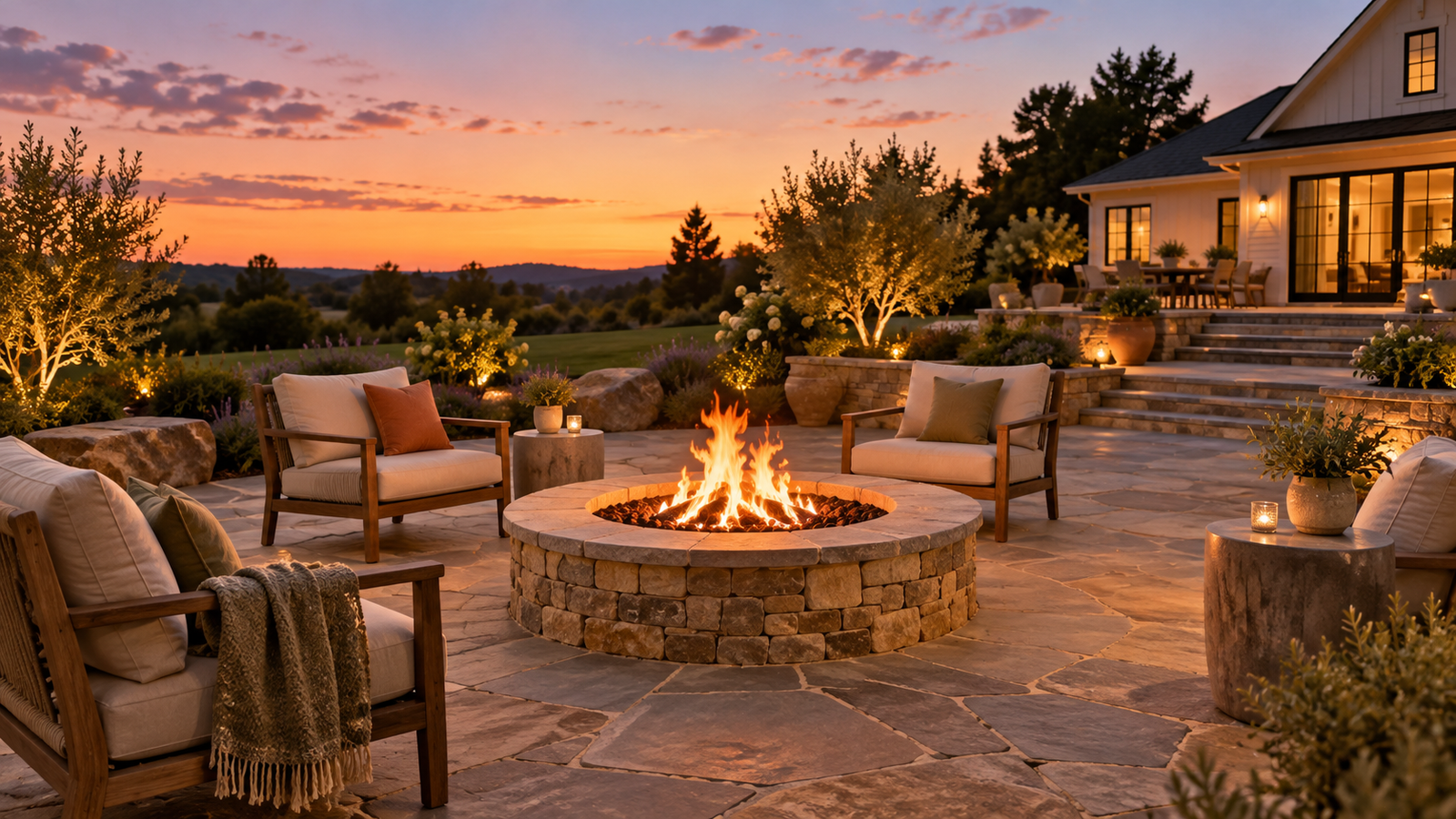
Conceptual illustration of an outdoor fire feature set well away from the house.
Keep a grill well away from the house, deck railings, eaves and overhanging branches, and keep children and pets at least 3 feet from any grill or fire pit in use. For a wood-burning campfire or fire pit, the National Fire Protection Association (NFPA) recommends at least 25 feet from any structure and anything that can burn. These numbers come from NFPA's published grilling and campfire safety guidance, distributed through fire departments nationwide, and they are worth building into the layout of any outdoor living space before you buy furniture around a fire feature.
How common these fires actually are
This is not a small risk category. NFPA's own grilling safety page reports that gas grills were involved in an average of 9,235 home fires per year, including 4,662 structure fires and 4,573 outdoor fires annually, with July, June, May and August as the peak months for grill fires. The same page cites Consumer Product Safety Commission (CPSC) data showing that from 2020 to 2024, an average of 21,682 patients per year went to emergency rooms because of injuries involving grills.
Grill clearance and habits
NFPA's own grilling safety tip sheet and grilling safety page include the following core points, echoed consistently by fire departments that reprint NFPA's guidance:
- Place the grill well away from the home, deck railings and out from under eaves and overhanging branches.
- Keep children and pets at least 3 feet away from the grilling area.
- Never leave a grill unattended while in use.
- For gas grills, always make sure the lid is open before lighting, and check the gas tank hose for leaks each year using a light soap-and-water solution; bubbles reveal a leak.
- For charcoal grills, use only charcoal starter fluid if any, never add it once the fire has started, and let coals cool completely before disposing of them in a metal container.
- Propane and charcoal grills should only be used outdoors, never indoors or in an enclosed space such as a garage.
An insurance industry risk management brief adds a specific distance figure for grills and similar open-flame cooking appliances: keeping them at least 10 feet vertically and horizontally from structures, which is a more conservative distance than the general 'well away' language NFPA uses in its consumer materials.
Fire pit and campfire clearance
For an open fire, whether a dedicated fire pit or a campfire-style feature, NFPA's guidance sets a larger minimum distance than for a grill. A safety summary reporting NFPA's advice states that campfires must be at least 25 feet away from any structure and anything that can burn, and that homeowners should also clear away dry leaves, sticks and overhanging low branches near the fire area. Keep the same 3-foot buffer for children, pets and combustible items such as blankets and outerwear around the fire itself, in addition to the larger structure clearance.
| Feature | From structures | From children, pets, flammable items |
|---|---|---|
| Grill (NFPA general guidance) | Well away from home, eaves, branches | 3 feet |
| Grill (insurance industry figure) | 10 feet | 3 feet |
| Fire pit or campfire (NFPA) | 25 feet | 3 feet |
Local fire codes and any manufacturer's installation instructions for a purchased fire pit can set their own requirements, and those take precedence over general guidance. Check both before you install a permanent fire feature.
Wind, surface and supervision
Distance is not the only variable. NFPA's tips, echoed across fire department safety materials, also cover conditions on the day: check wind direction before lighting a fire, since wind can carry sparks well past a clearance zone that would otherwise be adequate. Set a fire pit on a level, non-combustible surface, such as pavers, gravel or a poured pad, rather than directly on grass, mulch or a wood deck. Never leave a lit grill or fire pit unattended, even briefly, and have a way to extinguish it nearby, such as a hose, bucket of water or a working fire extinguisher.
Softwoods such as cedar and pine tend to throw sparks and pop more than hardwoods, which is a small but real factor in how far embers can travel from an open fire pit. If you burn wood regularly, seasoned hardwood produces a calmer, more predictable fire than green or resinous wood.
Planning the space around it
Once you know the clearance a fire feature needs, you can plan furniture, plantings and any overhead structure such as a pergola around it rather than working backward from a layout that turns out to be too tight. If you are adding a patio surface around a fire pit, our guide to patio drainage and materials covers surface choices, and our mulch calculator and gravel calculator can help estimate materials for a surrounding bed or base, keeping in mind that mulch itself is a combustible material and should sit outside the fire clearance zone.
Your takeaway: before you place a grill or fire pit, measure the clearance from the house, deck and any overhanging branches, using 25 feet as a starting point for an open fire and at least 10 feet for a grill, and check your local fire code and any manufacturer instructions for stricter requirements.
Frequently asked questions
Can I put a fire pit under a covered patio?
This depends on the structure, the fire pit type and local code. An overhead structure close to an open flame is a fire and heat risk. Check the fire pit manufacturer's clearance requirements and your local fire code before installing one under any roof or overhang.
Is it safe to use a grill on a wood deck?
NFPA's guidance is to keep grills away from deck railings and out from under eaves, reflecting the fire risk of an open flame near combustible decking material. Follow the grill manufacturer's specific clearance instructions.
Sources
- Grilling Safety Facts & Resources, National Fire Protection Association. Checked September 29, 2026
- Grilling Safety Tips (tip sheet), National Fire Protection Association. Checked September 29, 2026
- NFPA offers five important tips for safely enjoying at-home outdoor activities this summer, Northern Kentucky Tribune, reporting NFPA guidance. Checked September 24, 2026
- Outdoor Grilling Safeguards, Philadelphia Insurance Companies, Risk Management IQ. Checked September 24, 2026
Share this article
Get new guides by email
Practical home articles and free resources. No spam, and you can unsubscribe at any time.
Keep reading

DIY Backyard Movie Theater Setup for a Small Patio
Turn a small patio into a cozy backyard movie theater with a compact projector, portable screen, space-saving seating, smart lighting, and safe setup tips.
November 2026, 12 min read
Budget DIY Outdoor Kitchen Ideas and Setup: Build a Stylish Cooking Space for Less
Explore budget DIY outdoor kitchen ideas, from grill carts and cinder block counters to affordable storage, lighting, shade, layout tips, and safety essentials.
November 2026, 12 min read

How to Hang Backyard String Lights: A Modern, Step-by-Step Guide
Learn how to hang backyard string lights with modern layouts, secure anchors, support cables, outdoor-rated hardware, and practical safety tips.
November 2026, 9 min read