Flooring and Indoor Air Quality: What FloorScore Certification Means
New flooring can release volatile organic compounds into a home's air for a period after installation. Here is what that means, what a FloorScore certification actually tests, and how to reduce exposure during a flooring project.
By Home Crane Editors. . 3 min read.
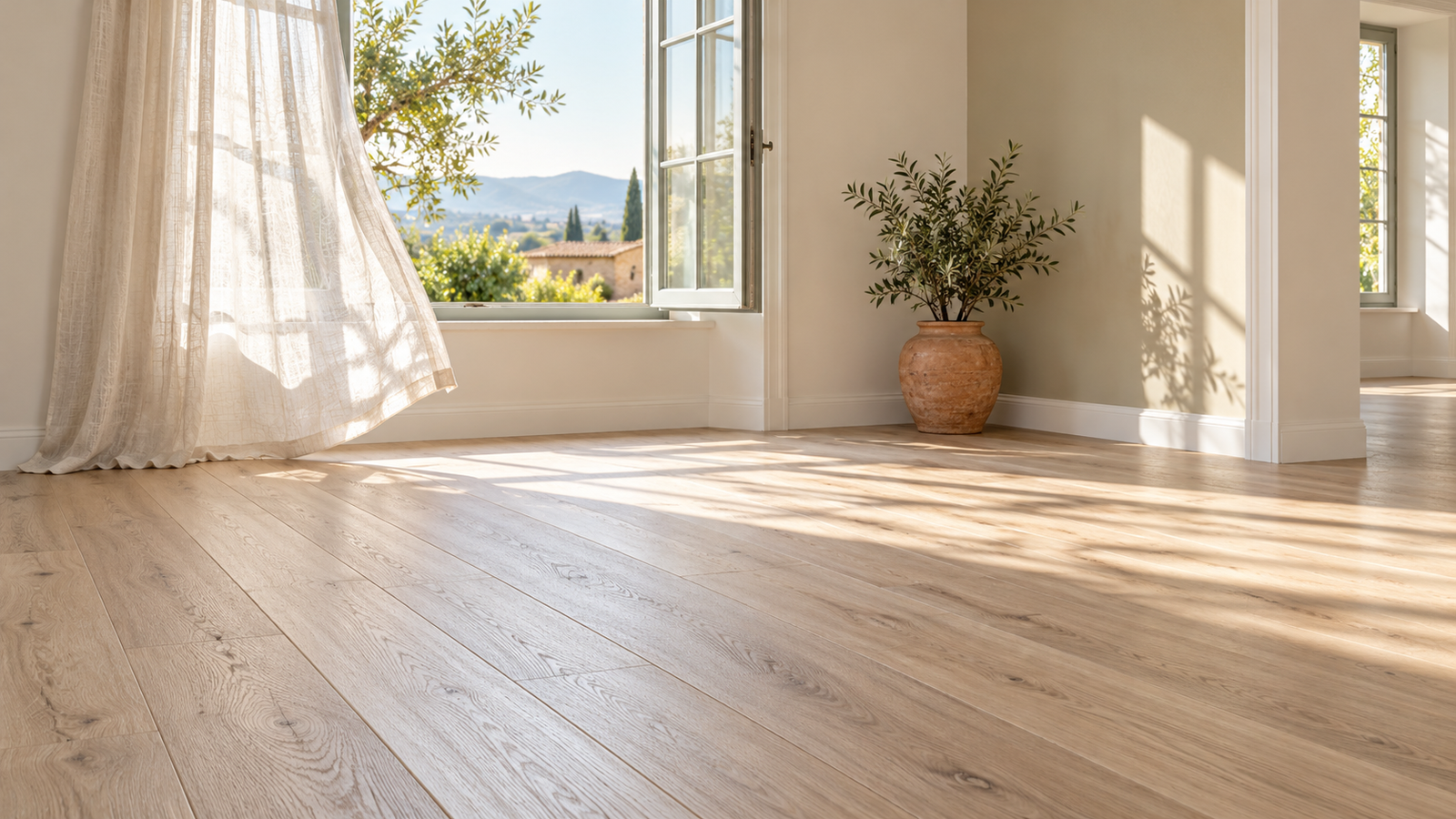
Conceptual illustration of ventilating a room during a flooring installation.
Many building materials, including some flooring products, adhesives and finishes, can release volatile organic compounds, or VOCs, into indoor air for a period after installation. The U.S. Environmental Protection Agency defines VOCs broadly as compounds with high vapor pressure and low water solubility, which is a technical way of describing chemicals that evaporate readily at room temperature. Because most people spend the large majority of their time indoors, the EPA has encouraged manufacturers of building materials to use reliable emissions testing to establish standards that help buyers evaluate products before installation, not just react afterward.
What FloorScore certification actually tests
The Resilient Floor Covering Institute, the trade association that helped create the certification, describes FloorScore as an independent program that tests and certifies hard surface flooring and associated adhesives for compliance with a specific California indoor air emissions standard, known as the California Section 01350 program. According to the certification's own materials, the testing covers 35 individual volatile organic compounds specified by that standard, and certification is administered by SCS Global Services, an independent third-party testing and certification organization, not the flooring manufacturers themselves.
Why third-party certification matters here
A key detail in how FloorScore works is that certification is not something a manufacturer can simply claim. The certifying body's own description of the process involves an evaluation of the product's formulation and the manufacturing site's document controls, an on-site audit by a third party, and independent product emissions testing before a product can carry the seal. This third-party structure is what allows the certification to be used as evidence in outside green building rating systems such as LEED, rather than functioning as a manufacturer's self-reported marketing claim.
| Feature | Covers | Does not cover |
|---|---|---|
| Hard surface flooring products | Carpet, which uses a separate program called Green Label Plus | |
| Associated adhesives and underlayment | Structural performance, durability or water resistance of the flooring itself | |
| Compliance with a specific VOC emissions standard | A guarantee of zero emissions, since the standard sets a compliance threshold rather than requiring none |
Carpet has its own separate program
Carpet flooring is generally addressed through a different certification, called Green Label Plus, developed by the Carpet and Rug Institute in coordination with California's Sustainable Building Task Force and the California Department of Public Health. If you are comparing hard surface and carpet options for the same room, note that a FloorScore seal specifically will not appear on a carpet product, since that material category is certified under this separate program instead.
Reducing exposure during and after installation
- Ventilate the space well during and for a period after installation, since VOC emissions from newly installed materials are generally highest immediately after installation and decline over time.
- If possible, schedule flooring installation for a time when the space can be left well-ventilated and less occupied for a few days afterward, particularly for anyone with respiratory sensitivities.
- Ask your flooring retailer or installer directly whether the specific product and adhesive you are purchasing carry FloorScore or an equivalent independent certification.
- Follow the manufacturer's specific curing and ventilation recommendations for adhesives and finishes, since these can carry their own separate emissions profile distinct from the flooring material itself.
Why this matters more for some households than others
VOC sensitivity varies significantly between individuals. Households with young children, older adults, or anyone with asthma or another respiratory condition generally have more reason to prioritize low-emission materials and thorough ventilation during a flooring project than a household without those factors. This does not mean uncertified flooring is unsafe for general use, since many products without FloorScore certification simply have not pursued that specific voluntary program rather than having failed a test. It means the certification is one useful signal to weigh more heavily when a household has a specific reason for added caution.
Building product manufacturers have also increasingly moved toward lower-VOC formulations even for products outside a formal certification program, driven partly by consumer demand and partly by broader green building trends across the construction industry. Asking a retailer directly about a product's emissions profile, even when no certification seal is present, is a reasonable question that a knowledgeable salesperson should be able to help answer or research on your behalf.
This connects to a broader ventilation picture
Flooring is one source among several that can affect indoor air quality, alongside factors like HVAC filter condition, covered in our HVAC filter maintenance guide, and general home sealing and ventilation covered in our home energy audit guide. A well-ventilated, well-filtered home reduces the cumulative effect of any single material's emissions, which is a useful frame for thinking about indoor air quality broadly rather than fixating on one product choice alone.
Your takeaway: when comparing flooring products, ask specifically whether a product and its adhesive carry FloorScore or a similar independent certification, and plan for extra ventilation during and shortly after installation regardless of which product you choose, since ventilation helps regardless of what certification a given product carries.
Frequently asked questions
Does FloorScore certification mean a product has zero VOC emissions?
No. It means the product has been independently tested and certified to comply with a specific emissions threshold under the California Section 01350 program, not that it emits no VOCs at all.
Does FloorScore apply to carpet?
No. Carpet is generally certified under a separate program, Green Label Plus, developed by the Carpet and Rug Institute. FloorScore covers hard surface flooring and its associated adhesives and underlayment.
Sources
- FloorScore Certification, Resilient Floor Covering Institute (RFCI). Checked September 24, 2026
- Is your flooring contributing to indoor air pollution?, Plant Services, referencing EPA guidance. Checked September 24, 2026
Share this article
Get new guides by email
Practical home articles and free resources. No spam, and you can unsubscribe at any time.
Keep reading
Painted Bathroom Ceramic Floor Tile: What to Check After One Year
Painting ceramic bathroom floor tile can be a cosmetic alternative to replacement when the tile is sound and the coating system permits the application. A.
October 2026, 3 min read

The Easiest DIY Flooring to Install for Total Beginners
Compare five beginner-friendly flooring approaches, with illustrations, subfloor checks, installation tradeoffs, and a practical buying checklist.
October 2026, 4 min read
How to Fix Squeaky Hardwood Floors Underneath Carpet
Find the cause of squeaks beneath carpet, confirm the hidden floor layers, and choose a suitable repair while protecting the hardwood underneath.
October 2026, 4 min read