Furniture and TV Tip-Over Safety: Why Anchoring Matters
A dresser or TV falling on a child is one of the most preventable hazards in a home, and it is more common than most people expect. Here is what CPSC data shows and what actually stops it.
By Home Crane Editors. . 3 min read.
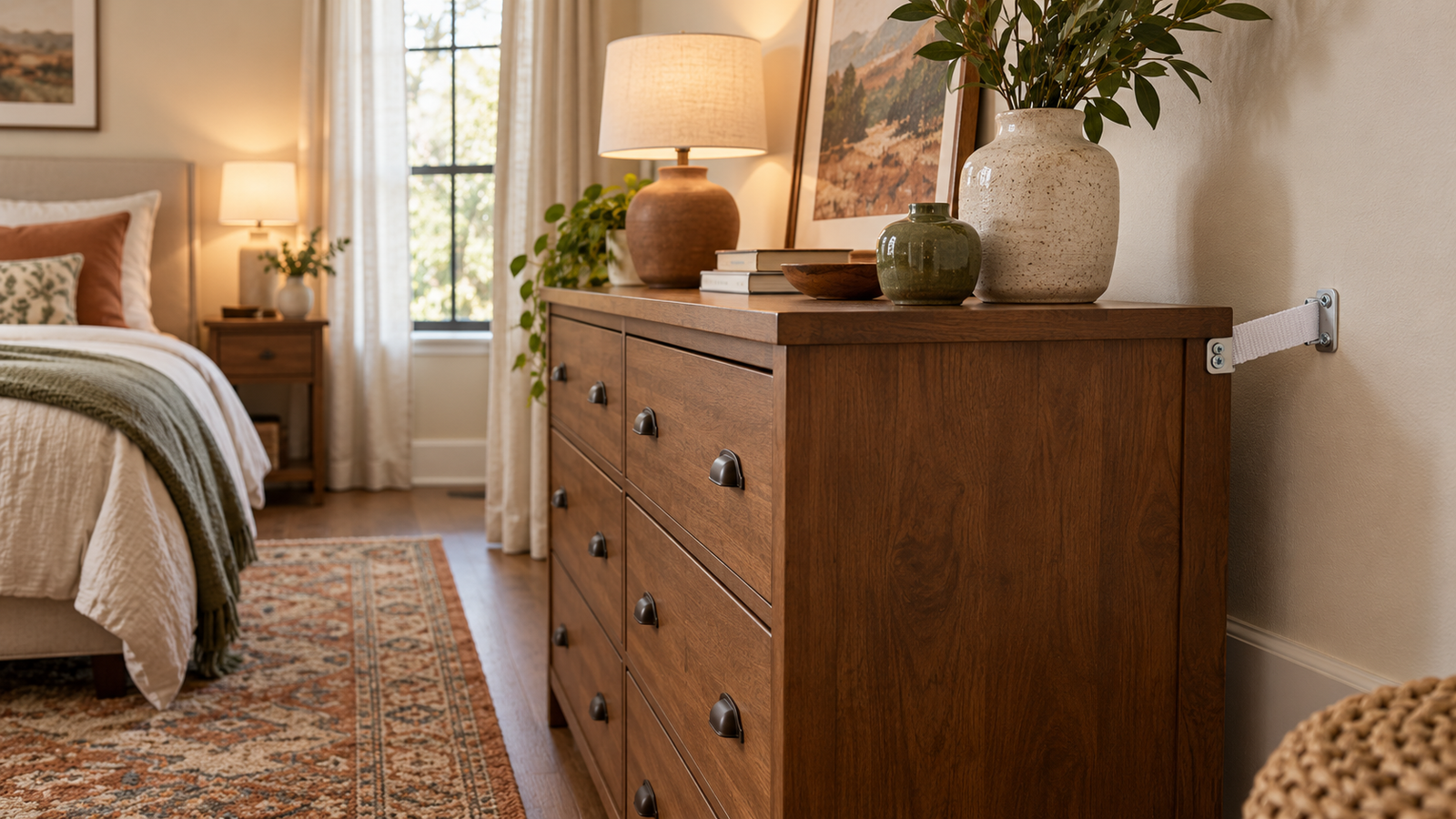
Conceptual illustration of an anchored dresser.
Anchor dressers, bookcases and TVs to the wall. That single habit addresses the leading cause of a hazard that has killed hundreds of children in the United States. The U.S. Consumer Product Safety Commission runs an ongoing public safety campaign, called Anchor It!, specifically because this risk remains common in homes that have never had a safety issue with any other piece of furniture.
What the data shows
A CPSC report analyzed by Kids In Danger, a nonprofit child safety organization, found that between 2000 and 2018, 556 deaths were caused by furniture and TV tip-overs, with 83 percent of those deaths involving children ages 0 to 17. Furniture, including chests, bureaus, bookshelves and TV stands, was the main cause, accounting for 60 percent of tip-over deaths and 76 percent of tip-over injuries in that report. Tables and chests, bureaus and dressers were the specific furniture types most often involved in children's injuries.
| Feature | Figure | |
|---|---|---|
| Total tip-over deaths, 2000-2018 | 556, per a CPSC report analyzed by Kids In Danger | |
| Share of deaths involving children | 83 percent | |
| Average annual ER visits for children, 2017-2019 | About 11,100 to 11,300, per figures cited by Consumer Reports and other advocacy groups reporting CPSC data | |
| Share of fatal incidents involving a TV | 75 percent, for children specifically |
Why this happens, and why it is easy to miss
Most tip-overs involve a child climbing furniture to reach something, such as a toy, a remote control, or the TV itself, according to CPSC's recurring public safety messaging. A dresser or bookcase that seems perfectly stable when used normally can tip when climbed, because the weight distribution that makes furniture stable for everyday use is not the same as what makes it stable against a child's body weight pulling from a drawer or shelf partway up.
What CPSC recommends
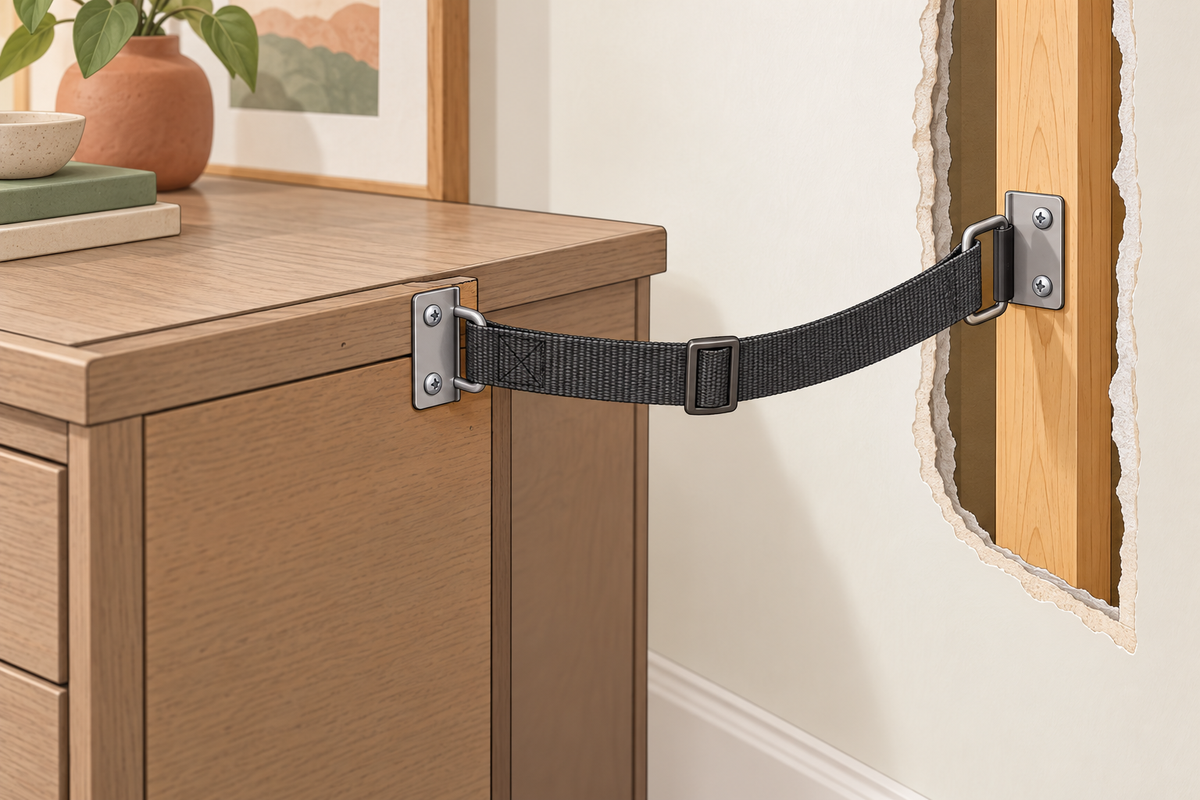
- Anchor TVs and furniture, such as bookcases and dressers, securely to the wall.
- Place TVs on a sturdy, low base, and push the TV as far back as possible, particularly if anchoring the TV itself is not possible.
- Do not place TVs on top of dressers or other furniture that children can climb.
- Do not place items, such as toys or a remote control, on top of furniture in a way that might tempt a child to climb to reach them.
- Check whether your dressers or other furniture have been recalled, through CPSC's website.
A new safety standard is now in place
This is one of the few home safety topics where the rules changed recently. In October 2022, CPSC approved a new mandatory safety standard for clothing storage units, requiring they be tested for stability and labeled accordingly. In December 2022, the federal STURDY Act became law, requiring CPSC to establish a mandatory stability standard specifically for freestanding clothing storage furniture. Furniture manufactured before the rule's effective date of September 1, 2023 may still be sold, so an older dresser already in your home, or a secondhand one, may not meet the current standard. CPSC advises consumers to ask sellers whether furniture meets the 2023 version of the relevant safety standard, and in the meantime, to anchor all furniture regardless of its age or compliance status.
Beyond dressers: what else to check
The same anchoring logic applies to bookcases, wardrobes, china cabinets and any other freestanding furniture tall or heavy enough to injure someone if it fell, not just items marketed as clothing storage. If you are furnishing a child's room or a shared family space, check each piece for anchoring hardware or the ability to add it before placing the item, rather than treating anchoring as an afterthought once a room is already set up.
If you are planning a broader room layout, our guide to accessible room layout clearances covers furniture placement and clear pathways, which pairs naturally with checking each piece for tip-over risk during the same planning pass.
A related hazard worth checking at the same time
While you are checking furniture stability, it is a natural time to also confirm your home's smoke and carbon monoxide alarms are current and correctly placed, since both are examples of low-cost, high-value safety checks that are easy to postpone indefinitely once a home feels generally safe. Our guide to smoke and carbon monoxide alarm placement covers where alarms should go and how often to test them, using the same kind of practical, one-afternoon approach as the furniture check described here.
Your takeaway: this weekend, walk through your home and check every dresser, bookcase and TV stand for an anchor strap or bracket. If any piece is not anchored, that is a small, inexpensive fix worth doing before the end of the day, not a project to schedule for later.
Frequently asked questions
Does anchoring apply even if I don't have young children?
CPSC's guidance is aimed primarily at protecting children, who are involved in the large majority of tip-over deaths and injuries. If children ever visit your home, including grandchildren or friends' children, anchoring remains a relevant precaution.
Is furniture sold today automatically safer?
A mandatory stability standard for clothing storage units took effect September 1, 2023, but furniture made before that date can still legally be sold and may not meet it. Ask sellers directly, and anchor furniture regardless of its age.
Sources
- Plans to Watch the Big Game on the Big Screen: CPSC Reminds Families to Protect Children from the Deadly Hazard of Toppling TVs and Furniture, U.S. Consumer Product Safety Commission. Checked September 24, 2026
- CPSC Releases New Furniture Tip-Over Report, Kids In Danger, analyzing a CPSC report. Checked September 24, 2026
- Congress Passes STURDY Act to Prevent Furniture Tip-over Deaths, Kids In Danger. Checked September 24, 2026
Share this article
Get new guides by email
Practical home articles and free resources. No spam, and you can unsubscribe at any time.
Keep reading

14 Easy IKEA Dresser Paint Hack Ideas for Beginners
Explore IKEA dresser paint hack ideas for beginners with practical design ideas, planning advice, safe installation notes, and helpful tips for your US home.
November 2026, 10 min read
7 Genius Ways to Upcycle Thrift Store Furniture into a Modern Look
Explore upcycle thrift store furniture modern with practical design ideas, planning advice, safe installation notes, and helpful tips for your US home.
November 2026, 10 min read
13 Best Narrow Entryway Bench With Storage DIY Layouts
Explore narrow entryway bench with storage DIY layouts with practical design ideas, planning advice, safe installation notes, and helpful tips for your US home.
November 2026, 10 min read